
The First 3 Seconds: A Per-Platform Hook Guide

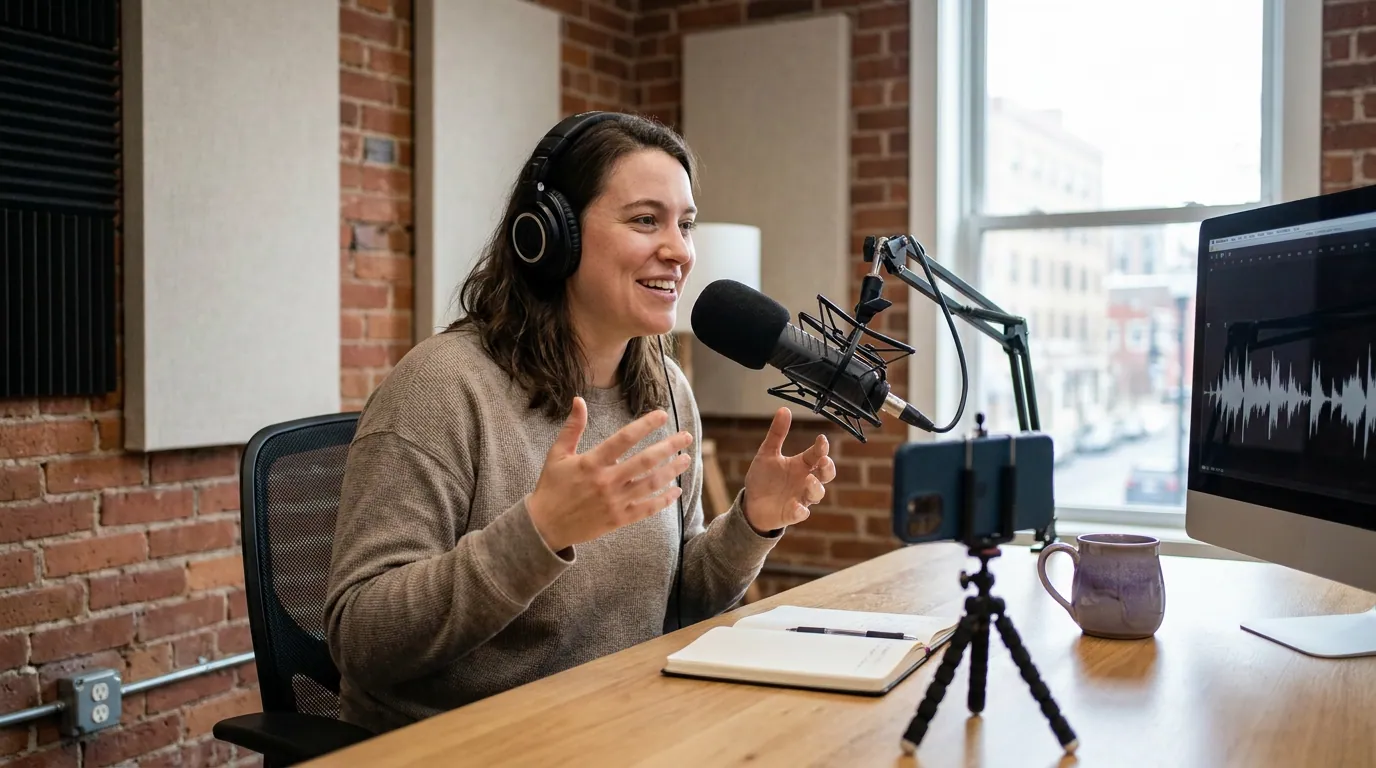
The first three seconds of a clip is not one job, it is four. TikTok measures whether you swipe away. Reels measures whether you replay or share. Shorts weighs the swipe plus whether sound stays on. LinkedIn rewards the few seconds of dwell before someone scrolls past in a feed of text. Same podcast moment, four different scoreboards, so the same opening line will not win on all four.
Most "hook advice" treats the opening as a single skill: be punchy, front-load the payoff, cut the dead air. That is all true, and it is not enough. Each feed optimizes for a different early-watch signal, and once you know which one a platform reads hardest, you can write the open for that signal instead of guessing. This is the per-platform hook map, plus a template tuned to each one, built for talk clips, where there is no visual spectacle to carry the first second for you.
Why the first three seconds decides the clip
A short-form viewer decides whether to keep watching almost immediately, and the platform is watching that decision in real time. The mechanism is simple: every feed uses your earliest retention as the signal for whether to show the clip to more people. Lose the open, and you do not get the audience to lose later.
This matters more than it used to because clips are now a primary discovery channel, not a side project. Clips drive an estimated 20–40% of new audience for video shows and can raise reach 2–5× (Podcast Studio Glasgow), and social media has become a leading driver of how listeners find new shows (InsideRadio). The opening seconds are where that discovery is won or thrown away.
What each platform measures in the opening seconds
Here is the map. No platform publishes its exact weighting, so treat these as the dominant early signal each feed is known to optimize for, confirmed by how creators are rewarded, not by a leaked formula. Match your open to the signal in this column and you are writing for the algorithm that will actually decide your reach.
TikTok, beat the swipe in the first second
TikTok's For You feed is a high-velocity swipe environment, so the signal that matters most is whether the viewer keeps their thumb still past the first second or two. Your enemy is the swipe-away, and it happens before a slow setup can pay off. The open has to give a reason to stay before the brain has decided to move on.
Hook template: lead with the most surprising or contradictory line in the clip, stated flat, no wind-up. "Most of what you've been told about morning routines is backwards" beats "So in this episode we talked about routines." Put the line on screen as a bold caption from frame one, because the visual stop matters as much as the audio.
Instagram Reels, make it loopable and sendable
Reels leans on replays and shares more than a single linear watch, so the opening should set up either a loop or a "send this to someone" reaction. A clip that loops cleanly racks up watch time without new viewers; a clip that earns a DM share reaches new ones. The open needs to plant the reason for both.
Hook template: open with a tension or a stance someone would forward, "If you split the check on a first date, read this", or end the clip on a line that sends the viewer back to the start, so the last second and the first second connect. State the claim in the first three seconds so the share happens before the clip even finishes.
YouTube Shorts, survive the swipe, keep sound on
Shorts is also a swipe feed, but it sits inside YouTube, where audio carries more of the experience and viewers are slightly more willing to listen than scroll-and-mute. The early signal is the swipe plus whether the viewer keeps sound on, a muted Short loses much of its value. Your open should reward listening, not just watching.
Hook template: open with a spoken question the viewer wants answered, paired with a caption that previews the answer is coming. "Here's the one number that tells you a startup is in trouble" makes staying-with-sound feel worth it. Avoid openings that work fully muted on Shorts, you want the audio to do real work here.
LinkedIn, slow the scroll, reward a complete thought
LinkedIn is a feed of text and professional updates, so a video competes for dwell, the seconds a scroll pauses. There is no swipe-up mechanic forcing a decision; the viewer chooses to stop. The open should read as a credible, specific claim a professional would pause for, not a high-energy hook that feels out of place.
Hook template: open with a concrete, slightly contrarian professional claim and a caption that frames the stakes. "We cut our hiring time in half by deleting one interview round" stops the right scroll. Lead with the insight, not the energy, the LinkedIn viewer is judging substance in the first three seconds, not pace. The fuller playbook for the feed is in cutting podcast clips for LinkedIn.
The per-platform hook swap, worked through
Here is the move in practice. Take one strong podcast moment, a guest saying "I fired my best-performing salesperson and revenue went up", and rewrite only the opening for each feed's signal. The clip body stays the same. You are changing the first line and the first caption, nothing else.
- TikTok: "This sounds insane, but I fired my best salesperson." The contradiction stops the swipe in second one.
- Reels: caption reads "Send this to a sales manager" while the line plays. It primes the share before the payoff.
- Shorts: "Why did firing my top seller make revenue go up?", a spoken question that rewards keeping sound on.
- LinkedIn: "One personnel decision raised our revenue. Here's the logic." Specific, professional, dwell-worthy.
One caption to write on all four: the spoken words, burned in. Most social video is watched on mute, Digiday reported as much as 85% of Facebook video views happened with sound off, citing multiple publishers (Digiday, publisher-reported and directional). On Shorts you want sound on, but the caption still has to carry the open for the muted majority everywhere else. For the platform mechanics behind each feed, our guides on cutting podcast clips for TikTok, Instagram Reels specs for podcast clips, and turning episodes into YouTube Shorts go deeper.
Common opening mistakes (and the fix)
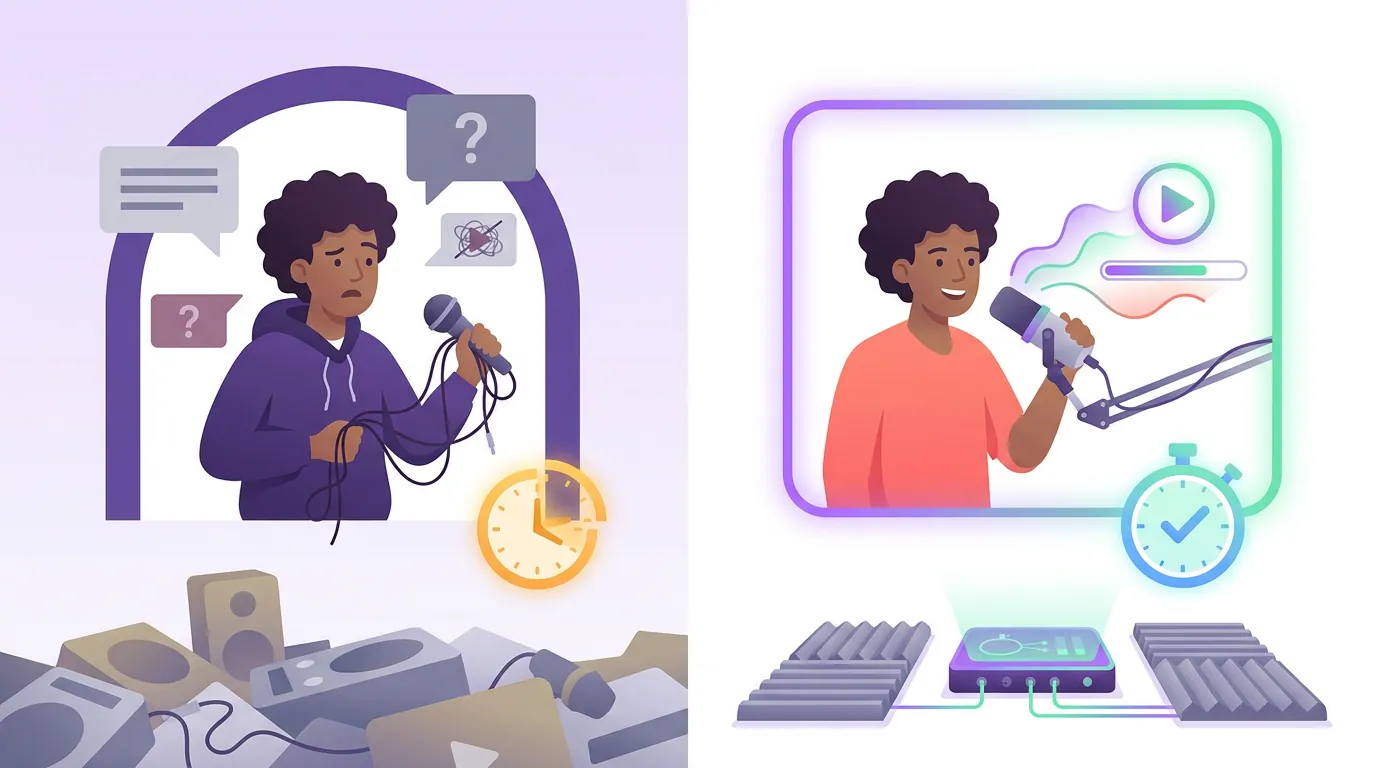
Most first-three-seconds failures are habits, not bad moments. Fix these and the same clip travels further.
- Opening on the setup, not the payoff. Talk clips often lead with context, "so we were talking about, you know, the early days." Cut it. Start on the line that made you clip it. The AI clipper usually sets the entry point at a topic boundary, which is rarely your hook; our piece on how AI clip detection works explains why, and the trim is yours to make.
- One hook for all platforms. Posting the identical open to TikTok, Reels, Shorts, and LinkedIn means three of the four are mistuned. Swap the first line per the map above. It costs a minute.
- A caption that lags the audio. If the burned-in text appears a second after the spoken hook, the muted viewer has already swiped. Caption the first words on frame one.
- An LinkedIn clip with TikTok energy. High-pace, jump-cut openings read as out of place in a professional feed and lose the dwell you need. Match the room.
- Burying the claim past second three. If the surprising part arrives at second eight, the platform has already judged the open. Lead with the claim; explain after.
Picking which moments are worth this per-platform treatment is its own skill, not every clip earns four custom openings. Our guide on how to pick the best AI-suggested clips covers the triage so you spend the effort on the clips most likely to travel.
The honest limit of hook-tuning
A tuned open buys you the first three seconds. It does not buy the rest. If the moment underneath is weak, a sharper hook just gets more people to the disappointment faster, and the platforms read the drop-off. Hook-tuning multiplies a real moment; it cannot manufacture one.
It is also worth keeping the rise of clipping in proportion. Short-form cuts now flood feeds, and for some creators the clips out-reach the source episode by a wide margin. More clips chasing the same scroll means the opening seconds are more contested, not less. That is the case for tuning them deliberately rather than posting one open everywhere and hoping.
FAQ
Should the first three seconds be different on every platform? Yes, at minimum the opening line and caption should change. TikTok rewards beating the swipe, Reels rewards a loopable or sendable open, Shorts rewards keeping sound on, and LinkedIn rewards a dwell-worthy professional claim. The clip body can stay the same; the open is what you re-tune per feed.
Do captions matter in the first three seconds? They are essential. Most social video is watched on mute, Digiday reported as much as ~85% of Facebook video views happened with sound off, citing multiple publishers (Digiday, directional). If your spoken hook is muted and uncaptioned, the open does not exist for most viewers. Burn the first words in on frame one.
How do I know which platform-tuned open actually won? Read each feed's native early-retention metric, not just total views. TikTok and Shorts show retention and a swipe-away curve; Reels surfaces replays, sends, and shares; LinkedIn shows dwell-adjacent reach. Compare the same clip's opening-seconds metric across feeds and re-tune the open that leaked, not the whole clip.
Does hook-tuning matter for LinkedIn, given it's not a swipe feed? It matters differently. LinkedIn measures dwell, whether the scroll slows, rather than a swipe-away. The open still decides reach, but the right open is a specific, credible, slightly contrarian claim, not high-energy pace. The same line that wins on TikTok can feel off on LinkedIn.
Where does the clip's first frame come from if I use an AI clipper? The tool usually sets the entry point at a topic or pause boundary, which is rarely your strongest line. Plan to trim the open yourself. See how AI clip detection works for why the auto-cut lands where it does and how to move it.