
Where to Post Podcast Clips: A Staged Plan


Post your podcast clips on two platforms first, not nine: one video-search engine (YouTube Shorts) and one feed-discovery app (TikTok or Instagram Reels, whichever your audience already uses). Add a third only when you can keep all three fed weekly without quality slipping. Everything else is FOMO.
If you are a solo host with no editor, posting everywhere on day one is the fastest route to burning out before you learn anything. Nine half-tended accounts each get a thin, irregular feed, and thin irregular feeds get throttled. Two accounts you post to consistently beat nine you abandon, and abandonment is the norm, not the exception: only about 16% of podcasts on Apple are still active (one episode in the past 90 days), so the vast majority go quiet (The Podcast Host). A workload you can actually keep is the point.
This is a staged distribution plan. You'll get a two-platform anchor to start, the exact trigger for adding a third, a per-stage checklist, and an effort-to-reward grid so you choose destinations by what each one returns for a solo workload, not by what every "post everywhere" guide tells you.
Why two platforms, not all of them
Clips are how new listeners find a show now. Short-form clips of podcasts have become their own category of content, with thousands of clippers flooding TikTok, Reels, Shorts, and X with podcast moments, and clips can drive 20–40% of a video show's new audience (Podcast Studio Glasgow). Social video has also overtaken word of mouth: 57% of listeners now rely on social media for podcast recommendations, the first time it passed friends and family (InsideRadio). So clipping is not optional. Where you put the clips is the open question.
The trap is treating "post the clips" as "post to every platform." Each platform is a separate posting habit: a different caption style, a different first-three-seconds expectation, a different reply culture. As one host, you can sustain maybe two of those well at the start. Spreading across six means every account gets a fraction of your attention, posts land irregularly, and irregular feeds get fewer impressions per post. The math punishes thin distribution.
Two platforms also let you actually read your data. With two feeds, you can see which hook style and which length hold attention, and apply the lesson next week. With six, the signal scatters and you learn slower. Distribution is a learning loop before it is a reach play, and a tight loop learns faster.
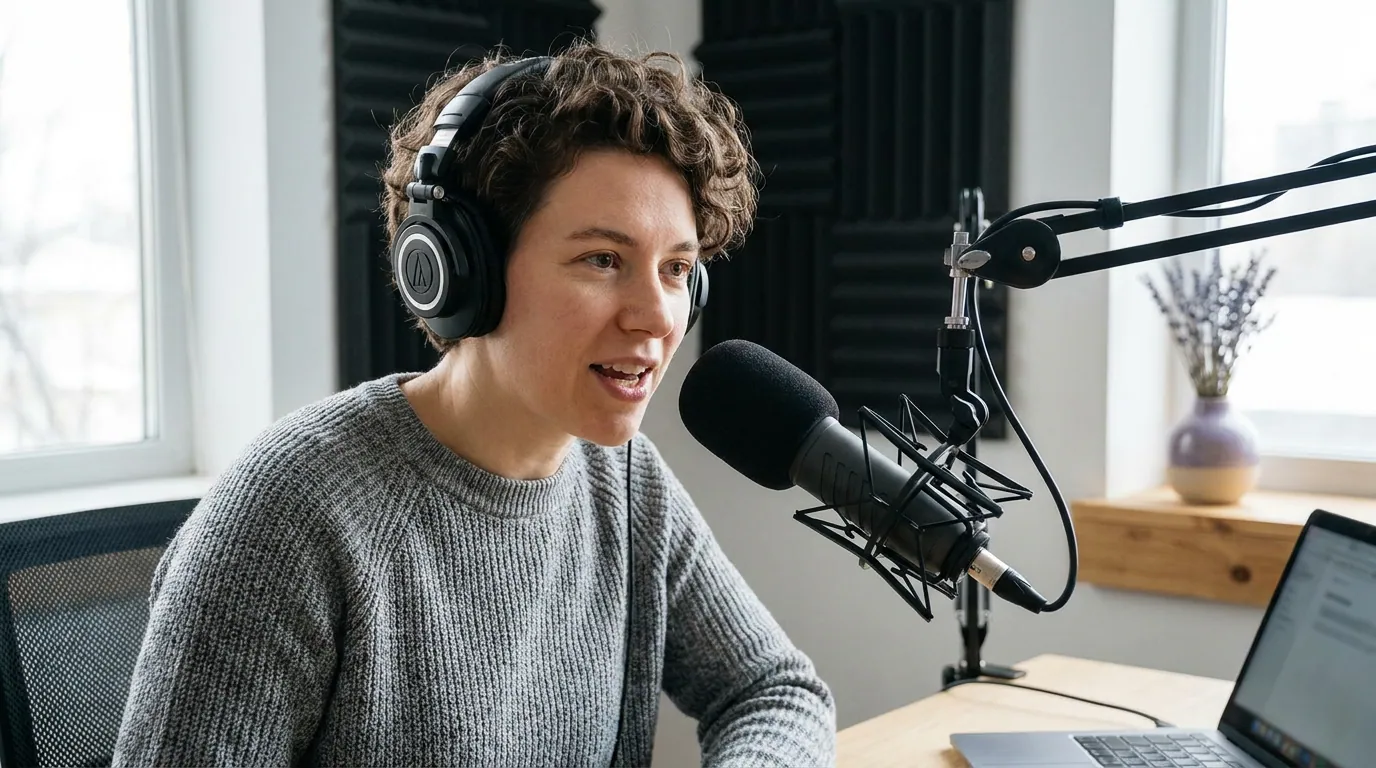
The effort-to-reward grid
Before the stages, choose your platforms by what each returns for a solo host's workload. This is the grid I use: vertical axis is discovery reward for a new, small account; horizontal axis is the ongoing effort to post natively well (right means more effort).
YouTube Shorts and TikTok sit top-left: strong discovery surfaces with low extra effort, since both are built for cold-audience reach. YouTube is now the #1 US podcast platform at 42% of monthly listeners, ahead of Spotify's 15% and Apple's 7% (Backlinko, Oct 2025), and a Short doubles as a feeder to your full episode in the same app. That dual role is why YouTube anchors almost every plan.
LinkedIn sits top-right, high reward but high effort, and only for business, career, or industry shows; its caption tone and posting rhythm differ enough to count as a separate habit. X, Facebook Reels, and Pinterest sit lower for most new shows: real reach exists, but discovery for a cold, small account is harder to earn there, so they belong in a later stage.
The three-stage rollout
The plan moves in stages, and each stage has an entry trigger, not a calendar date. You advance when you've earned it, not when a month has passed. Stalling at Stage 1 for two months is fine if you're still learning; jumping to Stage 3 with shaky output is the actual mistake.
Stage 1, The two-platform anchor
Start with YouTube Shorts plus one feed app, TikTok if your topic is broad and culture-leaning, Instagram Reels if your audience already lives on Instagram. YouTube is non-negotiable because the clip and the full episode share an ecosystem, so a Short can route a viewer straight to the long version.
Post three to five clips a week per platform from each episode. Three is the floor where you gather enough signal to learn; below it, every post is an isolated guess. Run this stage until the trigger below clears.
Stage 1 checklist:
- [] YouTube channel set up with the full episode uploaded as a video (Shorts feed off it).
- [] One feed app chosen by where your audience already is, not both.
- [] 3–5 captioned vertical clips per platform per episode, posted on a fixed weekly rhythm.
- [] Native captions on every clip; most social video is watched on mute (commonly cited at 75–85%; Verizon Media/Sharethrough reported ~75%, Digiday reported ~85% of Facebook video muted, both publisher-reported, directional).
- [] A simple log of which clips held attention past three seconds.
Trigger to advance: you've shipped your weekly quota on both platforms for four consecutive weeks without skipping, and you can name your two best-performing hook styles from your own data. If you can't do both, stay here.
Stage 2, Add the third platform
Once Stage 1 is stable, add one more, usually the other feed app you skipped (TikTok if you started on Reels, or vice versa), since clips reformat between them with little extra work. The exception: if your show is business, career, or industry, add LinkedIn instead, where talk content reaches decision-makers but needs a different, complete-thought caption style.
Do not add two at once. The whole point is to keep each new habit stable before stacking the next.
Stage 2 checklist:
- [] Third platform chosen by topic fit (feed app for broad shows, LinkedIn for B2B).
- [] Caption and length adjusted to the new platform, not a copy-paste of the old one.
- [] Posting rhythm held across all three without dropping below three clips a week on any.
- [] Cross-posting done cleanly (no visible watermark from another app, which feed algorithms can downrank).
Trigger to advance: all three platforms hit their weekly quota for four straight weeks, and you've had at least one clip clear meaningfully more views than your baseline, proof you've learned what travels.
Stage 3, Expand by reward, not reflex
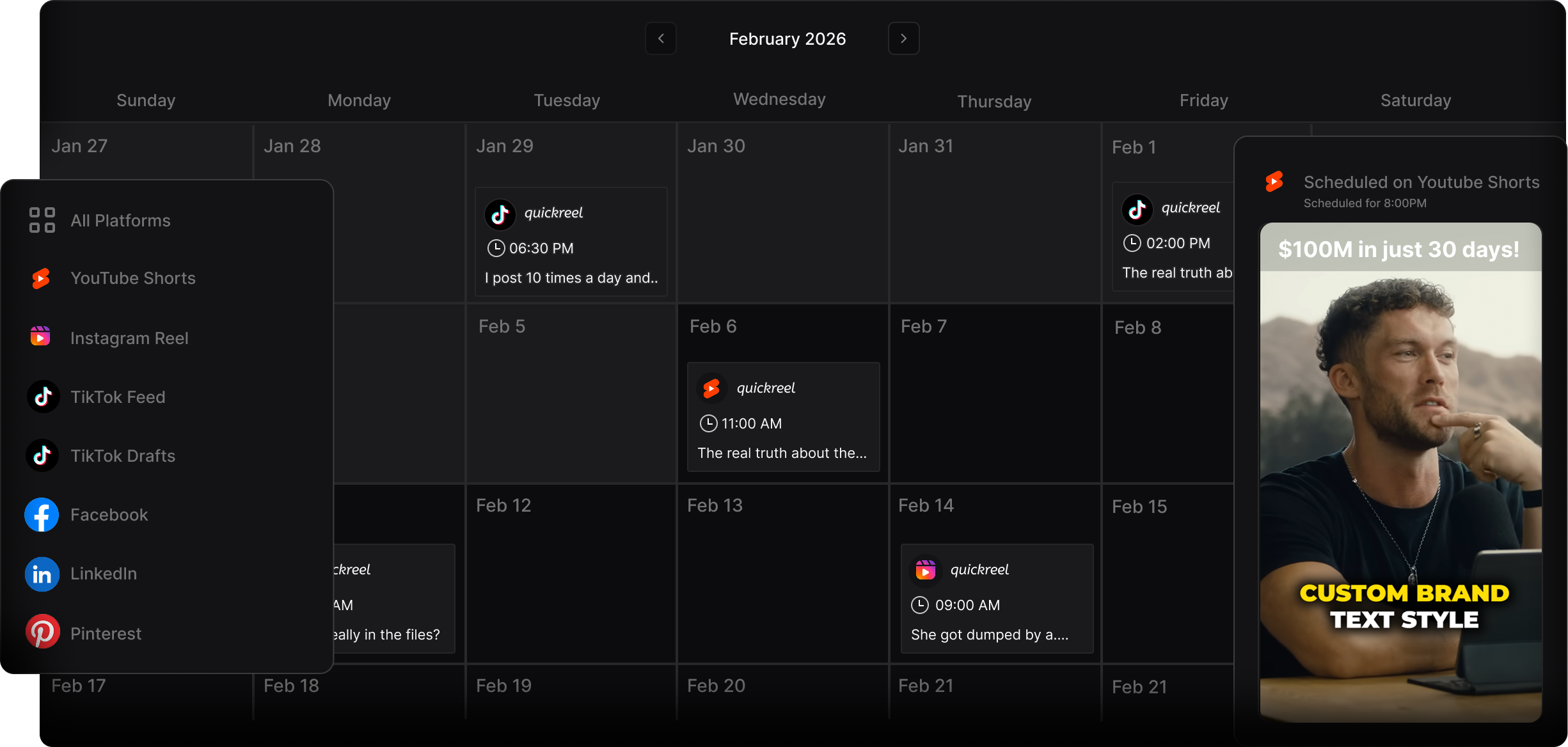
Only here do you add X, Facebook Reels, or Pinterest, and only the ones that fit your topic. This is also where a scheduler earns its keep: posting natively to five-plus platforms by hand is the workload that breaks solo hosts, so automate the push and spend your time on hooks and replies instead.
The honest caveat: more platforms is not more growth past a point. Adding a sixth feed that returns a trickle costs attention you could spend making your top two platforms better. Expand only where the reward grid says the surface is worth it for your show.
Stage 3 checklist:
- [] A scheduler set up to post one source clip to all destinations in one action.
- [] Each added platform justified by a real reason (audience present, topic fit), not FOMO.
- [] Top-two platforms still getting your best clips first; the long tail gets the rest.
- [] A monthly review that cuts any platform returning near-zero after eight weeks.

Common distribution mistakes (and the fix)
The errors that stall new shows are rarely about the clips themselves. They're about how distribution is spread.
- Launching on six platforms at once. Every account gets a thin, irregular feed, and thin feeds get throttled. Fix: two platforms, posted consistently, until the Stage 1 trigger clears.
- Treating cross-posting as "post the identical file everywhere." A clip with a TikTok-style caption underperforms on LinkedIn, and a visible watermark from another app can get a post downranked. Fix: reformat caption and length per destination, and export clean.
- Advancing on the calendar instead of the trigger. "It's been a month, time to add more" adds a platform you can't sustain. Fix: advance only on the four-week-stable-plus-data trigger.
- Ignoring YouTube because it feels like "the audio platform." It's the #1 US podcast platform at 42% (Backlinko, Oct 2025) and a Short feeds your full episode. Fix: anchor on Shorts from day one.
- Chasing views with no destination. A viral clip that points nowhere is empty engagement; views are not conversions. Fix: every clip should route somewhere, your full episode, a follow, or a link in bio.
Set it up once, reformat fast
You don't build nine workflows. You generate clips once and reformat per platform. Pick the strongest moments first, our guide on how to pick the best AI-suggested clips covers that judgment call, and how AI clip detection actually works explains why a tool surfaces what it does.
Then tune per destination using the platform habits that differ by audience: YouTube Shorts tolerates a slightly longer setup and feeds your full episode; TikTok rewards fast, native-feeling cuts; Instagram Reels wants the tightest 15–30 second version; and LinkedIn wants a complete-thought cut with a professional caption tone. One source clip, a few trims, a few captions.
FAQ
Where should I post podcast clips if I'm just starting? Two platforms: YouTube Shorts plus one feed app, TikTok for broad topics, Instagram Reels if your audience is already there. YouTube anchors because clips and your full episode share the same ecosystem. Add more only after four weeks of consistent posting on both.
How many platforms should a new podcast post clips to? Start with two and add a third only when you can keep all of them fed weekly without quality dropping. As a solo host, two platforms posted consistently beat six posted irregularly, because thin, inconsistent feeds get less reach per post.
Which platform matters most for podcast discovery? YouTube. It's the #1 US podcast platform at 42% of monthly listeners (Backlinko, Oct 2025), and a Short doubles as a feeder to your full episode in the same app, discovery and retention in one place.
How often should I post clips on each platform? Three to five clips a week per platform. Three is the floor where you collect enough data to learn what works; above seven, quality usually slips unless you have help. Hold the rhythm steady; consistency drives reach more than volume.
When is it worth adding LinkedIn? When your show is business, career, or industry-focused. LinkedIn reaches decision-makers with talk content, but it needs a complete-thought caption style different from feed apps, so treat it as its own habit added at Stage 2, not a copy-paste of your TikTok posts.