
The First-3-Seconds Hook, By Podcast Niche


A generic hook, "this blew my mind," "you won't believe this," "listen to this", underperforms a niche-matched one because it makes a promise your specific audience has already learned to scroll past. A true crime viewer wants a question with a body attached. A finance viewer wants a number that costs them money. The first line should speak the dialect of the niche, not a generic one. Below is the formula for five of them.
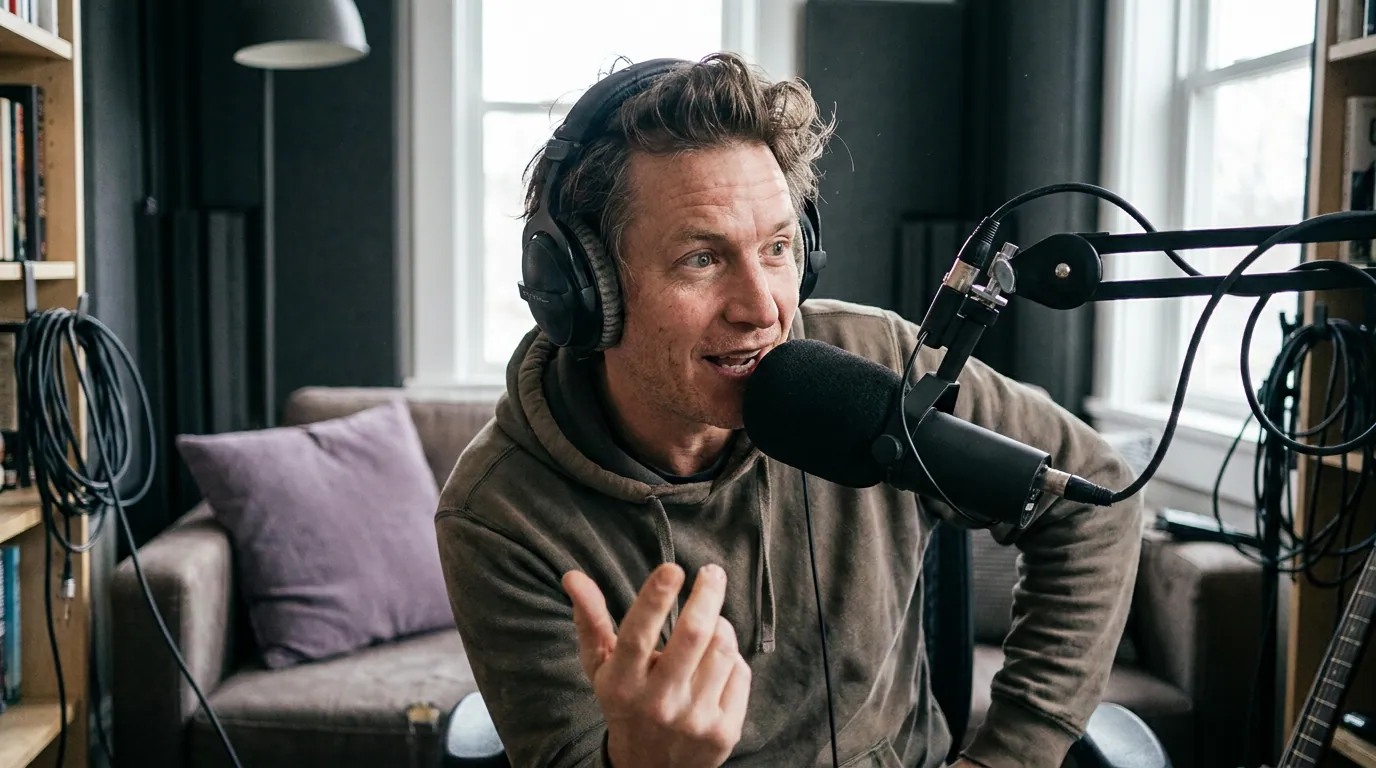
Here is the part most clip advice skips: the hook is a writing decision, not an editing one. Your AI clipper finds the moment and sets a clean entry point, but it will not write your first line in the language of true crime versus finance versus comedy. That part is yours. Once you have the per-niche formula, you can apply it in about ten seconds per clip.
Why a niche-matched hook beats a generic one
A clip's first three seconds carry almost all the scroll decision, the window where a stranger "make[s] split-second decisions about whether to continue watching" (castmagic). And most of that decision is made on text, not sound: a large share of social video is watched on mute, with one widely repeated estimate near 85% (Digiday, publisher-reported and directional, with study ranges roughly 69–85%). So your first line is the first sentence a stranger reads, in silence.
A generic hook fails because every niche has its own scroll-trained reflexes. The comedy audience has seen ten thousand "wait for it" openers. The finance audience has been burned by ten thousand "this one trick" promises. What reads as a genuine signal in one niche reads as spam in another. Comedy and True Crime sit among the largest US podcast genres, with Comedy at #1 (Statista), which means in those niches your clip is competing against the most hook-literate, most easily bored viewers on the platform. A line that works has to sound native to them.
When clips are your main discovery channel, and for a video show they often drive 20–40% of new audience (Podcast Studio Glasgow, a single studio's client data, so directional), the opening line is where most of that audience is won or lost.
The four levers every hook pulls
Before the per-niche formulas, the model underneath them. Every working hook pulls some combination of four levers. The reason hooks are niche-specific is that each niche's audience responds to a different pair of these first.
Curiosity opens a loop, a question, a missing piece, a "nobody talks about." Tension promises that something is about to go wrong or be revealed. Stakes make the viewer the subject: this affects your money, your body, your time. Specificity is the proof layer, a real date, a real number, a real name, that stops the line from sounding like every other empty promise. Generic hooks pull only the first two, weakly, and pull no specificity at all. That is exactly why they read as spam.
The cross-niche hook library
Here is the map: five niches, the lever pair each one leads with, and the opening-line formula that pairing produces. Read it as a swap table, find your niche, take the formula, fill the brackets with the actual moment.
True crime: lead with the detail, hold the loop open
True crime hooks pull tension and specificity. The audience is trained on the structure of a mystery, so the opening line should hand them one concrete, slightly off detail and refuse to resolve it. Specificity is what separates a real case from a creepypasta, a date, a time, an object.
- Generic: "This case is so disturbing."
- Niche-matched: "The neighbor said the lights were on at 2 a.m. The family had been gone for three days."
The second line gives a stranger nothing to argue with and everything to wonder about. Note what it does not do: it does not front-load the conclusion. True crime is the one niche where leading with the payoff usually hurts, the tension lives in the gap. For where to actually end one of these clips, see where to end a true crime clip for max suspense, and for which moments are worth clipping at all, which true crime moments actually clip well.
Finance: lead with the number that costs the viewer money
Finance hooks pull stakes and specificity. This audience has been burned by vague "build wealth" promises, so curiosity alone reads as a scam. The line that works puts a real dollar figure on something the viewer is currently doing wrong.
- Generic: "Here's a money tip that changed my life."
- Niche-matched: "Leaving your 401(k) in the default fund is costing you about $40,000 over twenty years. Here's the math."
The number is the hook, and "here's the math" promises proof, which is exactly the curiosity a skeptical finance viewer wants. The deeper move for B2B and money shows, finding the one defensible, screenshot-worthy claim in an episode, is covered in turning a business podcast into shareable clips.
Comedy: lead flat, drop the viewer mid-action
Comedy hooks pull curiosity and tension, but in an inverted way, the best comedy open is often anti-hook. A line that announces "this is so funny" kills the laugh before it lands. The working move is to start on a flat, slightly absurd setup line mid-action, so the viewer leans in to figure out what is happening.
- Generic: "This made me laugh so hard."
- Niche-matched: "So I'm explaining to the cop why there's a goat in my car, "
The cut starts mid-sentence, on a premise the brain cannot resist completing. The risk in comedy is the opposite of finance: timing, not stakes. Cut too aggressively and you amputate the rhythm the joke needs. The full treatment of where to place the cut so the punchline survives is in clipping comedy podcasts without killing the joke.
Fitness: lead with the mistake the viewer is making
Fitness hooks pull stakes and curiosity, framed as correction. This audience is looking for what they are doing wrong, so the highest-performing open names a common mistake and dangles the fix.
- Generic: "Try this workout tip."
- Niche-matched: "If your knees cave in on a squat, it's almost never your knees. It's this."
"It's this" is the open loop; "knees cave in on a squat" is the specific, recognizable problem that makes the viewer feel seen. Keep the demonstration in frame, fitness is one of the few niches where the visual is part of the hook, so vertical reframing on the speaker matters more here than elsewhere.
Interview: lead with the guest's most exposed sentence
Interview and chat shows pull curiosity and tension, and the source material is different: you are not writing a hook, you are finding the one already in the transcript. The best interview hook is the single most exposed thing the guest said, the admission, the contrarian claim, the moment they almost talked themselves out of saying it.
- Generic: "Such a great conversation with our guest this week."
- Niche-matched: "I got fired from that job, and honestly it was the right call."
Lead with the exposed line, then let the context follow as explanation. This is the one niche where front-loading the payoff almost always wins, because the draw is the person, not a plot.
Common mistakes when matching a hook to a niche
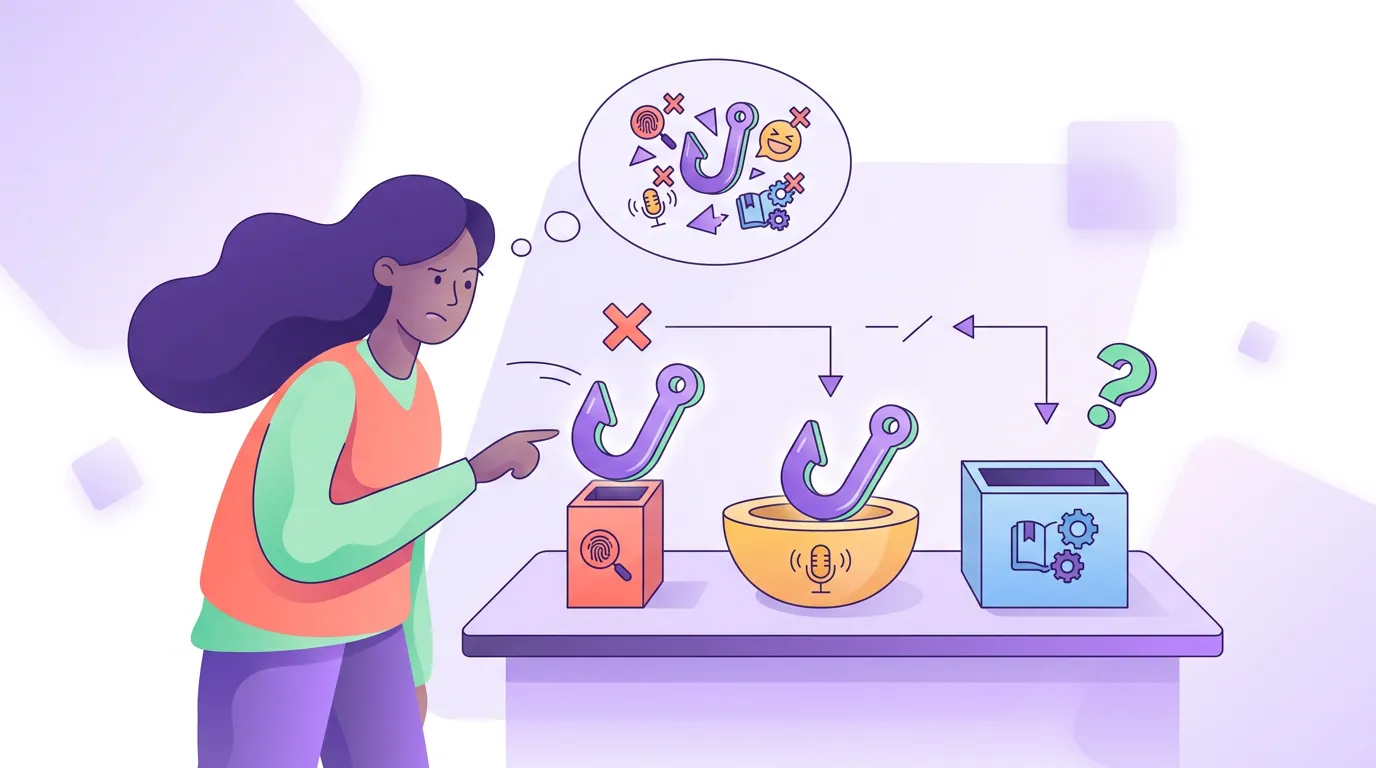
Using the generic hook because the AI surfaced it. Detection finds the moment and a clean entry point; it does not write your first line in the dialect of your genre. The clipper's opening is a starting point, not the final hook, see how AI clip detection actually works for what it does and does not decide.
Front-loading the payoff in true crime. The re-order move that helps insight and interview clips actively spoils suspense clips. If your niche's draw is a reveal, hold it. The general re-order technique, and exactly when not to use it, is in how AI picks your clip's first three seconds.
Stacking three levers in one line. A hook that tries to be curious and high-stakes and hyper-specific and tense reads as a run-on. Lead with your niche's pair. Let the rest of the clip carry the others.
Borrowing another niche's reflex. A comedy-style flat-setup open on a finance clip reads as unserious; a finance-style dollar figure on a comedy clip kills the laugh. The library is not interchangeable, that is the entire point.
Writing the hook and never checking it muted. Read your first caption card with the sound off. If it does not work in silence, it does not work, most of your audience never hears it. The keep-or-cut rubric that this sits on top of is in how to pick the best AI-suggested clips.
FAQ
What is the best hook for a podcast clip? There is no single best hook, the best one matches your niche. True crime leads with a specific, unresolved detail; finance leads with a dollar figure the viewer is losing; comedy leads with a flat mid-action setup; fitness leads with a common mistake; interviews lead with the guest's most exposed sentence. Match the formula to the genre.
Why do generic hooks like "you won't believe this" stop working? Because every niche audience has seen them thousands of times and learned to scroll past. A generic hook makes a vague promise with no specificity, which reads as spam to a hook-literate viewer. A niche-matched hook uses a concrete detail or number that proves the moment is real.
Should I write the hook or let the AI clipper pick it? The clipper finds the moment and sets a clean opening, but it keeps your spoken order and will not rewrite the first line in your genre's dialect. Use the AI to find the region, then write or re-order the opening line yourself using the per-niche formula.
How long does the hook actually have? About three seconds. On muted feeds that means your first caption card, because most social video is watched without sound, estimates run roughly 69–85% (Digiday). Viewers "make split-second decisions about whether to continue watching" (castmagic), so plan as if the scroll decision happens before second four.
Does the niche formula change by platform? The lever pair stays the same across Shorts, Reels, and TikTok, what changes is length and pacing, not which lever your audience responds to first. A finance clip still leads with stakes and a number whether it runs 20 seconds or 60.