
Which True Crime Moments Actually Clip Well

Five kinds of true crime moments clip well: the reveal, the unanswered question, the timeline gap, the chilling quote, and the solve-it tease. The skill isn't finding them, it's knowing where to cut each so the clip pays off the curiosity without giving away the episode. Cut a reveal one beat before the answer, not after, and a 40-second clip can send thousands of people to the full thing.
True crime is one of the most clippable genres there is, because its entire engine is withheld information. A comedy clip lives or dies on a single punchline; a business clip needs a complete idea to be useful. A true crime clip only has to make one promise, something is coming, and then stop just short of delivering it. That gap between question and answer is the whole product. Most weak true crime clips fail because they close the gap on screen instead of leaving it open in the viewer's head.
Why true crime clips are worth the effort
True crime sits in the US top-five podcast genres by audience, alongside Comedy, News, Society & Culture, and Sports (Statista; ranking varies by survey). That demand is the reason the niche is worth clipping deliberately rather than spraying ten random cuts and hoping. The audience is already primed for suspense; your job is to hand them a 40-second hit of it.
The distribution math backs the effort. Clips drive an estimated 20–40% of new-audience acquisition for video shows and can raise discovery reach 2–5× (Podcast Studio Glasgow; single-studio figures, treat as directional). And the feed is crowding fast, as short-form clipping turns into a standard distribution channel and more accounts flood social platforms with podcast and interview snippets. When clips this plentiful are competing for the same scroll, a clip that resolves its own mystery is one a viewer passes. A clip that doesn't is one they finish.
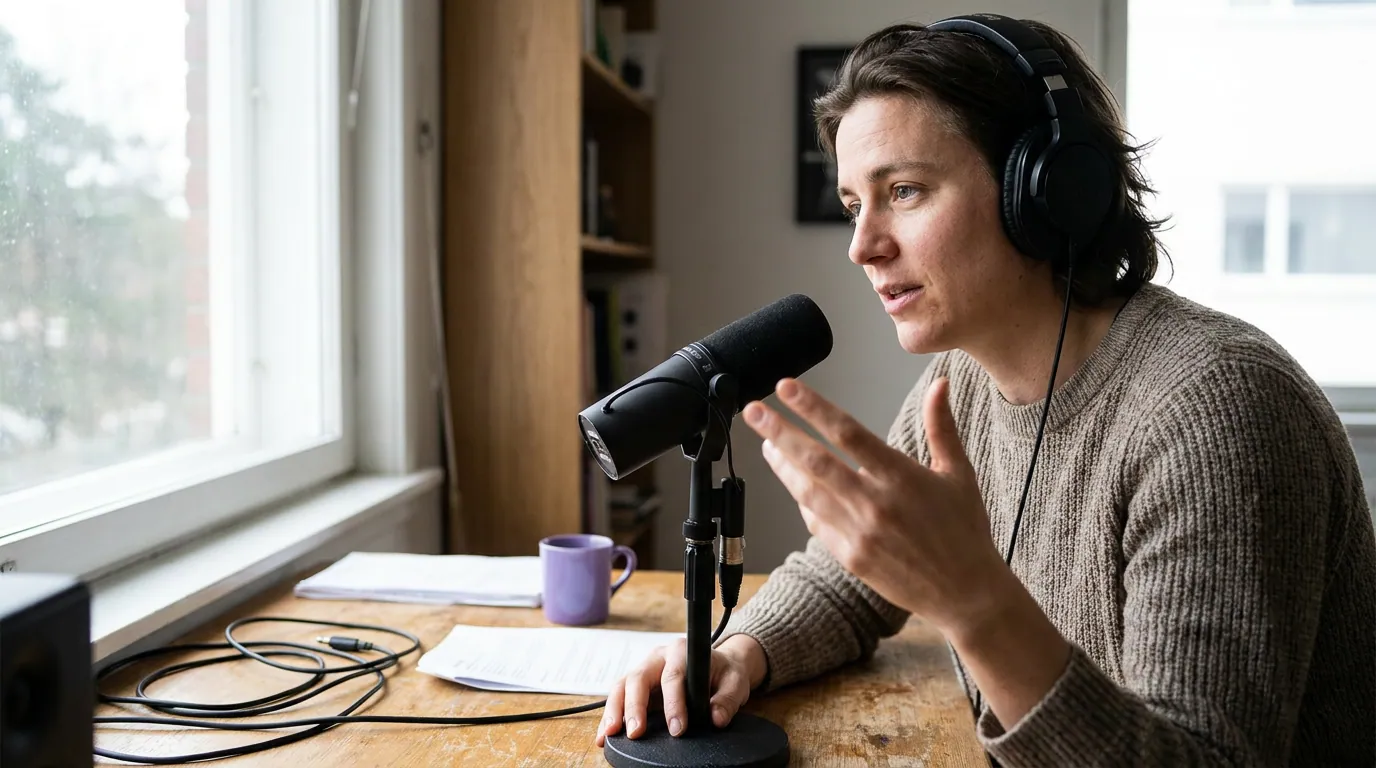
Which true crime moments actually clip well?
Five moment types reliably retain: the reveal, the unanswered question, the timeline gap, the chilling quote, and the solve-it tease. Each works for a different reason, and each has a different cut point, get the cut wrong and even the best moment falls flat. Treat the list below as a sorting hat: when you scan an episode, you're not looking for "good bits," you're looking for which of these five you've got.
1. The reveal, cut one beat before the answer
The reveal is the moment a single fact reframes everything the listener thought they knew: the alibi was fake, the witness was the killer, the body was never the right one. It clips well because the reframe is inherently dramatic. It clips badly when you include the reframe, because then the viewer has the payoff and no reason to go find the episode.
The cut rule: end the clip on the setup to the reveal, one beat before the answer lands. "And when they ran the DNA, it didn't match the suspect, it matched, " and stop. The host's intake of breath, the pause before the name, the "you're not going to believe this", that's your last frame. The viewer has to play the episode to hear what the DNA matched. Where to end a true crime clip for maximum suspense goes deeper on finding that exact frame, because it's the single decision that decides whether the clip works.
2. The unanswered question, cut on the question, drop the theory
Some of the strongest true crime moments are questions nobody can answer: why did he drive back to the house, how did she vanish from a locked room, who made the 2 a.m. call. The brain treats an open question as an itch. A clip that poses one and then walks away is far stickier than one that resolves it.
The cut rule: end on the question itself and cut the host's theory entirely, even when the theory is good. The instinct is to include "and here's what I think happened" because it feels like value. It isn't, it closes the loop. Let the question be the last thing the viewer hears, and let the comments fill with theories. That comment activity is also raw signal the algorithm rewards.
3. The timeline gap, end on the unaccounted-for window
A timeline gap is the missing chunk of time that no one can explain: the forty minutes between the last sighting and the 911 call, the day the suspect "can't remember." Gaps feel sinister precisely because they're empty, and a clip can hand the viewer that exact unease in under a minute.
The cut rule: walk the viewer up to the edge of the gap and stop there. Lay out the known timeline as a tight sequence, "last seen at 9:14, phone goes dark at 9:31, found at 11:50", and end on the silence in between. Don't fill the gap with speculation in the clip. The unfilled window is the hook, and naming the missing minutes out loud (and in the captions, since most social video is watched on mute) is what makes it land.
4. The chilling quote, cut the line clean, no spillover
Sometimes one sentence carries the whole episode's dread: a confession, a 911 transcript line, a casual remark that lands like a threat in hindsight. These are the most repostable true crime clips because they're a single, screenshot-able beat, and they're the easiest to ruin by leaving the setup attached.
The cut rule: isolate the line. Trim the throat-clearing before it and the host's reaction after it. A great chilling quote needs maybe one sentence of context, who said it, when, and then the line itself, delivered clean, held for a beat of silence. Put the quote in the caption verbatim too. The dread comes from the words sitting bare on screen, not from the host explaining why they're disturbing.
5. The solve-it tease, cut on the open clue, before the take
The solve-it tease hands the viewer a piece of evidence and an implicit invitation: you figure it out. A mismatched detail, an odd piece of testimony, a clue the investigators missed. It clips well because it turns a passive viewer into an active one, and active viewers comment, share, and come back.
The cut rule: present the clue and stop before the host gives their interpretation. "The neighbor said the car was blue. Every other witness said it was white. The report only ever listed white." Cut. Don't say what it means. The viewer's brain immediately starts working the problem, and the place they work it is your comment section and the full episode. This is the one moment type where ending on ambiguity isn't a risk, it's the entire mechanism.
The cut point is the whole game
Across all five types, one rule holds: cut where curiosity peaks, not where it resolves. A true crime clip is a trailer, not a summary. Its single job is to open a loop and refuse to close it on screen. Every cut decision should be tested against one question, does the viewer still need the episode after this clip ends? If the answer is no, you cut too late.
This is also why true crime rewards a human pass more than most genres. An AI clipper is excellent at finding the high-tension stretch, the spikes in emotion and emphasis that mark a reveal or a confession, but it doesn't reliably know to stop one beat before the answer. It tends to include the resolution because the resolution is where the energy is. How AI clip detection actually works explains why: the model scores intensity, and the answer is usually the most intense second in the moment. That's exactly the second you want to leave out.

Common mistakes clipping true crime
- Including the reveal. The single most common error. The clip shows the twist, so the viewer's curiosity is satisfied and they scroll on. Always end on the setup, never the payoff.
- Adding the host's theory to an open question. It feels generous; it kills the hook. An unanswered question is sticky because it's unanswered. Let the comments theorize.
- Leaving setup attached to a chilling quote. A bare line lands; a line with thirty seconds of preamble doesn't. Trim hard to the sentence that carries the dread.
- Skipping captions. True crime details, names, dates, the timeline, are precise, and most social video is watched on mute. A misread caption or a missing one breaks a moment built on specifics. Always proof the names. The same review discipline applies to picking the best AI-suggested clips before any of them go out.
- Clipping the gore instead of the mystery. Shock gets a flinch, not a follow. The retention engine in true crime is unresolved information, not graphic detail, and the graphic stuff gets clips suppressed on most platforms anyway.
Tools: finding the moment vs setting the cut
Any AI clipper will surface true crime's high-tension stretches, they're emotionally loud, which is exactly what detection models score on. Where tools differ is how easily you can override the cut point after the fact, because the model will reliably cut one beat too late on a reveal. You want generation, an editable timeline where you can drag the end frame yourself, accurate captions for the names and dates, and scheduling, in one loop, so trimming the suspense point isn't an export-reimport chore.
QuickReel keeps generation, a frame-level timeline, manual trim, captioning, and multi-platform scheduling in a single pass, which matters here because the human cut-point edit is non-optional in this genre. Opus Clip, Vizard, and Klap all surface strong candidate moments and expose a manual editor too; the five-type taxonomy and the cut rules above apply to any of their output unchanged. The honest reality across all of them: most modern tools detect roughly the same moments, so the win is how few clicks it takes to move the cut from where the model put it to where the suspense actually breaks. The taxonomy travels, the same withhold-the-answer logic works for clipping a comedy podcast without killing the punchline and for turning a business podcast into shareable clips, even though the beat you protect is different in each.