
What Great Interview Hosts Do That Others Don't


Great interview hosts do three things you can actually hear, episode after episode: they arrive with research the guest can tell is real, they chase follow-ups instead of marching through a question list, and they leave silence where a weaker host would fill it. Everything else, the warmth, the timing, the famous guest, sits on top of those three habits. Learn to hear them and you can study any interviewer like a craftsperson, not a fan.
Treat this as a diagnostic, not a ranking. Below is a data cut on how seven of the most-studied conversation shows actually run, episode length, how often the guest changes, what the prep sounds like, plus a three-part audit you can run on any episode to grade the host's craft. Want the technique packaged as practice drills? The companion piece on the questioning craft behind the best interview podcasts breaks the moves into a deck you can rehearse. This page teaches you to hear them first.
What separates the best interview podcast hosts from the rest?
The best interview hosts separate themselves on listening, not talking. They prepare deeply enough to abandon their notes, they treat each answer as the source of the next question, and they tolerate silence long enough for the guest to say the unplanned thing. Charisma is a multiplier, but those three habits are the engine, and all three are audible to anyone paying attention.
Most new hosts copy the wrong things. They assume the gap between them and a Terry Gross or a Marc Maron is talent or access, so they mimic the surface: a similar intro, a longer episode, a bigger guest. The real gap is procedural. A great host has done so much homework that they can stop performing it and just react. A weak host clutches the question list because it is the only thing keeping the conversation moving. You can hear the difference inside the first ten minutes.
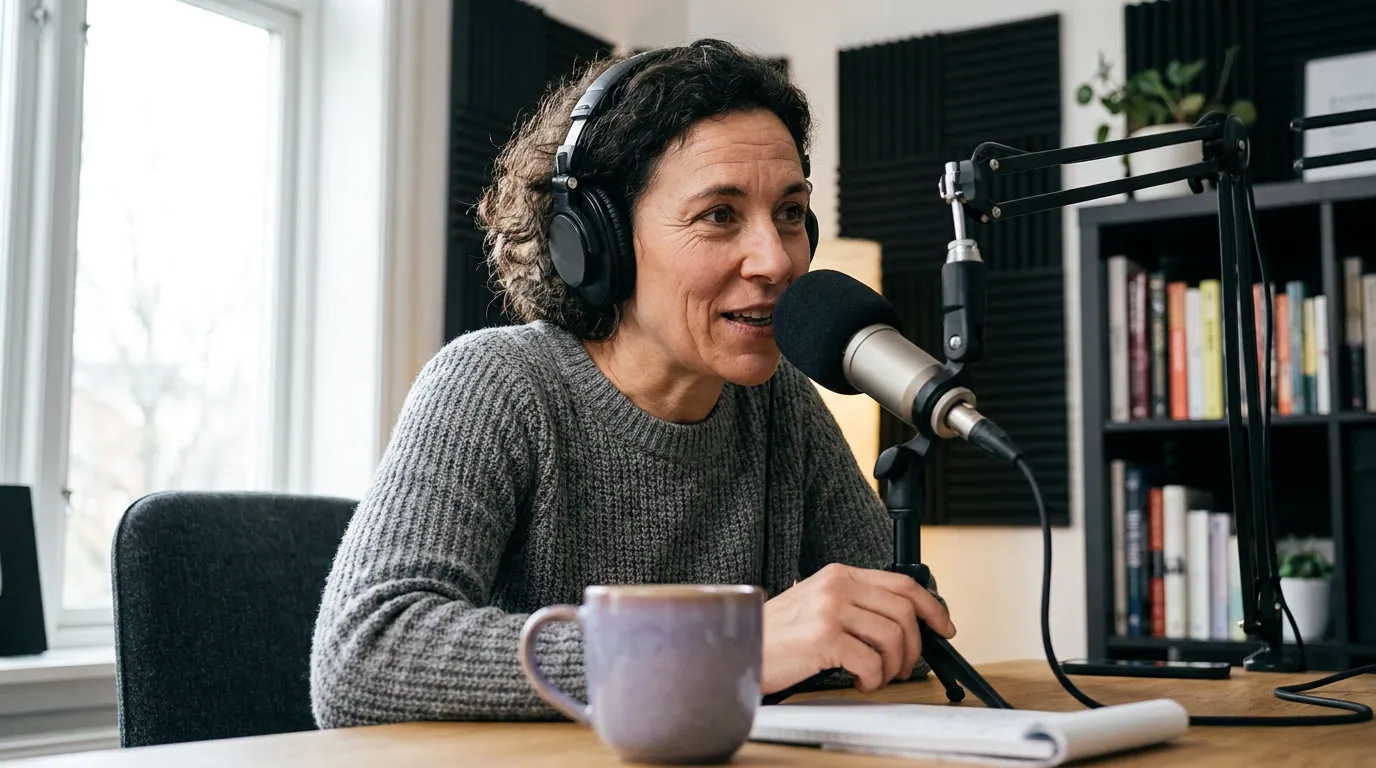
The interview shows worth studying, and the format math behind them
These seven shows are worth studying because each makes one of the three tells obvious, The Joe Rogan Experience, WTF with Marc Maron, The Tim Ferriss Show, Fresh Air, Call Her Daddy, Good Hang with Amy Poehler, and SmartLess. They are not ranked here; several happen to rank high by reach, with Joe Rogan, Call Her Daddy, and SmartLess all sitting in the Q1 2026 US top five (Edison Podcast Metrics, Q1 2026). The full episode catalogs live on those directory pages; the craft read lives here.
The chart below cuts the set by two numbers that shape the craft: episode length and how often the guest changes (a proxy for how deep any single conversation can go). A show that runs one guest for two-plus hours can do things a 45-minute weekly cannot, and the reverse holds too. Length and turnover are not quality. They are constraints, and good hosts work inside theirs.
Read the table this way: length sets the ceiling on depth, and turnover sets the floor on prep. A weekly show with a fresh guest every episode forces the host to do real homework every single week, there is no coasting on a relationship built over multiple appearances.
| Show | Typical length · turnover | The tell it teaches |
|---|---|---|
| Fresh Air (Terry Gross) | ~45 min · new guest each time | Research depth, questions only a close reader could ask |
| The Tim Ferriss Show | ~90–150 min · new guest | The specific-example pull (a research move you can hear) |
| WTF with Marc Maron | ~60–120 min · new guest | Real silence, the pause that gets the confession |
| The Joe Rogan Experience | ~2h39m avg · new guest | Long-leash follow-ups; no clock killing a thread |
| Call Her Daddy | ~60 min · new guest | Direct follow-ups that produce clippable exchanges |
| Good Hang (Amy Poehler) | ~45 min · new guest | Pre-interview prep you can literally hear |
| SmartLess | ~50–70 min · 1 mystery guest, 3 hosts | Distributed listening, three threads from one answer |
A note on the data: WTF with Marc Maron ended in October 2025 after 1,686 episodes (Wikipedia), but the back catalog is still the best masterclass in waiting out a silence, so it stays on the study list. Episode lengths are typical ranges pulled from each show's public catalog and reporting; they drift episode to episode.
Tell 1, research depth you can actually hear
Deep prep is audible because it changes the questions. A prepared host asks something the guest has obviously been asked before; a deeply prepared host asks the question that makes the guest pause and say "huh, nobody's asked me that." You do not need to see the host's notes to know which one did the reading. The guest's reaction tells you.
The sharpest example running right now is the structural prep on Good Hang with Amy Poehler. Before each main interview, Poehler does a short "flash interview" over Zoom with someone who personally knows the guest, and folds their questions into the conversation (Wikipedia). That is prep you can hear: the question that could only come from a friend, dropped into a celebrity interview. The format is doing real work.
Fresh Air is the older standard. Terry Gross reads or watches the full body of work, then asks the one specific question the press tour skipped, and drops her notes the instant the answer opens a door. The steal for your show: do enough homework that you can afford to go off-script. The point of preparation is not to follow it, it is to earn the freedom to abandon it. If you run pre-interview calls, the pre-interview call is where most of this depth gets built before you ever hit record.

Tell 2, follow-ups instead of a question list
The second tell is where the next question comes from. With a great host, it comes from the answer you just heard. With a weak host, it comes from the next line on a list, regardless of what the guest said. The conversation either bends toward the most interesting thread or marches past it. You can hear which, every single exchange.
A rough, audible proxy: questions per hour. A host reading a list tends to fire a lot of discrete questions, because each answer ends and the next card begins. A follow-up-led host asks fewer top-level questions and spends the saved time digging into each one. It is not a law, but if a 60-minute episode contains 40 distinct questions, you are usually hearing a list; if it contains 12, you are usually hearing someone follow threads.
The Tim Ferriss Show is the cleanest model here because the follow-up has a signature shape: Ferriss refuses abstractions. A guest says "I focus on the fundamentals," and he asks for the exact morning, the exact number, the exact failure. That is a follow-up and a research move at once, it pulls a slogan down into a scene. The Joe Rogan Experience runs the same instinct at a different scale; with no clock, a single thread can run for forty minutes (JRE averages about 2h39m per episode, per JRE Library). You will not have his runway, but the principle survives the cut to your length: let one good thread run instead of covering ten shallow ones. The mechanics of writing those threads live in how to ask good podcast interview questions.
Tell 3, the silence the best hosts protect
The third tell is the rarest because it is the hardest: great hosts leave silence where almost everyone else jumps in. When an answer trails off, a weak host rescues the gap with a new question. A great host waits. Three uncomfortable seconds later, the guest fills the silence with the caveat, the real reason, the part that did not make the press kit.
Marc Maron built a career on this. WTF works because Maron will ask, get a guarded answer, and simply stop, and the guest, unable to sit in the pause, gives the honest version. The silence does the work the next question would have ruined. This is the move that is almost impossible to fake, because doing nothing on tape feels like failing, and most hosts cannot stand it. The discipline behind it is its own skill; the deeper mechanics of the deliberate pause are in the power of silence in podcast delivery.
There is a co-hosted variant, too. SmartLess runs three hosts and one mystery guest, which manufactures follow-ups: each host hears a different thread in the same answer, so the silence one host leaves gets filled by another's curiosity rather than a script. If you co-host, that is the steal, assign someone to listen for the thing the lead host missed, and let the gaps be productive instead of panicked.
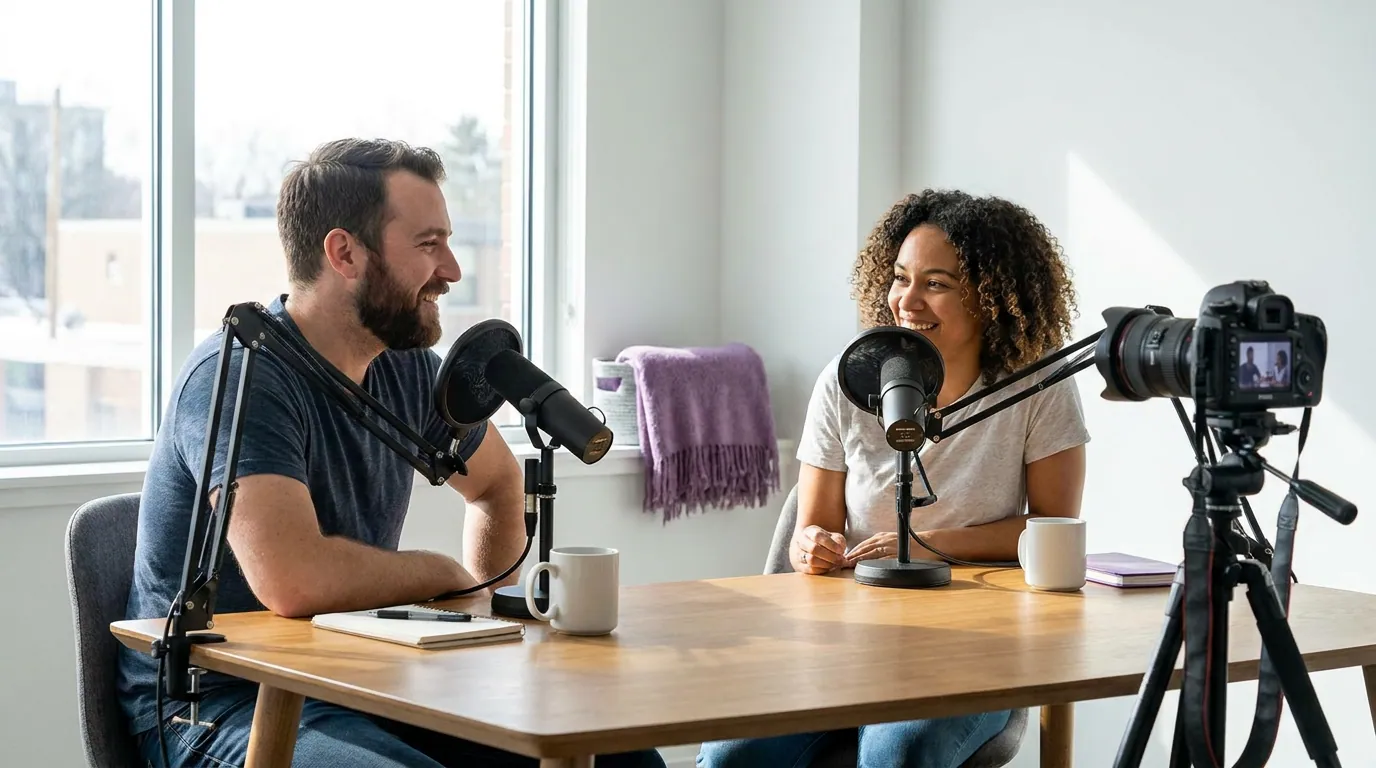
The prep-signals audit: grade any interview in ten minutes
Run this on the next episode you admire, and then on your own. It turns "that host is great" into "here is exactly what they did." Listen to the first ten minutes and answer five questions:
- Did the host ask anything the guest reacted to as new? A "good question" or a pause from the guest means real prep. A smooth, rehearsed answer means the question was a soft one.
- Where did the second question come from? If it built on the first answer, that is a follow-up. If it ignored the answer entirely, that is a list.
- Count the questions. Roughly how many distinct top-level questions in ten minutes? Multiply by six. Over ~40/hour usually signals a list; under ~15 usually signals threads.
- Was there a real pause? Find one moment where the host let silence sit for two-plus seconds. If you cannot find one, the host is rescuing every gap.
- What was the most honest thing the guest said, and what created it? Trace it back. It was almost always a follow-up or a silence, not a prepared question.
Score one point per tell present. Most competent shows hit two of three. The ones you remember hit all three, consistently. Do the same audit on your own last episode and you will find your weakest tell fast, most new hosts lose on silence first, follow-ups second, and prep last.
Why the unplanned moment is also your discovery engine
These three tells are not only how you make a better episode, they are how new listeners find you at all. The moment a follow-up or a silence produces, the candid, unrehearsed thing, is almost always the moment that travels as a clip. And clips now drive discovery: 57% of listeners rely on social media for podcast recommendations, the first time that surpassed friends and family (InsideRadio, 2025).
It is no accident that the top interview shows film their episodes. Video is the format that travels, and YouTube is now the #1 US podcast platform at 42% of weekly listeners, ahead of Spotify at 15% and Apple at 7% (Backlinko, citing Cumulus Media, Oct 2025). When you nail a follow-up that earns a real answer, that 30-to-60-second exchange is the clip. The craft tell and the growth lever are the same skill aimed two directions: ask the question that gets the moment, then put the moment where strangers scroll. Knowing which exchange to cut is its own discipline, see how to pick the moment that travels. And if you want the wider pattern behind the biggest US shows, what the top US podcasts have in common covers the production habits these interview shows share with the rest of the chart.
FAQ
What makes a podcast interviewer great rather than just competent? Three audible habits: research deep enough to ask questions the guest reacts to as new, follow-ups that come from the last answer instead of a question list, and the willingness to let silence sit until the guest fills it. Competent hosts usually do one or two; the memorable ones do all three consistently.
Which interview podcast hosts should a new host study? Terry Gross (Fresh Air) for research depth, Marc Maron (WTF) for using silence, Tim Ferriss for the specific-example follow-up, and Amy Poehler (Good Hang) for audible pre-interview prep. Several rank high by reach, Joe Rogan, Call Her Daddy, and SmartLess all sit in Edison's Q1 2026 US top five (Edison, Q1 2026), but study the technique, not the download count.
Does episode length make an interview better? No. Length is a constraint, not a quality. A two-hour show like The Joe Rogan Experience (about 2h39m average, per JRE Library) can chase one thread for forty minutes; a 45-minute show like Good Hang has to be tighter. Both can be excellent. Pick the length your format and your stamina can sustain, then use the three tells within it.
How can I tell if a host actually prepared? Listen to the guest's reactions. Real prep produces questions the guest pauses on or calls a good question, plus details only a close reader of their work would know. Generic, smooth answers usually mean the questions were soft. Prep is audible in the guest's response, not the host's confidence.
How do I get more honest answers as an interviewer? Mostly by waiting. After an answer trails off, stop talking for two to three seconds instead of asking the next question, the guest tends to fill the gap with the real version. Gentle pushback helps too: disagree warmly with the framing so they defend a genuine position rather than a rehearsed line.