
How to Use Pauses to Sound More Authoritative


To sound more authoritative on a podcast, put a deliberate one-second pause in four specific places: right before your key point, right after the host's question, in the spot where you'd normally say "um," and after any number or claim you want to land. Silence reads as control. The reason most guests rush is that a pause feels far longer to the person speaking than to anyone listening.
Authority on mic is mostly tempo. The people who sound like they know what they're talking about are not faster or smoother than you, they are more comfortable letting a sentence land before they start the next one. That comfort with silence is the entire trick, and it's learnable because it's a placement decision, not a personality trait.
The catch is that silence is the one delivery tool that feels worse the better you're doing it. Your nervous system reads a two-second gap as a failure in real time, even when the recording proves it was the strongest moment in the answer. This guide gives you the four places to put a pause on purpose, the data on why it feels so much longer to you, and a way to practice it that actually sticks.
Why does pausing make you sound more authoritative?
A pause signals that you choose your words rather than spill them. When you let a thought land for a beat instead of stapling the next sentence onto it, the listener registers what you said and you get a moment to aim what comes next. Rushing reads as nervousness. Stillness reads as conviction.
There's a practical reason too, specific to podcasts. Interviews get edited and clipped, and a clip is now the main way people find shows: 57% of listeners rely on social media for podcast recommendations, the first time it has surpassed friends and family (InsideRadio, 2025). A clean pause gives an editor a cut point and gives a clip room to breathe. A wall of unbroken, breathless talk gives them nothing to work with, and clips drive a real share of a show's new audience (Podcast Studio Glasgow).
The goal is not to talk slowly. It's to stop treating silence as an emergency.
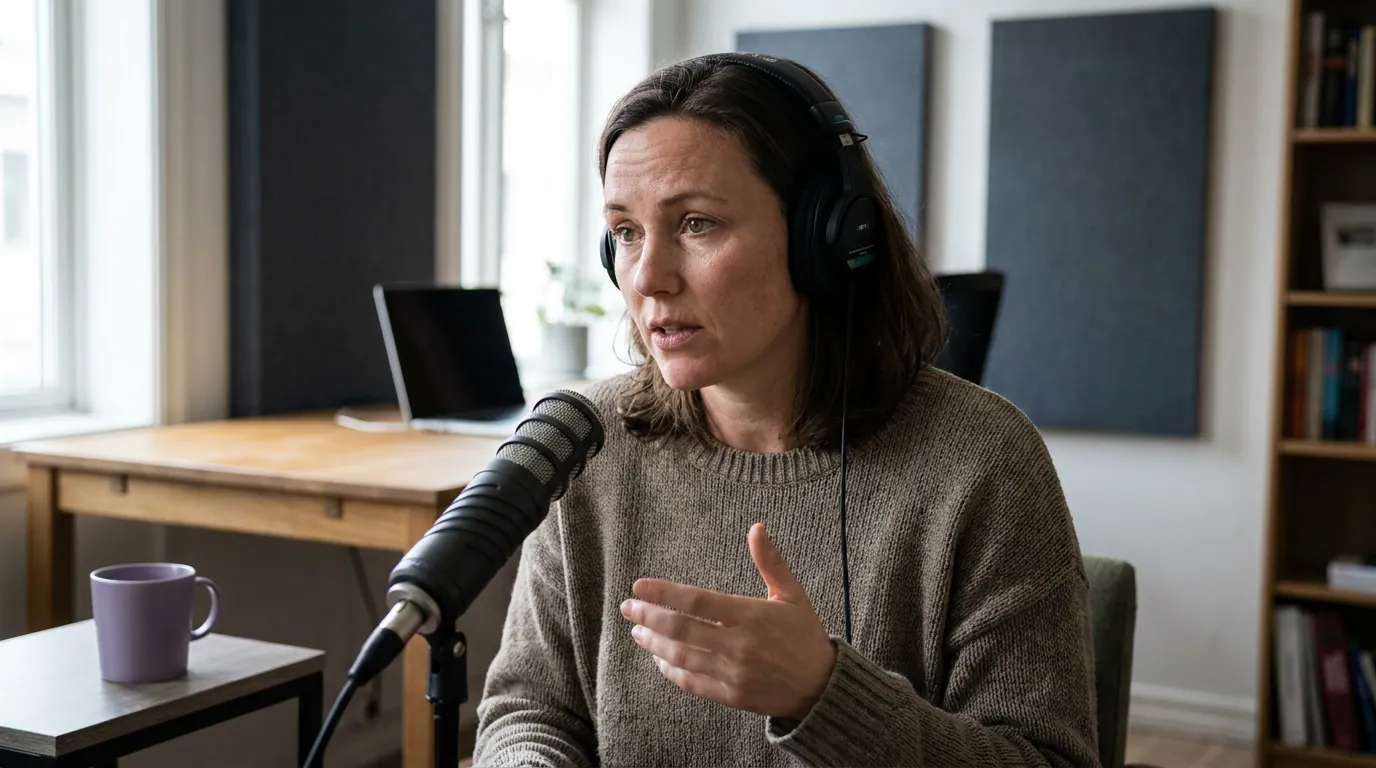
The perception gap: why a pause feels so much longer to you
Here is the single most useful thing to understand before you practice anything. The speaker and the listener experience silence on completely different clocks. To you, mid-answer, a one-second pause feels like the room has gone wrong and everyone is waiting. To the listener, that same second is a comfortable beat, often they don't notice it as a pause at all.
I can't hand you a peer-reviewed number on the exact multiplier, so I won't pretend to, treat the chart as a coaching illustration, not a study. But the direction is consistent across every guest I've coached: when people play back the answer they were sure they "froze" on, the pause is almost always under two seconds and sounds fine. The freeze was internal. The audio is calm.
Once you believe that, you stop fighting silence. You're no longer enduring a pause; you're using one. That belief shift does more than any breathing trick, because it removes the panic that makes you fill the gap with "um."
The four places to put a pause on purpose
Don't sprinkle pauses randomly, that just sounds halting. Put them in four specific, high-value spots. This is the framework I drill with guests, and it works because each spot does a different job.
1. Before the point, the setup pause
The most powerful pause goes immediately before the thing you most want remembered. You build a little tension, stop, and then deliver. "We tried everything for two years, and the thing that finally moved the needle was, [pause], answering customer emails myself." The silence is a spotlight. It tells the listener: the next words matter.
This is the placement that separates a guest who sounds like an expert from one who sounds like a Wikipedia summary read aloud. Mark the one sentence in each answer you most want to land, and put a beat in front of it.
2. After a question, the thinking pause
When the host finishes asking, take one full beat before you start. Don't start answering over the tail of the question, and don't fire back instantly. A short pause here reads as "I'm actually considering this," which is exactly the impression you want. It also stops you from answering a question you only half-heard.
This is the easiest pause to add and the one most guests skip because the instant after a question is when nerves scream loudest. Resist. One beat. Then go. It pairs well with knowing where to look on camera while you think, a settled gaze plus a settled beat reads as total composure.
3. Instead of a filler, the swap
This is the one that does double duty. Every place you'd reach for an "um" is a place a silent beat works better. The filler and the pause occupy the same slot in your speech, the gap while your brain catches up, so you're not adding anything new, just swapping a sound for silence. If fillers are your real problem, the targeted diagnostic for um and like goes deeper, but the swap itself is simple: close your mouth, breathe in through your nose, continue. A breath physically cannot coexist with an "um."
4. After a number or claim, the landing pause
When you say something concrete, a statistic, a surprising figure, a strong opinion, stop right after it. "More people now find new shows through social clips than through friends. [pause]" The silence gives the number a second to sink in instead of getting buried under your next clause. Speakers who trust their material let it sit. Speakers who don't, rush past it. The listener can hear the difference.
How long should a pause be?
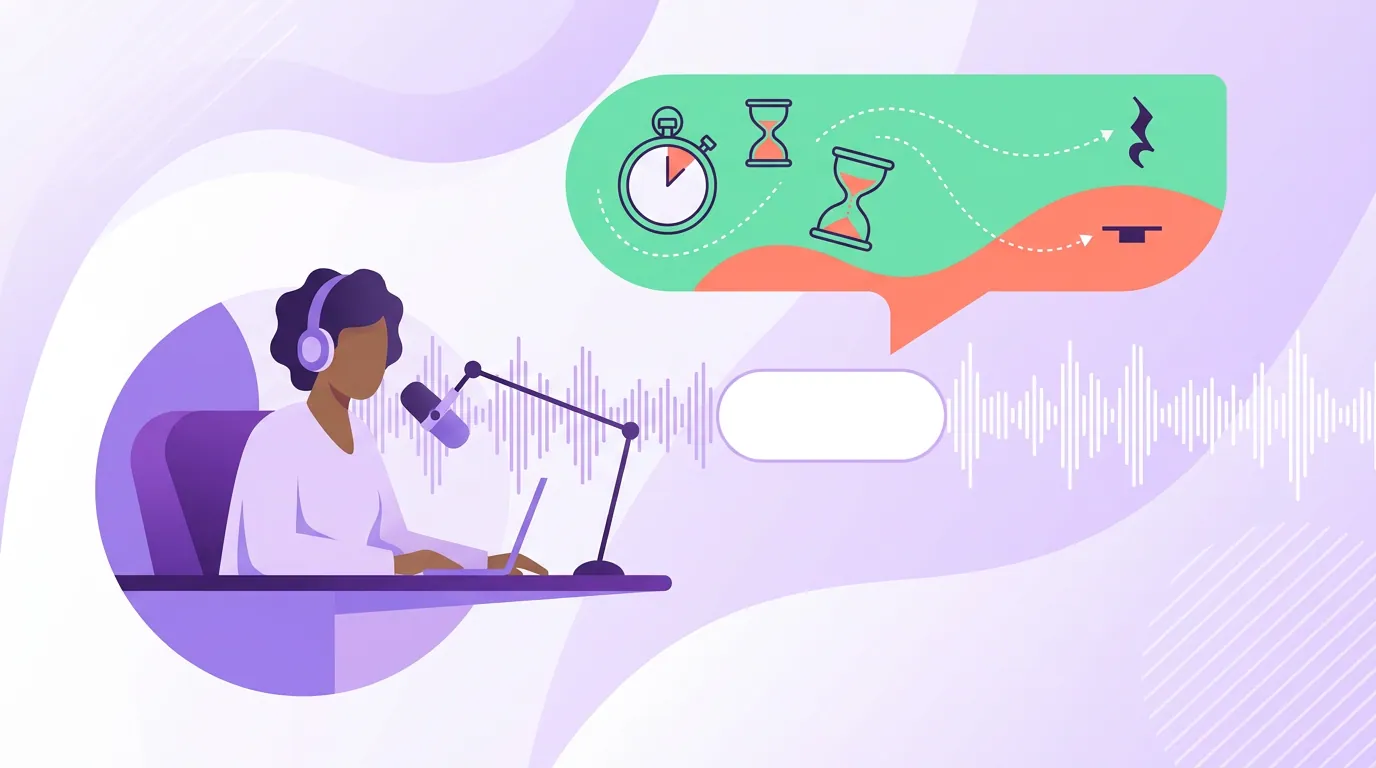
A deliberate pause for emphasis is about one second, long enough to register, short enough to feel natural. A thinking pause after a question can stretch to two seconds without ever sounding like a stall. Anything past three seconds starts to feel like a problem on a recording, so that's your ceiling for a held pause.
| Pause type | Target length | What it does |
|---|---|---|
| After a question | 1–2 sec | Reads as considered, not reactive |
| Before the key point | ~1 sec | Spotlights what comes next |
| In place of a filler | 0.5–1 sec | Replaces "um" with composure |
| After a number/claim | ~1 sec | Lets the fact land |
These are working targets from coaching guests, not a published standard, but they hold up well in practice. The mistake is almost never pausing too long. It's pausing for zero seconds because the silence felt unbearable from the inside.
How to practice this so it sticks
Reading about pauses does nothing. You have to feel the perception gap with your own ears, because that's what kills the fear. Here's the drill.
- Record one real answer. Pick a question a host might actually ask you and answer it for 90 seconds into your phone. Don't script it.
- On a second take, exaggerate. Answer it again, but this time put an obvious, almost uncomfortable pause before your main point and after the question. Make it feel like too much.
- Play both back. The "too much" version will sound calm and deliberate, not slow. This is the moment the lesson lands, the pause you were sure was excessive is barely noticeable on the recording.
- Find your natural length. Do a third take aiming for the middle. That's your real calibration: not the panicked rush of take one, not the forced gap of take two.
Five minutes of this rewires your instinct more than an hour of reading. And warming up first helps, a loose voice pauses more comfortably than a cold one, so run a quick vocal warm-up before you record.
Common mistakes with pauses
- Filling every gap with sound. The instinct to never let silence happen is the whole problem. Most guests don't need more words; they need permission to stop.
- Pausing everywhere, evenly. Random pauses sound halting and hesitant. Concentrate them in the four placements above and keep the rest of your speech at a normal clip.
- Holding a pause too long after a blank. A pause for emphasis is intentional; a frozen silence while you scramble is different. If you genuinely lose your thread, say so plainly and reset, recovering from a blank is its own skill, separate from the deliberate pause.
- Apologizing for the silence. "Sorry, let me think" undoes the entire effect. The whole point of a thinking pause is that you don't flag it. Just take the beat and answer.
- Confusing a pause with slow talking. You can speak at a perfectly normal, even fast, pace and still pause well. The pauses are punctuation, not a global speed setting.
When silence is the wrong call
Pauses are a tool, not a rule. In fast banter, a held pause kills the energy, match the room. If the host asks a yes/no logistics question, answer it; don't dramatize. And on audio-only shows, a long pause with no visual cue can read as a dropped connection, so keep audio-only pauses slightly tighter than video ones. Authority is reading the moment, and sometimes the moment wants speed. Respecting the host's rhythm is part of good guest etiquette too.
FAQ
Is it bad to pause when speaking on a podcast? No, controlled pauses make you sound more authoritative, not less. A one to two second beat after a question reads as thoughtful, and a pause before your key point makes it land harder. What hurts is the frozen, panicked silence with an "um" in the middle of it, not the deliberate kind.
How long should a pause be when speaking? About one second for emphasis and up to two after a question. Past three seconds on a recording it starts to feel like something went wrong. In practice almost no one pauses too long, the common error is pausing for zero seconds because the silence felt unbearable from the inside.
Why do pauses feel so uncomfortable to me but not to listeners? Because the speaker and the listener run on different clocks. Mid-answer, a one-second gap feels like the room has stalled; to the listener it's a comfortable beat they often don't even register. Record yourself and play it back, the pause you feared is almost always shorter and calmer than it felt.
Can pausing replace filler words like "um"? Yes, and it's the cleanest fix. The filler and the pause sit in the same slot, the gap while your brain catches up, so you swap the sound for a silent breath. Close your mouth, breathe in through your nose, continue. For a deeper diagnostic, see the guide to cutting um and like.
Do pauses help on audio-only podcasts or just video? Both, but keep audio-only pauses a touch shorter. On video the listener sees you thinking, so a longer beat reads naturally. On audio there's no visual cue, so a very long silence can sound like a dropped line. One second is safe on either.
Keep sharpening your on-mic delivery: look confident on camera as a first-time guest, cut the um and like that crowd out your pauses, and warm up your voice so silence comes easily.