
The Best Interview Podcasts Share One Skill

The best interview podcasts share one skill: the host asks the follow-up, not the next prepared question. They listen to the answer, hear the loose thread, and pull it. The prepared list is a safety net, not a script. That single habit separates a show people finish, WTF with Marc Maron, Fresh Air, The Tim Ferriss Show, Armchair Expert, The Joe Rogan Experience, from a list of questions read aloud.
You can find "best interview podcasts" lists anywhere, ranked by downloads. This one does the part that helps you make a better show: it takes the interviewers worth studying and breaks down the questioning moves they keep using, so you can practice the craft instead of just admiring the names. The fame is theirs. The technique is borrowable.
What actually makes an interview podcast good?
A good interview podcast is built on follow-up questions, not prepared ones. The host treats every answer as raw material, finding the specific detail, the contradiction, or the emotion in it and asking about that. Prepared questions get you a usable conversation; follow-ups get you the moment nobody planned, which is the part listeners remember and share.
Almost every weak interview show fails the same way. The host has ten good questions, asks all ten in order, and never reacts to a single answer. The guest gives a polished reply, the host nods and moves to question four, and the conversation never goes anywhere the guest had not already rehearsed. The skill is not writing better questions. It is being willing to abandon your list the second a better question appears in the answer you just heard.
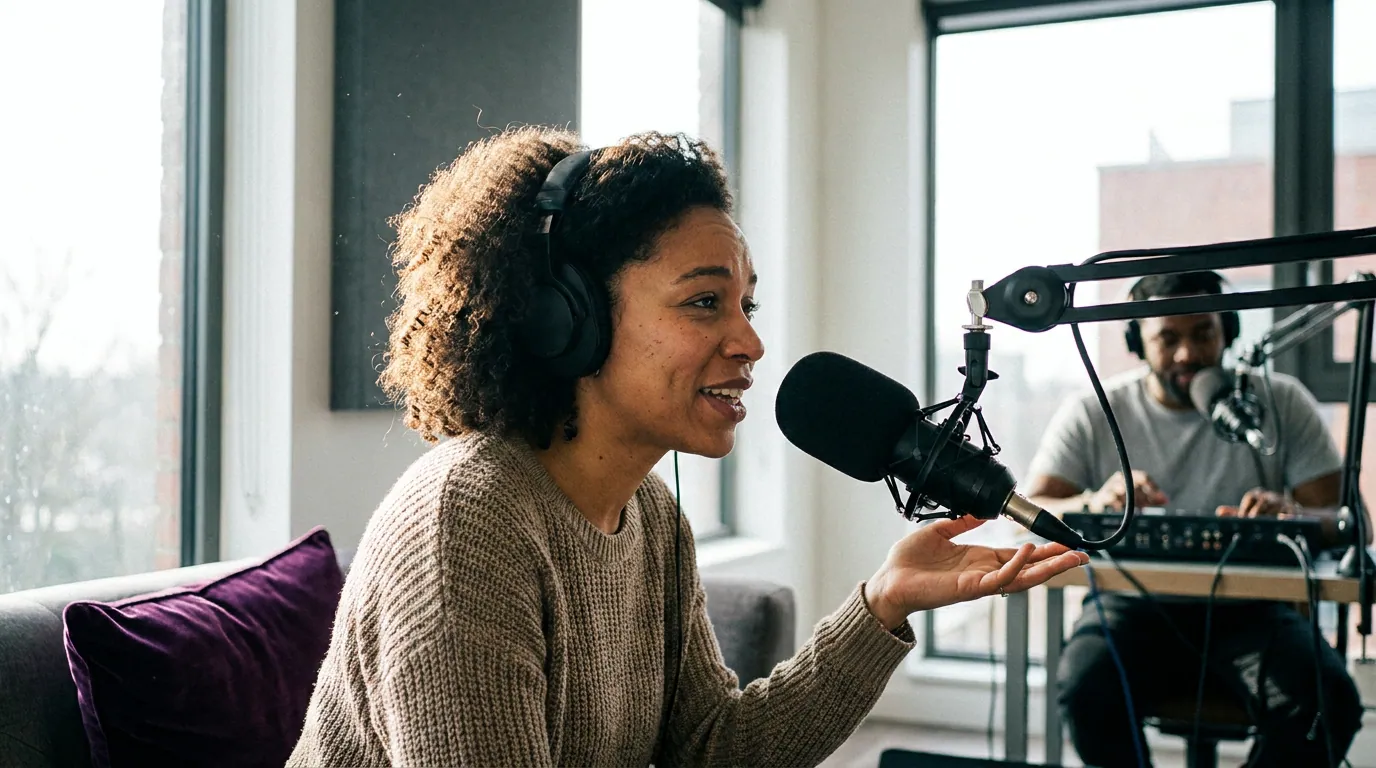
The interview shows worth studying (and what to steal from each)
These are not ranked by size, though several rank high by reach, with Joe Rogan, SmartLess, and Call Her Daddy all sitting in Edison's Q1 2026 US top 10 (Edison Podcast Metrics, Q1 2026). They are chosen because each one makes a specific questioning move you can copy. The full episode histories live on the directory; the technique breakdown lives here.
- WTF with Marc Maron, the master of the uncomfortable pause. Maron will ask a question, get a guarded answer, and just wait. The silence does the work the next question would have ruined. The steal: stop filling the gap. (WTF with Marc Maron page.)
- Fresh Air with Terry Gross, the gold standard for the prepared-but-flexible interview. Gross reads deeply, then asks the one specific question the guest has never been asked, and abandons her notes the moment the answer opens a door. The steal: do enough homework that you can afford to go off-script. (Fresh Air page.)
- The Tim Ferriss Show, the specific-example pull. Ferriss refuses to accept an abstraction. When a guest says "I focus on the fundamentals," he asks for the exact morning, the exact number, the exact failure. The steal: replace "tell me about X" with "walk me through the last time X happened." (The Tim Ferriss Show page.)
- Armchair Expert (Dax Shepard), the productive disagreement. Shepard will gently push back on a guest's framing, which forces them to defend or revise it in real time. The steal: disagreement, done warmly, gets you a real answer instead of a press-tour soundbite. (Armchair Expert page.)
- The Joe Rogan Experience, the long-leash follow-up. Rogan's interviews work because he has no clock and will chase a tangent for forty minutes if it is interesting. You do not have his runway, but the principle scales: let one good thread run instead of covering ten shallow ones. (Joe Rogan Experience page.)
- SmartLess, three hosts interviewing one mystery guest, which creates natural follow-ups because each host hears a different thread in the same answer. The steal for a co-hosted show: assign someone to listen for the thing the lead host missed. (SmartLess page.)
- Call Her Daddy, proof that a personality-led interview built on direct, sometimes blunt follow-ups produces the short, quotable exchanges that travel on TikTok and Reels before anyone opens a podcast app. The steal: directness is a follow-up technique. (Call Her Daddy page.)
These hosts have access and reputation you cannot manufacture. What survives being copied down to your scale is the move itself. Here are the five that recur across all of them.
What the best interviewers have in common: five questioning moves
Across these shows, the same five follow-up techniques keep appearing. Think of them as a deck of cards you can play after any answer, the thing to do instead of reading the next prepared question. This is the framework; practice it one move at a time.
1. The silence. When an answer trails off, do not jump in. Wait three seconds. People are uncomfortable with the gap and fill it with the thing they were holding back, the caveat, the real reason, the part that did not make the press kit. Maron built a career on it. The hardest version of this skill is doing nothing.
2. The specific-example pull. Abstractions are where interviews go to die. When a guest says "consistency is everything," do not nod, ask "what did consistency look like on the worst week you almost quit?" You trade a slogan for a scene, and scenes are what listeners remember. This is Ferriss's whole method.
3. The productive disagreement. A guest who is never challenged gives you their rehearsed answers. Push back gently on the framing, "I'd have guessed the opposite, what am I missing?", and they have to think in real time. Shepard does this without making it a fight, which is the trick: the disagreement is about the idea, never the person.
4. The assumption check. Every answer smuggles in a premise. When a guest says something "obvious," ask whether it actually is. "You said burnout is inevitable like it's a law of physics, is it?" This is the move that produces the contrarian moment, and it only works if you were listening closely enough to catch the buried assumption.
5. The close-the-loop. This is the advanced one. You hold a thread from twenty minutes ago and tie it to what the guest just said: "Earlier you told me you never plan, but that sounds like a plan, which is it?" It signals you actually listened to the whole conversation, and it forces a more honest, integrated answer. Gross and the SmartLess trio do this constantly.
The common thread under all five: you cannot run any of them if you are reading your next question while the guest is still talking. The skill is built on listening, not preparation. Preparation buys you the freedom to listen.
Why the follow-up is also your best clip
The unrehearsed moment is not just better radio, it is your best marketing. Social clips now drive podcast discovery more than friends and family do: 57% of listeners rely on social media for podcast recommendations, the first time that surpassed personal referral (InsideRadio, 2025). The clips that travel are almost never the prepared question and the polished answer. They are the moment the guest said something they did not plan to.
This is why so many top interview shows film their episodes, video is the format that travels, and YouTube is now the #1 US podcast platform at 42% of weekly listeners, ahead of Spotify at 15% and Apple at 7% (Backlinko, citing Cumulus Media, Oct 2025). When you nail a follow-up that gets a real answer, that 30-to-60-second exchange is the clip. The craft and the distribution are the same skill pointed in two directions: ask the question that gets the moment, then put the moment where strangers scroll. Choosing which exchange to cut is its own discipline, covered in how to pick the moment that travels.
How to practice this on your own show
You do not get the follow-up instinct from reading about it. You get it from recording, then reviewing the moment you should have pulled a thread and did not. After your next interview, listen back and mark every spot where the guest said something interesting and you moved on. Those are your missed follow-ups, and naming them is how the instinct gets built.
Three drills that work. First, cut your prepared question list in half, fewer questions forces you to react to answers. Second, ban yourself from "that's interesting" and "great point" for one episode; replace every one with an actual follow-up. Third, after each episode, write down the single best unplanned moment and ask what question created it. Patterns appear fast. For the question-writing side of the craft, see how to ask good podcast interview questions.
If you want to study how questioning craft differs by genre, the best business podcasts lean on the specific-example pull, while the best true crime hosts build entire episodes on the close-the-loop. For the production habits behind the biggest shows generally, see what the top US podcasts have in common, and for a smaller-market view, how Canadian shows work the cross-border problem.
FAQ
What is the most important skill for a podcast interviewer? Listening well enough to ask the follow-up. The best interviewers treat each answer as raw material, pulling the specific detail, the contradiction, or the emotion in it rather than moving to the next prepared question. Preparation matters, but only because it frees you to abandon your list when a better question appears in the answer.
How do top interview podcasts get such honest answers? Mostly through silence and gentle pushback. Hosts like Marc Maron let an uncomfortable pause sit so the guest fills it, and hosts like Dax Shepard disagree warmly so the guest defends a real position instead of a rehearsed one. Both moves require listening to the actual answer, not reading the next card.
Should I script my podcast interview questions? Prepare them, then be willing to drop them. Do enough research to ask one question the guest has never been asked, but keep the list as a safety net, not a script. The memorable moments come from follow-ups you could not have written in advance, which only happen if you are reacting to the conversation in front of you.
Why do interview clips do well on social media? Because the unplanned moment is inherently shareable, and social now drives most podcast discovery, 57% of listeners rely on social media for recommendations (InsideRadio, 2025). A great follow-up that produces a candid answer is usually the 30-to-60-second exchange worth cutting into a clip.
Can a beginner learn to ask good follow-ups? Yes, faster than most expect. Record an interview, listen back, and mark every spot where the guest said something interesting and you moved on. Those missed follow-ups are your training data. Cutting your prepared question list in half forces you to react to answers, which is where the skill actually lives.