
The Top US Podcasts and the Habits Behind Them

The leading US podcasts, Joe Rogan, Crime Junkie, The Daily, Call Her Daddy, SmartLess, Stuff You Should Know, sit near the top of Edison's reach reporting, and behind the genre differences they run on three shared production habits: they default to long-form filmed video, they distribute clip-first, and most publish on a near-daily or twice-weekly cadence. Who they are is the chart. What they do is the lesson.
You can read the rankings anywhere. This page does the part that actually helps a new US host: it takes the shows at the top right now and pulls out the patterns you can copy without their budget, their guests, or their decade head start. The format is learnable even when the fame is not.
Who is at the top of the US podcast chart right now?
In recent Edison Podcast Metrics reporting, the most-listened US podcasts by weekly reach include The Joe Rogan Experience, Crime Junkie, and The Daily near the top, with Call Her Daddy, SmartLess, and Stuff You Should Know also in the upper tier (Edison Podcast Metrics). Exact positions move quarter to quarter, so treat the set as the leading group rather than a fixed order.
Edison's ranking is worth leaning on because of how it measures: a survey-based panel of US weekly podcast consumers, asking which shows they "listened to or watched" in the past week (Edison). That "or watched" matters, it counts YouTube viewing, which download-based charts miss entirely. The names below are reach ranks, not download counts; Edison does not publish per-show audience figures, so treat the order as comparative, not absolute.
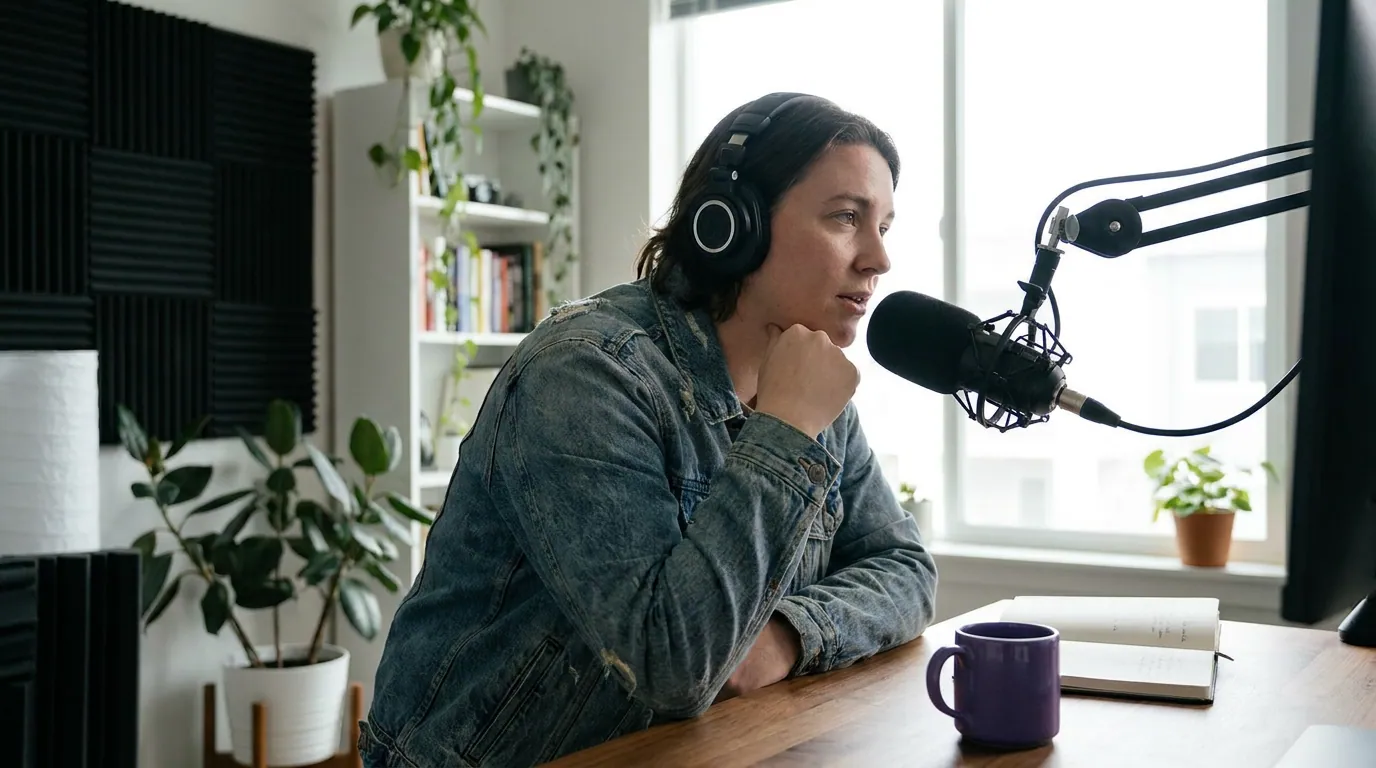
The shows worth studying (and what to steal from each)
The list spans four genres, which is the first useful signal: there is no single winning topic. There is a winning shape. Here is what each does that a new US host can actually borrow. Entity pages with full episode histories live on the directory; the analysis lives here.
- The Joe Rogan Experience, long-form conversation, three to four episodes a week, filmed and clipped relentlessly. The transferable habit is not "talk for three hours." It is treating every episode as raw material for dozens of standalone moments. See the Joe Rogan Experience entity page for the full run.
- Crime Junkie, proof that audio-led storytelling still tops the chart, but note it now ships video too. The steal: a rigid weekly slot and a format so consistent listeners know exactly what they are getting. Predictability is a feature. (Crime Junkie page.)
- The Daily, The New York Times publishes six days a week, ~20–30 minutes, by 6 a.m. The lesson for a small show is cadence discipline, not newsroom budget: a tight, repeatable format you can sustain beats a sprawling one you cannot. (The Daily page.)
- Call Her Daddy, a personality-and-interview format that lives on clips. Its short, quotable exchanges are built to travel on TikTok and Reels before anyone opens a podcast app. (Call Her Daddy page.)
- SmartLess and Stuff You Should Know, both prove longevity plus a clear premise (three friends interviewing a mystery guest; one curious topic explained well) outlast novelty. The habit to copy is a one-sentence show promise a stranger understands instantly.
- New Heights, the Kelce brothers' show is the clearest case of video and guest-driven reach. Its August 2025 Taylor Swift episode drew 1.3 million concurrent YouTube viewers, a Guinness World Record for a podcast, and passed 20 million views (Guinness World Records, Aug 2025). The steal is filming first so a big moment can travel as video, not just audio. (New Heights page.)
These shows have audiences you cannot manufacture. The point is that their methods survive being copied down to your scale. Now the three patterns that recur across all of them.
Habit 1: Long-form video is the default, not the bonus
Nearly every show in the US top 10 is filmed. That is downstream of where Americans now consume podcasts: YouTube is the #1 US podcast platform at 42% of weekly listeners, ahead of Spotify at 15% and Apple at 7% (Backlinko, citing Cumulus Media, Oct 2025). YouTube also passed one billion monthly podcast viewers globally in early 2025 (Variety, Feb 2025). When the largest distribution surface is a video platform, audio-only leaves reach on the table.
This does not mean buy a TV studio. The transferable version is simpler: point one camera at the conversation, frame it cleanly, and record video and audio in the same session. The reason it matters has nothing to do with looking professional. A filmed episode gives you something an audio file cannot, vertical clips with a face on them, which is the raw material habit two runs on.
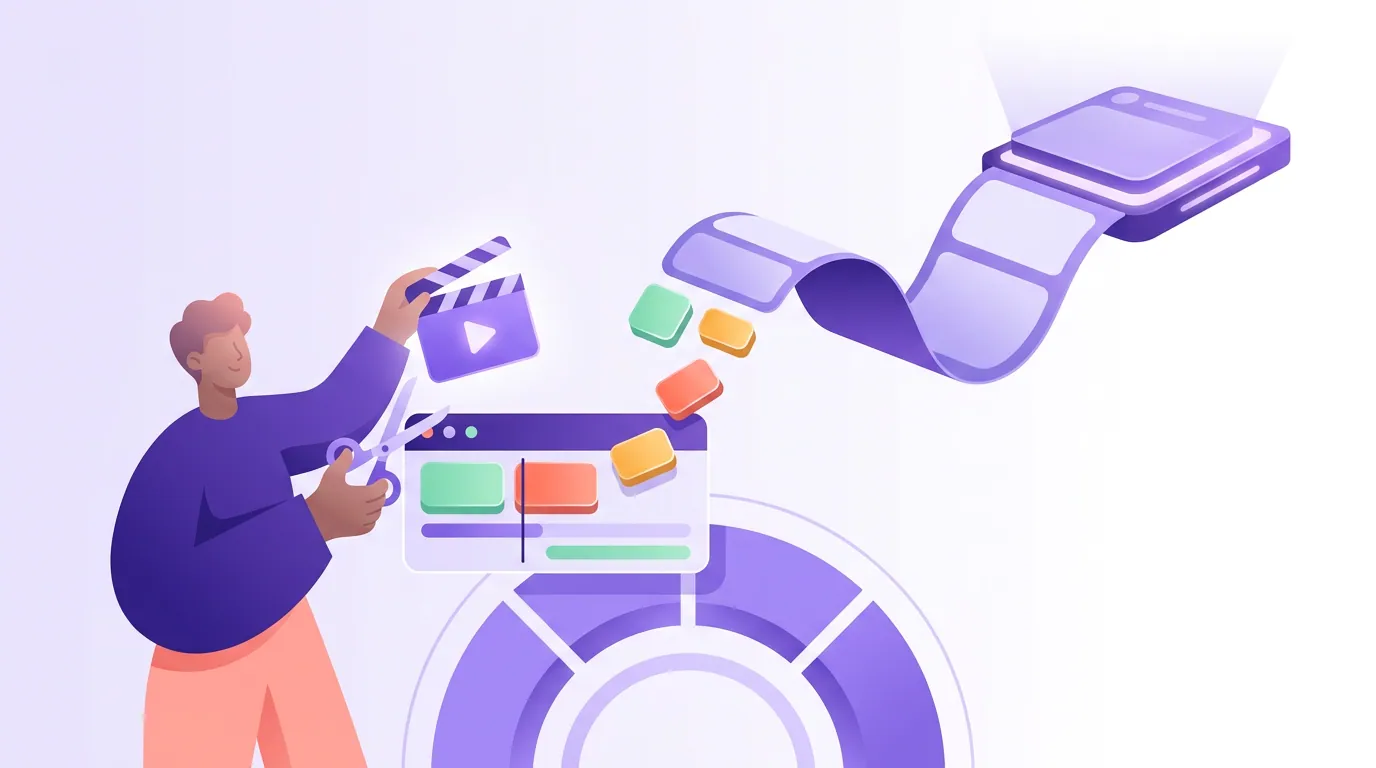
Habit 2: Clip-first distribution feeds the feeds, then the feed
The top shows do not publish an episode and hope. They publish an episode and then cut it into short, captioned vertical clips that go out across YouTube Shorts, TikTok, Reels, and X. The clip is the advertisement; the full episode is the destination. For most of these shows, more people meet the show through a 45-second clip than ever press play on the full thing first.
The data backs the priority. Social clips now drive podcast discovery more than friends and family do: 57% of listeners rely on social media for podcast recommendations, the first time that surpassed personal referral (InsideRadio, 2025). Put the clip where strangers already scroll and the show stops depending on people who already know it exists. One caption rule is non-negotiable: most mobile video is watched on mute, around 75% (Verizon Media / Sharethrough, 2017; via Digiday), and the older publisher estimate for Facebook ran as high as 85% (a figure platforms never confirmed, so read it as directional). Either way an uncaptioned clip is a silent clip to most of the people who see it.
The honest caveat the chart-toppers will not tell you: clip volume without a hook is empty motion. Views are not listeners, and a clip that gets a million plays but sends nobody to the show is a vanity metric. The shows that win pick moments that stand alone and make a stranger curious, which is a skill, covered in how AI clip detection works and how to pick the best AI-suggested clips.
Habit 3: A cadence the audience can set a watch by
The third pattern is the least glamorous and the most copyable: the top shows publish often and on schedule. The Daily ships six days a week. Joe Rogan runs three to four episodes weekly. Crime Junkie holds a fixed weekly slot. Call Her Daddy publishes one to two main episodes a week plus extras. The exact number varies; the discipline does not. Listeners learn when to expect you, and the platforms reward shows that feed them steadily.
Here is the trap, and where the three habits connect. Cadence is exactly what kills new shows, roughly 47% of podcasts stop at three episodes or fewer (Podcasting Tech, 2025), almost always from the workload, not lack of interest. Podfade estimates vary by dataset, and the viral "90% quit by episode three" figure circulates with no traceable source, so treat 47% as the conservative, better-supported number rather than gospel. The leaders sustain a heavy schedule because clips do the marketing while they make the next episode. A small show that tries to film, edit, clip, caption, and post everything by hand burns out before it finds an audience. The cadence habit is only survivable when the clip habit is automated.
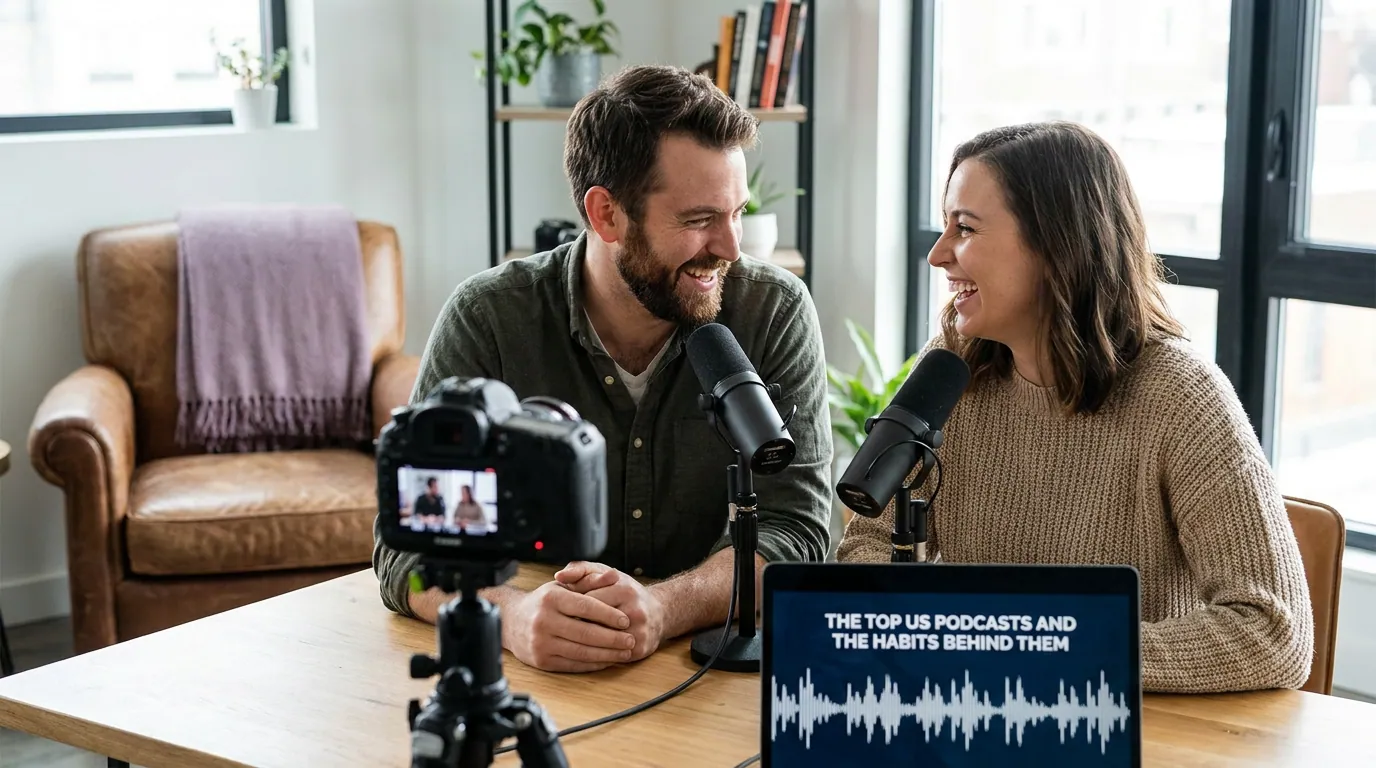
So what should a US host actually copy?
Not the budget, the guests, or the back catalog. Copy the shape. Film your episodes so you have clips to cut. Treat clips as your primary discovery channel, not an afterthought. Pick a cadence you can hold for a year and never miss the slot. None of those three requires being famous first, they are the on-ramp to it.
The order matters too. Film first, because clips need video to exist. Clip second, because clips are how strangers find you. Hold cadence third, because it compounds the first two. Most new US hosts do these in reverse, they publish audio, scramble for promotion, and quit when nobody finds them. The chart is telling you to flip that.
If you want the regional contrast, the UK top 10 looks nothing like the US for reasons of format and radio incumbency. For genre-specific playbooks, see business podcasts worth studying and what the best true crime hosts do differently.
FAQ
What is the most popular podcast in the US right now? The Joe Rogan Experience has led US weekly reach in recent Edison Podcast Metrics reporting, with Crime Junkie and The Daily close behind (Edison Podcast Metrics). Edison measures reach via survey, counting shows people listened to or watched, so it captures YouTube viewing that download charts miss.
Are the top US podcasts video podcasts? Almost all of them are now filmed. YouTube is the #1 US podcast platform at 42% of weekly listeners (Backlinko, Oct 2025), and Joe Rogan topped Spotify, Apple, and YouTube simultaneously in 2025 (Hollywood Reporter, 2025), so video is now the default rather than the exception. Audio-led shows like Crime Junkie still chart, but most leaders default to video because it gives them clips to cut and a larger discovery surface.
How often do the top podcasts release episodes? It ranges from weekly to six days a week. The Daily publishes roughly six episodes a week, Joe Rogan three to four, Call Her Daddy one to two main episodes plus extras, and Crime Junkie holds a fixed weekly slot. The shared habit is a predictable schedule listeners can rely on, not a specific number.
Can a small podcast actually copy what the top shows do? Yes, the methods scale down even when the audience does not. Film with one camera, cut each episode into captioned vertical clips, and hold a cadence you can sustain. The blocker is workload, since roughly 47% of shows quit at three episodes or fewer (Podcasting Tech, 2025); automating clips is what makes a heavier schedule survivable.
Where can I see the full list of top US podcasts? Edison Research publishes the Top 50 US Podcasts each quarter by reach, and YouTube and Spotify run their own watch-time and streaming charts. The rankings differ because they measure different things, survey reach versus watch time versus downloads, so check the methodology before comparing a show's position across two charts.