
Voice Projection and Volume Control for Podcast Guests


Projection on a podcast is breath support, not volume. You want a voice that carries energy and fills out the sound without getting louder than the mic can handle. Breathe low into your belly, support each sentence on that breath, and hold a steady posture so your level stays even from the first answer to the last.
Most guests get this backwards. They think a flat-sounding take means they were too quiet, so they push from the throat and talk louder, which spikes the meter, clips the recording, and leaves them hoarse by minute thirty. Loudness and projection are different things. One strains a single muscle and overloads the mic. The other moves more air with the same effort and sounds effortless on the recording. Below is how to do the second one, and how to fix the volume drop that hits almost every guest in the back half of a long session.
What does "voice projection" actually mean on a mic?
Projection is carrying your voice on a column of supported breath so it sounds full and clear, without extra strain or volume. On a podcast mic close to your mouth you don't need to be loud, the mic already hears you. What you need is fullness: breath behind the voice, an open throat, steady airflow. That reads as present; loudness reads as tense and clips.
Here's the part the room metaphor obscures. On stage, projection genuinely means filling a space with sound. On a mic four to six inches from your mouth, the mic does the carrying, so projection becomes about quality and consistency of tone, not reaching the back row. The mistake is importing the stage definition (be louder) into a close-mic setup where being louder only causes problems. You want the supported, open sound of someone projecting, delivered at a conversational level the mic can capture cleanly.
This matters more now that podcasts are watched, not just heard. 53% of new US weekly listeners say they prefer to watch a podcast, up from 30% in April 2022 (Backlinko). When a host cuts your episode into vertical clips, the moments that travel are the ones where you sounded sharp and full. A thin, throat-pushed answer makes a flat clip no matter how good the line was.
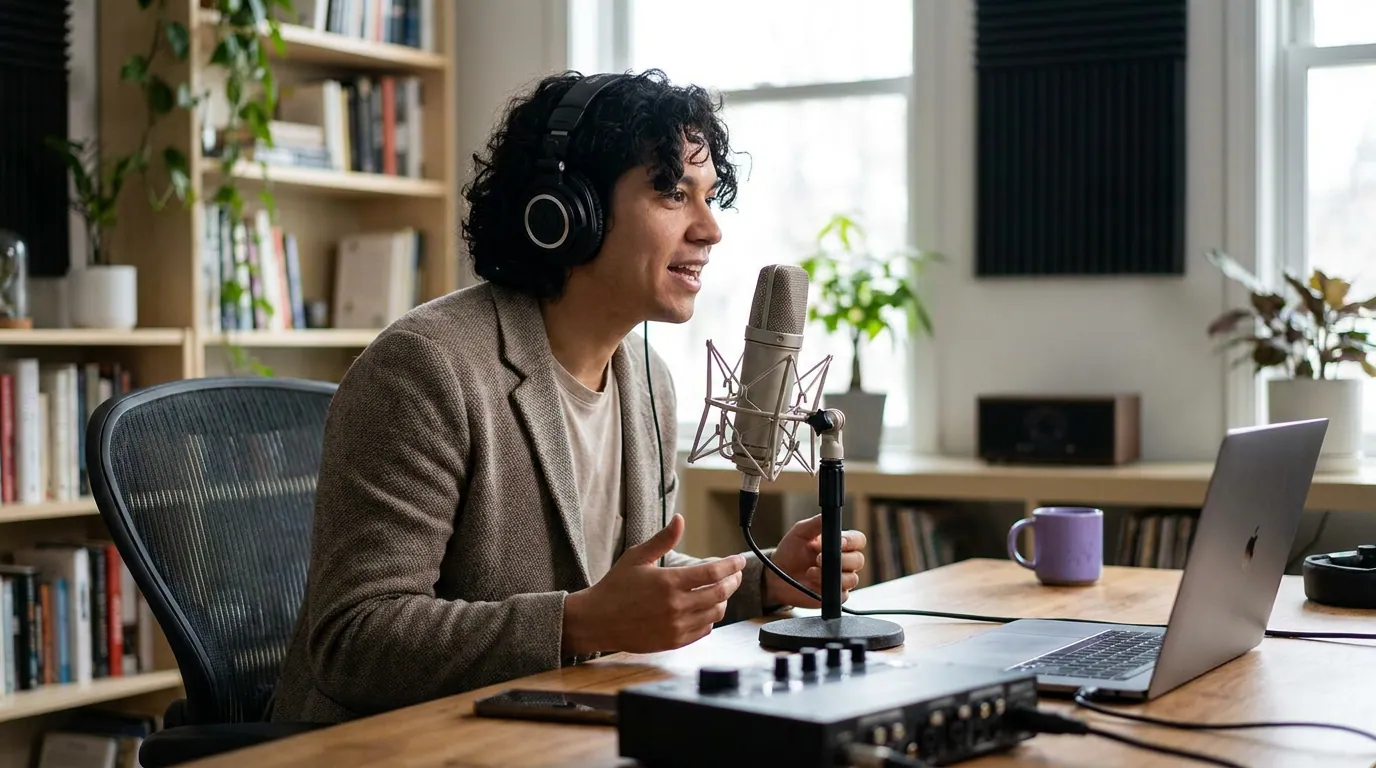
How do you project your voice without yelling or clipping the mic?
Build the support from the bottom up. Sit or stand tall, drop your breath low into your belly so your stomach moves out on the inhale, and let each sentence ride out on that air. Keep the throat open and relaxed, think "warm and forward," not "loud." The volume stays conversational; the fullness comes from breath, not throat muscle.
These five adjustments do almost all of the work:
- Breathe into your belly, not your chest. Put a hand on your stomach. On the inhale it should push out; your shoulders should barely move. Chest breathing gives you a thin, tight voice that runs out of air mid-sentence. Belly breath gives you a column of support that carries the line to the end.
- Anchor your posture. Sit upright with both feet down and your sternum lifted, or stand if the host allows it. A slumped torso crushes the diaphragm and kills support. Pick one posture and hold it, drifting around changes both your tone and your distance to the mic.
- Open the throat, relax the jaw. Yawn-stretch before you record to drop the larynx and open the space. A tight throat is what people think is projection but is really strain. Open and relaxed is fuller and lasts longer.
- Aim for "across the room," not "loud." Imagine speaking warmly to someone a few feet away, not shouting to the back. That mental target gives you supported energy at a sane volume. The mic handles the rest.
- Set a level you can hold for an hour. Find the volume where you sound engaged but never strained, and treat that as your ceiling. If you're tempted to climb above it for emphasis, add energy with pace and pitch instead, not raw volume.
The honest tradeoff: if you genuinely project too much on a close mic, you'll clip, a hard digital distortion the host usually can't repair without thinning your voice. The fix isn't to mumble. It's to keep the supported, full tone but pull your level back a notch and let the host raise gain on their end. Distance and support do the heavy lifting; see the companion guide on mic distance and off-axis angle for guests for the positioning that makes a steady level easy to hold.
Why does my volume drop near the end of a recording?
Because your energy fades and your breath support goes with it. An hour in, you're tired, the novelty's gone, and you stop driving sentences on the breath, so your voice sinks below the level it had in the first ten minutes. The host's level holds; yours sags, and the back half of every clip ends up quieter and flatter than the front.
This late-session fade is the single most common projection problem for guests, and it almost never shows up in a soundcheck, the soundcheck happens when you're fresh. By minute forty, three things have slipped at once: your posture has rounded, your breaths have gone shallow, and you've drifted slightly back from the mic as you relaxed. Each one lowers your level a little. Together they make the close of an interview sound like a different, sleepier person.
To hold your level for the whole session:
- Reset your posture at every topic change. Use the natural break when a host asks a new question to sit up, plant your feet, and take one deep belly breath. It's a free reset that nobody hears.
- Hydrate on a schedule, not when you're parched. A dry throat tightens and quiets you. Keep room-temperature water within reach and sip during the host's questions.
- Mark your distance. Note where your mouth sits relative to the mic at the start so you can return to it when you catch yourself drifting back.
- Mentally re-energize the last segment. Tell yourself before the final stretch that the close is where clips often come from. A little deliberate lift in the last ten minutes erases most of the sag.
- Warm up first so you have reserves. A voice that's warmed up fades slower. A five-minute vocal warm-up before you record buys you a stronger back half.
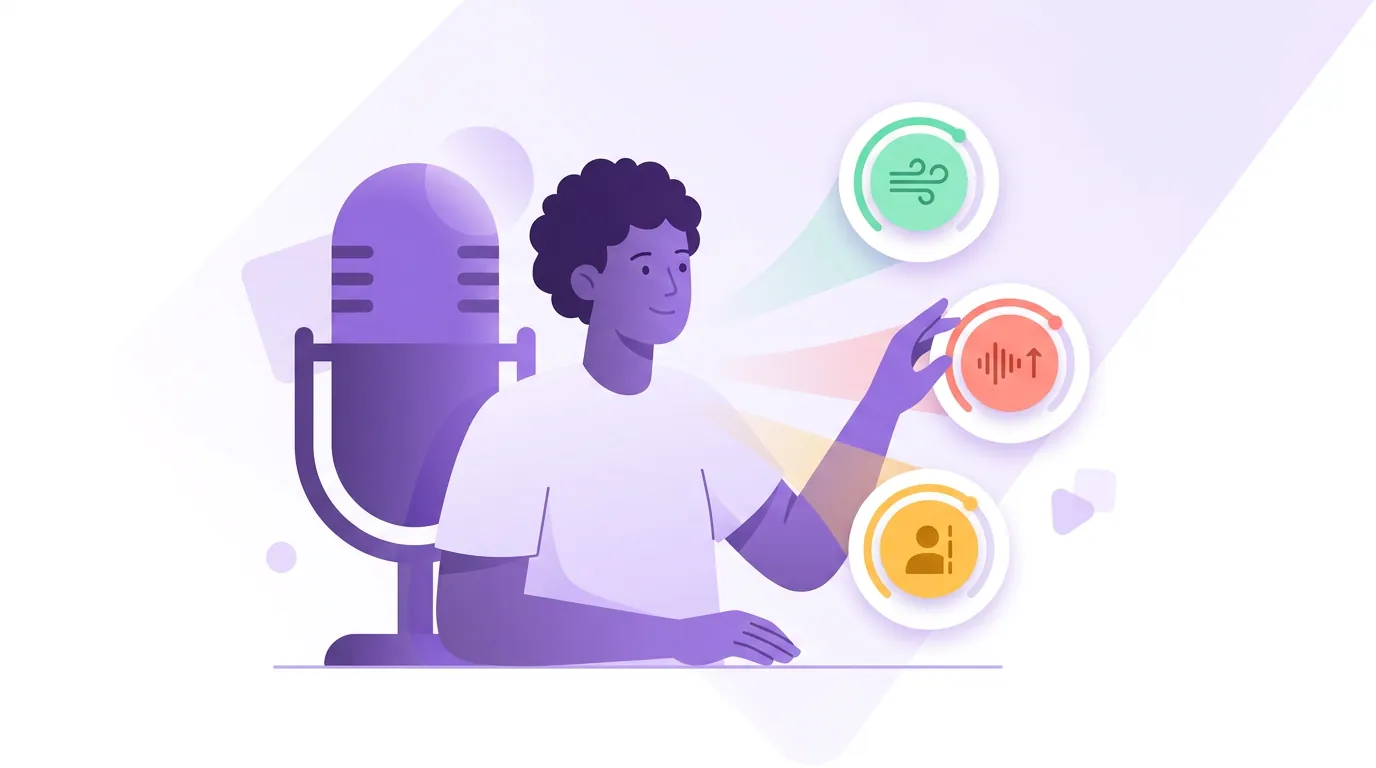
The supported-voice framework: three settings to lock before record
Treat projection like the other three things you set before a host joins, gain, distance, camera. Lock these in the same pre-record ritual and your level takes care of itself.
Run them in order, because each depends on the one before. Find the belly breath, build the posture that protects it, then settle on the level you can sustain. Do a 30-second test reading at that level, listen back on headphones, and confirm you sound full without the meter touching the top. Then forget about it and have the conversation.
Common projection mistakes guests make (and the fix)
- Confusing volume with energy. You feel flat, so you get louder, and clip. Fix: add energy through pace, pitch variation, and breath fullness, not raw volume. A varied, supported voice at a steady level beats a loud monotone every time.
- Chest breathing under nerves. Adrenaline pushes your breath high and shallow, which thins and quiets your voice right when you want presence. Fix: a slow belly breath before each answer. The breathing and warm-up routine that calms recording nerves is built for exactly this.
- The fade you don't notice. Your level sinks across the hour and you never hear it because you're inside it. Fix: the posture-and-breath reset at every topic change, plus a deliberate lift in the final stretch.
- Leaning in for emphasis. When you want to stress a point, you lean toward the mic, which booms, then snaps back too quiet. Fix: keep your distance fixed and emphasize with tone and pace, not by moving your head.
- Over-projecting on a close mic. Treating a four-inch mic like a stage and belting into it, which distorts. Fix: keep the supported tone but pull the level back; let the host's gain do the carrying.
Frequently asked questions
Is voice projection the same as speaking louder? No. Projection is moving your voice on a supported column of breath so it sounds full, clear, and energetic, at a normal volume. Loudness is pushing harder from the throat, which strains your voice and clips a close mic. On a podcast the mic already hears you, so you want fullness and consistency, not peak volume.
How do I project my voice without straining it? Breathe low into your belly, keep your throat open and jaw relaxed, and let each sentence ride out on that breath. Sit or stand tall so the diaphragm has room to support you. The energy comes from airflow and posture, not throat muscle, so you can sound present for an hour without going hoarse.
Why does my voice get quieter as a recording goes on? Your energy fades, and your breath support and posture fade with it, so your level sags below where it started. It rarely shows in a soundcheck because that happens when you're fresh. Reset your posture and take a deep breath at every topic change, hydrate on a schedule, and lift your energy deliberately in the final ten minutes.
Can the host just fix my volume in editing? Partly. A host can level out a moderate drop and balance you against their own voice, but they can't cleanly repair a clipped recording from over-projecting, and pushing up a thin, distant voice also lifts room noise. Even, supported projection at a sane level is the part only you can control, and it's what makes a clip sound good.
Should I project differently for a video podcast? The voice technique is identical, but video adds posture stakes. Sitting tall to support your breath also reads as confident on camera, while slumping kills both your sound and your presence. Set your breath and posture together, and pair this with where to look on a video podcast so your body backs up your voice.
Related guesting guides
- A five-minute vocal warm-up before you record, get the breath and voice ready before projection matters.
- Mic distance and off-axis angle for guests, the positioning that makes a steady level easy to hold.
- How to stop saying um and like in an interview, the verbal cleanup that pairs with a fuller voice.
- Looking confident on camera as a first-time guest, posture and presence beyond the sound.
- Where to look on a video podcast: camera vs the host, the eye-line side of on-camera delivery.
- Podcast guest etiquette: the unwritten rules, the broader code hosts wish guests knew.