
Look Confident on Camera as a First-Time Podcast Guest

Confidence on camera as a first-time podcast guest is mostly a routine, not a personality trait. You build it in the 30 minutes before you go live: reset your posture and breathing, fix the frame so you're not fighting the tech, and pick one friendly person to talk to instead of an imagined crowd. Then you plan only the first 90 seconds, because that is where nerves peak and where most guests freeze. Do that, and "looking confident" stops being something you summon and becomes something you set up.
This matters more on video than it used to. Watching is now the default way people meet a show: 53% of new US weekly listeners say they prefer to watch a podcast, up from 30% in April 2022 (Backlinko). When a host films the episode, the tense first minute isn't just heard, it's seen, and it's the part most likely to get cut into a clip and shown to strangers. The good news is that the fix is procedural, and a procedure works even when your hands are shaking.
How do you look confident on camera as a guest?
Looking confident on camera comes down to three things you can control: a settled body (slow breath, dropped shoulders, a frame at eye level), a target for your attention (one friendly listener, not a faceless crowd), and a plan for the first 90 seconds. Confidence isn't a feeling you wait for, it's the visible result of those setups.
The mistake first-timers make is treating confidence as something to feel before they hit record, so they wait, the nerves build, and the record button starts to look like a ledge. Confident-looking guests aren't calmer humans. They've usually just done this enough times to have a routine, and the routine does the heavy lifting. The rest of this guide is that routine, built for the guest seat specifically: you don't run the show, you don't manage the tech for both sides, and you only have to look after yourself.
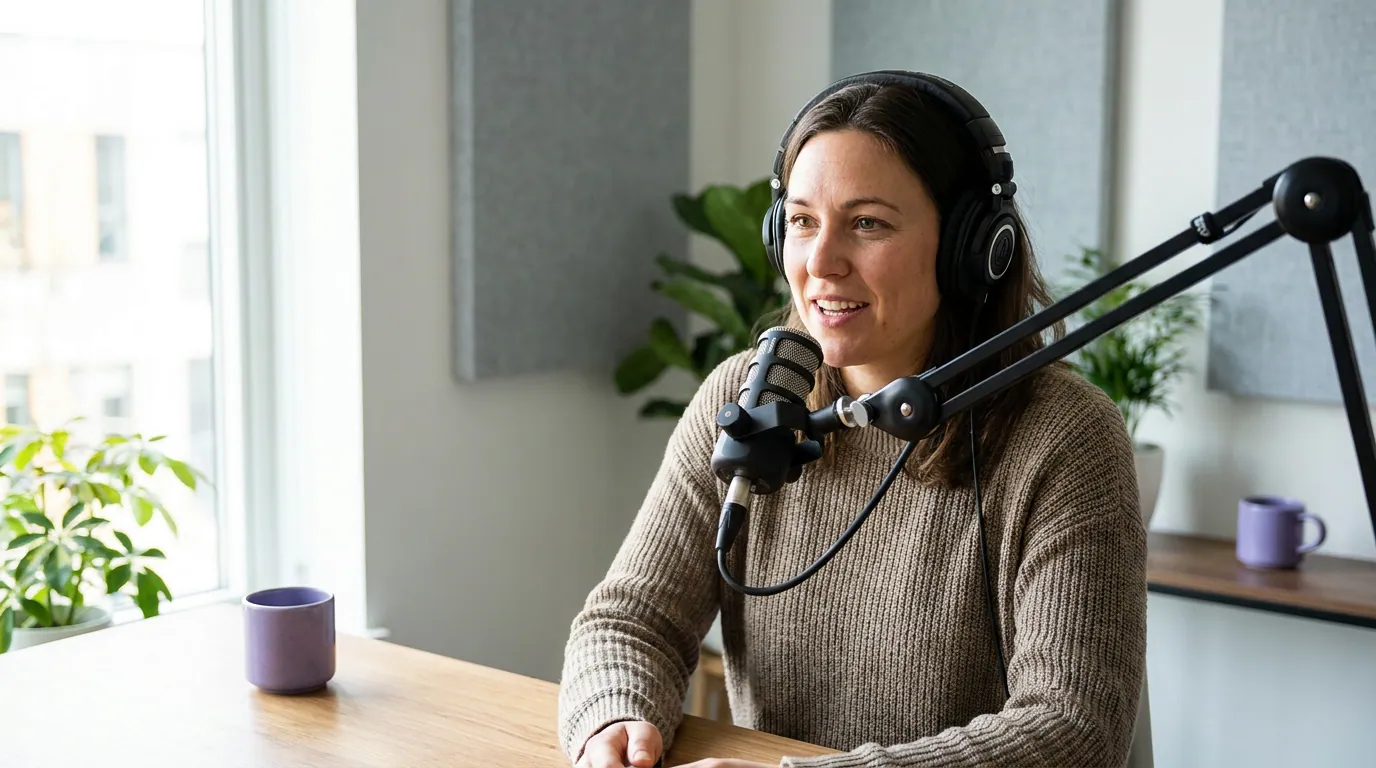
The 30-minute pre-record confidence routine
Treat the half hour before a recording as part of the recording. Most guests spend it refreshing their inbox and getting more anxious. Spend it like this instead, four blocks, each with one job, working backward from the moment you go live.
T-30 to T-20: settle the body and the tech
Nerves live in the body first, so start there. Stand up, shake your arms and hands out, and roll your shoulders back and down, the same loosening an athlete does, because it works on the same nervous system. Then sit and sort the frame once, so you're not fixing it on camera: put the lens at eye level (stack the laptop on books if you have to), face a window or lamp rather than having it behind you, and keep water in reach. Getting the frame right early removes a whole category of in-call panic. For the full visual setup, the body-language guide for video episodes covers the head-and-shoulders shot in detail.
T-20 to T-10: warm the voice and pick three points
A cold voice cracks and rushes, which reads as nerves whether you feel them or not. Hum up and down your range, say a few tongue-twisters, and read your opening line out loud twice. A few minutes of this steadies your pitch and pace, there's a five-minute vocal warm-up worth running here. Then write down exactly three things you want to say during the episode. Not a script, three anchors. When your mind blanks mid-answer, you reach for an anchor instead of for an apology.
T-10 to T-2: the reframe
This is the block that actually moves confidence, and it gets its own section below. In short: decide who you're talking to before the call starts, and make it one specific, friendly person.
T-2 to live: one reset
Right before you go live, do one thing only: a slow exhale, longer than the inhale, while you drop your shoulders and lean a few degrees toward the lens. The long exhale tells your body the threat has passed; the lean tells the camera you're interested. You don't need a pep talk. You need one good breath.
The "one friendly listener" reframe
Picture one specific person who already likes you, and talk to them. Most on-camera fear comes from imagining a faceless audience of thousands judging you. That audience isn't real yet, the only people in the room are you and the host. So replace the crowd with one real person: a friend, a former colleague, the kind of listener your message is for. Talk to that person, and your face, pace, and word choice all soften into something that reads as warm instead of guarded.
The reframe has a practical side too: it tells you where to put your eyes. Your "one listener" stand-in is the host on the screen, so you look at the host most of the time and treat the conversation as exactly that, a conversation. (The lens is the exception, saved for a key line; the trade-off between looking at the camera versus the host's face is worth getting right.) Talking to someone, rather than at an audience, is the single fastest way to look like you belong there.
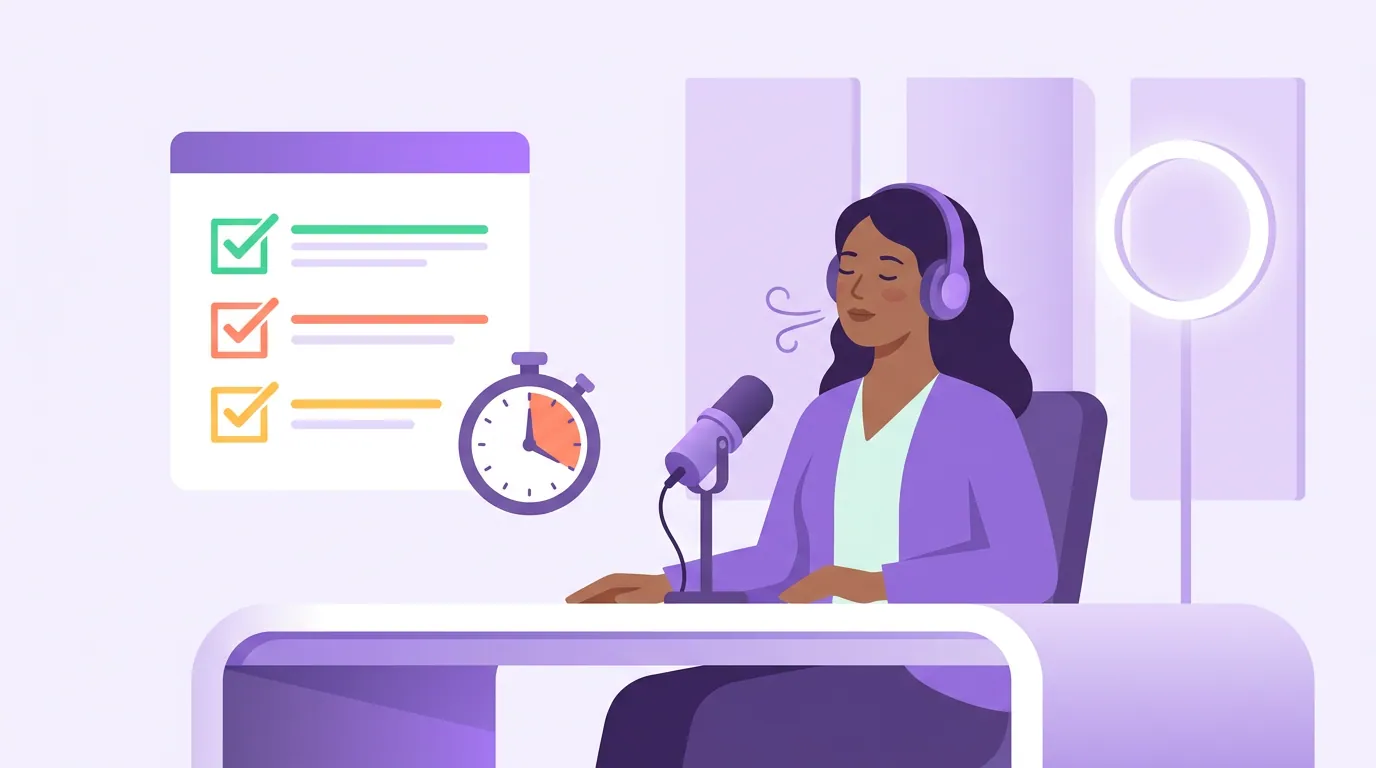
The first 90 seconds: a checklist for when nerves peak
Plan only the opening, because the fear concentrates there. Guest nerves spike hardest in the first minute or two and then drop fast once the conversation finds a rhythm, so you don't need to be relaxed for an hour, you need a plan for 90 seconds. After that, the conversation carries you.
Run this in order from the moment the host says "we're recording":
- Breathe before you answer the first question. A half-second pause before your first words feels like an eternity to you and like composure to everyone else. It also stops the rushed, high-pitched opening that makes you sound nervous.
- Answer the first question short. Resist the urge to prove yourself with a five-minute monologue. A tight, complete answer builds momentum; a sprawling one buries you. You can always go deeper when the host follows up.
- Use your name and a one-line frame. "I'm [name], I help [who] do [what]." Saying a sentence you've said a hundred times settles your voice on familiar ground.
- Smile once, genuinely, early. Not a grin held for an hour, one real smile in the first minute relaxes your own face and the host's, and warm clips outperform tense ones.
- Let a filler word go. You will say "um" in the first minute. Everyone does. Trying to eliminate it mid-sentence is what makes you freeze; if it bothers you long-term, fixing filler words like um and like is a separate, calmer project.
- Match the host's pace, then settle yours. Nerves make people sprint. If you're running fast, the fix for talking too fast is to land on the ends of your sentences instead of leaping to the next one.
Common mistakes that read as nervous on camera
The camera amplifies a handful of habits that are invisible on audio. Each has a fix that takes seconds.
- Watching your own thumbnail. Looking at your own face in the video grid pulls your eyes off the host and makes you self-conscious. Hide or shrink your self-view so it isn't in your eyeline.
- Over-preparing into a script. Memorized answers sound recited and collapse the moment the host asks something unexpected. Three talking points beat ten paragraphs.
- Apologizing for nerves out loud. "Sorry, I'm a bit nervous" hands the audience a reason to watch for it. You don't owe a disclaimer; just begin.
- Holding still like a photo. Trying so hard to look composed that you go rigid reads as stiff, not calm. A slight lean and a face that changes as you listen read as present.
- Treating the first take as the only take. Most hosts will happily restart a fumbled opening, and almost everything gets edited. Knowing a clean opening is one "can we go again?" away removes most of the pressure.
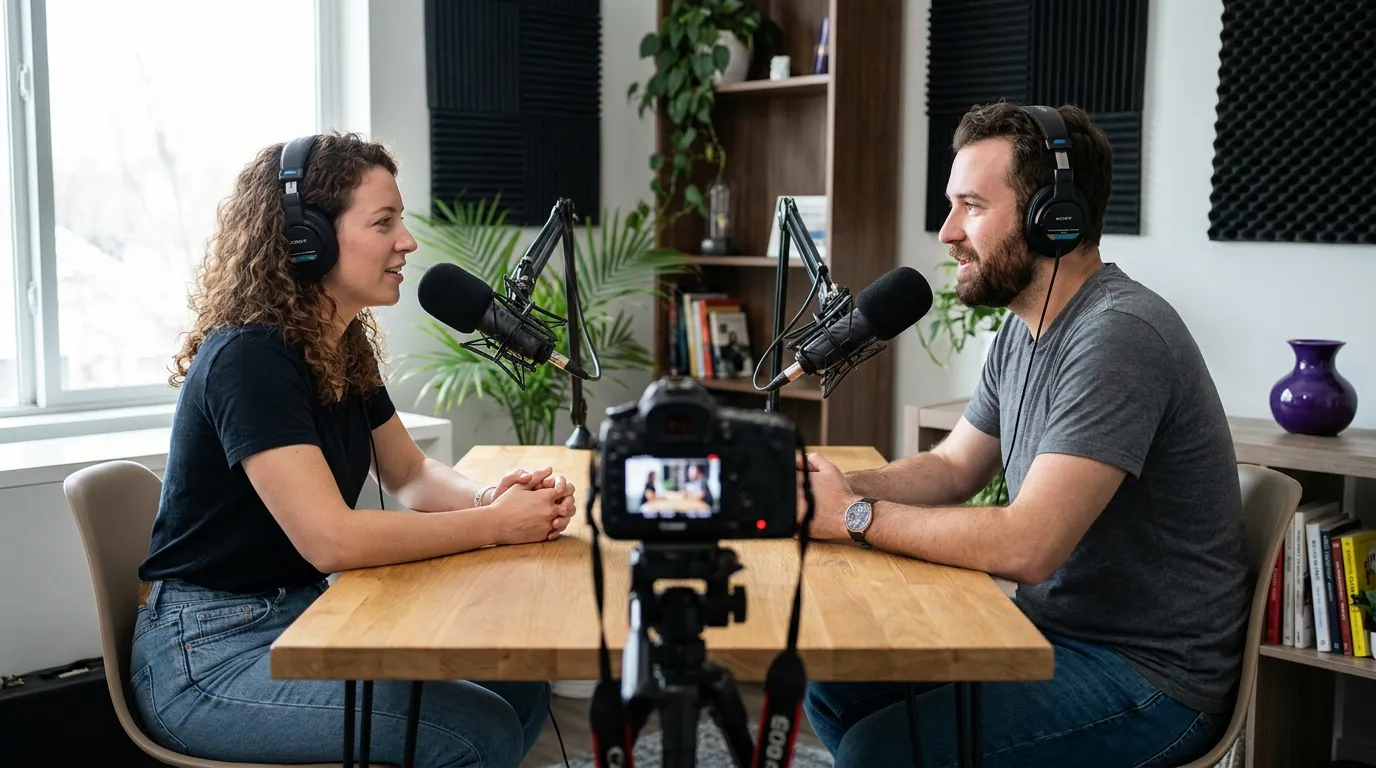
When you're naturally introverted or camera-shy
You don't have to become extroverted to be a good video guest, you have to be present and clear. Quiet, thoughtful guests often make the best clips because they say something real instead of performing energy. Lean on the routine harder: it carries you when extroversion can't. And remember the math of the guest seat, the host's job is to draw you out and run the room, so you're not carrying the conversation alone. Knowing that division of labor is part of basic guest etiquette, and it takes a real weight off.
Frequently asked questions
How do I stop looking nervous on a video podcast? Settle your body before you start: a slow exhale, dropped shoulders, and a slight lean toward the lens. During the recording, look at the host instead of your own thumbnail, answer the first question short, and let one filler word go without trying to fix it. Most "nervous" tells are habits the camera amplifies, and each has a quick fix.
What should I do in the 30 minutes before recording? Work backward in four blocks: settle your body and fix the camera frame (T-30), warm your voice and pick three talking points (T-20), do the one-friendly-listener reframe (T-10), and take one reset breath right before you go live (T-2). The routine does the work so you don't have to feel calm on command.
Should I script my answers to feel more confident? No, script three anchor points, not full answers. Memorized scripts sound recited and fall apart when the host asks something unexpected. Three things you want to land give you something to reach for when your mind blanks, without locking you into a performance.
Why are the first 90 seconds the hardest? Nerves concentrate at the start and drop sharply once the conversation finds its rhythm. That's why you plan only the opening: breathe before your first answer, keep it short, use a familiar one-line intro, and smile once. After 90 seconds, the conversation tends to carry you.
Do I need to look at the camera the whole time? No. Look at the host most of the time and treat it as a real conversation, that reads as natural. Save direct-to-lens eye contact for a key line on a show that posts clips. Staring into the camera for an hour reads as stiff, not confident.
Related guesting guides
- Where to look on a video podcast: camera vs the host's face, the eye-contact trade-off the reframe sets up.
- Podcast guest etiquette: the unwritten rules, what's yours to manage and what the host handles.