
Mental Health Podcast Clips, Done Responsibly


Clip a mental health podcast by leading with the validation moment, not the advice moment. The line that travels is the one that names a feeling someone thought was theirs alone, "the anxiety doesn't mean something is wrong with you", not the five-step technique that follows it. Validation is what makes a stranger stop scrolling and feel seen; advice without context is what gets clipped out of proportion and, in this niche, can do real harm.
Mental health is one of the most resonant podcast niches in short-form, because a viewer who pauses on the clip is often pausing because they recognize themselves in it. That recognition is exactly why the niche demands more care than any other. The same emotional pull that makes a clip spread is the pull that can land a vulnerable person on a 30-second fragment with no host present, no nuance, and no exit. Your job is to keep the recognition and remove the risk.
Why mental health clips are worth the extra care
Mental health clips earn their reach because discovery has moved into the feed, and the feed rewards the feeling of being understood. 57% of listeners now rely on social media for podcast recommendations, the first time it has surpassed friends and family (InsideRadio, 2025). For a mental health show, the clip is the first contact, and the viewer decides in a few seconds whether this is a place that gets them.
The distribution math is real, with a real caveat. Clips drive an estimated 20–40% of new-audience acquisition for video shows and can lift reach 2–5× (Podcast Studio Glasgow; single-studio figures, treat as directional). The feed is filling up too, with short-form clips now a primary way listeners meet a show before they ever open it. In a feed that crowded, the mental health clips that last aren't the most dramatic. They're the ones that leave the viewer steadier than they found them.
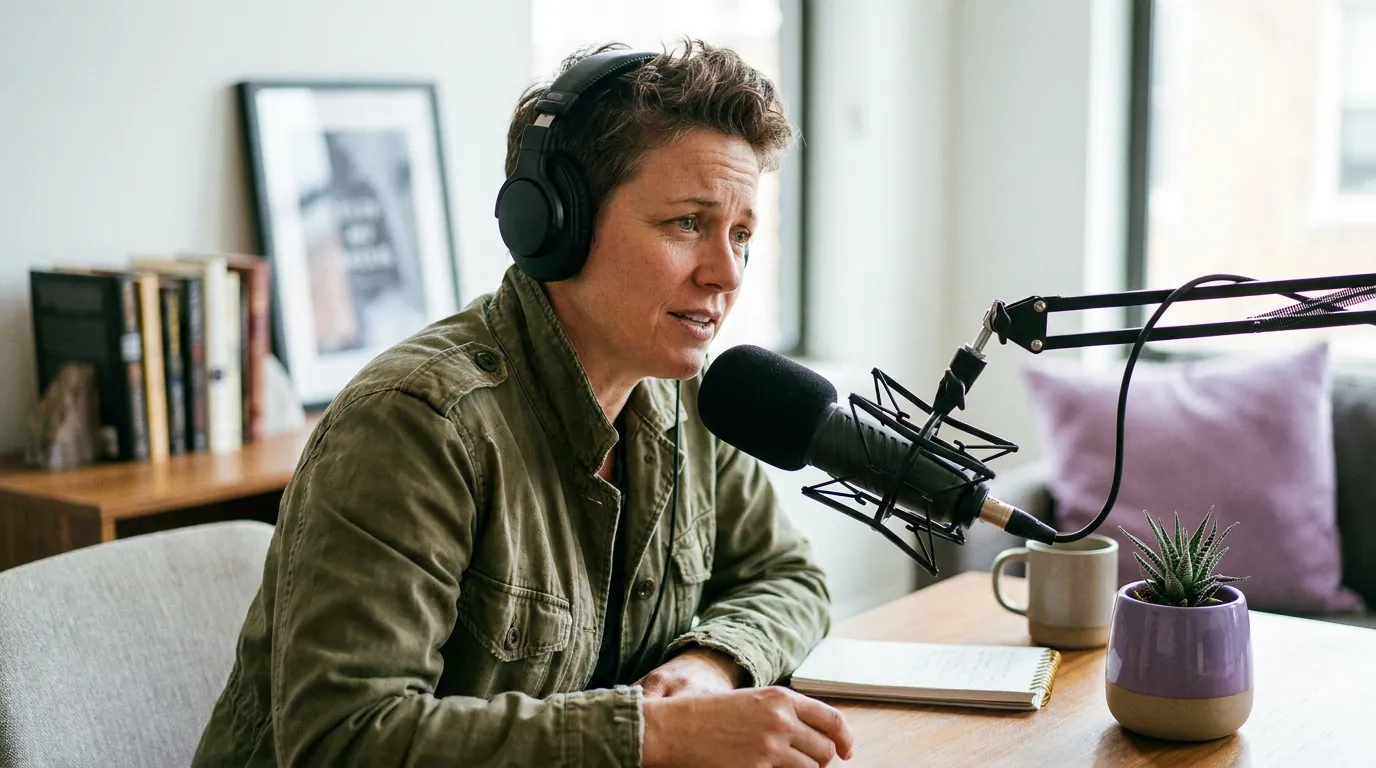
What does "validation over advice" mean?
It means leading the clip with the moment that names an experience a viewer recognizes, rather than the moment that prescribes a fix. Validation is descriptive: "a lot of people feel guilty for needing rest, and that guilt isn't a moral failing." Advice is prescriptive: "do these four things every morning to fix your anxiety." The first makes a stranger feel less alone in three seconds. The second, stripped of the conversation around it, reads like a clinical instruction from someone who has never met them.
The cut works because of how the moments behave out of context. A validation moment survives being shared, screenshotted, and watched on mute, because its meaning doesn't depend on what came before or after. An advice moment is fragile, pull it out of the episode and it can sound like a guarantee, a diagnosis, or a one-size-fits-all rule, none of which a responsible host would actually say. Lead with the line that holds up alone.
Which four moments should a mental health clip lead with?
Lead with one of four moment types: the validation line, the reframe, the named-expert insight, and the honest-struggle story. Each gives the viewer a different reason to stay, and each needs a distinct safety cue on screen in the first second, a feeling named, a shift made visible, a credential, or a face with a clear "this got better" arc. Pick the type first; it tells you what cue the clip needs and what it must never imply.
1. The validation line, open on the feeling
The strongest mental health clips name a feeling out loud in the first second. When a host says "the dread you feel on Sunday night isn't weakness," a viewer who has felt exactly that stops scrolling, because someone finally put words to it. Validation clips travel because recognition is the most shareable emotion in this niche.
The cut rule: surface the named feeling in the opening caption frame, then let the host expand. Most social video is watched on mute, so the validating sentence has to be readable, not just spoken. Stop the clip while it's still about the feeling, before it tips into a fix the viewer didn't ask for.
2. The reframe, open on the old belief, then the turn
A reframe clip shows a belief changing: "I used to think rest had to be earned. It doesn't." It works because the viewer watches a shift happen in real time, and shifts are inherently satisfying to watch. The structure is built in, old belief, then the turn, which makes it one of the easiest moment types to cut cleanly.
The cut rule: open on the limiting belief stated plainly, land on the turn, and end there. Don't extend into "and here's how you do it," which converts a gentle reframe into instructions. The reframe is the payload. Let it be enough.
3. The named-expert insight, open on the credential
When a guest is a licensed therapist, a psychiatrist, or a clinical researcher, the credential is the hook and the safety cue at once. The insight clips well because viewers extend trust to a verifiable title that they'd withhold from an anonymous voice, and the title also tells the viewer this is a professional speaking generally, not diagnosing them personally.
The cut rule: open on a title card naming the person and their credential, "Dr. Priya Nair, clinical psychologist", then let the insight follow. Caption the credential, because the audio is muted and the authority is doing the work. And keep the insight general: a clip should never read as the expert diagnosing the viewer, which is the line we'll draw clearly in a moment.
4. The honest-struggle story, open on the face and the arc
A real person describing a hard season is the most relatable mental health clip, and the one most easily mishandled. It works because the viewer sees themselves in the speaker. It becomes risky when the struggle is shown without any sign of the way out.
The cut rule: open on the person's face and make sure the clip contains the turn, the moment things started to get better, the help they reached for, the perspective they gained. Never clip the lowest point and leave the viewer there. A struggle story without an arc isn't a story; it's a person at their worst, frozen on a loop in a stranger's feed. The arc is the responsibility. The same lead-with-the-reason logic protects the suspense in a true crime clip, see where to end a true crime clip for max suspense, but here the thing you protect is the viewer, not the reveal.

The crisis-topic safety check (stop, slow, go)
Before any mental health clip goes out, run its core moment through three buckets. Stop moments don't ship. Slow moments ship only with a resource overlay and a clear arc. Go moments ship as-is. This is the step that protects both your audience and your account, because platforms actively restrict, demote, and age-gate content that touches self-harm and suicide.
A few rules make the buckets usable. Never clip method or means detail, any description of how someone attempted or considered self-harm is a stop, full stop, and no overlay rescues it. If a moment touches suicide, self-harm, an eating disorder, or active crisis at all, the safest move is to clip a different moment from the same episode. Slow moments, a recovery story, a trauma reference, grief, ship only with a crisis-resource line readable on screen (a helpline relevant to your audience's region) and a clear arc toward getting better. Go moments, validation, reframes, general insights, an honest caveat, ship as-is. When in doubt, downgrade. A restricted clip teaches the algorithm your account posts sensitive content, and that limit follows the next clip too.
The no-diagnosis rule
One rule sits above the buckets: a clip must never diagnose the viewer. A clip can name a feeling, describe a pattern in general terms, and share a professional's insight about a condition. It cannot say or imply "if you do X, you have Y." "Here are nine signs you have ADHD" is the format that spreads fastest and does the most harm, because a stranger watching on mute walks away convinced of a clinical label from a 30-second fragment. Reframe self-diagnosis clips into shared-experience clips: not "signs you have anxiety" but "things people with anxiety often relate to." The first hands out a label; the second hands out recognition. Recognition is the goal. A label from a clip is a liability.
Common mistakes clipping a mental health podcast
- Leading with advice instead of validation. "Four ways to fix your anxiety" is a prescription a stranger didn't ask for. "If your anxiety spikes at night, you're not broken" is recognition. Lead with the recognition; the techniques can live in the full episode.
- Clipping the low point without the turn. A struggle moment with no sign of recovery leaves a vulnerable viewer stranded. Always include the arc, the help reached for, the perspective gained, or clip a different moment entirely.
- Posting "signs you have [condition]" content. It's the fastest-spreading and least responsible format in the niche. It encourages self-diagnosis from a fragment. Rewrite it as "things people with [condition] often relate to," which validates without labeling.
- Skipping the resource overlay on heavy clips. A clip touching grief, trauma, or recovery should carry a crisis-resource line on screen, not buried in a hashtag, most social video plays on mute, so the safety net has to be readable.
- Posting the most dramatic moment because it spikes. Virality without strategy is empty engagement, and in mental health a dramatic clip can also get your account restricted. Views are not conversions, and a clip that draws moderation costs you the reach on everything after it, the same discipline you'd apply to picking the best AI-suggested clips in any niche.
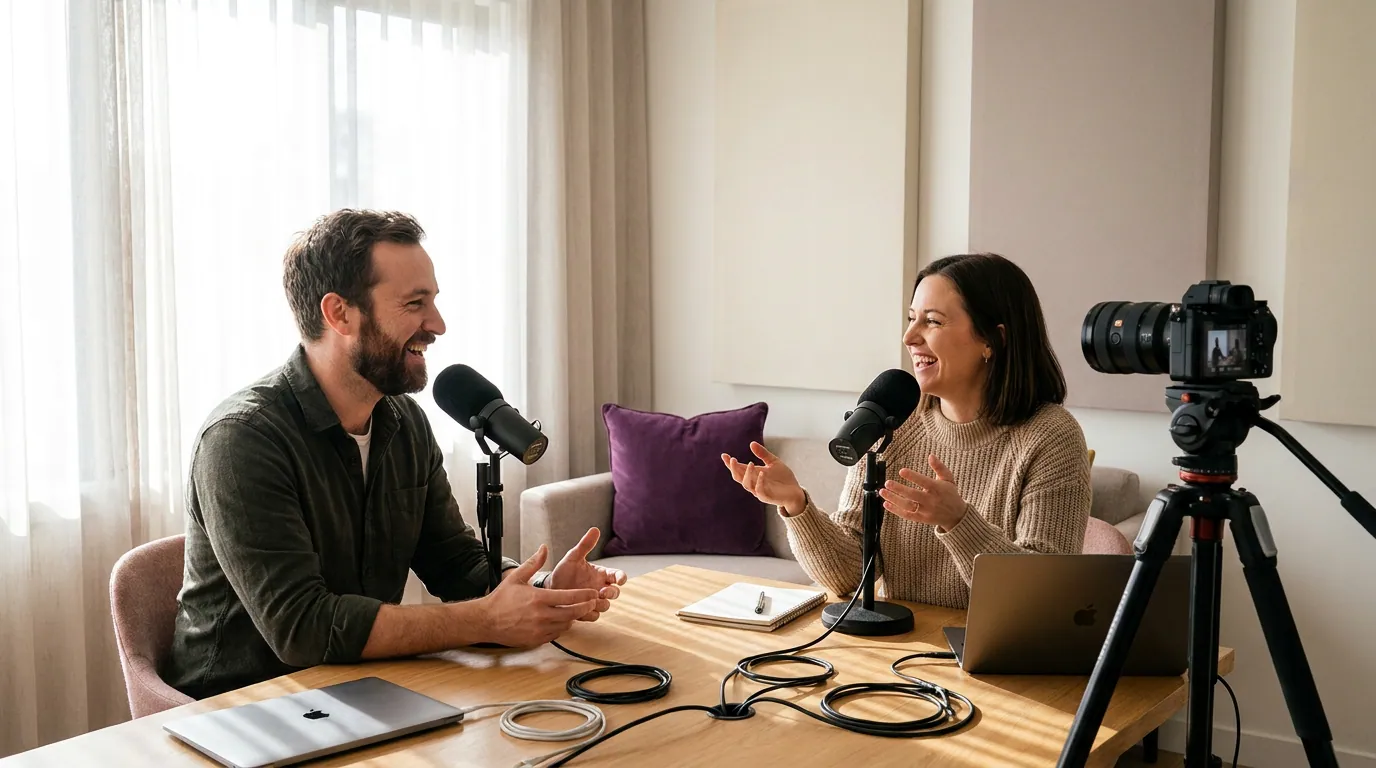
Tools: finding the moment vs vetting the harm
Any AI clipper will surface a mental health episode's emotionally loud moments, the rawest confession, the boldest "do this", because detection models score on emphasis and energy. The catch in this niche: the loudest moment is often the low point or the prescription, exactly the ones you shouldn't lead with. How AI clip detection actually works explains why the model gravitates there, intensity reads as a peak, which is precisely why the human pass isn't optional here. It's the safety check.
You want five things in one loop: generation to find candidates, an editable timeline to move the cut onto the validation line and off the low point, accurate captions for the named feeling and the credential, on-screen text for a crisis-resource overlay, and scheduling. One loop matters here because vetting a clip can't mean exporting and re-importing, the safety pass is an editing step, not an afterthought. QuickReel keeps generation, a frame-level timeline, manual trim, captioning, on-screen text, and multi-platform scheduling in a single pass. Opus Clip, Vizard, and Klap surface strong candidates and expose a manual editor too, and the four-type taxonomy and the stop/slow/go check above apply to any of their output unchanged. Most modern tools detect roughly the same moments. The real difference is how few clicks it takes to move the cut from the model's pick to the responsible one.
The framework travels. The same lead-with-the-reason logic that protects a punchline in a comedy podcast clip and the suspense in a true crime clip protects the viewer here, even though the thing at stake is different. The credibility-first instinct is the same one that earns trust in a business podcast clip.