
Clipping in Batches vs. After Each Episode


Batch your clips if your show is evergreen and you publish on a steady schedule; clip right after each episode if your show is timely or you have a team that can absorb the recurring work. Most solo creators with conversational, evergreen shows are better off batching a month at a time, it removes the per-episode grind that causes people to quit clipping by week three. The exceptions are real, though, and worth getting right.
This isn't a "batching is always better" piece. The two cadences trade different things, and the wrong one for your show either burns you out or leaves your best moments stale. Below: the honest side-by-side, a three-question rule that settles it for almost everyone, and where each rhythm actually breaks.
What the two cadences actually mean
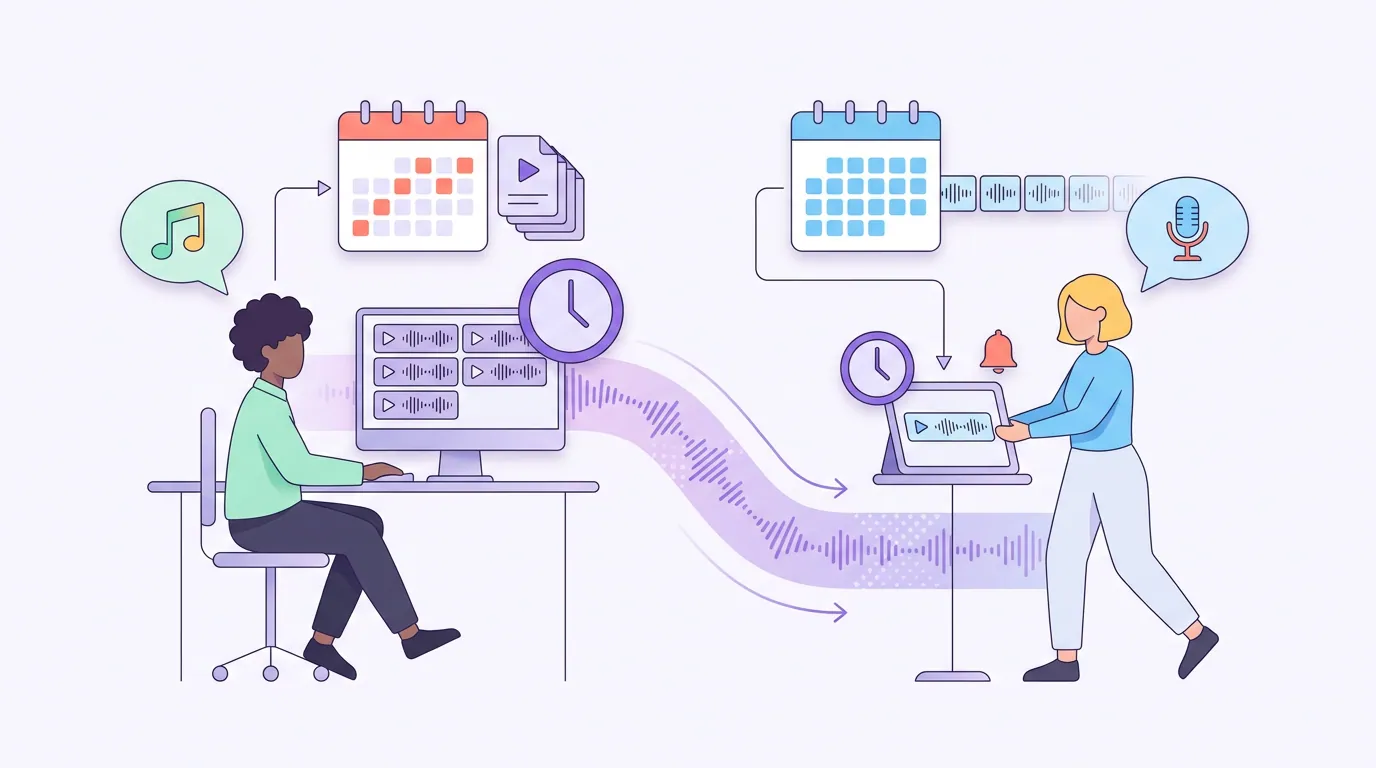
Batch clipping means you set aside one session, usually monthly, and clip several episodes at once into a queue you drip out over the following weeks. Clip-as-you-go means you produce clips from each episode shortly after it publishes, in a smaller, more frequent rhythm. The difference is not how many clips you make. It's when you make them and how much your week looks the same.
Both can produce the same monthly output. A single 20-to-40-minute episode holds enough usable 30-to-90-second moments (castmagic on clip length) for a week or two of posts either way, call it a rough dozen on a normal interview, fewer on a quiet one. The question isn't how many clips an episode yields; it's whether you'd rather pay the editing cost in one concentrated block or spread it thin across the month.

Why the cadence decision matters more than the tool
The cadence you pick is the single biggest predictor of whether you're still clipping in three months, and consistency is what actually grows the show. Clips drive 20–40% of new audience and can lift reach 2–5× for video shows by one studio's client data (Podcast Studio Glasgow, single-source, treat as a range). And the format has stopped being optional: short clips are now the main way a show gets discovered, not an afterthought to the episode.
But the upside only lands if you keep going. The podcasting graveyard is mostly a consistency problem, roughly 47% of podcasts stop at three episodes or fewer (Amplifi Media analysis). Clipping has its own version of that cliff: people start strong, then the per-episode workload collides with a busy week and they quietly stop. Choosing the cadence that survives your real schedule matters more than which clipper you use.
The three-question decision rule
Almost every show resolves to one cadence after three questions. Answer them in order and stop at the first one that points firmly.
- Is your content timely or evergreen? If your episodes react to news, releases, drama, or anything with a shelf life, clip as you go. A take on this week's headline is worthless in a queue three weeks deep. If your episodes are interviews, frameworks, or stories that are as relevant in March as in June, batching is safe and far more efficient.
- Do you have help, or are you solo? A team can absorb a recurring weekly clip task without one person carrying the whole load; the setup cost gets distributed. Solo, that recurring cost lands on you every single week, which is exactly the pattern that ends in week three. Solo and evergreen points hard at batching.
- Is your publishing schedule steady or seasonal? A weekly show with a predictable calendar batches cleanly, you always have enough episodes banked. A seasonal show that runs in bursts then goes quiet should clip each episode while it's live, because there's no steady stream of new material to batch against later.
Which cadence fits which creator
Solo creators with an evergreen show, batch. This is the largest group and the clearest call. You don't have the slack to pay the editor-warmup cost every week, and your content doesn't expire, so a monthly session into a queue is both efficient and burnout-proof. If this is you, how to batch a month of clips in one focused day is the exact session to run.
Teams, usually clip as you go, sometimes both. When a clip editor or VA owns the task, the recurring weekly cost is their job, not a tax on the host. That makes per-episode clipping practical and keeps you current. Many teams run a hybrid: clip the timely moments from each episode immediately, and batch the evergreen ones quarterly so nothing useful sits unmined.
Seasonal shows, clip as you go, while you're live. A show that runs ten episodes a season then goes dark can't batch against a steady stream, there isn't one. Clip each episode during the active run, lean into the momentum while the audience is paying attention, and treat the off-season as planning time, not production time.
Topical or news-driven shows, clip as you go, always. No exceptions worth making. A queue murders timely clips. The whole value of a reaction is that it's fast.
Common mistakes with each cadence
Batching timely content. The most expensive mistake. You batch a sharp take on a current event, queue it for three weeks out, and by the time it posts the moment is gone. Pull timely clips out of the batch and post them now; only evergreen material belongs in a queue.
Letting your voice drift in per-episode clipping. When you clip a little each week, your caption style, hook formula, and pacing quietly mutate over a month. The fix is a written one-page template you apply every time, so episode-12 clips look like episode-1 clips. Batching gets this for free; as-you-go needs the discipline.
Treating a batch as set-and-forget. A queued month is not an evaluated month. Leave a couple of open slots each week for a recut of something that's working or a timely add. How many clips per week actually grows a podcast covers the cadence that holds without burning the whole batch in one go.
Clipping as-you-go with no buffer. If every week's clips depend on this week's recording, one missed episode means a dead feed. Even per-episode clippers should keep two or three evergreen clips banked as a cushion for the week life gets in the way.
Over-producing to fill the queue. Batching tempts you to make 40 clips because you're already in the editor. A month of mediocre clips loses to a strong handful, run your keep/kill judgment hard. How to pick the best AI-suggested clips is the rubric to apply whichever cadence you run.
Tools, honestly
The cadence decision is independent of your tool, but the right tool makes the harder cadence survivable. An AI clipper collapses the slowest parts of any session, finding moments and rough-cutting, which is what makes monthly batching feel light instead of brutal, and what makes per-episode clipping fit into a normal week instead of eating a night. How AI clip detection actually works explains what it scores so you know what to mark by hand.
If you record on video, making clips from a YouTube podcast video is the fastest start for either cadence. Audio-only shows aren't locked out, making clips from an audio-only podcast covers turning a waveform into a watchable clip. The tool doesn't pick your cadence; it just removes the reason the cadence you picked falls apart.
FAQ
Is batching or clipping per episode better for a solo podcaster? Batching, in almost every case. Solo creators don't have slack to absorb a recurring weekly editing cost, and the per-episode rhythm is the pattern that ends in people quitting by week three. Batch a month of evergreen clips in one session and drip them out. The exception is a timely show, where you must clip as you go.
How often should I batch clips? Monthly is the common sweet spot for a weekly show: three to four banked episodes hold enough 30-to-90-second moments to post a few times a week for a month-plus (our rule of thumb, directional). Batch more often and you lose the setup-cost savings; less often and clips sit in the queue too long.
Can I mix both cadences? Yes, and many teams should. Clip the timely moments from each episode immediately so they ride the news cycle, and batch the evergreen material monthly or quarterly so nothing useful goes unmined. The hybrid is the best of both once you have help to run it.
Does batching hurt how timely my clips feel? It can, if you batch the wrong material. Anything reacting to news, releases, or current events should never sit in a queue. Keep batching for evergreen content, interviews, frameworks, stories, and post timely clips the day you record them.
Won't clipping after every episode burn me out? Solo, it often does, because you pay the editor-warmup cost every week. An AI clipper handling the mining and rough cuts lowers that cost enough to make it survivable, but if you're evergreen and solo, batching is still the lower-burnout choice.