
Clip Strategy for Faith and Religion Podcasts


Clip a faith podcast in two lanes: encouragement and teaching. Encouragement clips carry one warm, liftable moment, a verse read aloud, a short prayer, a line of testimony, and ask nothing of the viewer except a pause. Teaching clips carry one clear idea a listener can think about or apply. Sort every candidate into one lane or the other, build it around its single moment, and run it through one test before it ships: does this invite a stranger in, or does it preach at them? If it preaches, recut it.
Faith is one of the harder niches to clip well, because the failure mode isn't a boring clip, it's a clip that works against the show. A sermon excerpt pulled at the wrong line reads as scolding to anyone outside the room. A testimony cut too tight loses the part that makes it land. The fix is not to clip less; it's to clip with a clear sense of which lane each moment belongs in and what tone the clip is asking a scroller to meet. Get that right and a faith clip does something most niches can't: it reaches a stranger at the exact moment they needed to hear it.
Why faith clips are worth doing carefully
Religion and spirituality is a consistent top-tier podcast genre, not a fringe one, it sits among the most-listened categories alongside comedy, news, and true crime (Statista; genre rankings vary by measurement firm). That means there's a real audience scrolling for this content, and a real feed of competitors to stand out in.
Clips are how that audience finds you. They drive an estimated 20–40% of new-audience acquisition for video shows and can lift reach 2–5× (Podcast Studio Glasgow; single-studio figures, treat as directional). Discovery has shifted to social, too: 57% of listeners now rely on social media for podcast recommendations, the first time it passed friends and family (InsideRadio, citing Coleman Insights / Amplifi Media, "The State of Video Podcasting 2025," n=1,000 U.S. consumers). For a faith show, that's notable, because so much of this audience used to arrive through a church, a friend, or a family member. Now a meaningful share arrives through a clip on a phone.
And the feed is crowding fast. NPR documented a whole "clipping economy" in 2026, networks of paid freelance clippers churning podcast moments onto every platform at once, to the point that, as one host put it, "clips aren't the promotional material for the content, clips are the content." In that volume, a faith clip that scolds gets scrolled past; one that offers a moment of calm gets saved.
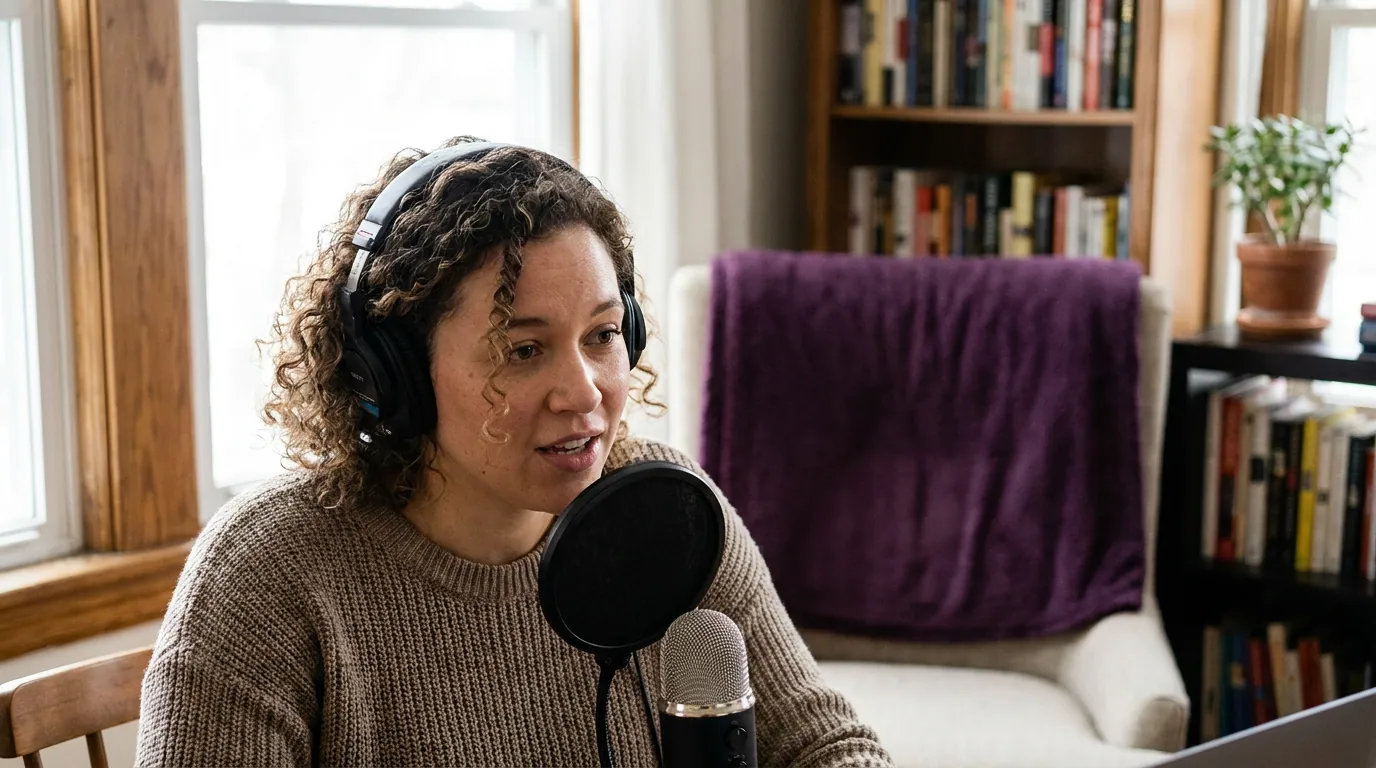
What is the encouragement-vs-teaching split?
The split is a sorting rule: before you cut anything, decide whether a moment is an encouragement clip or a teaching clip, because the two have different jobs, different lengths, and different tones. An encouragement clip offers comfort or hope and asks nothing back. A teaching clip offers one idea to consider or apply. Sort first; the lane tells you how to cut.
This matters because most weak faith clips are weak for the same reason: they try to be both at once. A clip that opens with a tender testimony and then pivots into a three-point doctrinal argument loses the people who came for the comfort and bores the people who came for the teaching. One lane per clip. A long episode usually holds plenty of both, so you're not choosing for the show, you're choosing for each individual clip.
The encouragement lane
Encouragement clips are the ones that travel furthest in this niche, because they meet a scroller's emotional state instead of their curiosity. Someone half-watching their feed at 11pm doesn't want a lesson. They want a sentence that lands like it was written for them. Keep these short, 15 to 45 seconds, and let the moment breathe. Don't crowd a tender line with title cards and zooms.
The cut rule: open on the warm moment within the first three seconds, hold it, and end on a beat of quiet rather than a hard sell. The opening three seconds decide whether a clip survives the scroll (castmagic), but in this lane the "hook" is warmth, not a shock. A steady voice reading a verse is a stronger open than a jump cut.
The teaching lane
Teaching clips carry one idea a listener can hold and think about, a reframe of a familiar passage, a practical answer to a real question, a single insight from the host or guest. These can run a little longer, 30 to 60 seconds, because an idea needs room to be stated and earned. But the discipline is the same as everywhere else: one idea per clip.
The cut rule: lead with the idea in plain words, give the one piece of support that makes it credible, and stop before the host's full argument unspools. The nuance, the caveats, the cross-references, those belong in the episode. The clip's job is to make a stranger think "I hadn't seen it that way" and want the rest. Pulling that single idea cleanly is the same discipline behind turning a business podcast into shareable clips, even though the subject couldn't be more different.
The three liftable moments: verse, prayer, testimony
Within those two lanes, faith episodes hand you three recurring kinds of liftable moment. Knowing the three speeds up sorting, because you stop scanning a whole transcript and start hunting for these specifically.
The verse read aloud. When the host reads scripture cleanly and slowly, that reading often is the clip, no commentary needed. Cut so the verse stands on its own, put the reference on screen as text, and resist adding a takeaway over the top. Most social video is watched on mute, commonly cited at 75–85% (Verizon Media/Sharethrough reported ~75%; Digiday reported ~85% of Facebook video muted, both publisher-reported and directional), so the words have to be on screen, accurately, or the clip is silent wallpaper.
The prayer. A short, complete prayer is one of the most shared moments in faith short-form, because it lets the viewer participate rather than just watch. Capture a prayer that has a clear beginning and end, keep it under about 45 seconds, and end on the close, the amen, not on a "follow for more." Cutting a prayer off mid-sentence to bolt on a CTA is the fastest way to make a sincere moment feel transactional.
The testimony. A personal story of change is the richest material here, and the easiest to ruin with a bad cut. Every testimony has a turn, the before-to-after pivot, and the clip lives or dies on whether you start a beat before that turn and let it complete. Start too late and there's no contrast; cut too early and there's no payoff. This is structurally close to the suspense work in which true crime moments actually clip well: in both, the cut point around the turn is the whole craft.

The tone test: invite, don't preach
Here is the test, and it's a single question you ask of every faith clip before it ships: does this clip invite a stranger in, or does it tell them what to do? A clip that ends "so you need to repent and turn your life around" preaches. A clip that ends "this is the part that stayed with me, maybe it'll sit with you too" invites. Same conviction underneath; completely different reception from someone scrolling who has never heard your show.
Inviting isn't softening the message, it's respecting that the viewer chose to stop. The encouragement lane invites naturally, because comfort doesn't demand anything. The teaching lane is where preaching creeps in, so it needs the test most. End teaching clips on the idea itself, or on a genuine question, not on an instruction. "Worth sitting with" beats "you must." Let the message do the convicting; the clip's only job is to open the door.
This is also why faith clips need a careful human pass. An AI clipper scores for emphasis and emotional intensity, so it'll happily surface the most heated thirty seconds of a sermon, which is often the most preachy, least inviting stretch in the whole episode. How AI clip detection actually works explains why the model gravitates to volume and intensity. You're re-sorting its picks by a different question: which of these invites rather than preaches? That re-sort is the work, and it's the same discipline as picking the best AI-suggested clips in any niche.
Common mistakes clipping faith podcasts
- Stacking a verse, a prayer, and a point in one clip. Each is a complete moment on its own, and crammed together they cancel out. One moment per clip, always.
- Ending a prayer on a CTA. Cutting "amen" short to bolt on "follow for more" makes a sincere moment feel like a sales funnel. End the clip on the close of the moment; put any prompt in the caption instead.
- Clipping the most heated stretch because the AI flagged it. The loudest thirty seconds is usually the most preachy. Re-sort the tool's picks by the tone test, not by its energy score.
- Misquoting scripture in the captions. A transposed word or a wrong reference is a credibility hit in this niche specifically, and most viewers watch on mute. Proof every verse, every reference, and every name before the clip ships.
- Cutting a testimony before the turn completes. Without the before-and-after contrast, a testimony is just a person talking. Start a beat before the pivot and let it land.
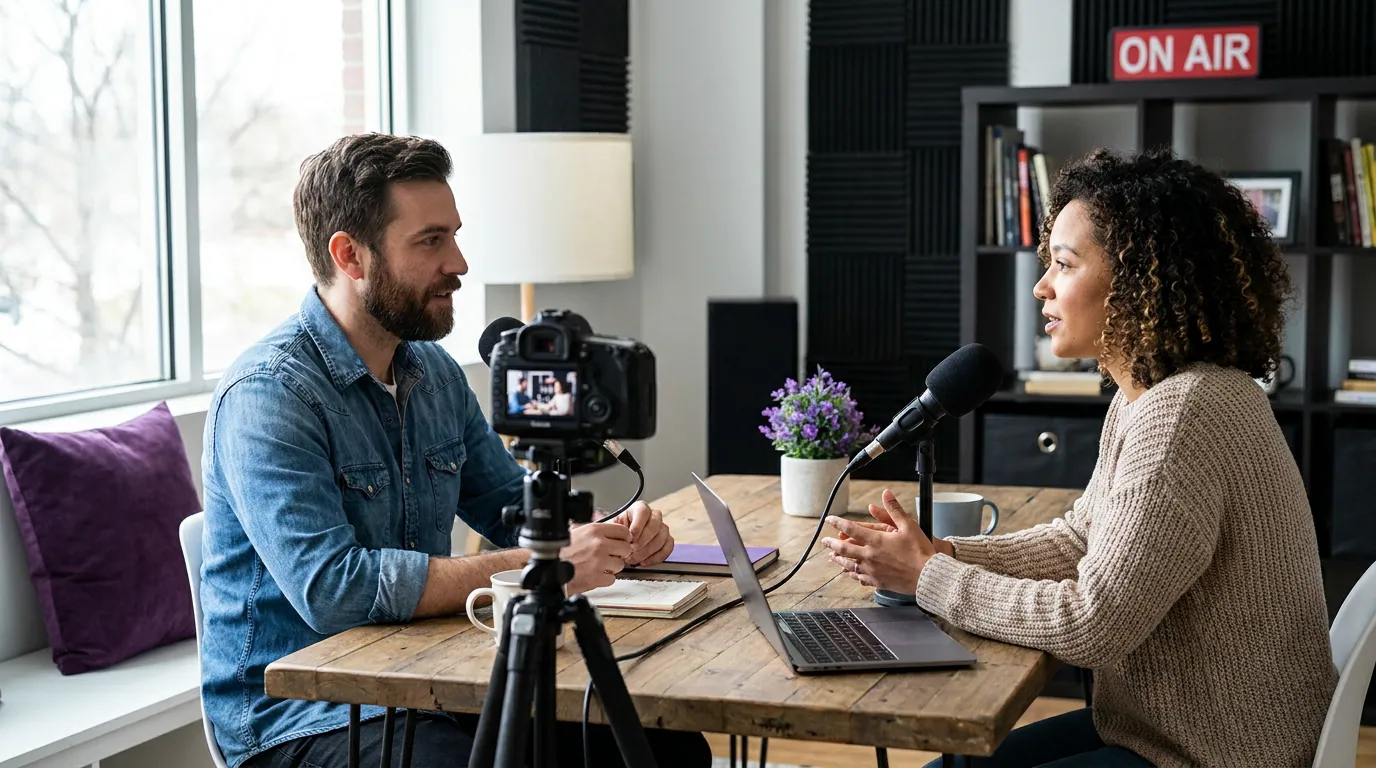
Tools: surfacing the moment vs setting the tone
Any AI clipper will find a faith episode's high-energy stretches, because detection models are built to score emphasis and emotion, that's their job. Where tools differ is how easily you can re-sort that output by lane and tone, fix the scripture in the captions, end the clip on the right beat, and schedule, without bouncing between apps. The encouragement-vs-teaching split and the tone test run on any tool's output unchanged; what varies is how many clicks separate a raw candidate from a finished, accurately captioned clip.
QuickReel keeps generation, a frame-level timeline, manual trim, captioning, and multi-platform scheduling in one pass, which matters here because the human steps, sorting by lane, proofing the verse, ending on the amen, applying the tone test, are non-negotiable in this niche. Opus Clip, Vizard, and Klap all surface strong candidate moments and offer a manual editor too; the framework above applies to any of their output. The honest reality across all of them: most modern tools detect roughly the same moments, so the win is how few clicks stand between a YouTube URL and a clip that actually invites. The craft of protecting one beat carries across genres, the cut-discipline is the same whether you're guarding a comedy punchline's timing or a testimony's turn.