
Breathing Techniques to Calm Nerves Before Recording

To calm nerves right before you record, take two slow physiological sighs, a double inhale through the nose, then a long exhale through the mouth, then sit and run two minutes of box breathing while you wait for the light. The double sigh drops your heart rate fastest; box breathing holds it down. Lengthen the exhale, not the inhale, and the jitter settles.
Nerves before a recording are not a character flaw and they are not random. A racing heart, a tight chest, a voice that climbs half an octave, that is your nervous system reading "high stakes, lots of people will hear this" and flooding you with adrenaline. You cannot think your way out of it, but you can breathe your way out of it, because breathing is the one part of that system you control directly. The trick most advice misses is that different breathing patterns do different jobs, and using the wrong one at the wrong moment wastes the two minutes you have. This guide maps four patterns to the exact moment each works best, then shows you how to keep breathing through the interview without the breath landing on the mic.
What is the fastest way to calm down before recording?
The fastest physiological reset is the physiological sigh: inhale through your nose, take a second short sip of air on top of that inhale, then exhale slowly and fully through your mouth. Two or three of these, done in under a minute, calm you faster than a single deep breath because the double inhale reinflates collapsed air sacs and the long exhale triggers the calming branch of your nervous system. A 2023 Stanford trial in Cell Reports Medicine put this exhale-focused "cyclic sighing" head-to-head with box breathing and mindfulness meditation and found the sigh produced the biggest gains in mood and the largest drop in respiratory rate (Stanford Medicine). That is the research behind the order I recommend below.
The reason it beats "take a deep breath" is mechanical. One big inhale on an already-tense chest can make you feel more keyed up, not less, you are stacking air on top of a shallow, fast pattern. The double inhale plus a deliberately longer exhale flips the ratio. Your exhale is when your heart rate naturally dips, so the longer it runs relative to the inhale, the more your body reads it as "safe, stand down." Spend a minute on the sigh, then settle into something steadier for the wait.
Which breathing pattern works for which moment?
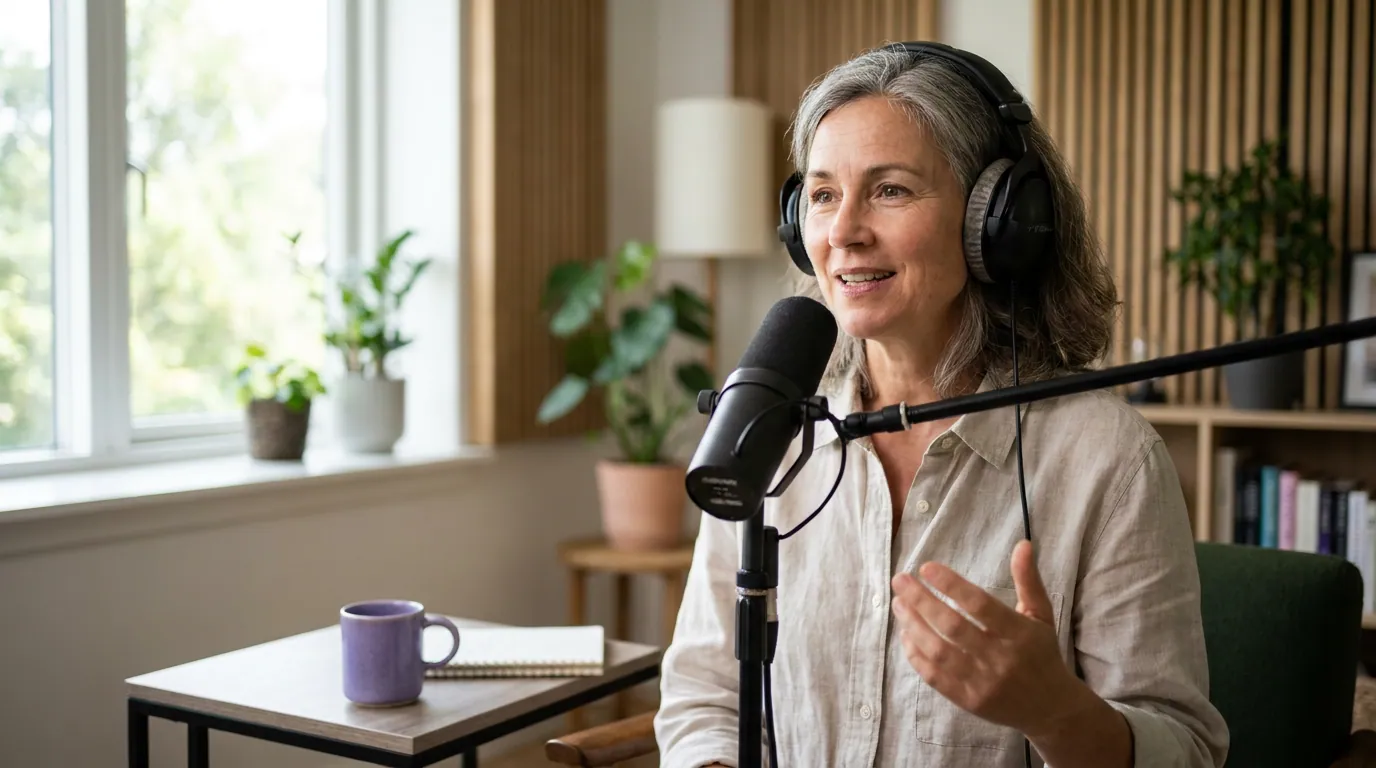
Match the pattern to the moment. Use the physiological sigh in the last sixty seconds before you record, when adrenaline is peaking and you need the fastest drop. Use box breathing during the wait, the sound check, the small talk, to hold a calm baseline. Use an extended-exhale breath the instant a hard question lands. Use a quiet diaphragmatic reset between answers to refill without gasping.
That mapping is the whole point, and it is what generic "just breathe" advice skips. A pattern that is perfect for a two-minute wait is useless in the half-second before you answer a tough question, and vice versa. Here is the map I coach guests to keep in their head.
The two patterns most guests confuse are the sigh and box breathing. The sigh is a rescue, short, sharp, for the spike right before you go live. Box breathing is maintenance, slow, even, for the minutes you spend waiting. Reach for the sigh when your heart is already pounding; reach for box breathing to stop it pounding in the first place.
How do you do box breathing before a recording?
Box breathing is four equal phases of about four seconds each: breathe in for four, hold for four, breathe out for four, hold for four, then repeat. Run it for two to three minutes during the sound check or the small talk before the host hits record. The even rhythm and the holds keep your nervous system from ramping back up, in the same Stanford trial, box breathing still lowered physiological arousal, just not as sharply as the exhale-led sigh, which is exactly why it earns the steady-state slot here rather than the last-minute rescue slot.
Four seconds is a starting count, not a rule. If a four-count hold feels like a strain, drop to three; the evenness matters more than the number. What you are training is a steady, predictable rhythm that crowds out the fast, shallow breathing that fuels nerves. Do it with your eyes soft or closed if you can, and if you are on camera in a pre-roll, do it before the host arrives so you are not visibly counting on screen.
How do you breathe mid-interview without it landing on the mic?
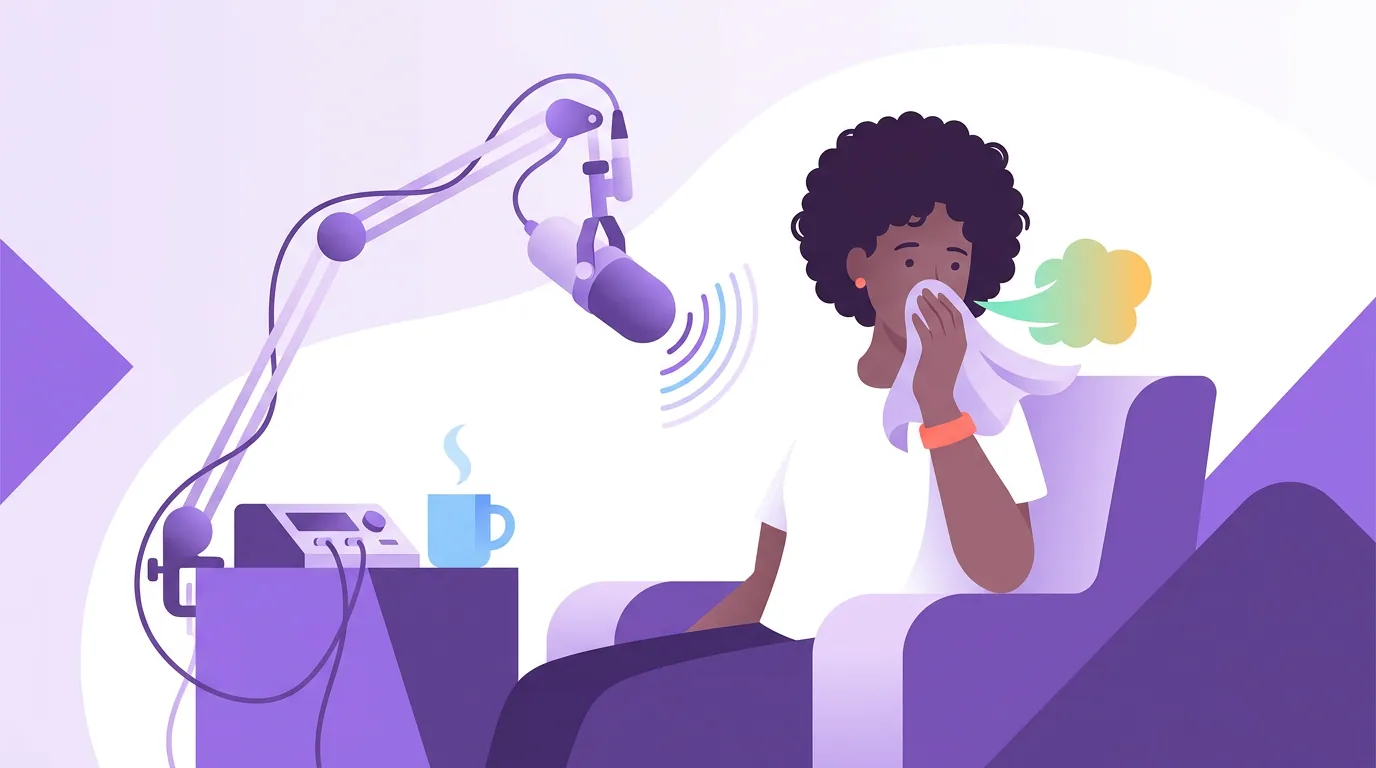
Breathe low and slow through your nose between answers, and never gulp air through your mouth right before you speak. A close mic captures every sharp inhale, so the goal is to refill the breath you spend talking in small, quiet, diaphragm-led sips rather than one panicked chest-grab. Take the bulk of your breath in the natural gaps, after the host's question, before you start, when a small pause is normal anyway.
This is the part almost no breathing guide covers, and it is the difference between calm-sounding and clearly-nervous on the recording. The audible gasp is not a volume problem you can fix in editing without leaving a hole. It is a pattern problem: when you are nervous you breathe high and fast into your chest, run out of air mid-sentence, then grab a loud emergency breath right into the capsule. Fix the pattern and the sound disappears on its own. Here is the checklist.
The single most useful one is habit five: never let yourself reach the gulp. The loud breath happens because you started a long sentence without enough air, ran dry, and grabbed more in a panic. If you refill in the natural gap after each of the host's questions, the moment a short pause is normal anyway, and a place a deliberate pause actually helps the conversation, you arrive at every answer with a full tank and never need the emergency breath.
Common mistakes that make nerves worse
Most pre-recording breathing advice fails not because the patterns are wrong but because people apply them badly. These five mistakes undo the work.
- One giant gasp instead of a long exhale. Sucking in a huge breath on a tense chest can spike anxiety, not calm it. The calming signal lives in the exhale, so make the out-breath longer than the in-breath, roughly twice as long for the extended-exhale pattern.
- Starting two seconds before record. Adrenaline does not clear in two seconds. Build in two to three minutes of box breathing during the sound check, not a single breath as the light turns on. The reset needs runway.
- Breathing into the chest. A high, shallow chest breath is the nervous pattern, and doing more of it faster just deepens the spiral. Drop the breath into your belly, your hand on your stomach should move, your shoulders should not.
- Holding your breath while you listen. Plenty of nervous guests stop breathing entirely while the host asks a question, then start their answer oxygen-starved and rushed. Keep a slow, quiet breath going the whole time the host is talking, the same way you would during a vocal warm-up before you record.
- Treating nerves as something to eliminate. A little adrenaline sharpens you. The goal is to bring it from a 9 down to a 4, not to zero, a flat, over-relaxed delivery is its own problem. Calm and engaged beats calm and dull.
The same low, steady breathing that settles your heart rate also steadies your voice and feeds the on-camera composure covered in looking confident on camera as a first-time guest. And because you are not running out of air mid-sentence, you reach for fewer stalling words, the breath gap does the work the um and the like were filling.
A two-minute pre-record routine
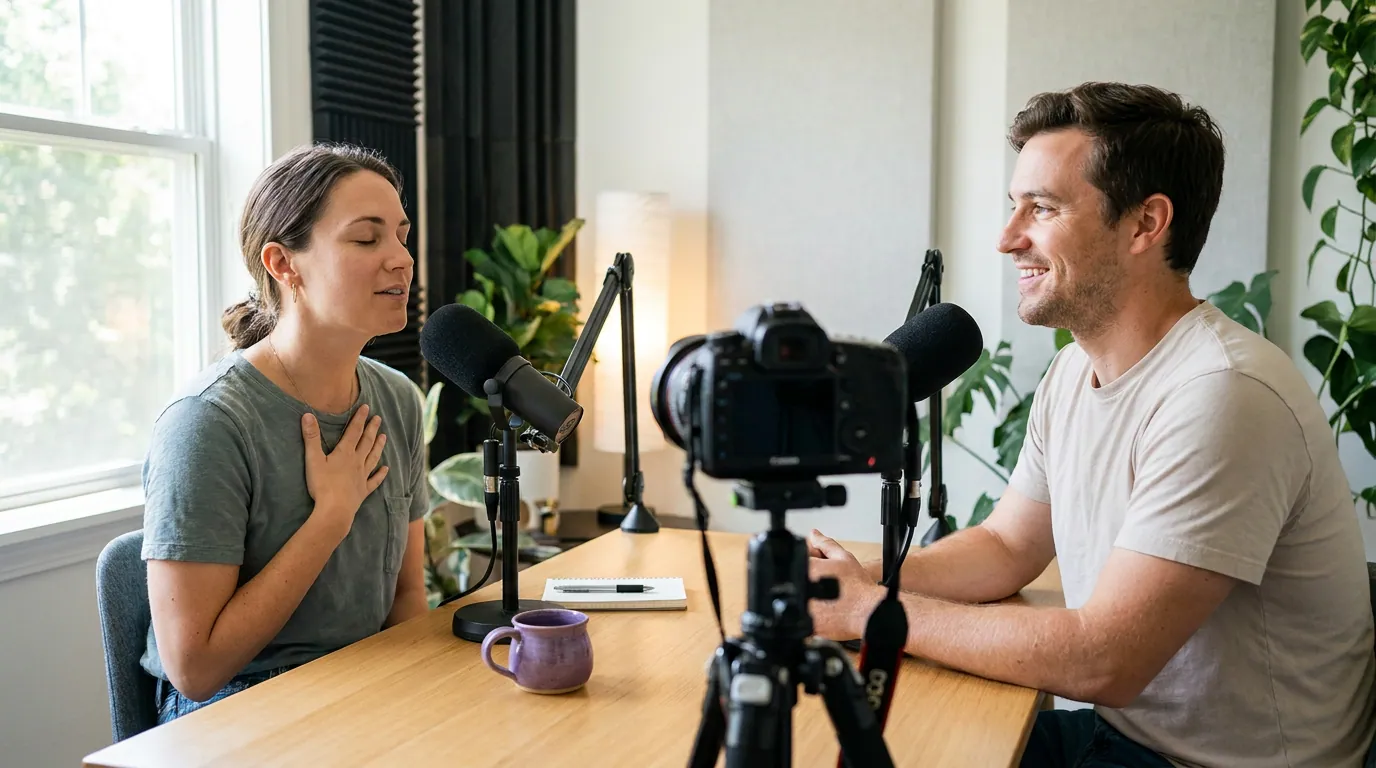
Stack the patterns into one short sequence and you do not have to think on the spot. Run this in the last few minutes before the host hits record.
- Three minutes out, box breathing. During the sound check and small talk, run box breathing at a four- or three-count. Hold a calm baseline so you are not starting from a sprint.
- One minute out, two physiological sighs. Double inhale through the nose, long exhale through the mouth, twice. This is the fast drop for the adrenaline spike as go-time approaches.
- Ten seconds out, one diaphragmatic breath. Drop one slow, low breath into your belly, relax your shoulders down, and unclench your jaw. Then look at where the camera actually wants your eyes and start.
- During the interview, refill in the gaps. Take your full breaths after each question, lead with the diaphragm, and end any sentence early if you feel the air running low.
Why your calmest answers are also your best clips
When your nerves settle, your delivery slows, your pitch drops back to its natural range, and you finish your thoughts instead of trailing off. Those are the moments worth posting. 57% of listeners now rely on social media for podcast recommendations, the first time that source passed friends and family (InsideRadio), and **53% of new US weekly listeners now prefer to watch a podcast, up from 30% in April 2022** (Backlinko). A calm, clear answer makes a clean clip, and the clip is what brings a new listener to the full episode. Breathe well, and you are not only easier to listen to; you are easier to share.
Frequently asked questions
What is the fastest breathing technique to calm down before recording? The physiological sigh: inhale through your nose, take a second short sip of air on top, then exhale long and slow through your mouth. Two or three of these in under a minute lower your heart rate faster than a single deep breath, because the double inhale and long exhale together trigger the calming branch of your nervous system. Use it in the last sixty seconds before you record.
How does box breathing help before a podcast? Box breathing, in for four, hold four, out four, hold four, replaces the fast, shallow breathing that feeds nerves with a slow, even rhythm your nervous system reads as safe. Run it for two to three minutes during the sound check or small talk to hold a calm baseline, so you do not start your first answer already spun up. Drop to a three-count if a four-count hold strains.
Why does my breathing sound so loud on the microphone? Because you are breathing high into your chest, running out of air mid-sentence, then grabbing a loud emergency breath right into the mic. Fix the pattern: breathe low into your belly through your nose, take your big breaths in the gap after the host's question, and never start a sentence without enough air. Sitting slightly off-axis so you speak across the mic helps too.
Should I do breathing exercises if I'm only a little nervous? Yes, but aim to take the edge off, not to flatten yourself out. A little adrenaline sharpens your delivery; the goal is to bring nerves from a 9 down to a 4, not to zero. A couple of physiological sighs and one slow diaphragmatic breath before you start is plenty when you are only mildly keyed up.
Can I breathe to calm down without the host noticing? Easily. Box breathing and diaphragmatic breathing are silent and invisible, do them with a soft gaze during the sound check or while the host is talking. The only thing to time is the physiological sigh, whose audible exhale you do in the last minute before record, off-mic, before the host calls action.