
Beauty Podcast Clips: Show, Then Tell

A beauty clip works when the viewer can see what you are talking about, the product in hand, the result on skin, the before-and-after, not just hear you praise it. Beauty is a visual purchase; a recommendation with nothing to look at reads as an ad someone forgot to finish. So when you clip a beauty episode, lead with the moment that has a payoff to show, and put that payoff on screen at the second you name the product. If your show is audio-only, you fake the payoff with overlays, and that works, if you do it deliberately.
Below is the routing matrix I use to sort beauty clips into three treatments, plus the four-part structure of the one moment that converts in this niche: the recommendation and the reason. There is also a rule most beauty creators get wrong, which is where the affiliate disclosure goes on a 30-second clip.
The one question that decides the treatment
Before you cut, ask: what does the viewer need to see for this recommendation to be believable? If the answer is the product, show the product. If it is the result, show the result or a before/after. If it is neither, a routine philosophy, an industry take, a story about a brand, then the value is verbal and the clip is talking-head with the payoff carried by overlays and captions. Match the visual to what the claim is asking the viewer to trust.
This matters because clips are where a beauty show actually grows. One production studio attributes 20–40% of new audience and a 2–5× reach lift to clips (Podcast Studio Glasgow), treat that as a directional range from one production house, not a platform-wide audit. Even at the low end, if clips carry a chunk of your discovery, a clip that says "this serum changed my skin" with no serum on screen is wasting the slot.
There is a crowding reason to be deliberate too. A beauty feed is the most product-saturated corner of short form, and clip volume keeps climbing as more shows repurpose episodes into Shorts, Reels, and TikToks. A clip that shows the thing and gives one sharp reason cuts through; a clip that only talks scrolls past.
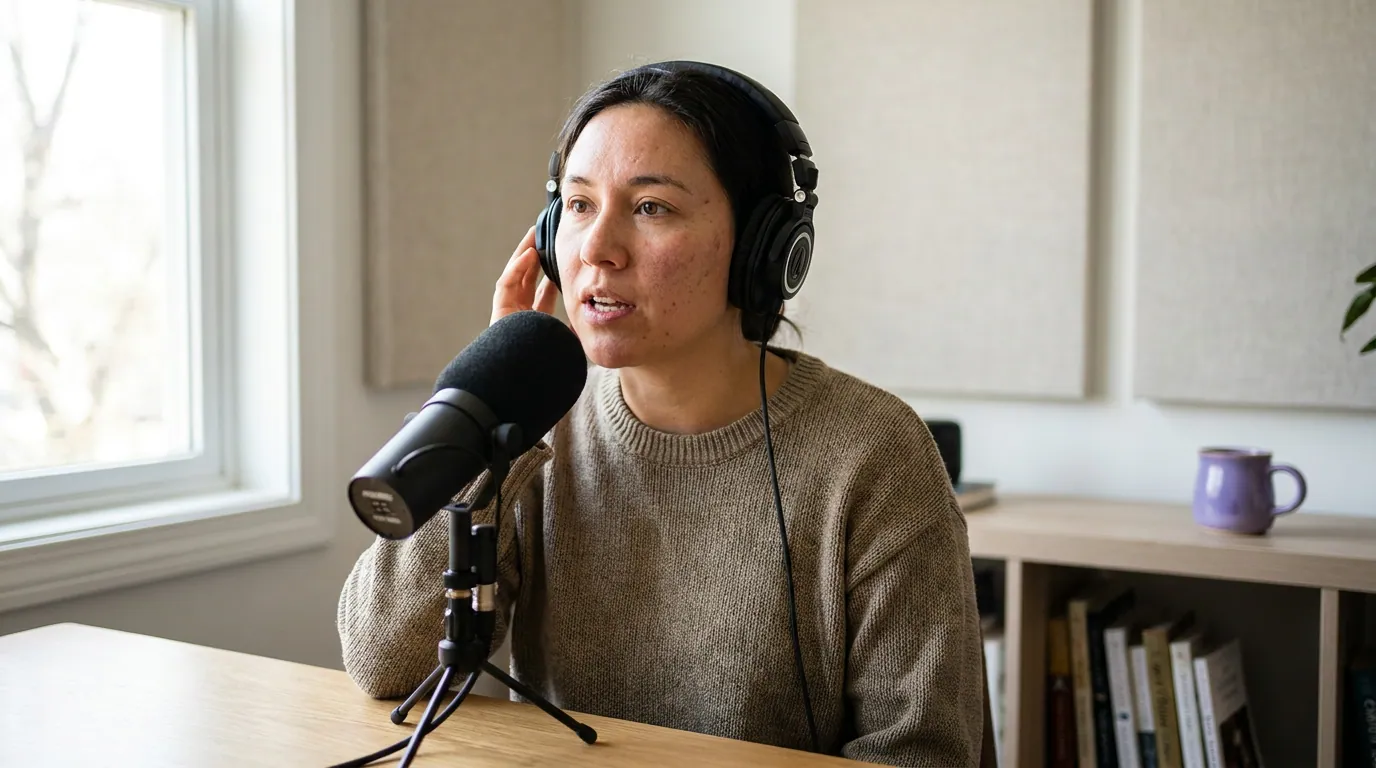
The three treatments, and what each is for
Every beauty clip falls into one of three buckets. Deciding which one before you edit stops you from posting a glowing product review where the product never appears, the single most common beauty-clip miss.
1. Product-on-screen. Your recommendation names a specific thing, so the thing has to be visible the moment you say it. Cut to a close-up of the bottle, the swatch, the texture on the back of a hand, timed to the product name, held for two or three seconds, then back to you. The viewer should be able to screenshot the clip and know exactly what to buy. A review with no product on screen asks people to trust a name they cannot see.
2. Result / before-after. The point is the outcome, not the bottle: clearer skin after a routine, a color correction, "this is week one versus week six." Show the change. A side-by-side or a slow reveal carries more conviction than any sentence, because beauty buyers are pattern-matching their own face onto your result. Caption the claim so it reads on mute, and never imply a result the footage doesn't actually show.
3. Talking-head with overlay. No single product, no visible result, a take on a trend, a routine philosophy, a "stop wasting money on this category" rant, or any audio-only show. Your face and captions carry it, and you layer in light overlays (product flashes, text callouts, simple b-roll) to give the eye something beauty-coded to hold. This is also how an audio-only beauty podcast fakes the payoff, which I'll come back to.
The mistake I see constantly: creators post their best recommendation as a bare talking-head, where the product is named but never shown, and then over-produce a philosophy clip with elaborate b-roll it didn't need. Spend the visual effort on the clips where the viewer is being asked to buy something.
The recommendation-and-reason moment, in detail
The clip that converts in beauty is almost always a recommendation with a reason attached. "Use this" is forgettable. "Use this because it's the one drugstore retinol that didn't wreck my barrier" is screenshot-and-save material. Build the moment in four beats.
Hook (the first 2–3 seconds). Open on the problem or the claim, not on throat-clearing. "I stopped buying $80 vitamin C." The opening seconds decide whether anyone stays long enough to reach the product, so the first line has to do work, not warm up. A weak open means the recommendation, however good, never gets heard.
The product, named and shown. The instant you say the name, it is on screen. This is the visual payoff and it is the whole reason a beauty clip beats a text post. Skip it and you have an audio recommendation with a face attached.
One concrete reason. Not three adjectives, one specific, testable reason: the texture, the ingredient, the price, the one thing it fixed. Specificity is what reads as a real opinion versus a sponsorship read.
Disclosure, if money or product changed hands. Covered next, because it's the beat creators skip and the one with legal weight.

The affiliate-disclosure rule for clips
If you got paid, got the product free, or earn a commission on a link, the clip needs a clear disclosure, and the caption alone is not enough. The US Federal Trade Commission's guidance for influencers is explicit: disclosures must be hard to miss, placed in the post itself, and for video they should be in the video, not only in the description, because viewers don't always read captions (FTC, "Disclosures 101 for Social Media Influencers"). On a 30-second clip that often gets watched on mute and without the caption expanded, that means an on-screen "#ad" or "paid partnership" label, not a buried hashtag.
The practical rule for beauty clips: if the recommendation is sponsored, gifted, or affiliate, put the disclosure on screen during the recommendation, in text the viewer can read in the first few seconds. Use the platform's paid-partnership tool when one exists, and keep "#ad" simple and visible. This protects you and it actually builds trust, audiences punish creators who hide it, not those who say it plainly. It applies to gifted product too, not just cash deals.
How audio-only beauty shows fake the payoff
A microphone-only beauty podcast can still ship clips that look native to a beauty feed, you build the visual payoff in the edit instead of capturing it on camera. Three moves do most of the work, and AI captioning plus simple overlays make them fast.
Product flashes on the name. When the host names a product, cut a clean still or a short stock close-up of that product over the audio, timed to the word. The viewer hears the recommendation and sees the thing, exactly as a video show would, even though you never filmed it.
Big, styled captions as the visual. Beauty short form leans hard on bold text. Large, well-timed captions, the product name, the price, the one reason, turn an audio clip into something readable on mute, which matters because most social video is watched silently. As much as 85% of Facebook video views happen with the sound off, across multiple publishers (Digiday, 2016, publisher-reported, so treat as directional).
A waveform or animated audiogram, sparingly. When you have no usable image for a stretch, a clean animated waveform with the caption is a passable beauty-coded background, but it's the weakest option. Reach for product stills and text first; use the audiogram only as filler.
The honest limit: a faked payoff cannot show a result. You can flash a product still, but you cannot fake before-and-after skin you never shot. For result-based claims, an audio-only show is better off staying verbal, make the clip about the philosophy or the warning, not a transformation you can't show.
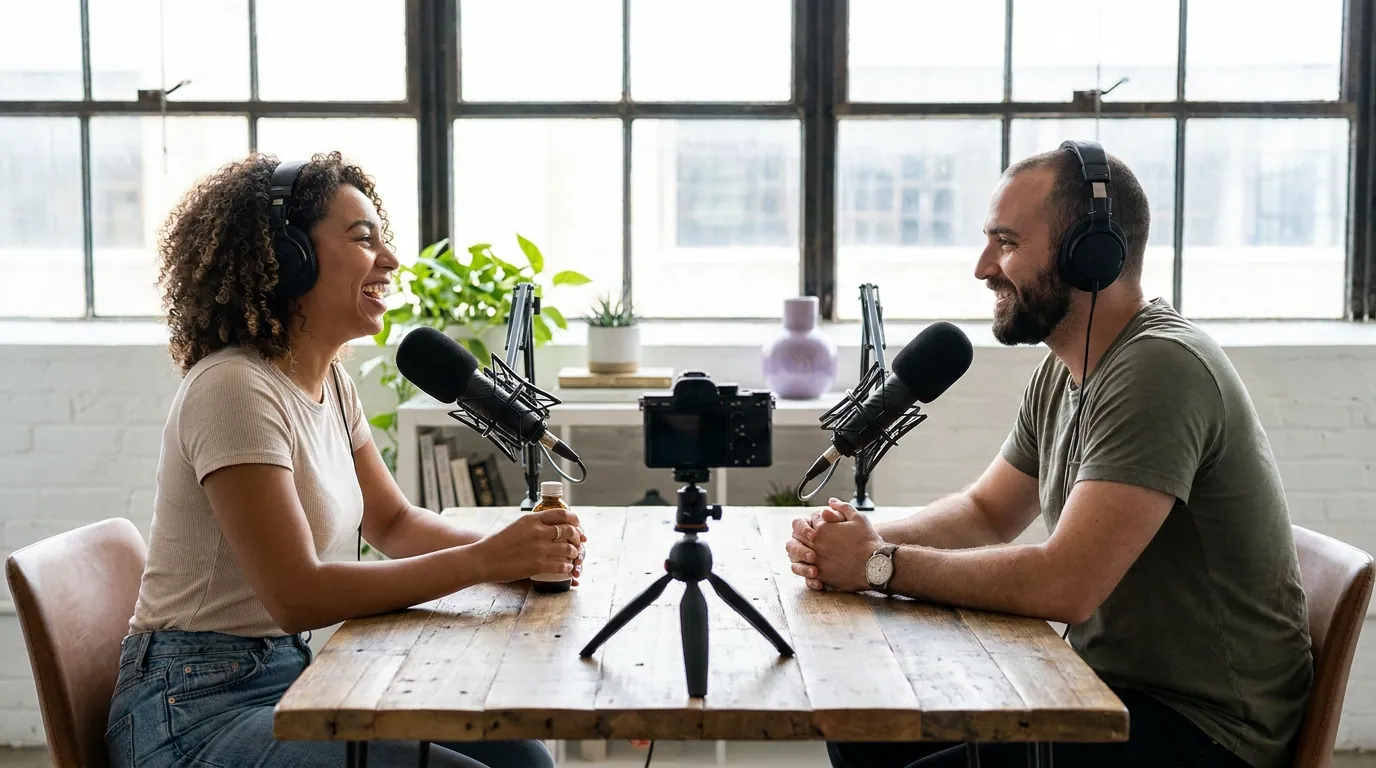
How AI clipping fits each treatment
AI clip detection reads the same signals on a beauty episode it reads anywhere, topic shifts, question-answer pairs, sentiment, emphasis, and pauses. If you want the mechanics, how AI clip detection actually works breaks down each one. What matters for beauty is that the model finds the moment, the spot where you recommend something or react to a result, but it knows nothing about whether the product is on screen or whether a disclosure is needed. Those calls are yours.
So the workflow is: let the AI surface the candidates, then run each through the routing question and the four-beat structure. The model will hand you the 25 seconds where you say "this is the only mascara I rebuy", it cannot cut in the tube at the right second or add the "#ad" label if the brand paid you. You do that. Treat the AI output as a shortlist to triage, not a finished post; the rubric in how to pick the best AI-suggested clips applies cleanly here.
Common mistakes beauty creators make
Naming the product but never showing it. The single most frequent miss. If the recommendation has a name, the name needs a face on screen. Cut to the product on the word, every time.
Skipping the disclosure or hiding it in the caption. Caption-only disclosure does not meet the FTC's "hard to miss" standard for video (FTC). Put it on screen during the recommendation. Gifted product counts, not just paid deals.
Faking a result you can't show. Flashing a product still is fine; implying before-and-after skin you never filmed is not. For result claims with no footage, keep the clip verbal and honest.
Three adjectives instead of one reason. "It's amazing, gorgeous, life-changing" tells the viewer nothing. One concrete reason, the ingredient, the price, the fix, is what reads as a real recommendation rather than a read.
Ignoring how the line is delivered. Beauty clips live on conviction and a touch of personality. A flat read of a great pick underperforms a sharp read of an average one, the same delivery lesson that makes or breaks a business podcast clip and decides whether a comedy clip lands its punchline. And where you end the clip matters: cut on the reason or the result, not mid-thought, the same cut-point discipline that drives where to end a clip for max suspense.
FAQ
Do beauty podcast clips need to show the product? When the recommendation names a specific product, yes, show it on screen the moment you say the name. A review with no product visible asks viewers to trust a name they can't see. The exceptions are verbal clips (trends, philosophy, rants), which work as talking-head with overlays and captions.
How do I make beauty clips if my podcast is audio-only? Build the visual payoff in the edit: flash a product still or short stock close-up timed to the product name, use large styled captions as the visual, and lean on an animated waveform only as filler. The one thing you can't fake is a result, keep result-based claims verbal if you have no footage.
Where do I put the affiliate disclosure on a short clip? On screen, during the recommendation, in text the viewer can read without expanding the caption. The FTC says video disclosures should be in the video itself, not only the description (FTC influencer guidance). Use the platform's paid-partnership label too, and disclose gifted product, not just paid deals.
What makes a beauty recommendation clip convert? A four-beat structure: a hook in the first three seconds, the product named and shown together, one concrete reason (not three adjectives), and a disclosure if money or free product changed hands. The reason is what separates a real opinion from a sponsorship read.
Why do my beauty clips flop with the sound off? Because the payoff isn't on screen and the captions aren't carrying the claim. With most social video watched on mute (Digiday, 2016, directional), the product or result has to be visible and the key line has to read as text. Add accurate, styled captions and time the product close-up to the recommendation.