
Cross-Channel Collabs to Grow a Podcast on YouTube


Grow a podcast on YouTube through collabs by targeting channels whose audience overlaps yours rather than channels that look like yours, then run one of three mechanics that physically move subscribers: a clip swap, a guest trade, or a joint episode. The targeting comes first. Pitch the wrong channel and even a perfect collab sends you viewers who never subscribe.
Most cross-channel advice stops at "reach out to similar creators." That's the part everyone gets wrong. A channel covering your exact topic shares your audience so completely that a collab just shows their viewers a smaller version of what they already watch. The channels worth your time sit one step to the side, same kind of viewer, a different reason to press play. This guide gives you a way to score those channels before you pitch, and the specific subscriber-moving moves inside each collab format.
Why collabs beat almost everything else for a podcast channel
A collab borrows trust you haven't earned yet. When another host hands their audience over to you, by featuring you, sharing your clip, or sitting across the mic from you, their viewers extend you the credibility they've already given the host. That transfer is the entire mechanism, and it's why a collab converts at rates a cold algorithm push rarely matches.
The timing is unusually good. YouTube reported more than 1 billion monthly podcast viewers in early 2025 (Variety), and it's now the most-used podcast platform in the US, 42% of monthly listeners, ahead of Spotify and Apple (Backlinko). The audience you want to reach is already on the platform where collabs and clips live in the same place.
The case for collabs gets sharper when you look at how hard solo growth is. The average channel takes around 22 months to hit 1,000 subscribers (BerryViral), and most podcasts never make it that far, given that more than 4 million of the 4.69 million indexed podcasts are no longer publishing (demandsage). Collabs are one of the few levers that compress that timeline, because you skip the cold-start problem entirely: you're introduced, not discovered.
How do I pick the right channel to collab with?
Pick channels by audience overlap and size parity, not topic similarity. Map each candidate on two axes, how much their viewers resemble yours, and whether they sit within roughly 3–5× your size, and pitch only the ones scoring high on both. A near-identical channel offers your viewers nothing new; a giant has no reason to trade evenly.
The mistake almost everyone makes is optimizing for size. A 200,000-subscriber channel whose audience has nothing in common with yours sends you a spike of curious clickers who never come back. A 4,000-subscriber channel whose viewers are your exact target sends you subscribers who stay. Overlap decides whether a collab converts at all; size only decides how big the lift is once overlap is established.
The adjacency map
Plot every candidate on a simple grid. The vertical axis is audience overlap: do their viewers look like your viewers in age, interest, and the questions they ask in comments? The horizontal axis is size parity: are they close enough to your subscriber count that an even trade makes sense for both of you? You want the top-right quadrant, high overlap, fair size.
To read overlap without analytics access to the other channel, use three free signals. First, your own comments and DMs, when viewers say "I found you through ___," that channel demonstrably shares your audience. Second, YouTube's own "from related channels" and the sidebar recommendations on videos like yours; the algorithm is doing co-view analysis for you. Third, the comment sections on clips covering your topics, the channels viewers name there are a live map of who watches what.
To read size parity, compare subscriber counts and, more usefully, recent view counts. A channel with 30,000 subscribers but 800 views per video is not a 30,000-subscriber partner, it's an 800-view one. Match on what actually circulates, not on the vanity number.
A simple scoring rule
Spend ten minutes per candidate and score them out of 100: audience overlap (50 points), size parity (30 points), and activity, posted in the last 30 days, host reachable (20 points). Anything 70 or above goes on your pitch list; below 50, drop it. Forcing a number stops you from chasing the biggest channel or the most flattering near-twin and makes you confront which partner will actually send you subscribers who stay.
The three collab mechanics, ranked
Once you have a shortlist, choose the mechanic by how directly it moves subscribers and how much trust it asks of the other host. Start light and earn your way to the heavier formats.
1. The clip swap (lowest lift, fastest yes)
Each of you posts the other's best 30–90-second clip to your Shorts feed, with on-screen credit and the other channel tagged. It costs neither host a recording session, which is why it's the easiest first yes and the right opening move with a partner who doesn't know you yet. It works because the recommendation now travels where viewers actually act: 57% of listeners rely on social media for podcast recommendations, the first time social passed friends and family (InsideRadio).
The move that turns a swap into subscribers is the end card. The last two seconds of the clip you give a partner should name your channel and tell viewers exactly what to watch next, "the full conversation is on [your channel]." A clip without that handoff entertains; a clip with it converts. Clips already drive an estimated 20–40% of new audience for video shows (Podcast Studio Glasgow), so the partner's feed is genuinely fertile ground.
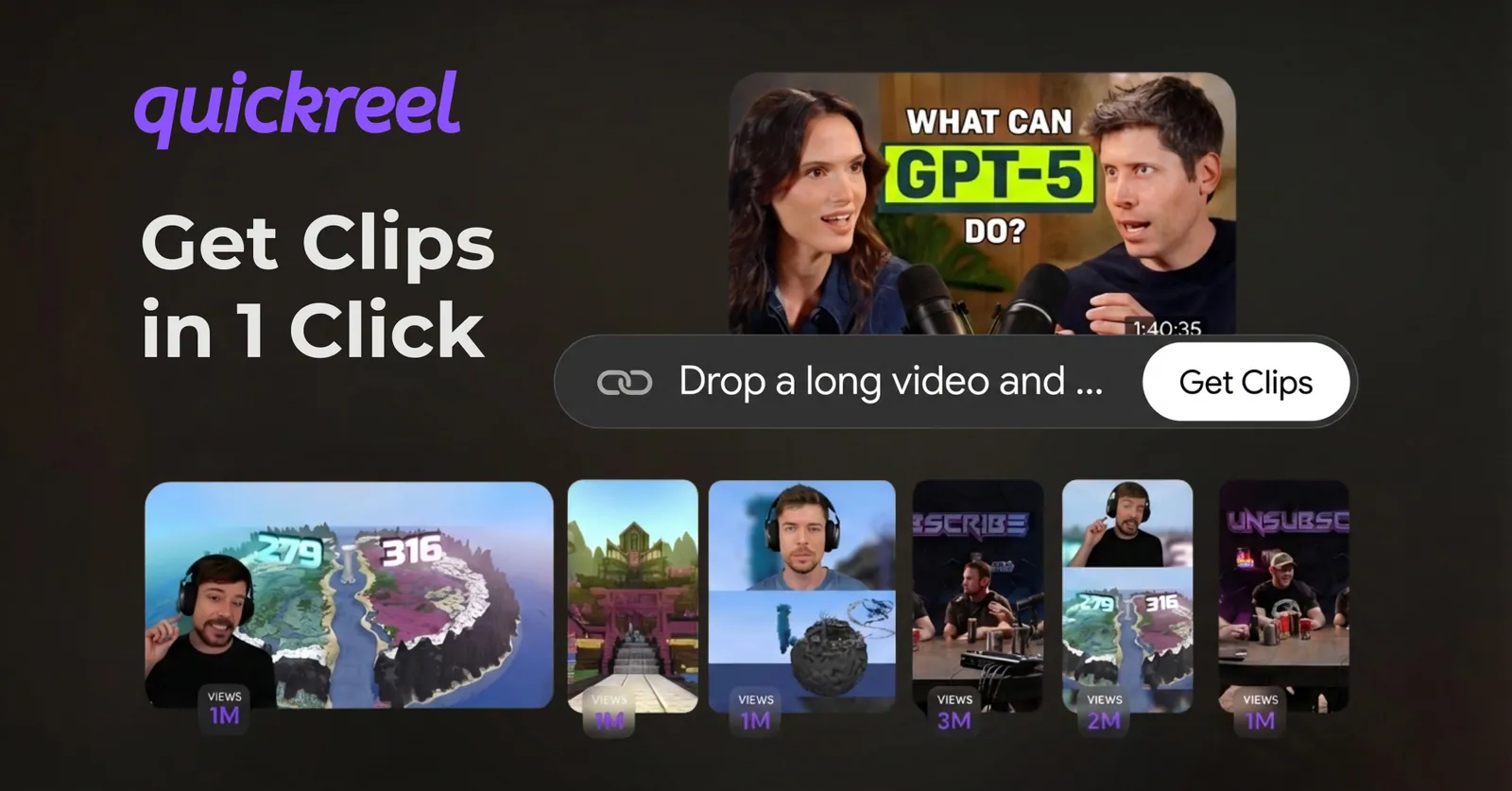
The practical bottleneck is having clips ready to offer. You can't pitch a swap if you have nothing to swap. The fastest way to arrive with options is to turn one of your own episodes into a handful of captioned, vertical clips and let the partner pick the one that fits their feed.
2. The guest trade (medium lift, the trust workhorse)
You appear on their channel, they appear on yours. A full episode of exposure to a calibrated audience beats a clip mention by a wide margin, because viewers spend 30–60 minutes with you instead of 30 seconds. The reciprocity also makes the ask easy: you're not requesting a favor, you're proposing an even exchange.
Three moves decide whether a guest trade converts. Record video even if your show is audio-first, a guest trade you can't clip wastes most of its value. Agree up front that both channels can cut and post clips from both episodes, which doubles the surface area of the collab across both feeds. And make a specific, spoken call to action inside the episode: "if you're enjoying this, my show goes deeper on X every week," with the host endorsing it in their own words. An endorsed CTA from a trusted host moves more subscribers than any other single line in a collab.
3. The joint episode (highest lift, biggest swing)
One episode, recorded together and published on both channels, or cross-posted with each channel's intro. Both audiences meet both hosts in the same video, and the YouTube algorithm tends to reward the engagement spike from two communities arriving at once. It asks the most coordination and the most trust, which is why it's the third move, not the first.
The mechanic that makes a joint episode pay off long after publish day is a shared clip campaign. Agree to cut the same episode into eight to twelve clips, split them between the two channels, and post over two weeks. One recording session then feeds both feeds for half a month, and every clip carries both channels' viewers toward both subscribe buttons.
Common mistakes that waste a collab
- Targeting topic twins instead of audience overlaps. A channel covering your exact subject shares your audience so completely there's nothing new to gain. Look one angle to the side, same viewer, different need, using the adjacency map, not a category search.
- Chasing size over fit. A perfectly matched channel a fraction of your size out-converts a mismatched giant, because its viewers are actually your people. With the average channel needing around 22 months to reach 1,000 subscribers (BerryViral), the rising mid-size partner is hungry for the lift and far more likely to say yes.
- Collabing with dead channels. Around 90% of indexed podcasts are no longer publishing (demandsage). Confirm a recent upload before you spend a word on outreach.
- No handoff inside the content. A clip swap with no end card, or a guest spot with no spoken CTA, entertains the other audience without moving anyone. Build the subscribe prompt into the content, not just the description.
- Recording audio-only for a video collab. If you can't clip it, you lose the half of the value that lives on social feeds. Roll a camera even for an interview.
Once a collab starts sending viewers, the rest of the funnel decides whether they stick. Read the clips-to-channel funnel for YouTube podcasts to convert clip viewers into subscribers, and turning Shorts viewers into long-episode watchers to move them up to full episodes.
FAQ
How do I find channels to collab with on YouTube? Pull candidates from your own "I found you through ___" comments, YouTube's related-channel and sidebar recommendations on videos like yours, and the comment sections on clips covering your topics. Then score each on audience overlap and size parity, and pitch only the ones that rank high on both.
Should I collab with bigger or smaller channels? Aim within roughly 3–5× your size in either direction so an even trade makes sense. Slightly bigger partners give you a one-way lift worth pitching for; smaller, rising channels say yes more often. A channel 20× your size has little reason to swap evenly, so lead with a clip they can post at no cost.
What's the easiest collab to start with? A clip swap. Each of you posts the other's best 30–90-second clip to Shorts with credit and a channel tag, no shared recording session, no scheduling. It's the fastest yes from a partner who doesn't know you, and it builds the trust you need before proposing a guest trade or joint episode.
Do collabs work if my podcast is audio-only? They work, but you give up most of the value. Record video for any collab so both sides can cut clips, which is where 20–40% of new audience for video shows comes from (Podcast Studio Glasgow). Even a single camera on each host is enough to make a guest trade clippable.
How many collabs do I need to see growth? Run two or three with well-matched partners before judging results, then double down on the channels that send subscribers who actually stay. A handful of repeatable, high-overlap partners outperforms a long list of one-off swaps with channels that don't share your audience.
Capture the subscribers a collab sends before they drift. Set up a podcast email list from zero and a 5-email welcome sequence so a collab spike turns into people you keep. And if you're still chasing your first milestone, getting your first 1,000 YouTube subscribers as a podcaster and a Shorts strategy built for podcast channels pair naturally with a collab push.