
YouTube Playlists That Drive Podcast Binge-Watching


To make people binge your podcast on YouTube, group episodes into playlists by theme, recurring guest, and series, then name each playlist around a benefit and order it with your strongest episode first. A playlist autoplays the next video when one ends, so each binge banks more session watch time, the signal YouTube uses to recommend you further. The architecture and the order do the work; you set them once and they keep running.
A loose pile of episodes on your channel asks every viewer to choose what to watch next, and most choose to leave. A playlist makes the choice for them. When episode one ends, episode two starts on its own, and your two-minute view becomes a forty-minute one. This is the cheapest retention lever on YouTube and the one most podcast channels never set up properly. Below is a playlist architecture by theme, guest, and series, plus an exact naming-and-ordering scheme that raises how often people start a playlist in the first place.
Why do YouTube playlists drive binge-watching?
A playlist autoplays the next video the moment one ends, so the viewer never decides what to watch next, the most common point at which people leave. That continuous play stacks several episodes into one session, and YouTube weights watch time and retention as core signals for what it recommends. Longer sessions feed the recommendations that bring new viewers (YouTube Help: search and discovery).
The behavior is already there waiting for you. The share of new US weekly listeners who prefer to watch a podcast climbed from 30% in April 2022 to 53% by late 2025 (Backlinko), and YouTube passed one billion monthly podcast viewers worldwide, announced February 2025 (Variety, Feb 2025). People sit down to watch episodes back to back the way they watch a series. A playlist is what turns your catalog into something they can settle into instead of a search result they bounce from.
There's a second, quieter benefit. A playlist has its own URL, its own title, and its own thumbnail, and it can rank in YouTube search and surface in suggested feeds as a unit. So a good playlist is both a retention machine for existing viewers and a discovery surface for new ones.
How to build the three playlist architectures
Don't build one giant "All Episodes" playlist and stop. That's reverse-chronological by default, which buries your best work and forces a new viewer to start with whatever you posted yesterday. Build three overlapping structures instead, and let the same episode live in more than one.
1. Theme playlists (the workhorse)
Group episodes by the topic a viewer actually came for, not by what they happen to be. If your show covers money, founders, and health, a viewer who clicked a money episode wants more money episodes, not the next chronological one about a guest they've never heard of. Name these around the topic plus a benefit: "Getting out of debt," "First $10k as a founder," "Sleep, stress, and burnout."
Theme playlists are the workhorse because they match how people search and how they binge. Someone who finishes one debt episode is the single most likely person on earth to watch a second debt episode. Put eight to twelve of your strongest episodes on that theme in one playlist and you've built a forty-minute-to-six-hour session out of work you already published.
2. Recurring-guest playlists
If a guest comes back more than once, give them their own playlist with every appearance. Guest searches are some of your highest-intent traffic, people type the name, and a playlist of "Every conversation with [name]" captures all of it in one ranked unit. It also flatters the guest, which makes them more likely to share the playlist link rather than a single episode.
This works even for one-off marquee guests if you pair them with topically adjacent episodes: "[Name] and the best of our founder interviews." The viewer came for the name and stays for the theme.
3. Series and season playlists
For any content meant to be consumed in order, a multi-part series, a course-style run, a literal season, build a series playlist and lock the order. This is the one place reverse-chronological is wrong by definition: part three should not autoplay before part one. Number the episodes in their titles ("Part 1 of 4") so the sequence is obvious before anyone presses play.
Series playlists earn the longest sessions because the viewer has decided in advance to watch the whole thing. Your job is to not break the chain: order it correctly, and make sure each part ends on a reason to continue.
The naming-and-ordering scheme that lifts playlist starts
A playlist only banks session time if someone starts it. These five rules are what move that number. They cost nothing and you set them once.
- Strongest episode first, never reverse-chronological. The first episode in a playlist is its trailer; it decides whether the viewer commits to the session. Put your best-performing, most self-contained episode in slot one. The default "newest first" order hands that critical slot to whatever you happened to post last.
- Name the playlist around a benefit or a clear theme, not "Episodes 1–20." "Build a side business that survives your day job" earns a click; "Season 2" does not. The title is what ranks in search and what a browsing viewer reads before deciding to start.
- Set a deliberate playlist thumbnail. YouTube shows the first video's thumbnail by default, fine if slot one is strong, but pick it on purpose. A playlist with a consistent, readable cover looks like a curated collection, not a dump.
- Order for momentum, not chronology. After the strongest opener, alternate so two slow episodes never sit back to back. The goal is that every episode ends right before one the viewer can't skip.
- Write the first 100 characters of the playlist description as a hook with the keyword. That text is what YouTube reads and what shows in search. Lead with the theme and the payoff, the same way you'd write an episode title.
One honest caveat: a playlist can't rescue weak episodes. Autoplay only helps when the next video is good enough to hold the viewer who didn't choose it. Order surfaces your best work first; it doesn't manufacture quality.
Common playlist mistakes
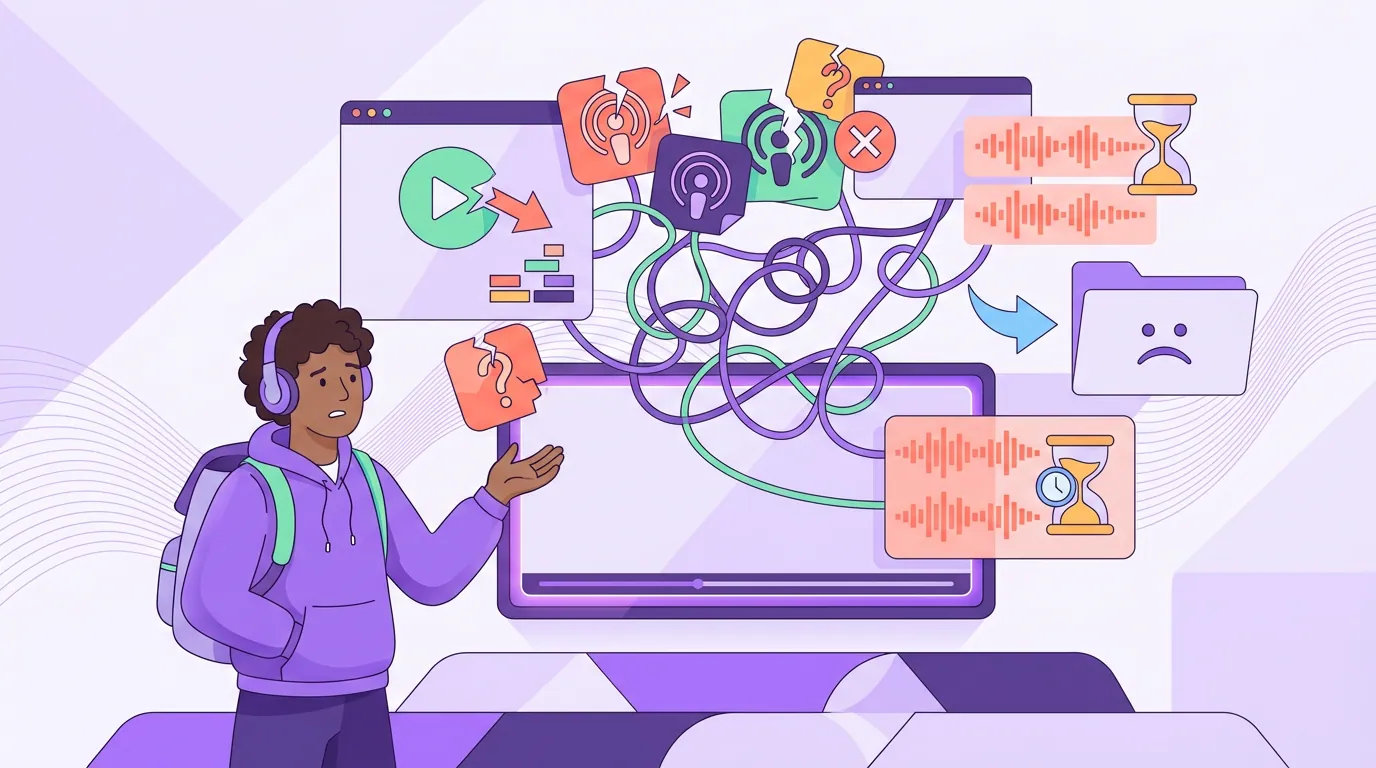
- One "All Episodes" playlist, reverse-chronological. It buries your best work and makes new viewers start with yesterday's episode. Build theme, guest, and series playlists instead, with your strongest episode first.
- Playlists named after seasons or numbers. "Season 3" tells a stranger nothing. Name the payoff: what they'll get from watching.
- Never adding clips, Shorts, or new viewers' entry points to a playlist path. A new viewer arrives on a clip or a single episode and finds no obvious next step. Link the full episode into its playlist in the description and pinned comment.
- Letting the order go stale. When an episode quietly outperforms, move it to slot one. Treat opener choice as something you revisit, not set-and-forget.
- No end screen pointing into the playlist. End screens are the last 5–20 seconds where you can send a finishing viewer to the next episode or the playlist itself, the bridge that keeps the session alive.
Where playlists fit in your YouTube growth
Playlists are the retention layer; they hold the viewers other tactics bring. The biggest feeder is short-form, clips drive 20–40% of new audience for video shows and can raise reach 2–5x (Podcast Studio Glasgow). A clip pulls a stranger to one episode; a playlist turns that one episode into a session. Wire them together: build the clips-to-channel funnel for YouTube podcasts, run a Shorts strategy built for podcast channels, and close the loop by turning Shorts viewers into long-episode watchers.
The compounding effect is real: more session time lifts recommendations, recommendations bring more new viewers, and those viewers land in playlists that keep them. That's the path to your first 1,000 YouTube subscribers as a podcaster. Then capture the people YouTube sends you, start a podcast email list from zero and put a welcome sequence for new subscribers behind it, so a binge-watcher becomes an audience you own.
FAQ
Do YouTube playlists actually help podcasts grow? Yes. A playlist autoplays the next episode, stacking watches into one longer session, and YouTube weights watch time and retention as core signals for what it recommends (YouTube Help). Playlists also rank in search as their own unit, so they help discovery and retention at once.
How many playlists should a podcast have? Build at least one per recurring theme, one per repeat guest, and one per series or season. There's no penalty for an episode living in several playlists, in fact you want it to, because each playlist catches a different viewer intent.
Should playlists be in chronological order? Only series and seasons meant to be watched in order. For theme and guest playlists, lead with your strongest, most self-contained episode, the first slot decides whether the viewer commits to the session, and reverse-chronological order wastes it on whatever you posted last.
What makes someone start a playlist instead of one video? A benefit-driven title, a deliberate thumbnail, and a first-100-character description that reads like a hook. "Build a side business that survives your day job" earns the start; "Season 2" doesn't. Then your strongest opener has to deliver, or the autoplay chain breaks.
How do playlists and clips work together? Clips bring new viewers; playlists hold them. Point each clip at the full episode, link that episode into its theme playlist, and a stranger who arrives on a 30-second clip can fall into an hour-long session, clips drive 20–40% of new audience for video shows (Podcast Studio Glasgow).