
How to Warm Up a Cold Voice for an Early-Morning Recording


To clear a thick, low morning voice for an early call, start two hours ahead: drink a large glass of room-temperature water on waking, sip warm (not hot) water steadily, breathe in steam for a few minutes, then hum gently before any talking. Skip dairy, ice-cold drinks, and citrus in the last two hours, they thicken mucus or dry the throat. The goal is rehydration and gentle heat, not pushing your voice.
A morning voice is low and gravelly for reasons you can actually undo. Lying down all night lets fluid settle around the vocal folds, so they sit slightly swollen and sluggish. You also lose water through eight hours of breathing, which leaves the throat dry and the mucus on the folds thick and sticky. That combination is the rasp. None of it is permanent, and none of it needs heroics, it needs water, a little warmth, and enough lead time for both to work.
Why is my voice so deep and croaky in the morning?
Your voice is deep and croaky in the morning because the vocal folds are mildly swollen from lying flat overnight and the throat is dehydrated from hours of breathing dry air. Swollen folds vibrate slower, so the pitch drops; thick, dried mucus makes them stick and rasp. Both clear within an hour or two of rehydrating and moving, which is exactly what a morning warm-up speeds up.
This is normal physiology, not a sign anything is wrong. It just happens to collide badly with an 8 a.m. recording, when the most-listened part of your appearance, the first few minutes, is also your croakiest. On a video podcast the stakes are higher than they used to be, because short clips are now how people find shows. 57% of listeners say they rely on social media for podcast recommendations, the first time that source has edged past friends and family (InsideRadio, citing Coleman Insights / Amplifi Media data), and 53% of new US weekly listeners now say they would rather watch a podcast than only listen (Backlinko). If the clip that travels is a 40-second moment from your first answer, you do not want that answer recorded through a half-asleep throat.
The fix is timing. You cannot un-swell vocal folds in ninety seconds. You can if you start two hours out.
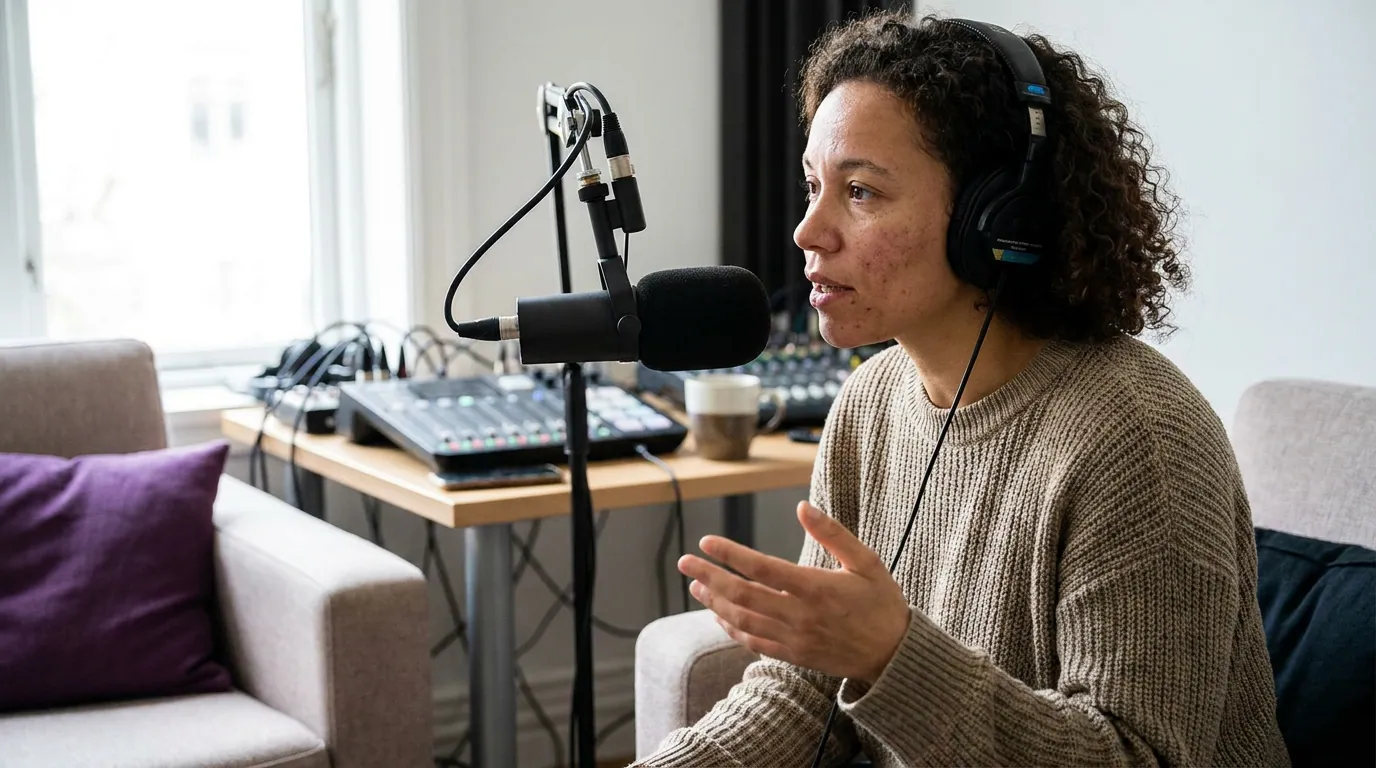
The two-hour morning thaw, step by step
Treat the morning before an early recording as a countdown, not a scramble. The single biggest lever is rehydration, and water takes time to reach the tissues, drinking a glass two minutes before you talk does almost nothing for the folds. Front-load it. Here is the clock-mapped version.
- On waking, one big glass of room-temperature water. This is the most important step and the one people skip. You wake up dehydrated; replace it early so the water has time to reach the tissue around the folds. Room temperature, not ice-cold, cold water tightens the throat and you want it relaxed.
- From 90 minutes out, sip warm water steadily. Keep a mug of warm (comfortable, not scalding) water nearby and sip throughout. Warmth relaxes the throat muscles and helps thin the thick overnight mucus. Steady sipping beats one big gulp; you are keeping the folds lubricated, not putting out a fire. Plain water or a caffeine-free herbal tea is ideal. A little honey is fine.
- At 45 minutes, steam, then gentle humming. Breathe in steam for three to five minutes: lean over a bowl of hot water with a towel over your head, or just take a hot shower and breathe through your nose and mouth. Steam hydrates the folds directly, faster than swallowing can. Then, with a loosened throat, hum a soft low-to-high glide a few times, closed mouth, easy volume. This wakes resonance without strain. Do not start with the humming; warm the tissue first.
- At 20 minutes, soft articulation. Now, and not before, say a few tongue-twisters slowly and over-crisply: "red leather, yellow leather," "the lips, the teeth, the tip of the tongue." Cold morning consonants are mushy; this wakes the muscles that shape them. Keep it gentle, you are loosening, not drilling.
- In the last 5 minutes, ramp to your level. Say one sentence (your name and what you do) climbing from quiet to your real speaking volume in four or five steps. Stop at normal. This puts you on the level you will open the episode on, so your first answer is not croaky-quiet or over-pushed.
If you have a generic pre-record routine you already trust, this slots in front of it, see the 5-minute vocal warm-up to run right before record for the final-minutes sequence. The morning thaw is the extra layer the early start demands.
What to drink, and what to avoid in the last two hours
What you put in your body before an early call changes how clear your voice is. The simple version: water and warmth help; anything that dries the throat, thickens mucus, or triggers reflux works against you. The two-hour window is the one that matters most, because that is when the swap actually reaches your voice.
The two that surprise people are coffee and that morning latte. Coffee is not banned, most of us need it at 7 a.m., but it is mildly drying, so drink it alongside water rather than instead of water. The latte is the bigger trap: dairy thickens the mucus on your folds, which is the exact opposite of what a croaky morning throat needs. If you want the coffee, take it black or with an oat or nut alternative, and chase it with warm water. And alcohol is a night-before decision: it dehydrates you straight through to the morning, so the croak you wake up with after two drinks is partly self-inflicted.

Common mistakes that keep the croak in
The morning thaw is simple. The ways people undo it are predictable.
- Starting too late. A glass of water five minutes before recording cannot reach swollen folds in time. Rehydration is the slow part. If you only do one thing differently, drink the big glass the moment you wake.
- Clearing your throat to "fix" it. Hard throat-clearing slams the folds together and irritates the very tissue you are trying to calm, which makes the rasp worse. Swallow, sip warm water, or do a gentle silent hum instead.
- Pushing the pitch back up. A morning voice sits low. Forcing it brighter or louder strains a cold instrument. Let warmth and hydration raise it naturally over the two hours, do not muscle it.
- Skipping steam because it feels fussy. Steam hydrates the folds faster than drinking does, and a hot shower counts. On a truly croaky morning it is the highest-payoff three minutes you have.
- Treating it as one-and-done. If there is a long pre-show chat or a break, the voice cools and dries again. Keep sipping warm water on camera, and run a quiet ten-second hum before you go back on.
How the morning voice fits the rest of your on-mic game
A warm, clear voice is the floor, not the whole performance. Once you sound awake, the next gains come from delivery. The slow breathing baked into the thaw also helps you cut the ums and likes when you are being interviewed, since filler often fills the gap left by shallow, anxious breathing. On a video podcast your voice and your face are graded together, so pair this with looking confident on camera as a first-time guest and knowing where to look, the camera or the host's face.
Arriving warm is also plain good manners. Not making the host wait while you cough your way to clarity sits squarely in the unwritten rules of podcast guest etiquette, the flip side of how a host works to make guests feel comfortable on mic.
FAQ
How long does it take to clear a morning voice?
Plan on one to two hours from waking. The two slow levers, rehydrating the tissue around your vocal folds and letting the overnight swelling settle, take time. Steam and gentle humming speed it up in the final hour, but you cannot compress the whole process into the last five minutes, which is why an early call needs an early start.
Should I drink hot or cold water before recording?
Warm or room-temperature, never ice-cold. Cold water tightens the throat muscles you want relaxed, while gentle warmth helps loosen them and thin thick morning mucus. Sip steadily rather than gulping once. A caffeine-free herbal tea works too; a small amount of honey is fine, but skip milk, which thickens the mucus on your folds.
Can I still have coffee before an early podcast?
Yes, just pair it with water. Coffee is mildly drying, so on its own it can leave a cold throat more parched. Drink a glass of water alongside it, and avoid a milky latte close to recording, dairy thickens throat mucus, the opposite of what a croaky morning voice needs. Black coffee or a non-dairy alternative is the safer choice.
What if I wake up an hour before recording, not two?
Compress, do not skip. Drink a big glass of room-temperature water immediately, take a hot shower and breathe the steam, then sip warm water while you get ready. Hum gently in the last fifteen minutes and ramp to your speaking level just before record. You will not be fully thawed, but you will be far clearer than a straight cold open.
Does a clearer morning voice actually matter for clips?
It matters most for the opening minutes, which is the part most likely to get clipped. A warm, hydrated voice has steadier tone and crisper consonants, so a 30-to-60-second moment pulled from early in the episode holds up instead of sounding thick and half-asleep. Given that clips drive much of how new listeners discover shows, your first answer is worth warming up for.