
How to Start a Startup Podcast Founders Will Join


Start your startup podcast as an access machine, not a media play. The show is the most flattering excuse there is to get an hour with founders, operators, and investors you could never cold-email, so build the whole thing around who you want in the chair, ask questions that surface real operating lessons instead of pitch-speak, and agree the confidentiality rules before you ever hit record. Audience is the bonus; access is the product.
That reframing changes every decision below. Most "how to start a startup podcast" advice optimizes for subscriber growth you would spend two years chasing. A founder-interview show that earns yeses optimizes for the twenty conversations you most want this year and treats download counts as a rounding error. The steps that follow set up the access version, and they include the parts other guides skip: how to climb the guest ladder, how to ask so people actually open up, and how to handle the metric a founder is contractually not allowed to share.
Why start a startup podcast, access, not audience
A startup podcast can run on one of two reasons, funded by completely different things. The audience reason is funded by reach: you publish, you grow listeners, eventually some of that attention becomes useful. The access reason is funded by the guest chair: every episode is an hour with someone smart, and whatever the audience does is gravy.
For a founder, angel, operator, or anyone building inside the startup world, the access reason wins on arithmetic. You do not need ten thousand listeners to learn how a Series A founder actually got their first hundred customers, or to put yourself on a first-name basis with an investor. You need the right person to say yes to an hour. The show is why they say yes, a low-pressure, ego-friendly invitation that no LinkedIn DM can match.
This matters because most shows never reach the audience the first reason needs. Nearly half of all podcasts stop within their first three episodes Amplifi Mediasummarizing podfade data), and the top 50% of episodes pull only 28+ downloads in their first week (Buzzsprout global stats, these skew indie, since Buzzsprout is one mid-size host among many and the largest platforms publish no comparable benchmark). If your show's value depends on out-growing those numbers, the odds are against you. If its value is the hour with each guest, the download count barely registers. This is the same logic a client-winning business podcast runs on, pointed at relationships and learning rather than pipeline.
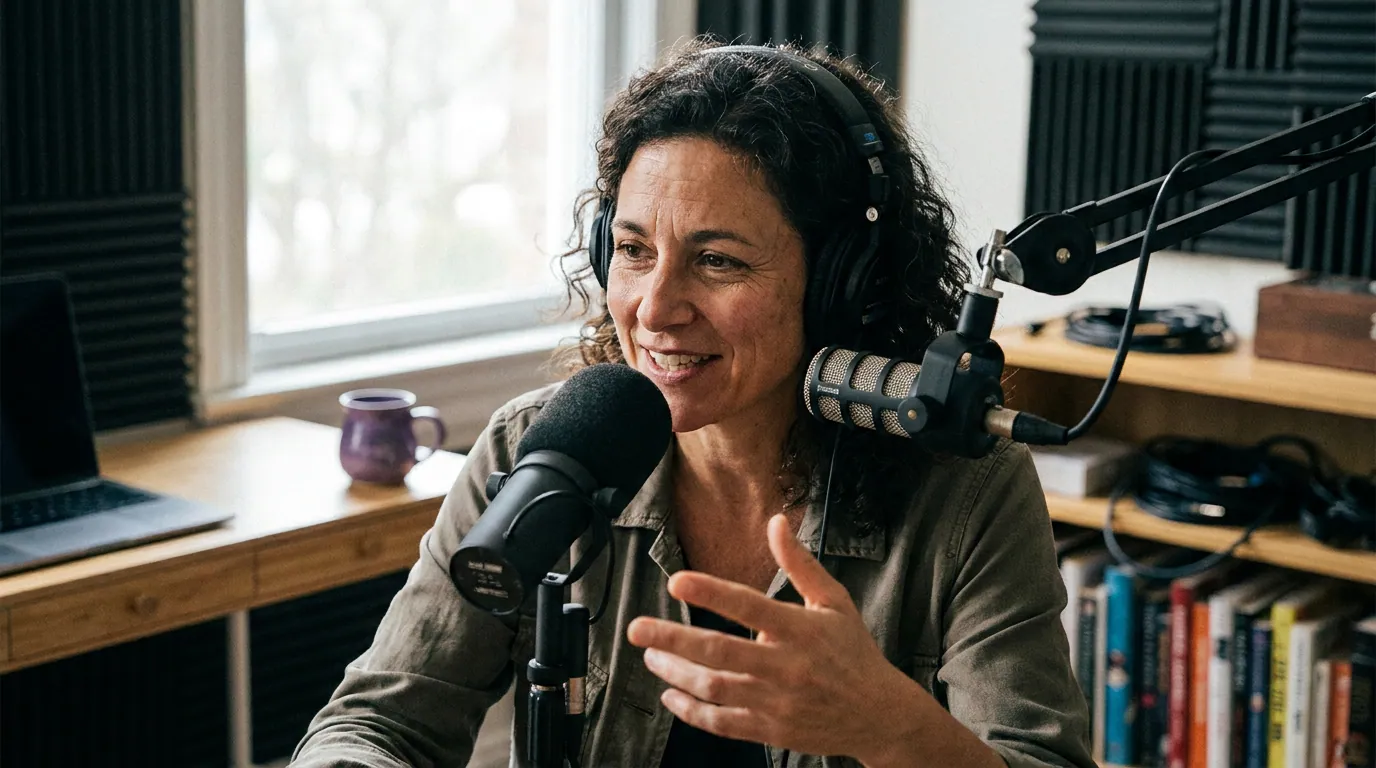
How to start a startup podcast founders will join
Seven steps, in order. The first three build the access; the rest is the show wrapped around it.
1. Pick the niche tight enough that a yes is obvious
Start with the angle, not the gear. "A startup podcast" is too broad to make a busy founder reply. A show with a specific lens gives every invitee an instant reason to come on, because they know exactly which of their stories fits.
Good startup podcast ideas are narrow on purpose: first-ten-customers stories in B2B SaaS, how solo founders reached $1M ARR, fundraising post-mortems (the rounds that fell apart), the operating playbooks of seed-stage CEOs, or vertical-specific founder stories, fintech, climate, dev tools. The narrower the lens, the warmer your invite reads, because you are clearly the person who gets their corner of the world. Breadth feels like a content farm; specificity feels like a peer. If you are still hunting for the angle, the same niche-narrowing logic applies as in our comedy podcast start guide, a tight premise does more recruiting than any production polish.
2. Climb the guest ladder instead of cold-pitching the top
You will not land a famous founder for episode one, and you should not try. Access compounds. Each episode you publish is social proof that earns the next, slightly harder yes, so build a ladder and climb it deliberately.
Start on rung one with peer founders at your own stage, they say yes fast because the hour is mutual and the stakes are low. After three or four published episodes you have a reel and a track record. That opens rung two, early operators whose lessons are gold and whose calendars are gettable. By a dozen episodes you have the social proof to reach rung three, notable founders, and rung four, investors who will come on because the show is now a known quantity. The back catalog is the credential. Climbing the ladder is the network-building, you are not just collecting guests, you are accumulating people who now owe you a small, warm favor. For sourcing and outreach at each rung, our guide to finding podcast guests covers the research and the ask in depth.
3. Send the invite that gets a busy founder to reply
The access move only works if the invitation reads as a genuine invitation, not a roundabout pitch. Founders get pitched constantly; they can smell it in one line. The difference is what you ask for, their hardest-won lesson, on a topic they care about, on a show where they look sharp. Not their time for your benefit.
A structure that converts: name one specific thing you admire (the actual decision, not "your amazing journey"), name the single question you most want their take on, state the time commitment (under an hour, remote, you handle everything), and make scheduling one click. Three sentences. The flattery is real because you chose them for a reason, and the ask is light because the recording is the entire favor. This is the warmest top of funnel a founder will ever receive, you are the curious host, they are the expert, which is the exact inverse of every pitch in their inbox.
4. Ask for operating lessons, not pitch-speak
This is where most founder-interview podcasts die quietly: they let the guest deliver the same press-tour story you have already heard. Founders are trained to talk in narrative, the clean origin myth, the hockey-stick chart, the values slide. Your job is to get underneath it to the real operating lesson. That takes question design, done before the call.
The pattern is simple: ask about mechanisms and decisions, not vision and feelings. "What's your growth strategy" gets you a slide. "Which acquisition channel did you turn off last quarter, and what was the CAC that made you do it" gets you a real story with a number in it. Anchor every question to a moment, the week before a layoff, the call where the deal died, the first hire who failed. Specific prompts make even a media-trained founder drop the script, because there is no rehearsed answer to a question they have never been asked. Send your three best questions in advance so the guest can recall actual numbers; keep the sharpest one for live. Our interview-question playbook goes deeper on follow-ups and the art of the productive silence.
5. Set the confidentiality rules before you record
Founders are the one guest type who routinely cannot share their best material. Revenue, churn, a layoff, an acquisition in progress, a co-founder split, much of it is under NDA, board-sensitive, or simply legally radioactive. Handle this badly and either the conversation stays shallow or you publish something that gets your guest in trouble and torches your reputation on the rung above. Handle it well and founders trust you with more, which is the entire flywheel.
A protocol that works, agreed in the pre-call, not mid-recording:
- State the green zone up front. Tell the guest plainly: "Share what you can, anything you can't, just say 'pass' and we move on, no awkwardness." Removing the fear of an ambush is what lets them go deep on everything else.
- Offer ranges and relatives instead of exact numbers. A founder usually can't say "$2.1M ARR" but can say "low seven figures" or "we tripled year over year." The lesson survives without the protected figure.
- Promise a review-and-redact pass. Tell every guest they can flag anything for removal before publish. You almost never have to cut much, but the promise is what earns candor. A guest who knows they have an undo button takes bigger swings.
- Honor an explicit NDA. If a metric or deal is under a real NDA, it is off the table, do not coax it out and publish it. The episode does not need it, and your access does.
Get this protocol in writing in your booking confirmation. It is the single thing that separates a startup podcast founders recommend to each other from one they warn each other about.
6. Keep the gear minimal and the cadence honest
Spend less than you think. A clean USB mic and a quiet room beat an expensive rig in an echoey one, the gap between a $150 and a $1,500 setup is smaller than the gap between good mic technique in a treated room and bad technique in a noisy one. Our mic picks by budget tier cover the sensible options, and you can launch the whole show on free software with our start-a-podcast-for-free walkthrough. Because most startup guests are remote, prioritize a recording setup that captures each side locally so a guest's spotty Wi-Fi never wrecks the audio.
On cadence, pick what you can sustain with real booking attached. For an interview show that means roughly two episodes a month, not weekly. Consistency is the strongest predictor of a show surviving its first year (podfade data viaAmplifi Media, and a steady twice-monthly beat with strong guests beats a weekly grind that burns you out, and empties your guest pipeline, by episode eight.
7. Turn each episode into clips your guests want to share
One hour of recording is a week or two of distribution if you cut it up, and for a startup show, the clips do double duty. Pull three to five short, captioned clips from each episode: the guest's sharpest line, a surprising number, a counterintuitive lesson. They give the guest something flattering to post to their network (more founders and investors who see your show as legitimate), and they make you discoverable to strangers who match the niche.
Short clips drive an estimated 20–40% of new audience for video shows (Podcast Studio Glasgow), and social video is now the leading source of podcast discovery, 57% of listeners say social media drives their recommendations, the first time it passed friends and family (InsideRadio). For a startup show, X and LinkedIn are usually where those clips land best, because that is where founders and VCs already spend their day. One honest caveat: views are not relationships. A clip that goes mildly viral among strangers matters less than the one your guest reshares to fifty other founders, optimize for the second.
Common mistakes when starting a startup podcast
- Chasing a famous founder for episode one. The big yes comes after a back catalog proves you are worth an hour. Start on the bottom rung with peers, publish, then climb. Cold-pitching the top before you have anything to show is how the show stalls at episode zero.
- Letting guests deliver the press-tour story. If you ask "what's your vision," you get the slide. Anchor every question to a specific decision or number so even a media-trained founder has to think. The whole value is the lesson under the narrative.
- Treating confidentiality as an afterthought. Springing a revenue question on a founder who is under NDA either kills the rapport or burns them on publish. Agree the green zone, the ranges, the redact pass, and the NDA line in the pre-call, in writing.
- Optimizing for downloads from day one. The numbers will be small for months; that was never the point. Judge the show by the relationships and lessons it produces, and the download count stops being demoralizing.
- Skipping the clips. The clips are the reason a guest reshares you to their network of other founders, your exact next guests. Recording the episode and never cutting it up wastes the most efficient referral mechanism you have.
A startup show shares its access logic with the client-winning business podcast, which points the same guest-chair strategy at pipeline instead of learning, worth reading if your real goal is revenue, not just relationships.
Frequently asked questions
How do you get founders to come on your podcast?
Climb a guest ladder. Start with peer founders at your stage who say yes easily, publish three or four episodes, then use that back catalog as proof to reach bigger names and investors. Send a three-sentence invite that names one specific thing you admire, asks for one hard-won lesson, and makes scheduling one click.
What are good startup podcast ideas?
Pick a lens narrow enough that the right guest knows instantly which story fits: first-ten-customers stories in B2B SaaS, how solo founders reached $1M ARR, fundraising post-mortems, seed-stage operating playbooks, or a vertical like fintech or dev tools. A tight premise recruits guests far better than a broad "founder interviews" show, which reads like a content farm.
How do you handle confidential metrics in a founder interview?
Agree the rules in the pre-call. Tell the guest to say "pass" on anything they can't share, accept ranges instead of exact figures ("low seven figures," "tripled year over year"), promise a redact pass before publish, and honor any real NDA fully. Putting this in writing in your booking email is what gets founders to open up.
How many listeners does a startup podcast need to be worth it?
Far fewer than you would expect, because the value is the guest chair, not the audience. The top half of all episodes get only 28+ downloads in their first week (Buzzsprout, which skews indie). An access-model show pays off per episode through the relationship and the lesson, long before any audience milestone.
How often should a startup podcast publish?
Twice a month is sustainable once you attach real guest booking to each episode, and consistency is the strongest predictor of surviving the first year (podfade data viaAmplifi Media. A steady twice-monthly cadence with strong guests beats a weekly grind that drains your guest pipeline and burns you out by episode eight.
Pick a lens, list the ten peers you could record this month, and send three invitations before you touch a logo. The show is a reason to spend an hour with the people you most want in your network, everything else is wrapping. When you are ready to map the rest of the launch, the free-launch walkthrough and the interview-question playbook pick up from here.