
How to Start a Comedy Podcast With Friends

Starting a comedy podcast with friends comes down to three things almost nobody plans for: chemistry, structure, and a mic setup that survives three people laughing at once. Pick the friends who make you laugh on a slow Tuesday, give each person a role so you're not all reaching for the same joke, build a repeatable segment lineup with a "bit-bank" of pre-loaded premises, and put every person on their own microphone and their own track. The funny part you mostly can't manufacture. Everything around it, you can.
Here's the uncomfortable truth that decides whether your show survives. Comedy is the single most popular podcast genre in the US (Statista, top-genre rankings), which means it's also the most crowded room you could walk into. "Three guys laughing in a garage" is not a format, it's a thousand identical shows. What separates the ones people keep listening to is that the banter has rails. This guide gives you those rails.
What actually makes a comedy podcast work?
A comedy podcast works when three people with real chemistry have a structure to push against. Funny improvised banter is unreliable on its own; it dies in long silences and over-talking. The fix isn't a script, it's a repeatable segment lineup plus a bank of pre-loaded premises so there's always something to riff on. Cast for chemistry, then engineer the structure.
Most new comedy shows fail at one of two things, and almost never at "not funny enough." They fail at chemistry (the hosts are friends but not funny together on a mic) or at structure (every episode is a 70-minute formless hangout that's fun to record and exhausting to listen to). Nearly half of all podcasts never make it past their first three episodes Amplifi Media/ SquadCast, failure-rate analysis), and the comedy shows that quit early almost always quit because recording got boring once the novelty wore off. Structure is what makes episode 30 as easy to record as episode 3.
So before you buy a single microphone, settle two questions: who's at the table, and what happens at the table.
Step 1, Cast the room for chemistry, not friendship
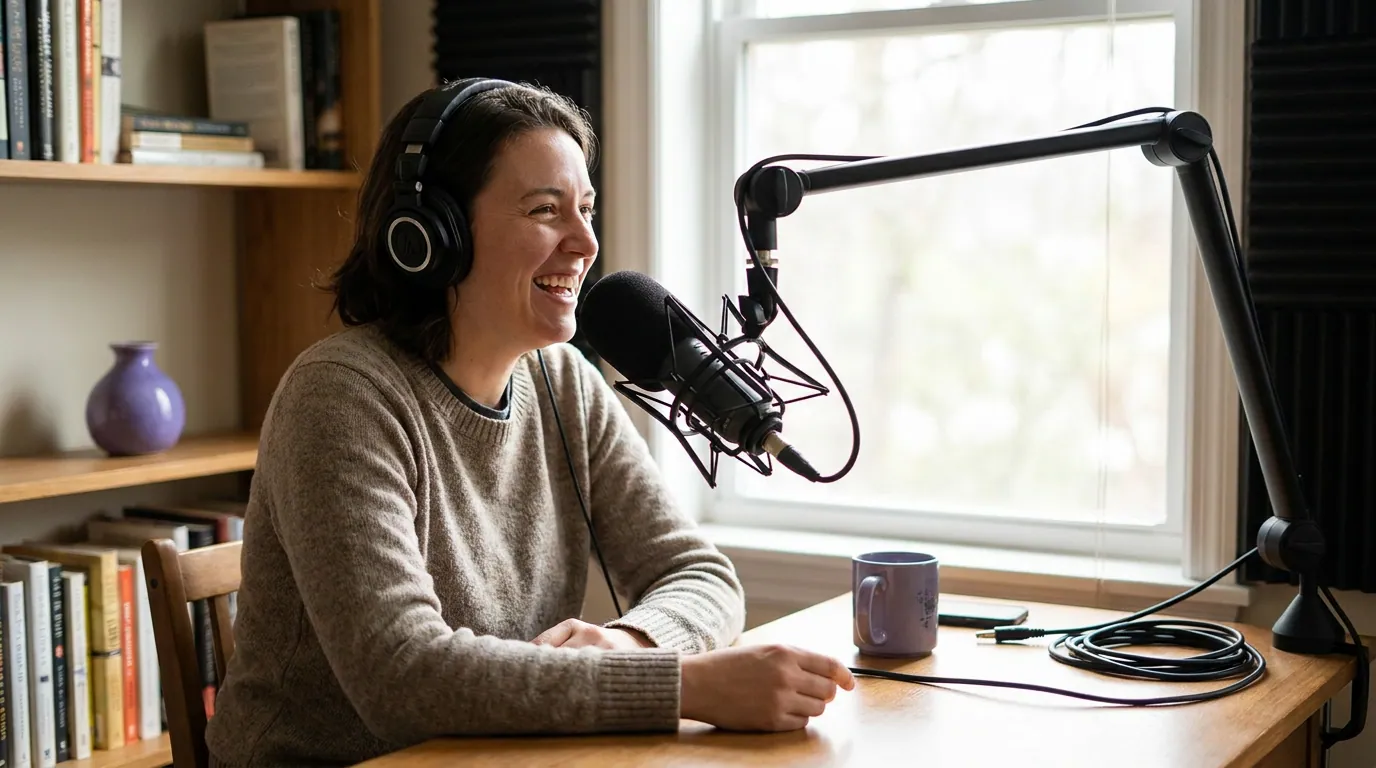
Pick co-hosts who make each other funnier on a recording, not just the friends you like most. Record one unscripted 20-minute test conversation with each candidate lineup and listen back the next day. Friendship makes a good hang. Chemistry makes a good listen, and they're not the same thing.
The test is simple and you should actually do it: get everyone in a room, hit record, talk about anything for 20 minutes, and listen to the playback the next day, cold. You're not judging whether you had fun. You're judging whether the recording is fun. Specifically:
- Does someone consistently set up jokes that someone else lands? That's chemistry.
- Does everyone fight for the same punchline? That's a problem you'll fix in Step 2.
- Is there a person who goes quiet on the mic even though they're hilarious in real life? Some people freeze when recorded. Better to know now.
Two or three hosts is the sweet spot. One co-host gives you a clean back-and-forth. Three gives you a "triangle" where two people can gang up to tease the third, comedy gold, and it's the format behind a lot of the biggest hangout shows. Four starts to clip and crosstalk badly (more on that in the mic section), and beyond four, half the table goes silent.
Step 2, Assign roles: the straight man, the wildcard, the connector
Give each host a default comedic role so you stop competing for the same joke. In a two-person show, one plays the straight man (reacts, asks the obvious question, keeps it grounded) and one plays the wildcard (escalates, derails, takes the swing). In a three-person show, add a connector who bridges the two and pulls the quiet person back in. Roles are defaults, not cages, but having one stops the dead air where everyone waits for someone else to talk.
This is the single most useful thing I can give a new comedy trio, because the failure mode it prevents is invisible until you hear it: three funny people all reaching for the joke at the same instant, talking over each other, and then an awkward beat where nobody knows who's driving. Assign defaults and that beat disappears.
A few notes on using them:
- The connector usually also runs the clock. Someone has to be allowed to say "okay, moving on" without it feeling rude. Make that an assigned job, not a power struggle.
- People can swap roles between segments. The straight man for a news bit can be the wildcard for a personal-story bit. The default just sets who leads when nobody's sure.
- The quiet-on-mic person is often your best wildcard, give them the role that demands a swing, and a lot of "they freeze on recording" problems solve themselves.
Step 3, Build the segment-rotation system
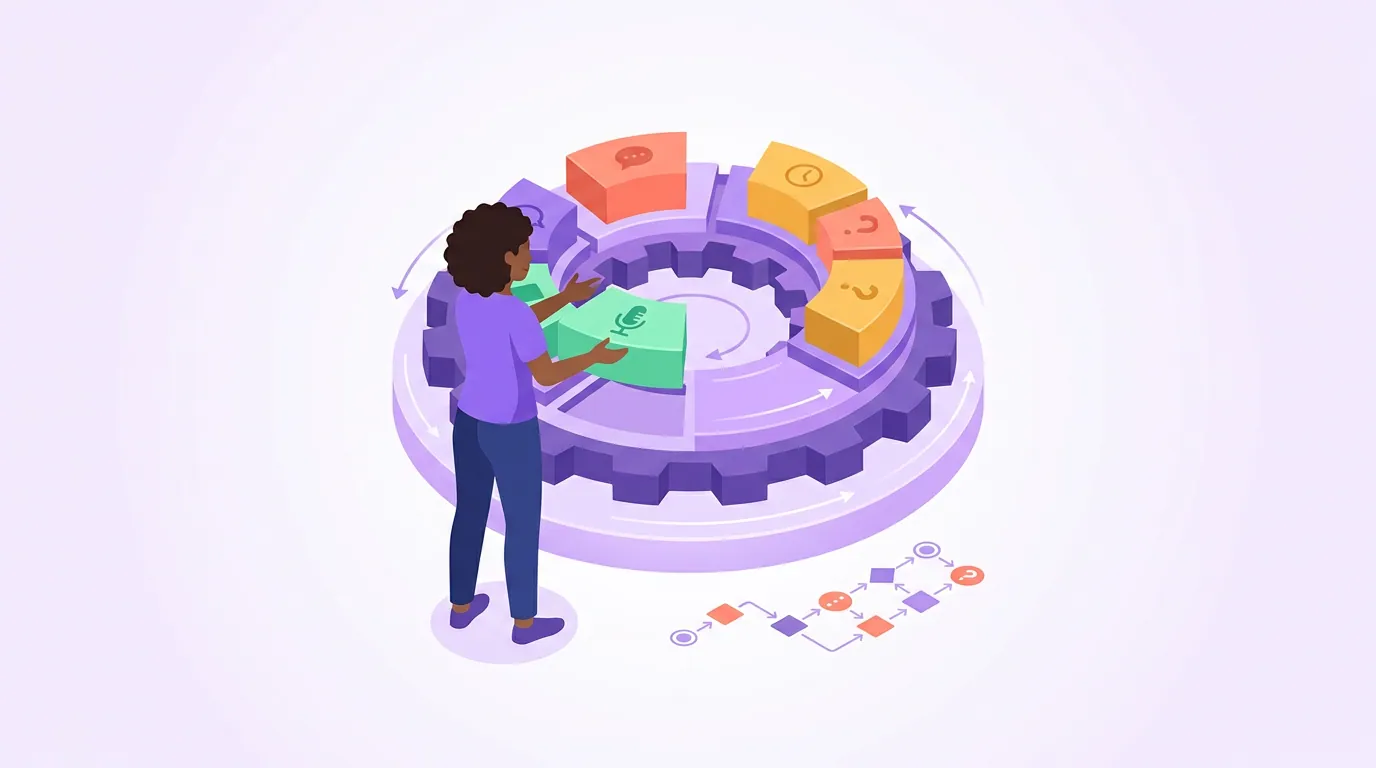
Give every episode the same skeleton of recurring segments, and rotate the variable middle. A repeatable lineup, cold open, catch-up, a rotating main segment, a bit from the bit-bank, listener corner, sign-off, means you never sit down to a blank page. Listeners learn the rhythm and stay for the segments they love; you stop ad-libbing the whole structure every week.
The mistake new shows make is treating "we're loose and improvised" as the format. Loose is the texture, not the structure. The biggest hangout comedy shows are far more structured than they sound, they just hide the scaffolding well. Here's a skeleton you can steal and adapt:
The trick is that five of the six blocks stay identical every week. Only the green slot, the main segment, rotates. That's the difference between "we never know what to talk about" and "we know exactly what we're doing for 45 of the 50 minutes." The cold open does double duty: it's the funniest 45 seconds of the episode, and it's the most clippable moment for social, which is how new listeners will actually find you.
This structure travels across niches, too, it's the same backbone you'd use to start a true-crime podcast, start a business podcast, or start a fitness podcast as a coach, just with the segments swapped for the genre. Comedy's version leans harder on the bit-bank.
Step 4, Stock the bit-bank
A bit-bank is a running shared doc of pre-loaded comedic premises, recurring games, "would you rather" categories, hot-take prompts, listener-submitted dilemmas, that you pull from whenever the energy dips. It's the safety net that lets you stay loose. When a tangent dies, you don't panic; you reach into the bank and the show keeps moving.
Keep it in one shared note everyone can add to between episodes. The categories that reliably generate laughs for a friend-group comedy show:
- Recurring games. A bracket, a ranking, a "draft" of something absurd. Games create stakes, and stakes create reactions.
- Hot-take prompts. One person reads a deliberately indefensible opinion; the table defends or destroys it.
- "Tales from the group chat." Real (anonymized) stories from your friend group. This is your unfair advantage, nobody else has your specific friends.
- Listener dilemmas. Once you have listeners, their problems are infinite free material.
- Callbacks. Track running jokes from past episodes in the same doc. Callbacks are the highest-reward comedy a show can do, and they only exist if you write them down.
Aim to walk into every record with at least two bank items ready. You probably won't need them. But knowing they're there is what lets you take a swing on an improvised tangent, because if it dies, you have an exit.
Step 5, Mic the room so the laughs don't clip
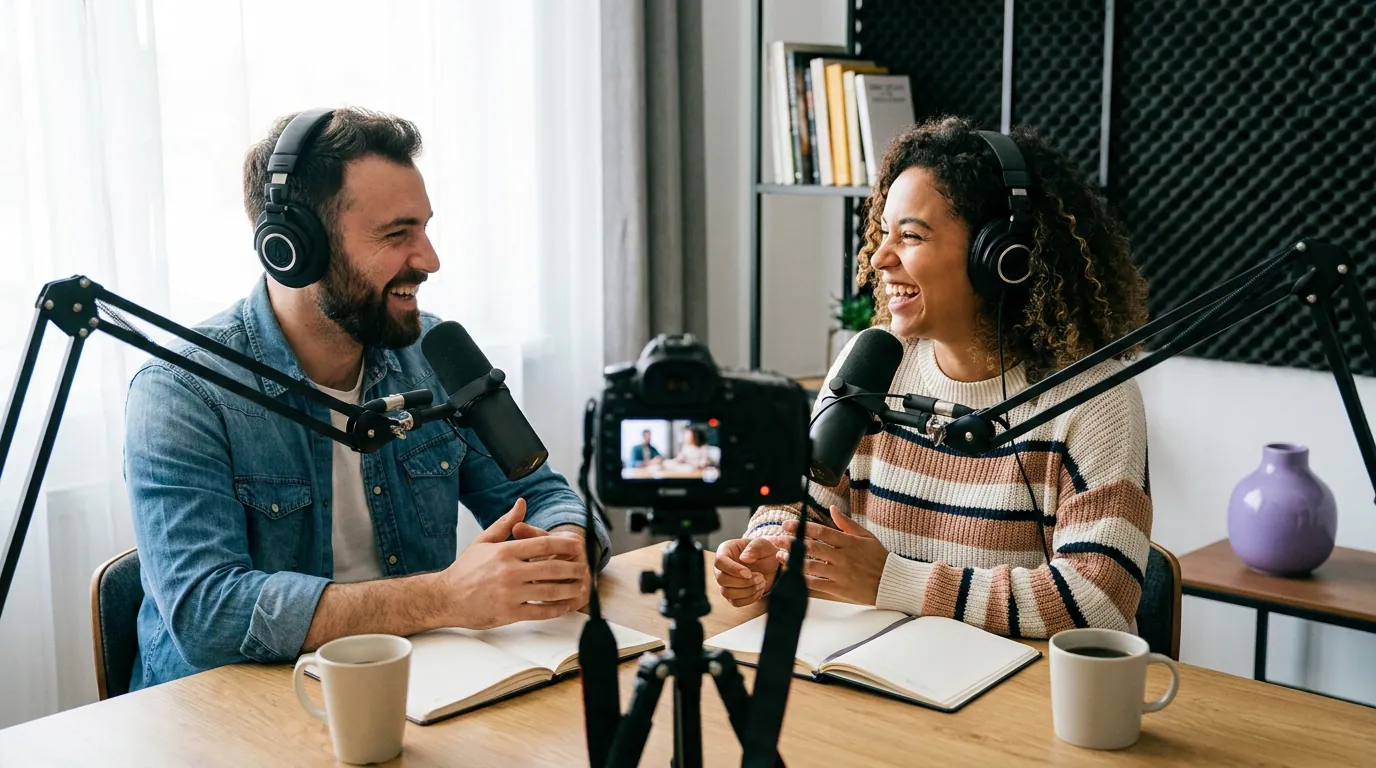
Give every person their own microphone recording to their own separate track. Overlapping laughter is the defining sound of a comedy show and also the fastest way to ruin the audio, when two people share one mic and both laugh, the signal "clips" (distorts into a harsh crackle) and can't be fixed in editing. One mic, one track, per person. Then you can balance everyone separately afterward.
This is the technical part people skip, and it's the one that makes a comedy show sound amateur even when it's genuinely funny. Here's the setup that prevents it:
The practical rules:
- Dynamic mics, not condensers. Dynamic mics reject room noise and the person next to you, which matters enormously when four people are laughing. A condenser picks up the whole room and turns crosstalk into mush. The gap between a $150 and a $1,500 setup is smaller than the gap between bad mic technique in a noisy room and good technique in a treated one, so spend on a couple of decent dynamics and a soft room, not on exotic gear.
- Set levels conservatively. Comedy spikes loud. A laugh or a shout that sounds fine in conversation will clip if your gain is set for normal speech. Leave headroom, aim for normal talking to sit around −18 to −12 dB so the big moments have somewhere to go.
- Get a multi-input interface or mixer so each mic lands on its own track. For two hosts you need a two-input interface; for three or four, a four-input one. Our breakdown of the best podcast mics by budget tier covers which dynamics pair well for multi-person rooms, and the best budget mic under $100 is a fine starting point for each seat.
- One pop filter or good distance per mic. Comedians lean in when a bit lands. A fist's distance from the mic keeps plosives and volume swings under control.
If you can only afford one upgrade for a comedy show, it's getting everyone off a single shared mic and onto separate tracks. Funny survives mediocre mics. It does not survive a clipped, distorted laugh.
Common mistakes when starting a comedy podcast with friends
The traps are predictable, which means they're avoidable.
- No structure, just hanging out. A 75-minute formless ramble is fun to record and tiring to hear. Use the segment skeleton from Step 3. Aim for 35–55 minutes, tightly cut.
- Everyone fighting for the punchline. Assign roles (Step 2). The dead air comes from indecision, not lack of jokes.
- Sharing mics or using one room mic. Overlapping laughs clip and there's no fix in post. One mic, one track, per person.
- Inside jokes with no on-ramp. A running joke is great; a running joke a new listener can't follow is exclusion. When you do a callback, give a one-line reminder of where it came from.
- Recording when nobody's funny. Don't record tired, hungover, or right after a fight. Comedy needs energy. Move the session.
- Never cutting anything. The funniest version of your show is the tightly edited one. Trim the first 1.5 seconds of dead air, cut the worst tangent, and lose the bit that only you found funny.
- Treating clips as an afterthought. Comedy is the most clippable genre there is, a single punchline travels. Plan for the clip while you record, not after.
FAQ
How many people should host a comedy podcast?
Two or three is the sweet spot. Two gives a clean back-and-forth; three creates a "triangle" where two hosts can gang up on the third, which generates a lot of natural comedy. Four or more starts to crosstalk and clip badly, and the quietest hosts go silent. If you must have four, separate mics and tracks become non-negotiable.
How do you make a comedy podcast funny if you're not naturally funny on a mic?
Lean on structure, not spontaneity. Pre-load a bit-bank of games, hot-take prompts, and real stories so you're never improvising from zero, assign a clear comedic role so you're not freezing in indecision, and edit ruthlessly, the funniest version of any episode is the tightly cut one. Many "not funny on a mic" people are great wildcards once given the role.
What equipment do you need to start a comedy podcast with friends?
One dynamic microphone per host, a multi-input interface or mixer so each mic records to its own track, headphones for each person, and a soft, non-echoey room. Dynamic mics matter more than usual here because they reject the laughter and crosstalk from people sitting next to you. You can launch a two- or three-host show well under a few hundred dollars per seat.
How long should a comedy podcast episode be?
Aim for 35–55 minutes of tightly edited audio. New comedy shows tend to over-record and under-cut, producing 75-minute hangouts that lose listeners in the middle. Record loose, then cut hard. The segment-rotation structure keeps episodes consistent in length, which trains listeners on when to tune in.
What are good funny podcast ideas for a friend group?
Build the show around what only your specific friends have: your group's running jokes, your shared history, the dynamic between you. Strong recurring formats include drafts and brackets of absurd things, indefensible-hot-take debates, anonymized "tales from the group chat," and listener-dilemma segments. The format matters less than the chemistry, pick whatever gives your specific group the most to react to.