
How to Start a Fitness Podcast as a Coach

Start a fitness podcast the way you'd build a client's program: record video, not just audio, pick one client problem per episode, and end every episode with an invitation rather than a pitch. The hard part for coaches isn't the gear, it's giving real programming advice without crossing into individualized medical liability, and keeping the show alive past the burnout zone. This guide handles both.
A fitness podcast is one of the better content bets a coach can make, because your existing knowledge is the show. You already explain progressive overload and protein timing five times a day. The podcast turns those conversations into a body of work that earns trust at scale, and trust is what closes coaching clients. Comedy, news, and society shows top the US charts (Statista), but health-and-fitness is a durable, high-intent niche where listeners arrive already looking to change something.
Below: the equipment floor, a four-part episode template built to convert, the legal line every coach has to respect, and a content calendar mapped to when people actually want to get in shape.
What do you need to start a fitness podcast?
You need a quiet room, one decent microphone, a recording app, a free host, and a clear answer to "who is this for." For a coach specifically, add a phone or webcam, record video. Most new fitness listeners want to watch, and video clips are how a coaching business turns episodes into leads.
The gear floor is low and the returns from spending more are smaller than beginners expect. A budget mic in a soft, quiet room beats an expensive one in a hard, echoey gym. Here's the honest tier breakdown for a coach who wants to look and sound credible without overspending.
| Tier | What it covers | Realistic spend |
|---|---|---|
| Start (audio + basic video) | One USB mic (Samson Q2U ~$70 or RODE PodMic), headphones, your phone on a tripod | ~$120–250 |
| Step up (cleaner video) | XLR mic + interface, a webcam or mirrorless camera, a soft key light | ~$400–800 |
| Studio | Two mics, mixer, multi-cam, treated corner | $1,000+ |
Equipment cost tiers run roughly $70–300 (budget), $300–700 (mid), and $1,000+ (pro), with mics in the $50–400 band (Ausha). Start at the bottom. If you want the specific mic picks, our guides on the best podcast mic under $100 and podcast mics by budget tier save you the research.
One thing to fix before any gear: the room. A bedroom with a bed, rug, and curtains is acoustically better than a tiled home gym. If you must record in the gym, throw moving blankets on the hard surfaces behind you and the camera.
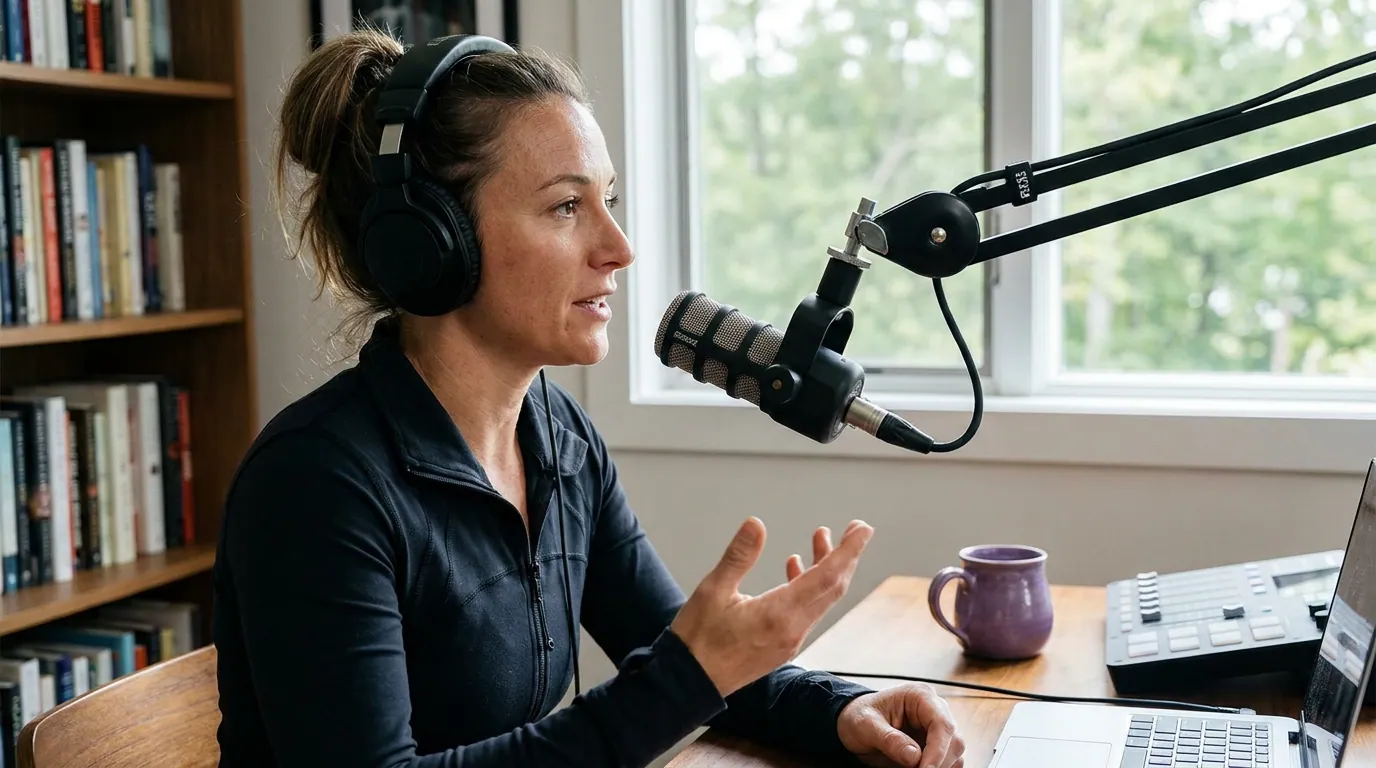
The Coach's Episode Template (value first, invitation last)
Use a four-part structure every episode: a hook that names a specific client frustration, the teach where you give away the real method, the proof where you show it working, and a soft invitation at the end. The selling is structural, not verbal, you sell by demonstrating competence, then opening a low-pressure door.
This is the part most coaching podcasts get wrong. They either never mention their service (so the show generates zero business) or they pitch in every segment (so listeners tune out). The fix is to separate the value from the ask and let the value carry 95% of the weight.
Here's each block in practice for a hypertrophy coach:
- Hook (~30 seconds): "If you've been training hard for a year and your arms still won't grow, you're probably making one of three mistakes. The third one nobody talks about." Name the frustration in the listener's words.
- Teach (60–70% of runtime): Walk through the actual fix, set ranges, frequency, the cue you give clients. Give away the method completely. Withholding the "real" answer is what makes a show feel like an infomercial.
- Proof (~20%): "One of my clients, mid-40s, had stalled for two years. We changed two things and added an inch in twelve weeks." A specific case, anonymized, with a concrete before/after.
- Invitation (~15 seconds): "If you want me to look at your current split, the link in the show notes goes to a free form, send it over and I'll tell you what I'd change." Soft, specific, one door.
The invitation works because the listener has already watched you solve their problem for free. The non-salesy CTA isn't a tone trick, it's a sequencing rule. Earn the right to ask by giving first. For the business-side mechanics of converting an audience into clients, the same logic drives our guide on starting a business podcast that wins clients.
How to give programming advice without crossing into medical liability
Speak in general principles and population-level guidance, never diagnose, never prescribe to an individual you haven't assessed, and never claim to treat a condition. The legal line is the difference between education ("most beginners benefit from two to three full-body sessions a week") and individualized medical advice ("for your herniated disc, do these exercises"). Stay on the education side.
This is the single biggest risk in a coach's podcast, and it's easy to cross by accident when a listener emails a question about their knee. Personal trainers and coaches generally hold a fitness-education scope, not a medical or clinical one, the line between fitness guidance and treating an injury or condition is exactly where professional liability begins (ACE Fitness professional resources). Two practical rules keep you safe.
- Rule 1, Speak to populations, not patients. "Lifters who sit all day usually need more hip mobility work" is education. "Do these three stretches for your sciatica" is medical advice. Add the qualifier out loud: "in general," "for most people," "this isn't individual advice."
- Rule 2, Refer out the moment a question gets clinical. When a listener asks about pain, an injury, pregnancy, a heart condition, or a medication, the answer is "see a doctor or physical therapist." Say it on the record. It protects you and it builds more trust than pretending to know.
Two more safeguards: put a plain disclaimer in your show notes and read a short version in your trailer ("This show is general fitness education, not medical advice"). And avoid outcome claims you can't back, "lose 20 pounds in a month" is both a liability and an advertising-standards problem. None of this is legal advice; confirm the specifics with your certifying body and a lawyer in your jurisdiction. The same discipline applies in any regulated niche, see how it plays out for money topics in starting an investing podcast and staying compliant.
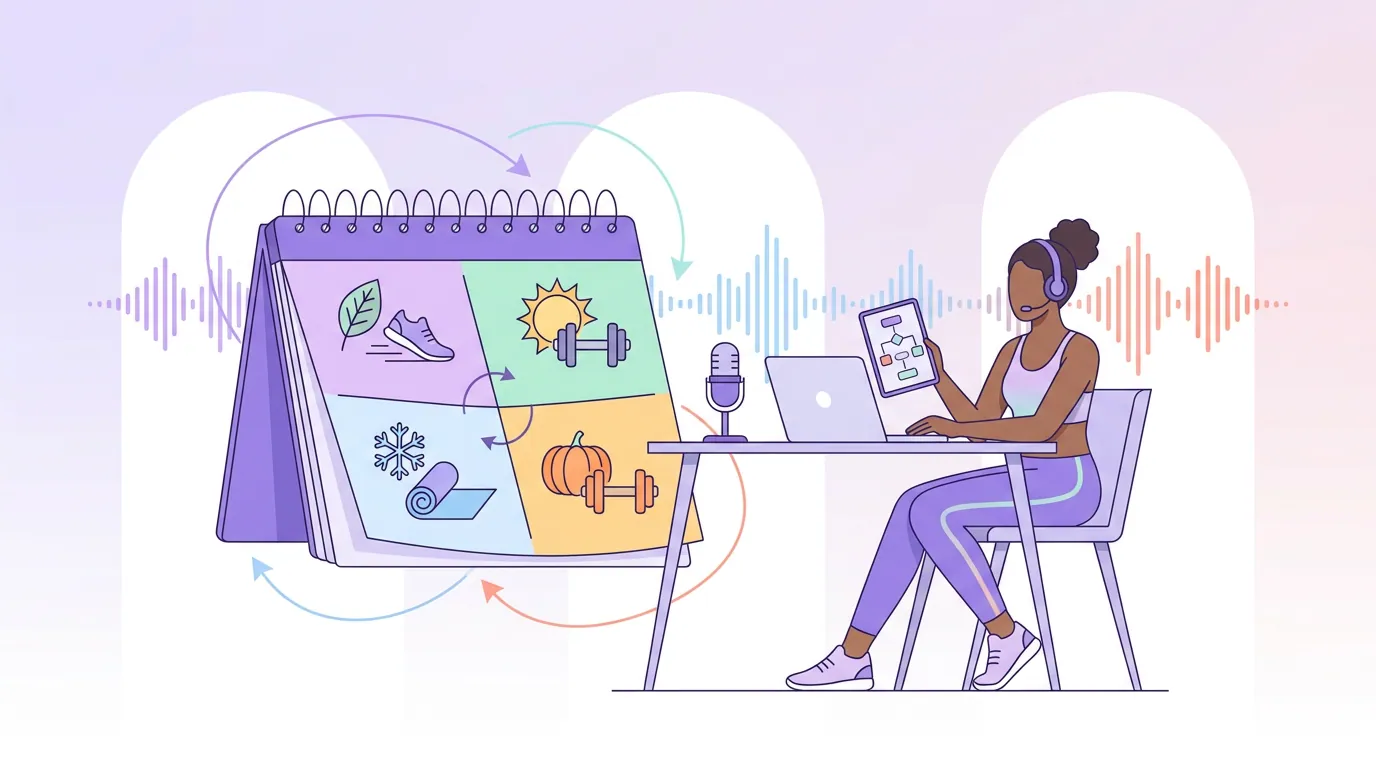
The fitness content calendar: plan to the demand cycle
Plan episodes against when people want to change their bodies, not against your publishing schedule. Fitness demand spikes twice a year, January (New Year resolutions) and roughly April to June (the "summer cut"). Produce your best beginner and transformation content to land four to six weeks before each peak, so it's discoverable when intent is highest.
This is the planning move most coaching podcasts miss. They publish whatever they filmed that week. A coach who maps the year to demand gets the right episode in front of the right person at the moment they're searching. Search interest for fitness topics is strongly seasonal, with the well-documented January surge and a secondary spring-into-summer rise, batch and schedule around it.
A workable 12-month skeleton:
- November–December: Record and schedule your January slate, "how to actually keep a fitness resolution," beginner program walkthroughs, habit-building. This is your biggest new-listener window.
- January–February: Capitalize. Publish weekly, push clips hard, answer the beginner questions flooding in.
- March–April: Pivot to the summer cut, fat-loss nutrition, training for definition, realistic timelines. Schedule it to land before May.
- May–August: Sustain with intermediate and advanced content, guest coaches, and listener Q&As.
- September–October: "Fall reset" content and your strongest evergreen episodes; start recording the next January batch.
Two episodes a week during peaks, one during off-peak, is a sustainable cadence for a working coach. The single biggest predictor of a show surviving is publishing consistency, and the failure data is brutal: about 47% of podcasts have produced three episodes or fewer before going quiet (Amplifi Media). Almost half quit before they've built any momentum. Batch-recording during slow client weeks is how coaches stay on the right side of that number. Our guide on growing a fitness podcast around your program launches goes deeper on tying episodes to your offers.
Common mistakes coaches make starting a fitness podcast
The failures here are rarely about audio quality. They're about treating the podcast as a hobby instead of a business asset.
- Audio-only when your value is visual. Coaching is demonstration. Form cues, exercise tweaks, and your own credibility land far better on video. New listeners increasingly prefer to watch, and a video frame lets you show what you're describing. Record video even if you also publish audio.
- Pitching in every segment. It kills the show. Follow the template: teach for 80% of the runtime, invite once. Trust closes clients; pressure repels them.
- Crossing the medical line to seem helpful. Answering "what should I do about my torn rotator cuff" on air feels generous and is a liability. Refer out, every time.
- Ignoring the demand cycle. Publishing a beginner episode in August wastes your best asset. Front-load beginner and transformation content before January and summer.
- Stopping at episode three. The danger zone is real. Batch-record four to six episodes before you launch so a busy client week never breaks your streak.
- No clips. An episode that lives only on Apple and Spotify is invisible to people who don't already follow you. Clips are the discovery layer, social video clips now drive podcast discovery more than recommendations from friends and family (InsideRadio). Pulling a 45-second form correction out of an episode is exactly the kind of clip that travels, see how fitness coaches turn demonstrations into clips.
FAQ
How much does it cost to start a fitness podcast?
You can start for roughly $120–250: a USB mic like the Samson Q2U (~$70), headphones, and your phone as a camera. Mid-tier setups run $300–700, and a full studio passes $1,000 (Ausha). A quiet, soft-walled room matters more than expensive gear, fix the room first.
Can a personal trainer give workout advice on a podcast legally?
Yes, as general education. You can teach principles, program types, and population-level guidance. What you can't do is diagnose, prescribe for a named individual's injury or condition, or claim to treat anything, that crosses into a medical scope (ACE Fitness). Add a show-notes disclaimer, refer clinical questions to a doctor or PT, and confirm specifics with your certifying body. This isn't legal advice.
How do I get coaching clients from my fitness podcast without sounding salesy?
Use the four-part episode template: hook, teach, proof, then one soft invitation at the end. Spend roughly 80% of each episode giving away your real method and showing it work on a real (anonymized) case. The selling happens by demonstrating competence, the closing line just removes friction for someone already convinced.
How often should a fitness podcast publish?
Two episodes a week during demand peaks (January and late spring), one a week off-peak, is sustainable for a working coach. Consistency is the top predictor of survival, and about 47% of shows have produced three episodes or fewer before going quiet (Amplifi Media). Batch-record during quiet client weeks so a busy stretch never breaks your streak.
Should a fitness podcast be video or audio?
Video, with audio as a secondary output. Coaching is demonstration-heavy, more new listeners prefer to watch, and video lets you pull clips of form corrections and exercise tweaks, the content that gets discovered on social. You can publish the audio to Apple and Spotify too, but film it.
What should my first fitness podcast episode be about?
A specific, common client frustration you solve constantly, not a "welcome to my podcast" intro. Pick the question you answer most often (stalled progress, fat loss that won't budge, training around a busy schedule), and run it through the hook-teach-proof-invite template. Make episode one a complete, useful standalone.