
A Fitness Podcast Growth Plan Tied to Program Launches

Grow a fitness podcast by recording to the calendar your audience already lives by. Fitness motivation runs on a predictable cycle, a January surge, a late-spring push before summer, and a September reset, and your episodes, clips, and program launches should ride those waves instead of fighting them. Plan content backward from when people are ready to start, and your show becomes the thing they find at exactly the moment they want to change.
Most fitness shows publish on a flat weekly cadence and wonder why growth comes in random bursts. The bursts are not random. They line up with the three or four windows a year when your listeners decide this is the week I start. This guide gives you the motivation map, a 12-month editorial calendar keyed to those windows, and a clip-and-launch system that turns one episode into a discovery engine. The goal is not more episodes, it is the right episode landing the week someone is ready to act on it.
When should a fitness podcast publish to grow fastest?
Publish your strongest, most beginner-friendly episodes and your program launches into the three motivation peaks: early January (New Year resolutions), April through June (the summer-cut run-up), and early September (the post-summer, back-to-routine reset). Treat the weeks before each peak as your launch runway, and the off-peak months as where you build depth for the people who already stuck around.
This is not a guess about human behavior, it is the rhythm any trainer, gym, or supplement brand plans their whole year around. People start fitness journeys on calendar triggers: a new year, an upcoming beach trip, the end of summer slack, sometimes a birthday or a Monday. Your podcast competes for attention every week, but it only competes for new beginners in those windows. A "couch to first workout" episode dropped in mid-November lands flat. The same episode dropped December 28 catches a wave you did not have to create.
One honest caveat on that chart: it is a model of consumer behavior, not a measured dataset of your downloads. Your own analytics will shift the exact peaks, a strength-training show skews differently from a running show, and your audience's hemisphere flips the summer window. Pull your last two years of download data, overlay it on this shape, and adjust. The principle holds even when the dates move.
Why does tying content to launches grow the show and not just the product?
Tying episodes to launches grows the show because it gives every release a clear job and a clear payoff, which is what sustains the publishing consistency that predicts survival. Nearly half of all podcasts stop at three episodes or fewer Amplifi Media, usually because the episodes feel pointless to make. A launch calendar fixes that: each episode is a visible step toward something.
A launch also forces the discipline that grows audiences: you build anticipation, you make a few episodes that genuinely help, and you give people a reason to come back next week instead of drifting. The program is the deadline. The deadline is what makes you publish on time, promote properly, and actually ask your listeners to do something. Shows without a launch rhythm tend to publish into a void and stall.
Fitness is also one of the more crowded corners of podcasting, Health & Fitness sits among the larger US genre categories (Statista, top US podcast genres), so a flat "tips every Tuesday" show blends in. A show that visibly builds toward a New Year reset program, a summer-shred series, or a fall habit-rebuild has a story arc, and story arcs are what people follow and share.
The clip-to-launch system (the part most fitness shows skip)
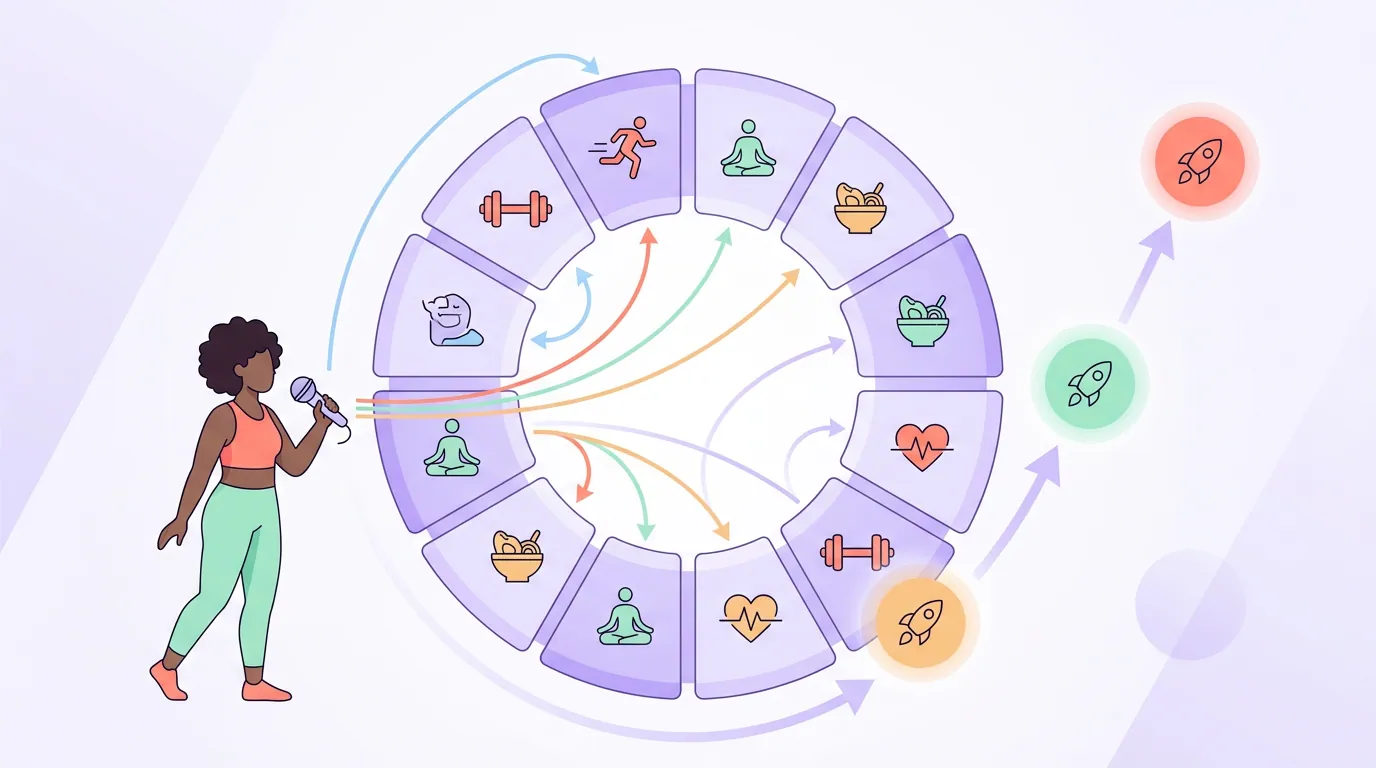
Build each launch on a clip engine: record the episode, pull several short clips from it, and seed those clips in the two to three weeks before the program opens. The clips do the discovery; the episode does the convincing; the launch does the conversion. Done in that order, one recording session can carry an entire launch window.
This matters because discovery has moved. Social clips now drive podcast discovery more than friends and family, 57% of listeners rely on social media for recommendations versus 54% on word of mouth (InsideRadio), and 53% of new US weekly listeners now prefer to watch a podcast rather than only listen (Backlinko). For a visual niche like fitness, that is a gift: a 30-second clip of a clear, useful answer, "here's why your knees hurt on squats", is exactly what gets saved and sent.
The reach upside is real but worth pinning down honestly: clipping consistently can lift discovery reach by 2 to 5x (Podcast Studio Glasgow). That figure comes from a production studio with an interest in the result, so treat it as directional rather than a promise. And remember a large share of social video plays on mute, autoplay-without-sound is the default scroll behavior on every major feed, which is why your clip's on-screen captions carry the whole message. A fitness tip nobody can hear is a fitness tip nobody acts on.
The 12-month fitness podcast editorial calendar
Here is the calendar, keyed to when fitness audiences actually decide to start and buy. The pattern: heavy, beginner-facing content and your two biggest launches around the January and pre-summer peaks; a real but smaller push at the September reset; and depth, community, and guest episodes in the quieter months that keep your existing audience engaged and your back catalog growing.
| Window | Episode focus | Launch / clip move |
|---|---|---|
| Dec 26 – Jan | "Start here" beginner series, resolution mindset | Open your flagship New Year program; seed clips Dec 20–Jan 2 |
| Feb – Mar | Habit-keeping, why-most-quit, depth episodes | Soft re-engage January buyers; clip the "don't quit in February" angle |
| Apr – mid-Jun | Summer-ready training, nutrition basics, fast wins | Open your summer-cut program; biggest clip runway of the year |
| Jul – Aug | Travel/maintenance, guest interviews, lighter content | No hard launch; clip evergreen tips, recruit guests for fall |
| Sep | Back-to-routine reset, structure and accountability | Open your fall reset program; second-biggest launch window |
| Oct – Nov | Strength/depth topics, community Q&A, planning ahead | Build the email list; tease the New Year program for early access |
A few rules that make this calendar work instead of just look tidy:
- Record launch episodes three to four weeks early. You cannot promote a launch with clips you have not made yet. Batch the launch-window episodes ahead so the runway exists.
- Match the episode to the buyer's stage. Peak windows want beginner, do-this-now content. Trough windows want depth that rewards the people already with you, that is where you book the guests and build the catalog.
- Give every launch a runway, not a launch day. Seed clips for two to three weeks before the program opens so the people who discover you have time to subscribe, listen, and decide.
- Protect the off-season for relationships. July and October are not dead time. They are when you grow your email list and line up the guests who bring their own audience, the same audience-borrowing logic behind a show that grows by booking guests first.
Common mistakes that stall fitness podcast growth
- Launching cold, with no clip runway. Opening a program on a single announcement episode wastes the window. Discovery happens in the weeks before the launch, through clips. Build the runway first, sell second.
- Promising results you cannot back up. Health content is high-scrutiny, "lose 20 pounds in 30 days" hooks fast and erodes trust faster, and it invites the same credibility problem that sinks finance shows. The careful, honest version is also the one that grows; the trust discipline that makes a finance podcast people actually trust work applies directly here. Cite your sources, name what is individual, and never present a single study as settled fact.
- Flat cadence with no arc. "A new tip every Tuesday" is forgettable. Series and launches give listeners a reason to follow the next episode instead of treating yours as interchangeable background audio.
- Clipping the wrong moment. The clip that travels in fitness is a clear, specific answer or a vivid before/after framing, not a slow setup. Lead the first three seconds with the payoff: "Stop doing this on your deadlift." The same clippable-moment instinct that powers a comedy show's growth applies to a useful fitness reveal.
- Growing only on rented platforms. A clip can get throttled the week of your launch. Move your most engaged listeners to a channel you control, start a podcast email list from zero and put a real welcome sequence behind it so your next launch reaches people directly.
FAQ
How do you grow a fitness podcast? Publish to the fitness motivation cycle instead of a flat weekly schedule. Land your strongest beginner episodes and your program launches in the three peak windows, early January, April to June, and September, and seed short clips in the two to three weeks before each launch. Use the quieter months for depth, guest episodes, and building an email list you own. The right episode at the right moment beats more episodes at random.
When is the best time to launch a fitness program through a podcast? The three highest-intent windows are late December into January (New Year), April through June (the summer-cut run-up), and early September (the post-summer reset). Open your two biggest programs around the January and pre-summer peaks, and run a smaller, real launch in September. Always give the launch a two-to-three-week clip runway rather than a single announcement day.
How many clips should I make from each fitness episode? Aim for around five strong clips per episode, each a single clear idea, one form fix, one myth-bust, one mindset reframe. That is enough to seed a launch window across several days without diluting quality. Caption every one, since a large share of social video plays on mute by default, and lead the first three seconds with the payoff.
Do fitness clips actually drive new listeners? Yes, with a caveat. Social clips now drive podcast discovery more than friends and family (57% versus 54%, InsideRadio), and 53% of new US weekly listeners prefer to watch a podcast (Backlinko), which favors a visual niche like fitness. Consistent clipping can lift reach 2 to 5x (Podcast Studio Glasgow), though that figure comes from a production studio, so treat it as directional, not guaranteed.
What should I record in the off-season months? Depth and relationships. July, August, October, and November are when you book guest interviews, run community Q&As, build your back catalog, and grow your email list. These episodes reward the audience you already have and set up the guests and material you will launch with in the next peak window.