
How to Start an Educational Podcast That Teaches Well


Start an educational podcast by designing each episode around a single learning objective, one thing the listener can do or explain when it ends, then teach to that objective and recap it on a schedule so it sticks. Treat the audio-only constraint as a design rule, not a handicap: explain visual ideas with analogy and narrated steps, and offload the actual diagram to a downloadable. The format question is settled by the teaching, not the other way around.
Most "how to start an educational podcast" advice covers gear, hosting, and cover art, the same checklist as a comedy show. None of that decides whether anyone learns anything. The thing that separates an edu podcast people finish and remember from one they skim and forget is structure borrowed from instructional design: clear objectives, worked examples, and spaced review. The steps below build the teaching first and wrap the show around it.
What makes an educational podcast actually teach?
An educational podcast teaches well when every episode has one explicit learning objective, the explanation moves from a familiar idea to the new one with a worked example, and key concepts get reviewed again in later episodes instead of mentioned once and dropped. Entertainment keeps people listening; structure is what makes them retain it.
The distinction matters because attention and learning are different problems. A funny aside or a great guest holds attention. Retention, the listener still being able to use the idea next week, comes from how the information is sequenced and reinforced. Plenty of "educational" shows are really infotainment: pleasant to hear, nothing transferred. That is a fine genre, but it is not what you are starting if you want listeners to come away able to do something new.
Two industry realities should shape how seriously you take structure. About 47% of all podcasts stop at three episodes or fewer (Amplifi Media analysis), and the ones that last are the ones that keep publishing on a regular cadence. An episode template you can fill reliably is the cheapest insurance against both quitting and drifting into shapeless rambling.
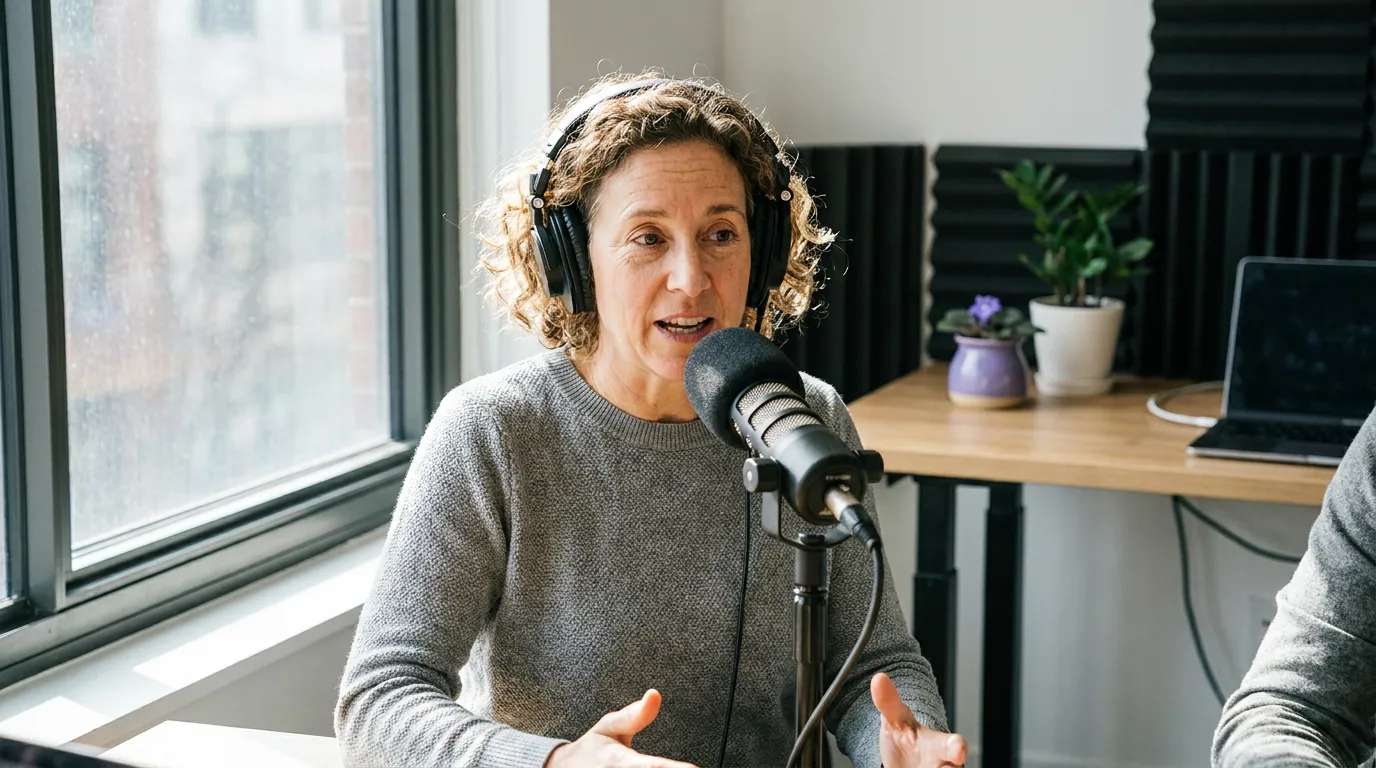
How to start an educational podcast that teaches well
Seven steps. The first three are the instructional design; the rest is the show wrapped around it.
1. Write one learning objective per episode
Before you record, finish this sentence: "By the end of this episode, the listener will be able to ___." Use a verb you can check, explain, calculate, choose, avoid, set up, not a vague one like "understand" or "learn about." "Understand compound interest" is a topic. "Explain why starting to invest at 25 beats starting at 35" is an objective. The verb forces a teachable shape onto the episode.
One objective per episode, not three. The temptation is to cram, because you know a lot and the topic is rich. Resist it. A listener who walks away able to do one new thing learned more than a listener who heard six things and retained none. If a topic genuinely needs more, it is a series, and each episode gets its own objective.
The objective also fixes your scope problem. Everything that serves it stays; everything that does not gets cut or saved for another episode. That single rule does more for episode quality than any microphone.
2. Build every episode on the learning-objective spine
Once the objective is set, run the episode on a three-part spine drawn from how instruction is actually designed: state the objective, teach it with a worked example, then recap it. This is the structure that turns a monologue into a lesson.
In the teach stage, always move from something the listener already knows to the new idea. A new concept anchored to a familiar one lands; a definition delivered cold bounces off. Then give one worked example, a real case walked through start to finish, and name the common mistake people make, because knowing the trap is half of knowing the skill. The recap is a 90-second review of the objective in plain words, one concrete action to try this week, and a one-line preview of when this idea comes back. That preview is the hook into step three.
3. Build spaced-repetition recaps into the series
The single biggest lever on whether a series sticks is reviewing concepts again after the episode that introduced them. People forget most of what they hear within days unless it is revisited, spacing the review out is far more effective than repeating it back to back. So design recaps into the series the way a course designer would, not as an afterthought.
In practice: each episode spends 60 to 90 seconds reviewing one or two ideas from earlier episodes before introducing the new one, and every fifth episode is a pure recap-and-apply that ties the cluster together with one combined exercise. This costs you almost no extra time per episode and changes the listener's experience from "I heard a lot of interesting things" to "I can actually use this." It also gives newcomers a built-in on-ramp, since the recaps re-teach the essentials.
4. Teach visual concepts without a diagram
Audio's hardest constraint for an educational show is that the listener cannot see anything. The lazy move is to wave at it, "if you could see this chart...", which teaches nothing. The disciplined move is a three-part substitute: a familiar analogy, narrated steps, and a downloadable that carries the actual visual.
The analogy does the heavy lifting, a debt snowball is a row of dominoes you topple smallest-first; a normal distribution is a crowd packed in the middle and thinning at the edges. The narration then walks the picture in order, slow enough that the listener can build it in their head: "Picture a line starting low on the left, climbing gently, then steepening near the right." The downloadable, a one-page PDF or an image in your show notes, carries the precise version for anyone who wants the real thing. Tell listeners it exists, in the episode, so they go get it. If you publish a video version, lean further into on-screen visuals there, but never let the audio depend on them.
5. Choose the format your teaching demands
An educational podcast usually wants one of two formats, and the choice follows the teaching. A solo or co-teaching format gives you control over sequencing and recaps, which is exactly what structured instruction needs, most courses are not improvised conversations. An interview format works when the lesson is the guest's expertise, but you have to impose the spine on them: brief them on the one objective, steer them to a worked example, and recap their points yourself at the end.
Avoid the unstructured panel for teaching. Four people riffing is entertaining and almost impossible to keep on one objective. If you are weighing the trade-offs across all the options, our podcast format decision matrix scores each against your time and goals, but for teaching, default to solo or tightly produced interview. Chaptering your episodes also helps learners jump to the section they need; our podcast chapters setup guide walks through adding them.
6. Keep the gear minimal and the cadence sustainable
Spend less than you think on equipment. A clean USB mic in a quiet room outperforms an expensive rig in an echoey kitchen, the gap between a $150 and a $1,500 setup is smaller than the gap between good mic technique in a treated room and bad technique in a noisy one. For a teaching show, clear, fatigue-free audio matters more than warmth, because listeners may stay with a complex explanation for 20 minutes. Our mic picks by budget tier cover sensible options, and you can launch the whole thing on free software with our guide to starting a podcast for free.
On cadence, pick a beat you can hold while writing real lessons. Scripting a tight teaching episode takes longer than recording a casual chat, so weekly is ambitious for a solo educator. Every other week, reliably, beats weekly until you burn out, and a regular weekly or biweekly cadence is what separates the active minority from the roughly 47% of shows that stop at three episodes or fewer (Amplifi Media analysis).
7. Use clips to make the teaching discoverable
A teaching episode is full of self-contained ideas, which makes it unusually good raw material for short clips. Pull three to five from each episode, the analogy that makes a hard concept click, the one mistake to avoid, the 30-second version of the worked example. A clear explanation is inherently shareable, because people send useful things to people they want to help.
This is also how new learners find you. Short social video clips are now the leading source of podcast discovery, 57% of listeners say social media drives their recommendations, the first time it passed friends and family (InsideRadio), and clips are estimated to drive 20–40% of new audience for video shows (Podcast Studio Glasgow). Caption them, since most social video is watched on mute, and an educational clip with on-screen text doubles as a tiny lesson on its own.
Common mistakes when starting an educational podcast
- Cramming three lessons into one episode. It feels generous and teaches nothing, because retention collapses past one objective. Cut to one teachable thing and bank the rest as future episodes. A series of focused episodes outperforms a few overstuffed ones every time.
- Defining the objective with "understand." You cannot check "understand," so you cannot tell whether the episode worked. Use a verb you can verify, explain, calculate, choose, avoid, and the episode designs itself around it.
- Waving at visuals you never replace. "If you could see this graph" teaches nobody. Build the analogy-plus-narration substitute and put the real diagram in the show notes. The constraint is solvable; ignoring it is not.
- Teaching a concept once and never returning to it. Without spaced recaps, listeners forget most of it within days. Spend 60 to 90 seconds each episode reviewing earlier ideas, and the series compounds instead of evaporating.
- Over-scripting into a lecture. Structure is not the same as stiffness. Keep the spine but talk like a person, a warm voice walking you through a hard idea is the whole appeal of learning by audio.
The same instructional-design logic adapts to other niches: a coaching-led show follows it closely in starting a fitness podcast as a coach, and an authority-building version sits inside starting a business podcast that wins clients.
Frequently asked questions
What format is best for an educational podcast?
Solo or co-teaching for most structured teaching, because you control sequencing and recaps the way a course does. Use interviews when the lesson is the guest's expertise, but impose the one-objective spine on them and recap their points yourself. Avoid unstructured panels, they entertain but rarely stay on a single learning objective.
How long should an educational podcast episode be?
As long as it takes to teach one objective and no longer. For a single concept with a worked example and a recap, that is often 15 to 25 minutes. Length should follow the lesson, not a target; a tight 18-minute episode that teaches one thing beats a 50-minute one that wanders across five.
How do you teach visual concepts on an audio podcast?
Substitute three things for the missing diagram: a familiar physical analogy, step-by-step narration the listener can picture in order, and a downloadable in your show notes that carries the real visual. Mention the download inside the episode so people go get it. The audio builds the intuition; the document holds the precise detail.
How often should an educational podcast publish?
Choose a cadence you can hold while writing real lessons. Scripting a teaching episode takes longer than a casual chat, so every other week is usually more sustainable than weekly for a solo educator. A regular cadence is what separates shows that keep going from the roughly 47% that stop at three episodes or fewer (Amplifi Media analysis).
Do educational podcasts get many listeners?
Most podcasts have small audiences, the median episode gets 28 downloads in its first week (Buzzsprout global stats, drawn from the shows Buzzsprout hosts, which skew indie). For a teaching show that is fine: a focused, useful series with even a few hundred committed learners is worth more than a large, passive audience that retains nothing.
Write one objective, build the state-teach-recap spine, and plan where each idea gets reviewed before you record episode one. The teaching is the show; the gear and the cover art are wrapping. When you are ready to map the rest of the launch, the podcast format matrix and the free-launch walkthrough pick up from here.