
Speak Clearly on a Podcast Without Losing Your Accent


To speak more clearly on a podcast, finish your consonants, slow the first few words of each sentence, and open your mouth wider than feels natural, all of which sharpen intelligibility without touching your accent. Clarity and accent are two separate things. You change one and keep the other. The drills below work on the part listeners actually struggle with: hearing the ends of your words.
Almost everyone who worries about being "hard to understand" on mic has diagnosed it wrong. They hear their own accent and assume that's the problem, so they try to flatten it, and end up sounding stiff, careful, and less themselves. The real issue is usually mechanical and accent-neutral: dropped consonants, sentences that start too fast, a jaw that barely opens. Fix the mechanics and your accent becomes a feature, not a liability.
Is it your accent or your clarity that's the problem?
It's almost always clarity, not accent. Accent is which sounds you make, the vowel in "bath," the music of your sentences. Clarity is how completely you make them: whether the final "t" in "about" arrives, whether the listener gets the whole word or a blurred shape. A strong accent with crisp articulation is easy to follow. A neutral accent with mush is not.
This distinction matters because the two have opposite fixes, and confusing them makes you worse. Trying to lose an accent means suppressing your natural sound, it reads as tense and inauthentic, and it rarely fully works anyway. Improving clarity means doing more of what you already do, more completely. One is subtraction and self-consciousness. The other is precision and confidence. You want the second.
A quick self-test: record one minute of yourself talking and play it back at 0.75x speed. If the slowed version is clear, your articulation is fine and you were just speaking fast, fix pace. If even the slow version blurs, you're dropping consonants and need the articulation drills. The slowdown separates a speed problem from a precision problem in about ninety seconds.
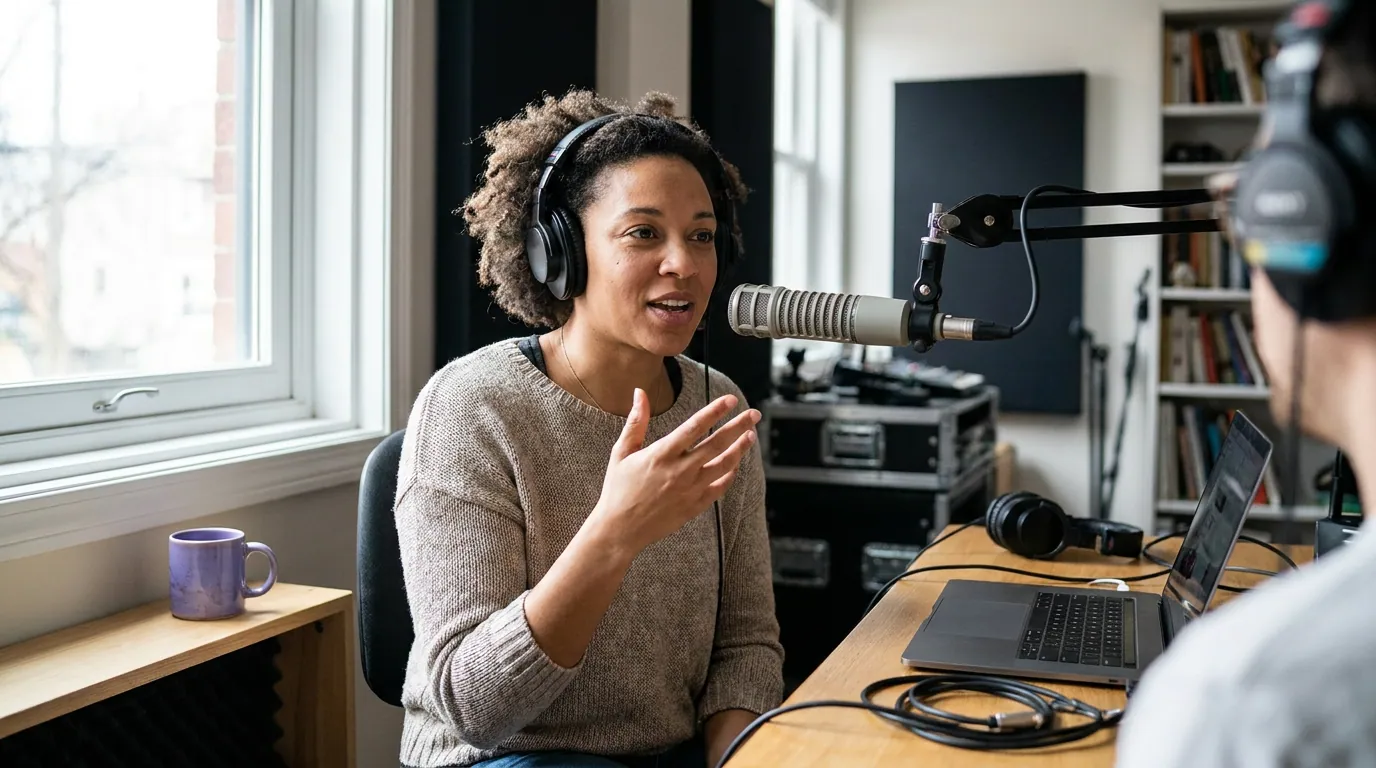
The three levers that fix most mumbling
Three adjustments account for most of the gap between "hard to follow" and "easy to listen to," and none of them touch your accent. Finish your consonants. Slow the start of each sentence. Open your mouth more than feels natural. Pull these three and you'll sound markedly clearer with the same voice you've always had.
Lever 1, Finish your consonants. English carries most of its meaning in the consonants at the ends of words, and that's exactly where casual speech drops them. "I went about it" becomes "I wen' abou' it." The vowels survive; the meaning leaks out the back. Make a point of landing the final sound, the t, d, k, p, s. This is the single change that does the most, and it's identical work whether your accent is from Lagos, Lahore, or Leeds.
Lever 2, Slow the start of sentences. Most people don't talk too fast throughout; they launch too fast, cramming the first few words, then settle. The listener misses the opening and spends the rest of the sentence catching up. Begin each sentence a beat slower than feels right. The first three or four words set the tempo for the whole thought. Speed up after if you want, by then the listener is with you.
Lever 3, Open your mouth wider. Mumbling is, very often, a jaw that barely moves. Sound made through a half-closed mouth comes out muffled no matter how good your articulation is. Open more than feels natural, it will feel theatrical and sound completely normal on playback. If you do one physical thing differently before recording, make it this.
A five-minute articulation warm-up before you record
Do these five drills in the order below, right before you hit record. The whole set takes under five minutes and primes the exact muscles the three levers depend on. None of them ask you to change your accent, they wake up your mouth so your natural voice lands cleanly. (If you want a fuller routine that includes breath and pitch, pair this with a proper vocal warm-up before recording.)
- Cork or pen drill (60 seconds). Hold a clean pen or cork lightly between your front teeth and read a paragraph aloud, forcing your tongue and lips to work harder around the obstacle. Remove it and read the same paragraph, your articulation will feel instantly freer. This is the oldest trick in voice coaching because it works.
- Consonant-ending pass (45 seconds). Read a paragraph and deliberately over-pronounce every final consonant: "thaT," "abouT," "anD," "musT." Overdo it on purpose. The exaggeration trains the muscle memory; in real speech it dials back to normal-but-complete.
- Tongue twisters with crisp endings (60 seconds). "Red leather, yellow leather" and "unique New York" target the consonant clusters people slur. Say them slowly and completely before you say them fast. Slow-and-complete beats fast-and-blurry every time.
- Jaw release (30 seconds). Drop your jaw fully and waggle it side to side, then yawn wide twice. A loose jaw opens wider with less effort, which is Lever 3 made physical.
- Slow-launch sentences (45 seconds). Say five normal sentences, each starting deliberately slow on the first four words, then easing to your natural pace. This rehearses Lever 2 so it's already in your body when the conversation starts.
The point of warming up is not perfection on day one. It's that the muscles are awake when the host asks the first question, so you're not articulating from cold.
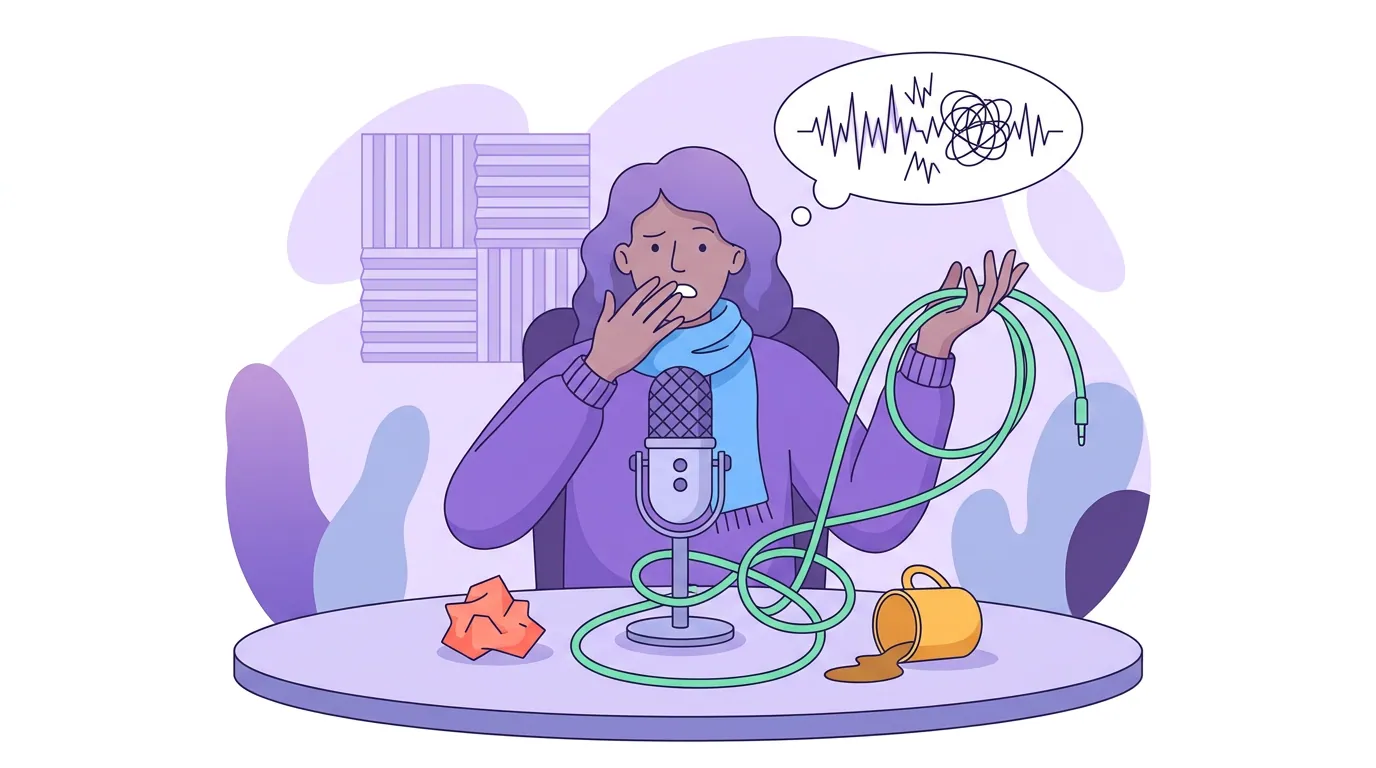
Common mistakes that make it worse
Most clarity advice fails because it pushes people toward sounding artificial. Here are the traps, and what to do instead.
- Flattening your accent. This is the big one. Sanding off your natural sound makes you tense and generic, and listeners notice the strain. Your accent is not the problem. Keep it; fix the mechanics. A clear, accented voice is more memorable than a neutral, careful one.
- Slowing down everywhere. Uniform slow speech is dull and slightly patronizing. The fix is targeted: slow the launch of sentences, not the whole thing. Pace variety is what makes you easy and engaging to listen to.
- Over-enunciating into stiffness. Drills use exaggeration on purpose, but if you carry that into the real conversation you sound like a robot reading terms and conditions. Warm up with exaggeration, then talk like yourself, the muscle memory carries the benefit without the stiffness.
- Sitting too far from the mic. Some "mumbling" is just distance. A voice that's clear at four inches reads as muffled at twelve. Get close to the mic (a fist's width is a good default) before you blame your articulation.
- Fixing it in your head instead of in playback. You can't hear your own dropped consonants in real time, your brain fills them in. The only reliable feedback loop is recording, listening back, and catching the specific words you swallow. Clips with captions make this brutally obvious, which is the point.
How clarity, confidence, and clips connect
Clarity and confidence feed each other on mic. When you trust that your words are landing, you stop second-guessing mid-sentence, which is what produces the freezing and backtracking guests dread. The mechanical fixes above buy you that trust, and they pair naturally with the rest of on-camera composure, like looking confident as a first-time guest, cutting the ums and likes that crowd your sentences, and knowing where to look on a video podcast.
There's also a downstream reason to care. Once an episode is out, the moments that travel are the short, quotable clips, and 57% of listeners now rely on social media for podcast recommendations, the first time that source passed friends and family (InsideRadio). A clip only works if the line in it is clean enough to follow on a phone, often with the sound off and captions on. Clear consonants are what make a great line clippable. Mumbled gold is unusable. The same composure that helps in the room also helps the episode spread, for guests and hosts alike, and good guest etiquette and a host who knows how to make guests comfortable on mic both make clarity easier to find.
Frequently asked questions
How do I stop mumbling on a podcast? Open your mouth wider than feels natural, finish the consonants at the ends of your words, and get closer to the mic, about a fist's width. Mumbling is usually a barely-moving jaw plus dropped final sounds plus too much distance, not a deep speech flaw. Warm up the jaw before you record and the difference is immediate.
Can I sound clearer without losing my accent? Yes, they're separate things. Accent is which sounds you make; clarity is how completely you make them. You can keep every bit of your natural sound and still be far easier to follow by articulating fully, finishing consonants, and slowing the start of sentences. Don't try to flatten your accent; it makes you tense and less yourself.
Why do I sound unclear in recordings but fine in person? In person, listeners get your face, gestures, and the room to fill gaps. A microphone strips all of that away and leaves only the audio, so dropped consonants and a closed jaw that nobody noticed face-to-face suddenly stand out. The fix isn't a different voice, it's tighter articulation and better mic distance.
What's the fastest articulation exercise before recording? The cork-or-pen drill. Hold a clean pen between your front teeth, read a paragraph aloud forcing your mouth to work around it, then read it again without the pen. Sixty seconds, and your articulation feels noticeably freer. Add a wide yawn to loosen the jaw and you're ready.
Does speaking slowly make me clearer? Only if you slow the right part. Uniform slow speech is clear but boring. Slow the first three or four words of each sentence, the launch, then return to your natural pace. The opening sets the tempo and is where listeners most often fall behind, so fixing the start does most of the work without making you sound sluggish.