
How to Sound Natural, Not Scripted, on a Podcast


Prep bullets, not sentences. The reason guests sound scripted is that they wrote their answers out in full and then tried to recite them, and the brain can't recite and react at the same time, so it picks recite. Bring four or five short bullets you could expand a dozen different ways, know one number and one story cold, then look at the host and actually answer the question they asked. That single switch fixes most of it.
Sounding natural is not a personality trait you either have or you don't. It's a preparation method. Over-prepared guests sound canned because they memorized; under-prepared guests sound vague because they have nothing to grab; the sweet spot is prepared material with unprepared wording. Below is the bullets-not-scripts card I give guests before a recording, the specific verbal tells that make a listener feel they're hearing a press release, and the in-the-moment habits that keep you conversational once the record light is on.
How do you sound natural in a podcast interview?
Prepare what you want to say, not the exact words you'll say it in. Make a short bullet list of stories and points, rehearse them out loud once or twice so they're loose rather than memorized, then answer the actual question in the room instead of steering back to your script. Natural speech is reactive; recitation isn't.
The mistake nearly every nervous guest makes is treating an interview like an exam they can fail. So they write a script, memorize it, and spend the recording trying not to forget it, which means their attention is on the page in their head, not on the host. Listeners hear that. They can't always name it, but they feel the difference between someone talking to the host and someone reading at them. The fix is counterintuitive: prepare more, script less.
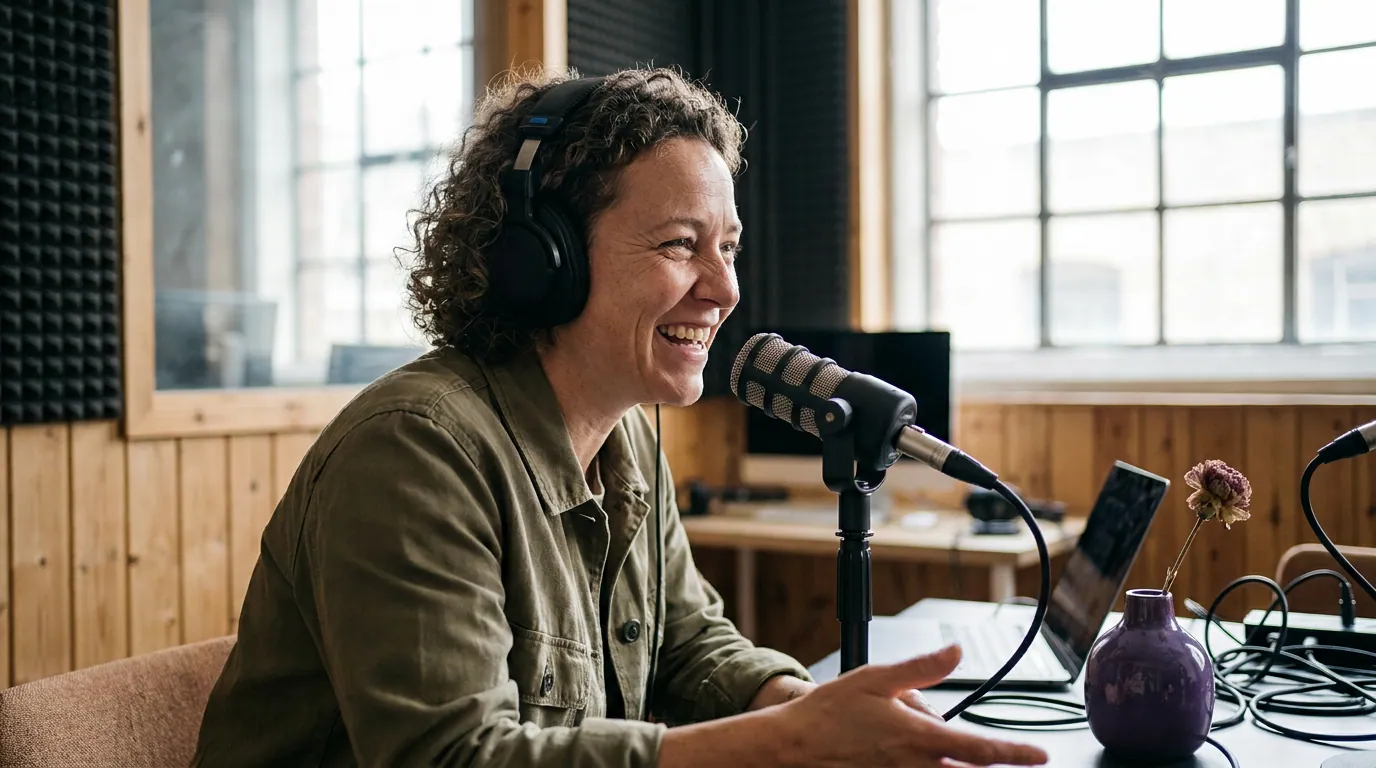
The bullets-not-scripts method
A script is a liability the moment a guest deviates from it, because deviation feels like failure and recovery feels like floundering. Bullets are the opposite, they're a menu, not a track. You commit to having the material; you improvise the delivery every time. Here's the one-card version I hand to guests.
Build the card in five steps.
- Write four or five bullets, never sentences. Each bullet is a point you want to make, three to six words long, "the layoffs taught me to over-communicate," not the paragraph you'd say about it. If a bullet is a full sentence, you'll recite it. Keep it short enough that you have to build the words live.
- Pick one number you know cold. A specific figure makes you sound credible and grounds the abstract. Memorize one, "we cut churn from 9% to 4%", and don't fake the others. A guest reaching for a number they half-remember is the most obvious tell there is.
- Choose one story you can tell from memory. Not memorized word-for-word, known. You've lived it, so you can tell it twelve different ways. A real story is the single most natural-sounding thing you can say, because you're recalling, not reciting.
- Rehearse out loud once or twice, then stop. Say each bullet aloud a couple of times so the path is worn in, not the words. Past two or three reps you start memorizing phrasing, and memorized phrasing is what sounds scripted. Under-rehearse on purpose. (A quick vocal warm-up before you hit record does more for naturalness than a fifth rehearsal.)
- Note one phrase to avoid. Most guests have a verbal crutch, a piece of jargon, a humble-brag, a rehearsed line from their website. Write it at the bottom of the card as the thing not to say. Naming it is usually enough to keep it out of your mouth.
That's the whole card. Six lines. You glance at it between questions, not during answers, and the rest of your attention goes where it belongs, on the conversation.
The canned-answer tells listeners catch instantly
Listeners can't always explain why a guest sounds fake, but they detect it within a sentence or two, and the tells are specific and learnable. Below are the patterns that read as scripted, paired with what natural speech does instead. Most "I sound robotic" problems are one of these, not your voice.
A few of these deserve a word.
Answering the question you wished they'd asked. This is the most common media-training failure. A guest has three messages they came to deliver, so every answer bends back to them regardless of the question. Hosts notice immediately, and so do listeners. Answer the real question first; bridge to your point after, if it fits.
Zero false starts. Polished, edited speech with no "actually, " or "well, two things" is a giveaway that the words were pre-written. Real thinking has small seams. You don't want a parade of filler words like "um" and "like", those hurt, but a single self-correction signals you're composing the thought live, which is exactly what you want to project.
The pivot to a rehearsed line. When a guest hits a phrase that's clearly off their landing page, the energy drops and the cadence flattens. You can hear the gear-change. Use your bullets to find the point fresh each time; never recite the marketing copy.
The opposite of all these is not "say whatever comes to mind." It's reacting. Natural speech is built from responses, to the question, to what the host just said, to the room. Recitation ignores all of that, which is precisely why it sounds dead.

In-the-moment habits that keep you conversational
Preparation gets you most of the way; a few live habits handle the rest. None require talent.
- Pause before answering. A one- or two-second beat reads as thinking, not stalling, and it gives you time to build a sentence instead of grabbing a memorized one. Silence feels longer to you than to the listener.
- Talk to the host, not the audience. Use the host's name. React to their last sentence. An interview is a conversation a third party overhears; the moment you start addressing the crowd, you sound like an ad.
- Let your pace move. Speeding up when you're excited and slowing down on the hard part is what conviction sounds like. Even, metronomic delivery is the audio signature of reading.
- Keep notes in your peripheral vision, not in front of your face. Off to the side, glanced at between questions. The instant your eyes lock onto a page, your delivery flattens, and on a video podcast, where the camera reads your eye-line, the audience sees it too.
- Strand yourself on purpose in rehearsal. Practice answering a question you didn't prepare for, out loud. It builds the muscle the whole method depends on: making words on the spot from a point you know, rather than retrieving a sentence you stored.
Common mistakes (and the fix)
- Memorizing instead of internalizing. The fix is reps with a ceiling: rehearse a bullet two or three times, then move on. Past that you're memorizing phrasing.
- Over-prepping the open, under-prepping the rest. Many guests script the first thirty seconds perfectly and wing everything after. The intro is the part you should least script, it sets the tone. Loosen the open; anchor the middle with your bullets.
- Treating a pre-interview call as a dress rehearsal. If a host does a pre-interview chat, don't perfect your answers there and then recite them on record, the second telling is always flatter. Save the stories for the mic.
- Bringing too much material. Ten bullets means you're managing a list instead of having a conversation. Four or five is plenty for an hour; the gaps are where the good stuff lives.
- Apologizing for thinking. "Sorry, let me think" undercuts you. Just take the beat. A considered pause is a feature, not a flaw, and is well within normal guest etiquette.
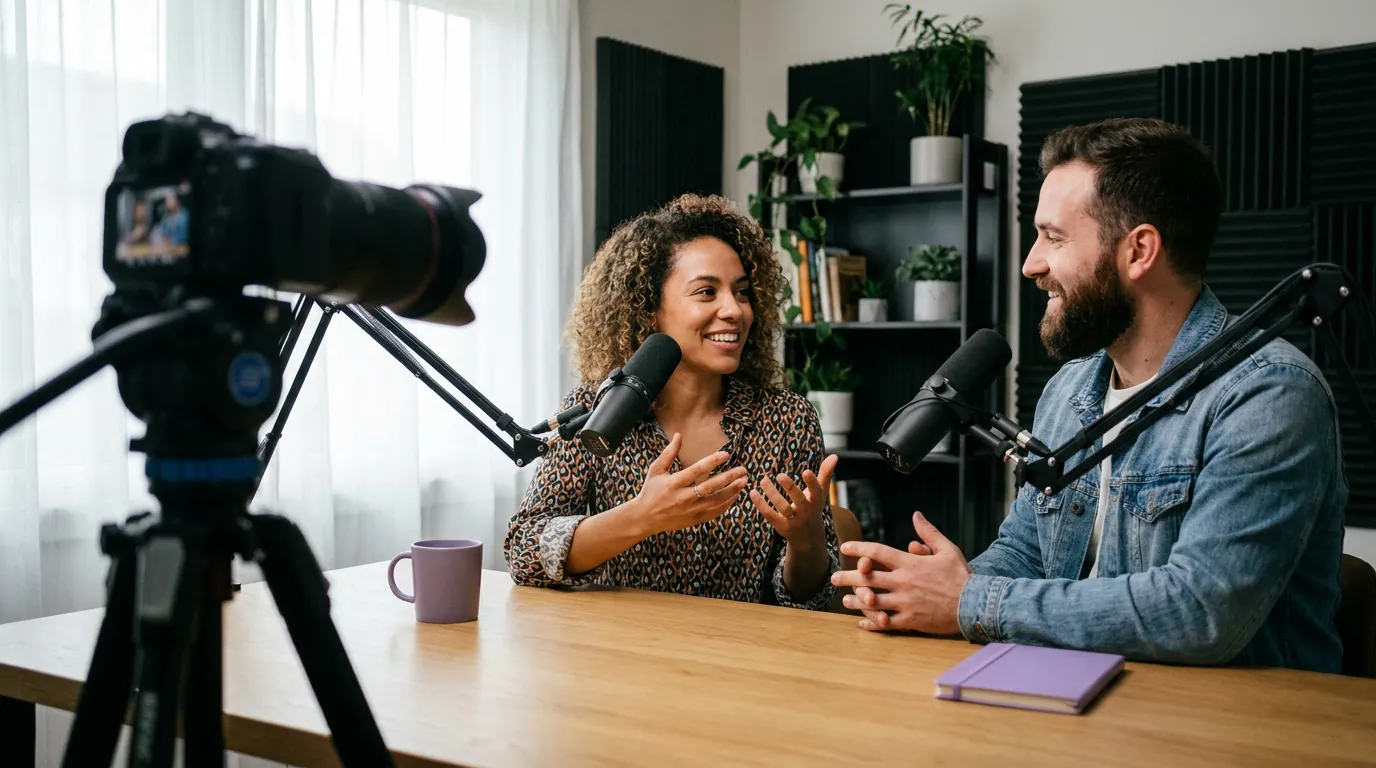
Why a natural take is also a more shareable one
There's a payoff beyond the recording itself. The unscripted moments, the real story, the off-the-cuff line, the answer you surprised yourself with, are the ones that travel as clips, and clips are now where new listeners come from. 57% of listeners rely on social media for podcast recommendations, the first time that source passed friends and family (InsideRadio), and **53% of new US weekly listeners now prefer to watch a podcast, up from 30% in April 2022** (Backlinko). Both are survey and publisher-reported figures rather than controlled measurements, so treat them as direction, not gospel, but the direction is clear.
A scripted answer rarely makes a good clip; it has no spike, no surprise, nothing for a stranger to react to. A genuine moment does. Prep with bullets, stay reactive, and you don't just sound better in the room, you hand the host something worth cutting, which is the cheapest way for a guest to reach a new audience.
Frequently asked questions
How do I stop sounding scripted in an interview? Stop writing full answers. Prep four or five short bullets plus one number and one story, rehearse them out loud only two or three times, then answer the host's actual question instead of reciting. Scripted delivery comes from memorizing wording; natural delivery comes from knowing the material and building the words live.
Should I write out my answers before a podcast? Write the points, not the sentences. Full written answers tempt you to recite, and recitation is what listeners hear as fake. Bullets give you the safety of preparation without locking you into phrasing, you commit to the material and improvise the words each time.
Is it okay to pause or say "um" on a podcast? A short pause to think is good, it signals you're composing a real answer, and it sounds more confident than rushing. A steady stream of "um" and "like" is different and worth reducing, but the occasional one is human. Aim for considered, not flawless.
How much should I rehearse before a recording? Run each talking point out loud two or three times, then stop. Enough to make the path familiar; not enough to memorize phrasing. Over-rehearsing is the most common cause of sounding scripted, because you cross from knowing the material to reciting it.
Why do my answers sound canned even though I know my topic? Usually because you're delivering pre-written lines from your bio or website instead of answering the question in front of you. Knowing your topic isn't the problem; reaching for stored sentences is. Trade the script for bullets and answer the host, not the audience.