
How to Prepare for a Podcast Interview as a Guest


Prepping for a podcast interview takes about two hours spread across the week before you record: learn who the host is, listen to two of their episodes, write five to seven talking points, rehearse two or three stories out loud, and test your mic and internet the night before. Do those five things and you'll sound like a guest worth booking again, which is the whole point.
Most guests over-prepare the wrong parts and skip the parts that matter. They write a script nobody asked for and never check whether their headphones work. Below is a timed checklist that tells you exactly what to do, when to do it, and, the part nobody else ranks, how much each task actually moves your odds of getting a second invite. Spend your prep time where it pays.
How do you prepare for a podcast interview as a guest?
Work backward from the recording date. A week out, research the host. A few days out, listen to two real episodes and write your talking points. The night before, prep two or three stories and dry-run your gear. Five tasks, roughly two hours, front-loaded so nothing lands on you the morning of.
The reason to schedule it rather than cram is that the high-value tasks need to marinate. Listening to episodes changes what you say; you can't absorb a host's style at 9:55 for a 10:00 call. The low-value-but-critical task, testing your gear, is the one that fails silently if you leave it to the last minute. Here's the sequence.
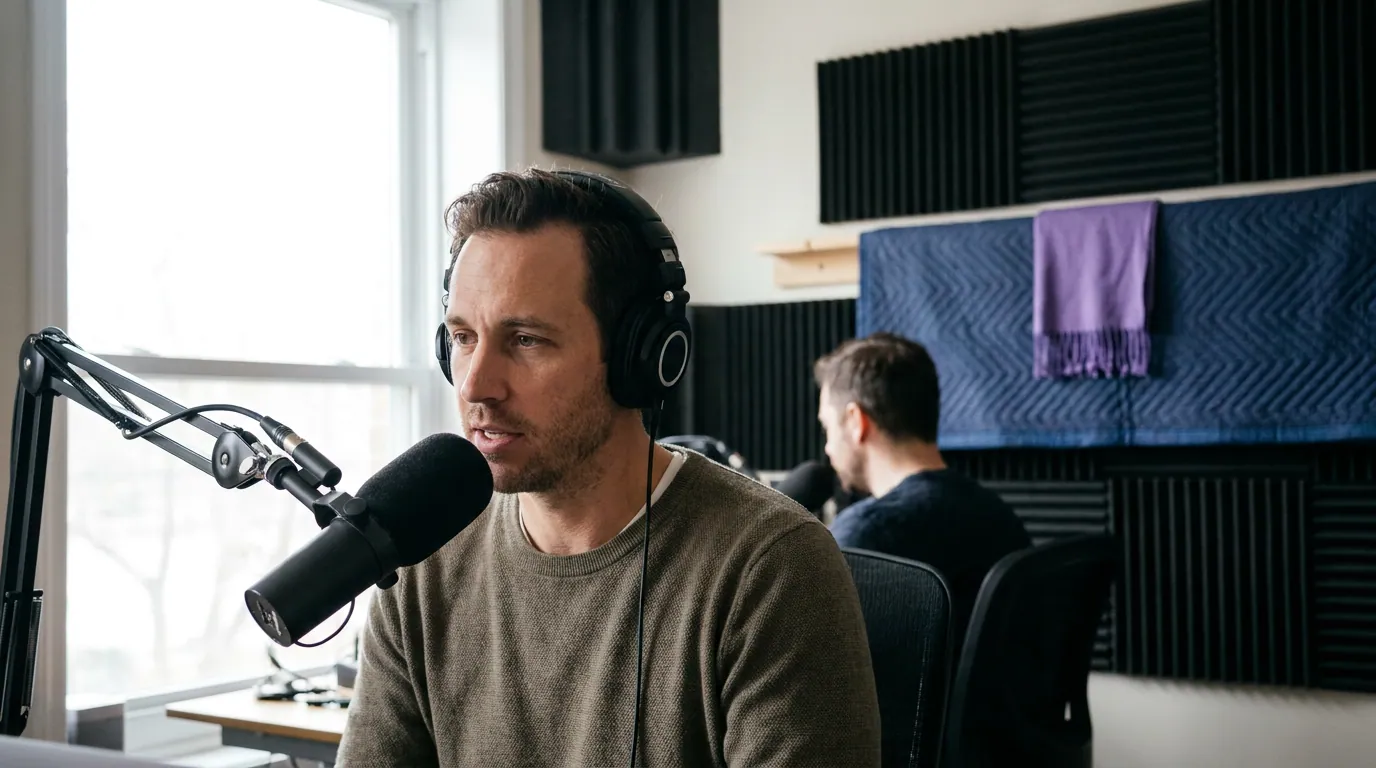
Why prep is the whole game for a guest
The point of guesting isn't this one episode, it's the next ten. A prepared guest gets re-invited and referred to other hosts; an unprepared one is a chore the host quietly never books again. That matters because social clips and word-of-mouth, not the show's main feed, are what carry a guest appearance to new ears.
Here's the leverage. 57% of listeners now rely on social media for podcast recommendations, the first time it has surpassed friends and family (InsideRadio, 2025). The moments that get clipped and shared are the ones where a guest said something sharp and self-contained, not the ones where they rambled. Prep is how you manufacture clippable moments on purpose. And the audience is increasingly watching, not just listening: 53% of new US weekly listeners now prefer to watch a podcast, up from 30% in April 2022 (Backlinko). On camera, an unprepared guest is obvious in a way they never were on audio alone.
If you're still landing the booking itself, that's a different job, start with how to get booked on podcasts as a guest and finding shows that will actually book you. This guide assumes the date is on your calendar.
The five prep tasks, ranked by re-invite payoff
Not every prep task is worth the same. Below is the order I'd spend time in if I only had an hour, based on what consistently separates the guests hosts re-book from the ones they don't. The ranking is editorial, my read from coaching guests, not a survey, but the gaps between tiers are real and worth respecting.
1. Prep two or three stories (highest payoff)
Stories are what get clipped, quoted, and remembered. A guest who answers in concrete scenes, "we tried X, it failed for this reason, then we found Y", gives the host something to share. A guest who answers in abstractions gives them nothing to work with. This is the single highest-leverage hour of prep.
Pick two or three moments from your work: one win, one failure, one surprising lesson. Say each one out loud and time it, aim for 45 to 90 seconds. Attach a real number to at least one ("it cut our churn from 9% to 4%"), because a number is what makes a clip credible enough to travel. Stories drive a meaningful share of a video show's new audience, and clips can lift reach several times over (Podcast Studio Glasgow). You are pre-loading the raw material.
2. Listen to two full episodes
Listen to two recent episodes, ideally the most recent one and one with a guest in your lane. You're listening for three things: the format (solo questions or a co-host trading off?), the pacing (do they go deep on one thread or move fast across many?), and any recurring ritual ("what's the one thing you'd tell your younger self?"). Match your energy to theirs. A guest who brings high-octane sound bites to a slow, reflective show feels like a bad fit, even when the content is good.
This also lets you reference an earlier guest or episode naturally on the recording, which hosts notice and remember. It signals you respect the show enough to actually consume it.
3. Build five to seven talking points (not a script)
Write five to seven bullet points you want to land, frameworks, opinions, the one contrarian take you're willing to defend. Bullets, never a script. A scripted guest sounds like they're reading, and the moment the host goes off-plan they freeze. Bullets keep you flexible and let the conversation breathe.
Each point should be a position, not a topic. "Cold email" is a topic. "Most cold email fails because people pitch before they've earned attention" is a point, it has an edge the host can push on. The guests who get re-invited show up with a point of view, which is most of what good podcast guest etiquette comes down to in practice.
4. Research the host and the show
Spend 15 minutes on the host: their background, what they care about, how they describe the show, and whether they have an obvious stance you should know. The goal is to avoid asking questions they've answered a hundred times and to find one genuine point of connection. If you already had to dig up their details to pitch, see how to find a podcast host's real email address, you're halfway there.
Lower on the ranking than people assume, because hosts can tell the difference between research and flattery. A guest who name-drops the host's dog from an old episode is trying too hard. One sincere, specific reference beats a dossier.
5. Dry-run your gear the night before
This wins zero re-invites, and skipping it can cost you the whole episode. Test your mic, your headphones, your internet, and the recording platform the night before, not five minutes before. Record 20 seconds and play it back. Wear wired headphones so the host's audio doesn't bleed into your mic. Use ethernet or sit next to the router. Close everything that might ping.
The most common guest disaster is unusable audio, a tinny laptop mic, an echoey room, a dropped connection halfway through a great answer. It's entirely preventable and it's the fastest way to never get asked back, because re-editing your bad audio is the host's problem, not yours.
Common mistakes that make a guest look unprepared
Writing a full script. Scripts kill conversation. You sound like you're reading, you can't react, and the host's job gets harder. Bullets, always. If you can't say it without notes, you don't know it well enough yet.
Pitching your product instead of being useful. The fastest way to not get re-invited is to turn every answer into a plug. Be genuinely helpful and mention what you do once, when it's relevant. The audience rewards the guest who taught them something, and so does the host.
Skipping the gear check. Covered above, but it's the most common and most fixable failure, so it's worth repeating. Bad audio overrides good content every time.
Matching the wrong energy. Bringing a hype-reel persona to a quiet, thoughtful show, or the reverse, reads as a mismatch even when your points are strong. This is exactly what the two-episode listen prevents.
Treating it as one-and-done. The guests who compound are the ones who follow up, share the episode, and make the host look good. Prep for the relationship, not just the recording.
Frequently asked questions
How long should you prepare for a podcast interview? About two hours total, spread across the week before you record, not crammed the morning of. Roughly 15 minutes researching the host, 45 listening to two episodes, 30 building talking points, 20 prepping stories, and 10 dry-running your gear. Front-load it so the high-value tasks have time to settle.
Should I ask the host for the questions in advance? You can ask for the general topics or themes, and most hosts will share them. Don't ask for a word-for-word question list, it signals you want to script your answers, which makes for a stiff conversation. Themes plus your own talking points is the right amount of structure.
What should I have ready before the recording starts? Your five to seven talking points on one page, your two or three rehearsed stories, water within reach, wired headphones on, and your mic tested. Have your own intro line ready too, since many hosts will ask you to introduce yourself. Keep the page to bullets so you're not reading.
How do I not sound nervous or freeze up? Rehearse your stories out loud beforehand so the shape is automatic, and remember the host wants you to do well, an awkward guest is bad for their show too. Slow down, leave pauses, and treat it as a conversation with one curious person, not a performance for an audience.
How do I get re-invited to a podcast? Show up prepared, bring stories and a real point of view, match the show's energy, keep your audio clean, and make the host look good. After it airs, share the episode and the clips with your audience. Hosts re-book and refer the guests who were easy to work with and easy to promote.