
Question Hooks That Work (and the Ones That Flop)


A question hook works when the viewer can't answer it in one second, and it flops when they can. "Have you ever struggled to grow your podcast?" gets an instant "no" or "yeah, scroll", the question closes. "Why did the show with the worst audio out-grow everyone last year?" can't be answered, so the thumb stays to find out. The whole difference is whether your opener opens a gap or hands the viewer an exit.
Most advice tells you to "start with a question" as if all questions pull the same way. They don't. Half of them are the fastest way to lose a clip, because a question the viewer can answer is a question they answer by scrolling. This page sorts the two kinds with a one-second test, then gives you a formula for turning the dead-end ones into the kind that hold.
Why a question can be the worst opener, not the best
A question is a request for a response. The danger is that the response a viewer can give instantly is "no", and "no" is a decision to leave. That makes the question hook the highest-variance opener in short-form: when it lands, it plants a thought the viewer needs resolved; when it misses, it actively invites the scroll you were trying to stop.
The stakes sit in the first three seconds. Castmagic calls them "absolutely critical" because viewers "make split-second decisions about whether to continue watching", a dead-end question burns that window asking permission the viewer denies. And because most clips are read before they're heard, Digiday reported around 85% of Facebook video played silently as far back as 2016, a publisher-reported, directional figure that has only grown truer, your question usually lands as caption text on mute. There's no warm delivery to soften a flat question. The words carry it alone.
That matters more every month. Podcast clips posted as Shorts, Reels, and TikToks keep climbing as more shows go video-first. More clips in the feed means more openers competing for the same first second, and a question that offers an easy "no" loses that competition.
The test: can the viewer answer it in one second?
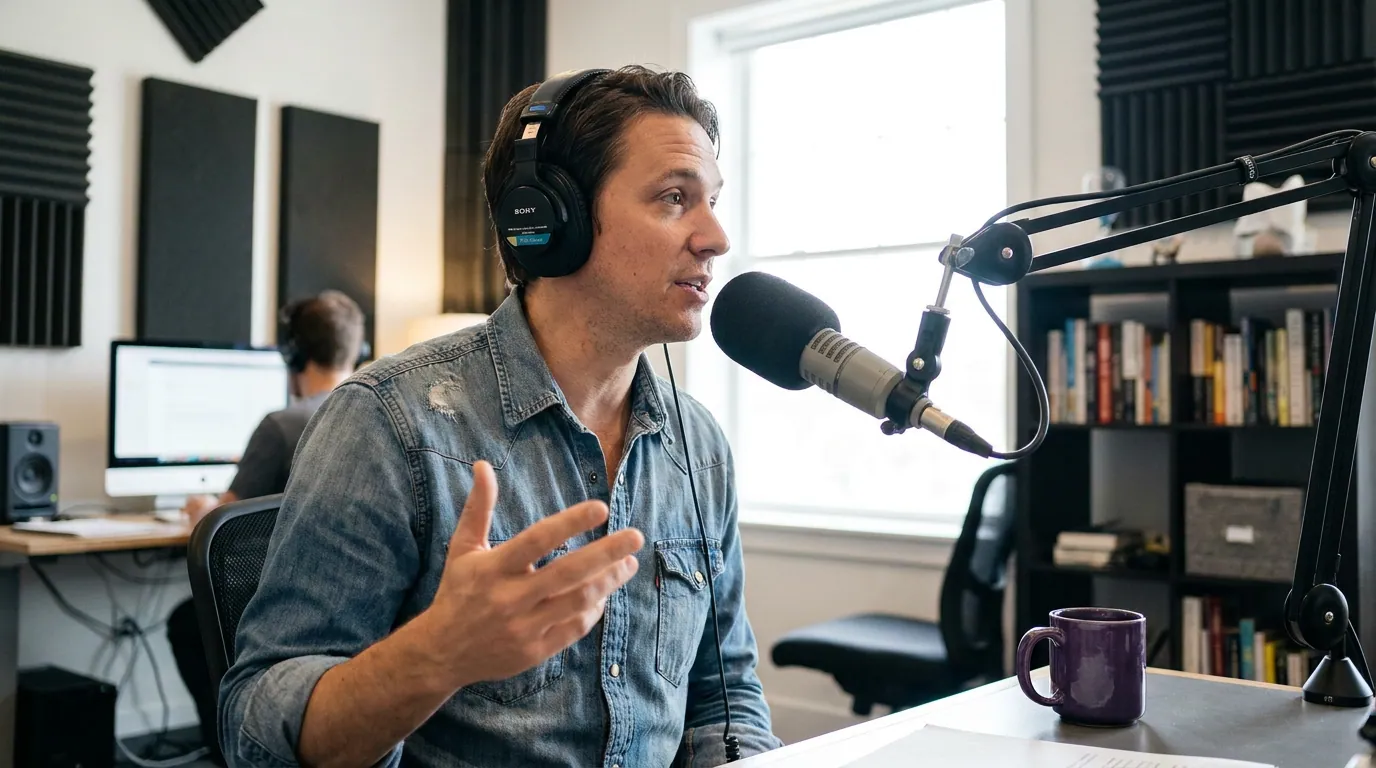
Run every question opener through one filter. If the viewer can answer your question in a single second, yes, no, "not me," "obviously", it's a dead-end hook and it leaks viewers. If they genuinely can't answer it, you've opened a curiosity gap, and the gap is what keeps the thumb still.
The mechanism is the curiosity gap, the discomfort of an open question the brain wants resolved. A dead-end question never opens the gap, because it's already closed when the viewer answers it. A curiosity-gap question names something specific the viewer doesn't know and can't guess, so the only way to close it is to keep watching.
Four question hooks that flop (and why)
These are the dead-end shapes I see most often on otherwise-strong clips.
- The yes/no warm-up. "Do you want to grow your podcast?" Every viewer answers in their head, usually "obviously", and the obvious answer is boring. You've spent the first second confirming something, not opening anything.
- The "have you ever struggled" complaint. "Have you ever felt stuck editing clips?" It's relatable, which feels safe, but relatable isn't the same as compelling. The viewer recognizes the feeling, nods, and scrolls, recognition is a closed loop.
- The fake-rhetorical question. "What if I told you there's a better way?" The viewer's honest answer is "then tell me, or don't." It promises a payoff without naming any specific thing, so there's no gap to hold them.
- The too-broad quiz. "What's the secret to going viral?" So big it reads as a content-mill title. A question that vague signals a generic answer is coming, and the viewer pre-rejects it.
The common thread: each one is answerable, dismissible, or both. A question that can be waved away in the first second is functionally an exit sign.
Four question hooks that work (and why)
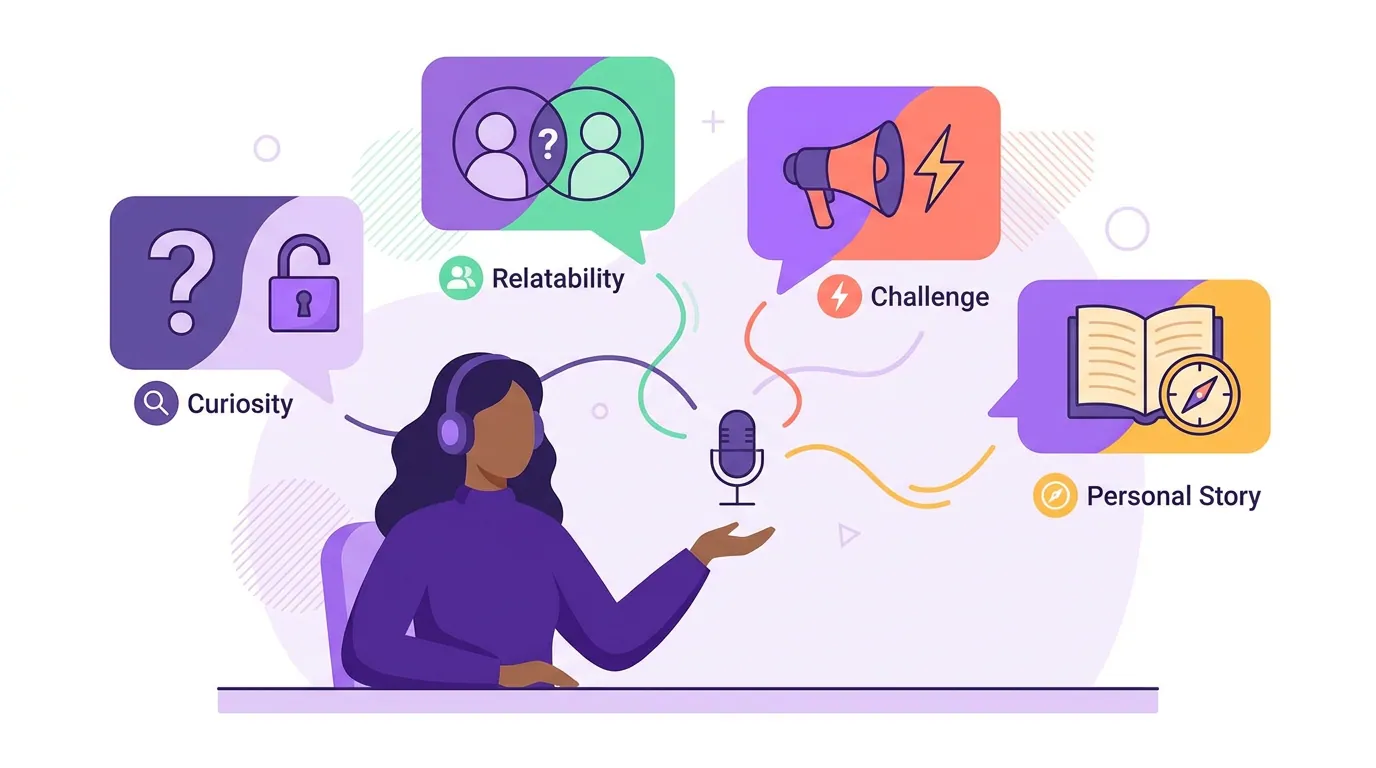
The working shapes all share one property, the viewer cannot supply the answer, so they have to stay for yours.
- The specific mystery. "Why does this $99 mic out-perform the $1,500 one in a noisy room?" Named, concrete, unanswerable without watching. The specificity reads as true, and the answer is genuinely unknown.
- The false-assumption flip. "You think more posting grows a podcast, so why did cutting to three clips a week double this show's reach?" It states what the viewer believes, then contradicts it with a question they can't resolve.
- The stakes question. "What mistake cost this founder $40,000 on a single episode?" A named cost the viewer wants to avoid, framed as a question only the clip answers. Stakes plus a gap.
- The "which one" tease. "Three of these editing habits help and one quietly kills your reach, which one?" A countable set with a hidden answer. The viewer mentally scans the options, which is itself watching.
Notice none of these can be answered with "no." They can only be answered by the clip. That's the line between a question that works and one that flops.
The rewrite formula for dead-end questions
When a clip opens with a closeable question, you usually don't need a new moment, you need to reopen the gap. Four moves do it.
- Add a specific that can't be guessed. Swap the general for the named: not "Can you grow without ads?" but "How did this show hit 50,000 downloads with a $0 ad budget?" The number is the bait.
- Make it about a third party, not the viewer. "Have you ever failed at this?" closes on a yes/no. "Why did this guest quit at exactly the wrong moment?" makes the viewer a spectator to a story they don't know the end of.
- Build in a false assumption to flip. Name what the viewer probably believes, then question it. "Everyone thinks longer clips lose people, so why did the 90-second cut out-watch the 20-second one?"
- Attach a stake or a number. A cost, a count, a deadline. "Which of these three caption mistakes is costing you half your views?" The stake gives the gap weight.
One caution: the question has to be one the clip actually answers. An open question with no payoff is an over-tease, and over-teasing trains viewers to distrust your next opener. Virality without a real payoff is empty engagement, the gap you open has to close inside the clip.
When not to use a question at all
A question is one shape, not the only one. If your strongest moment is a confession, a contradiction, or a named cost said out loud, the statement version usually beats the question version, the audio already carries the tension, so you just move it to the front. The seven non-question shapes in the hook-formula library cover those cases, and what to put in the first three seconds of a clip covers the framing around any opener. Reach for a question only when the gap is the strongest thing you've got.
Where AI clip tools fit
A clip tool finds the moment and drafts a caption; it doesn't yet reliably write the right question for it. Tools like QuickReel detect strong segments and auto-caption them, and most modern clippers surface roughly the same 80% of moments, so the moment-finding is close to a commodity, the mechanics are in how AI clip detection actually works. The opening question is still a human call. Treat the auto-title as a placeholder, run it through the one-second test, and rewrite it if a viewer could answer it without watching. The triage habit that makes this fast is in how to pick the best AI-suggested clips.
FAQ
Should you start a video with a question? Only if it's one the viewer can't answer in a second. An open, specific question that names something unknown opens a curiosity gap and holds the viewer. A broad yes/no question hands them an easy answer, and the easy answer is "scroll." When in doubt, run the one-second test before you commit the opener.
Why do my question hooks get no views? Usually because they're answerable. "Do you want more downloads?" or "Have you ever struggled with editing?" close the instant the viewer answers them in their head. Add a specific that can't be guessed, point the question at a third party, or attach a stake, and confirm the clip actually answers it. The distribution side is in why your podcast clips get no views.
What are the best question openers for clips? The specific mystery ("why does this $99 mic beat the $1,500 one?"), the false-assumption flip, the stakes question, and the "which one" tease. All four share one trait: the viewer can't supply the answer, so they stay for yours.
How do I know if a question hook is working? Watch the first-second retention on the clip's curve. A working question hook holds the opening seconds and shows a clean drop only later; a dead-end question shows a steep cliff in the first second or two. Reading that shape is covered in how to read a retention curve on a clip.