
Video Podcasts and What the Best Ones Get Right


The best video podcasts to learn from span a huge range of set complexity, Lex Fridman runs one of the world's largest shows from a single room with one main shot, while Joe Rogan cuts between four cameras and Steven Bartlett films on six. Study them by what their set is for, not by how much it cost, and the lesson is the same: the picture earns the watch, and the picture is what becomes the clip.
This is not a ranked list by subscriber count. If you want raw audience size, the video shows the top US podcasts share is the better page. This one is a craft study for a specific reader: an audio host deciding whether to add a camera, or a new host deciding how much set to build on day one. The honest answer to "how big a setup do I need" is "less than the top shows make you think", and the rest of this page proves it with their own production details.
Why the picture matters more than it did three years ago
YouTube is now the most-used podcast platform in the United States: 39% of weekly podcast consumers name it as their primary service, ahead of Spotify at 20% and Apple at 11% (Edison Research, Infinite Dial 2026, reported March 2026). YouTube also passed 1 billion monthly viewers of podcast content worldwide in early 2025 (Variety, Feb 2025). When the largest discovery surface for your show is a video platform, a static webcam at a bad angle is a tax you pay on every new viewer.
But "the picture matters" does not mean "build a broadcast studio." The four shows below win at four different budgets. Find the tier that fits your format and stop there.
The set-complexity ladder
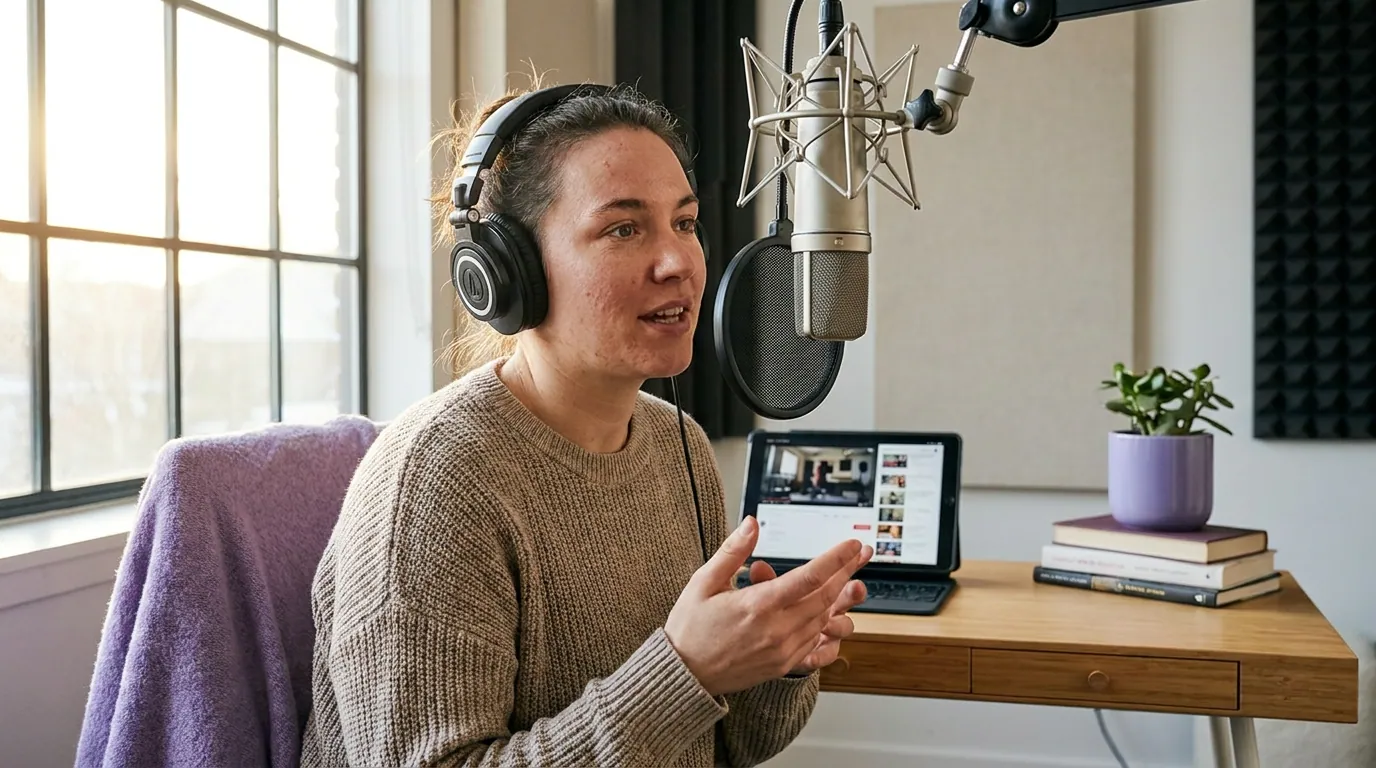
Video podcast setups fall into four tiers. Each tier solves a real problem the previous one couldn't, and each maps to a flagship show running it well. Find the lowest tier that fits your format, every step up adds cost, editing time, and a new way to fail on camera.
Tier 0, The webcam test You do not need a flagship setup to learn whether video helps your show. One fixed camera, the cleanest light in your room, and decent audio is enough to publish a few episodes and read the data. Most new video shows hold a single locked webcam angle for the entire episode, and the vidpros editorial breakdown of top video shows is blunt that this is exactly what loses viewers. Tier 0 is a test, not a destination, treat any episode here as disposable.
Tier 1, One camera, done with intent (Lex Fridman) The most important show on this ladder is the one that proves you can stay on a single tier and still reach the top. The Lex Fridman Podcast runs out of a single room in Austin, with a dark minimalist set and a small, deliberate number of camera angles rather than constant cutting, paired with a broadcast-grade Shure SM7B / SM7dB microphone chain on RODE PSA1 arms (SwipeFile, Lex Fridman's Podcast Setup). The whole rig, SwipeFile notes, "could fit in a spare bedroom."
What Tier 1 gets right is that it spends on the two things viewers actually feel, audio quality and lighting, and refuses to spend on the things they don't. Lighting is frequently more decisive than the camera body; a well-lit basic camera reads as professional, a badly lit expensive one does not. If you are a solo or one-guest interview show, this is the tier to copy. Staying here is a strategy, not a compromise.
Tier 2, Three to four cameras and a switcher (Joe Rogan) Tier 2 exists to solve one problem: a long, two-or-three-person conversation gets visually monotonous on a single locked shot. The Joe Rogan Experience runs four tripod-mounted camcorders into a Blackmagic ATEM live switcher, letting the operator cut to whoever is speaking and pull articles or video onto the studio screen mid-conversation (JRE Library, equipment & studio setup). The switching is what keeps a three-hour episode watchable.
The trap at this tier is the jarring cut. More cameras means more ways to break the viewer's sense of place. The fix is discipline, not gear: cut to the speaker, cut to a reaction during a silence, and use the wide shot for back-and-forth. If your episodes routinely run past an hour with two-plus people on screen, Tier 2 earns its cost. Below an hour, it usually does not.
Tier 3, The broadcast gallery (Diary of a CEO) Tier 3 is a television studio. The Diary of a CEO shoots a multi-camera setup, its earlier rig ran six cameras from two manufacturers, built around Blackmagic URSA Broadcast G2 cameras, Pocket Cinema 6K Pro cameras on sliders and a dolly, and an ATEM Mini Extreme ISO switcher. After unifying on shared color science, director-producer Jack Sylvester said they gained "a more consistent look and feel across all our episodes, social media clips and trailers," plus remote camera operation and the ability to "produce an initial edit live" (Creative COW, Oct 2022).
Notice what the Tier 3 investment actually bought: not a prettier picture for its own sake, but a clip pipeline. Consistent color across cameras and a live rough cut are what let a show ship social clips at scale. Almost no new host needs Tier 3. It is here as the ceiling, so you can see how far the ladder goes and why the top rung is built around distribution, not vanity.
What the best video podcasts share
Here is the finding the gear lists bury: set complexity does not predict clip output. A one-camera show can be more clippable than a six-camera one, because clips are made in the conversation and the captioning, not in the camera count. The shared trait across the strong video shows is not budget, it is that each one decided, on purpose, where it sits on the ladder and built a clip habit that matches.
Three habits run through all of them:
- Audio is the floor, not the trade-off. Every show on this list spends on microphones before it spends on a second camera. The picture is what gets the watch; the audio is what keeps it. Fridman's single-camera show uses the same broadcast mic class as the six-camera studios.
- Clips are a separate workflow, owned on purpose. Diary of a CEO treats short-form as its own data-driven discipline, not an afterthought. The show's "Pre-Watch System" runs episodes past thousands of viewers, tracks where attention drops, and cuts based on the data; one ten-second tweak to its YouTube call-to-action reportedly tripled subscribers (Colin and Samir, How Diary of a CEO became YouTube's #1 show). The Tier 3 studio rebuild was justified the same way: shared color science across "all our episodes, social media clips and trailers" (Creative COW). The lesson is structural, not budgetary: decide how your clips get made and tested before you record.
- YouTube and audio are published in parallel, never either-or. None of these shows abandoned the audio feed when they added a camera. They added a surface. That choice is backed by data, and it leads straight to the caveat the video hype skips.
The caveat the video hype skips
Video is a growth lever, not a replacement for audio, and the numbers are clearer on this than most "go video now" advice admits. In the US there are roughly 79.5 million podcast video viewers against a listener base of about 149.7 million, so the audio audience is still nearly twice the size of the video one (eMarketer, podcasting FAQ 2026). And much of what counts as "watching" is functionally listening, eMarketer frames podcasting as a dual-format medium where video expands the audience rather than replacing audio, with many "viewers" running the video in the background while they listen.
So the strategic read is not "video is winning, abandon audio." It is "publish a strong audio feed and a deliberate video feed, and let the audience pick." The shows you admire all do exactly that. If your format is audio-first storytelling, narrative or documentary, a camera may add less than careful sound design does, and that is a legitimate reason to stay at Tier 0 or 1. The same logic that makes a true crime show's format choices distinct applies here: match the production to the format, not to the trend.
How clips fit, whatever tier you choose
The connective tissue between every tier and your actual growth is the clip. Social clips are now the dominant podcast discovery channel, 57% of listeners say they rely on social media for recommendations, the first time it passed friends and family (InsideRadio, 2026). That is why even the Tier 3 studio's biggest investment paid off as a clip pipeline.
You do not need the studio to get the pipeline. Whether you film on a webcam or six cameras, the clip workflow is the same: pull the strongest 30–90 second moments, reframe them vertical, caption them, and post. A one-camera Tier 1 show that clips consistently will out-grow a six-camera show that doesn't. Set complexity is a choice about the watch; clip cadence is the choice about the reach. Keep them separate in your head, and you'll spend on the right one.
FAQ
What is the best video podcast to learn from for a beginner? Lex Fridman's podcast, because it proves a single deliberate camera and broadcast-grade audio can reach the top tier without a studio (SwipeFile). For a beginner, the lesson is to spend on light and sound first, keep one clean shot, and add cameras only when a long multi-person format forces it.
Do I need a multi-camera setup to start a video podcast? No. A multi-camera setup solves visual monotony in long, multi-person conversations, that is the only problem it solves. For solo or single-guest shows under an hour, one well-lit camera with good audio is enough. Add a second camera when a single shot starts feeling static, not before.
Are video podcasts actually better than audio-only? Video expands reach because YouTube is the #1 US podcast platform at 39% of weekly listeners (Edison Infinite Dial 2026), but it does not replace audio: the US audio base is nearly twice the video base (eMarketer, 2026). The strong move is to publish both feeds and let listeners choose their mode.
How do top video podcasts make so many clips? They treat clipping as a separate, data-driven workflow rather than an afterthought. Diary of a CEO tests episodes with thousands of viewers and cuts based on where attention drops, then optimizes the short-form and YouTube hooks the same way (Colin and Samir). The repeatable habit is what matters, the camera count does not predict clip output.
Which video podcasts have the most worth-copying production? For one-camera intent, Lex Fridman; for multi-cam switching discipline, Joe Rogan; for a clip-first studio system, Diary of a CEO; and for deliberate audio-first restraint even as video grows, Acquired, whose hosts describe video as "a different platform" rather than a replacement for audio. Each sits on a different rung of the ladder and gets that rung right, copy the one that matches your format.
Want more shows to study by format? Compare the staging-first read in what the best video podcasts get right on production, the structure lessons in business podcasts worth studying as a new host, the comedy podcasts new hosts should steal from, and the explainer craft in finance podcasts that teach hosts how to explain money.