
Best Startup Podcasts to Learn From, by Format


The startup podcasts founders actually replay split into two kinds. War-story interviews, How I Built This, The Pitch, Founders, replay because the emotional arc holds up a second time. Tactical teardowns, Acquired, Lenny's Podcast, My First Million, This Week in Startups, replay because you missed a number the first time. Knowing which kind you are listening to is the whole skill, and it tells you what to copy if you ever host one.
Most "best startup podcasts" lists rank by audience size and hand you a download number you can do nothing with. This one sorts by founder utility: the format split that decides why an episode gets a second listen, the specific interviewer moves the hosts use to pull a real figure out of a guest instead of a platitude, and the habit that separates a useful startup show from a motivational one, getting metrics on the record. The names belong to the hosts. The structure underneath is borrowable.
What makes a startup podcast worth learning from?
A startup podcast is worth learning from when it leaves you with something you can act on, a tactic, a number, a decision rule, not just a feeling that building is hard. The best ones do one of two jobs cleanly: preserve a founder's whole arc as a story, or take a company apart to show the moving parts. The mediocre ones blur the two and deliver neither.
The trap for a new founder is mistaking emotional intensity for information. A guest tearing up about almost going bankrupt is memorable; it is not, by itself, a lesson. The shows on this list earn their replays because the host either structures the emotion into a usable arc, or refuses to let the guest stay vague, pushing past "we focused on the customer" to "we had 11 paying accounts and churned two in March." Both are valid. They just teach different things.
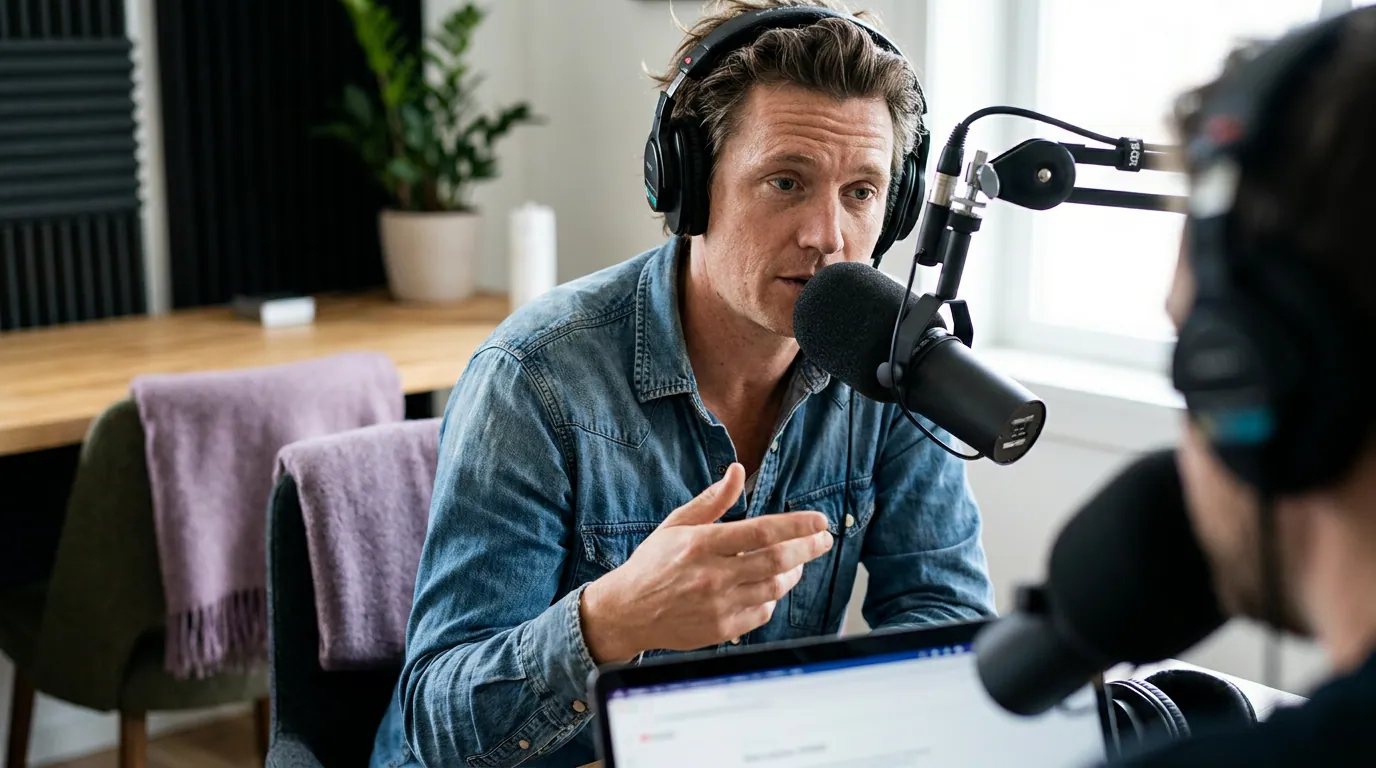
The startup podcasts worth studying (and which kind each is)
These are not ranked by size. Each is here because it does one of the two jobs cleanly, and because a founder can name what to copy. The full episode histories live on the directory; the format read lives here.
- Acquired (teardown), Ben Gilbert and David Rosenthal publish single-company histories researched over weeks, often with no guest at all. They describe each episode as handcrafted over roughly 200 hours of research, pulling from primary sources and financial filings, which is why episodes regularly run three to four hours and why the Nvidia story spanned a multi-part series. The steal: depth is a moat a founder can build, because it costs time, not access. The honest caveat, it is a study of finished companies, not a manual for your pre-seed week. (Acquired on the directory.)
- The Pitch (war story, with live stakes), Josh Muccio puts real founders in front of real VCs pitching for real money, and the show's own about page reports $26.3M invested across 74 startups, $7.3M of it from listeners, over 197 episodes. Episodes are deliberately tight, the time constraint forces sharper questions. The steal: nothing teaches the gap between your story and an investor's objection like hearing the objection out loud. (The Pitch on the directory.)
- How I Built This (war story), Guy Raz takes one founder and walks the whole company from kitchen table to scale, structured as a story with a near-failure and a turn, produced originally by NPR since September 2016. The honest critique: it is lighter on operator tactics than Acquired, stronger on resilience. The steal: give every episode a beginning, a moment it nearly died, and a pivot, that arc is what makes it replayable. (How I Built This on the directory.)
- Lenny's Podcast (teardown), Lenny Rachitsky organizes each product-and-growth interview around concrete decisions, then closes with a recurring failure corner and lightning round. The disarming part: Lenny has admitted in his own newsletter comments that he sometimes skips the failure corner when he runs short on time, which is a more honest model of segment discipline than most shows pretend to. The steal: a fixed closing segment trains your guest and your listener to expect the useful part. (Lenny's Podcast on the directory.)
- My First Million (teardown, forward-looking), Sam Parr and Shaan Puri generate and pressure-test business ideas live rather than interviewing founders about the past, posting two to three times a week inside HubSpot's network since Parr sold The Hustle to HubSpot in 2021. The steal: two informed people thinking out loud is content; you do not need a famous guest to teach. (My First Million on the directory.)
- Founders (war story, biography-driven), David Senra reads a biography of one great entrepreneur each episode and distills the usable ideas, a format he has run solo since 2016 across 350-plus episodes. The steal: you do not need access to legends if you are willing to read about them and find the pattern. (Founders on the directory.)
- This Week in Startups (teardown, news-paced), Jason Calacanis runs a high-cadence mix of funding news and founder interviews, one of the longest-running startup shows. The steal: a stable, frequent format that reacts to the week removes the pressure to land a marquee guest every episode. (This Week in Startups on the directory.)
These hosts have reputations and budgets you cannot copy. The format choice is the part that survives at any scale, and the teardown shows survive on one habit the war-story shows can skip.
How the best hosts pull specifics out of a guest
The difference between a useful startup interview and a motivational one is whether the host gets a number on the record. Across these shows, four interviewer moves do the work, and all four are free to copy on episode three of a show nobody has heard of yet.
The mechanism behind all four is the same: replace an abstraction the guest can hide behind with a question that has only one honest answer. "Tell me about growth" invites a story; "what was MRR the month before you raised" invites a fact. Founders listening for tactics replay the episodes that contain facts, because a fact is something you can compare your own company against. That is why the teardown shows reward a second listen and many inspirational founder shows do not.

What these startup podcasts have in common
Beneath the format split, the shared habits are three: most run long-form, most keep a fixed publishing slot, and the host's structure, not the guest's fame, carries the episode. The shows that survive locked a format early and repeated it. That is the takeaway a new founder-host can use, because format discipline costs nothing.
The episode-length spread is wider than any list admits. The Pitch runs a tight cut on purpose; Acquired runs the opposite extreme. So "keep it short" and "go deep" are both correct, they just serve different jobs. Match length to the format, not to a rule someone gave you.
Guest type splits the list as cleanly as length does. Three shows are carried by their hosts with no recurring outside guest, Acquired, My First Million, and Founders, which is direct proof that a startup show does not need booking access to be useful. The other four lean on guests, but even there the host's questions, not the guest's resume, decide whether the episode teaches anything.
The single trait every show shares is consistency. Roughly 47% of podcasts produce three episodes or fewer and then stop (Amplifi Media and Podnews, analyzing the Podcast Index). None of these seven died in that danger zone, because each locked a format early and kept its slot. Pick your kind, war story or teardown, keep your publishing day, and you have already cleared the bar most shows never reach.
How to apply this on your own startup show
Decide which kind you are making before you record, and do not switch every week. The mistake new founder-hosts make is alternating between a heart-string origin interview and a metrics teardown, so the audience never learns whether to come for the feeling or the figure. If you are still choosing, the two easiest to start solo or with one co-host are the host-carried teardown (My First Million's idea brainstorm) and the biography war story (the Founders model), because neither requires booking anyone.
Then point your structure at one repeatable thing. Map the format to a fixed slot, open with your strongest material, and, if you are making a teardown, write three questions per guest that can only be answered with a number. Record the episode, find the 30-to-60 seconds where the guest finally says the specific thing, and make that both your cold open and your first clip. The interviewing craft and the distribution are the same skill aimed two directions; choosing which exchange to cut is its own discipline, covered in how to pick the moment that travels.
That clip matters because of where founders find new shows now. Social media has edged past friends and family as the top recommendation source: 57% of listeners say they rely on social media for podcast recommendations, versus 54% for friends and family (Coleman Insights and Amplifi Media's State of Video Podcasting 2025, via InsideRadio). Most of those clips live on YouTube, now the most-used US podcast platform at 42% of weekly listeners, ahead of Spotify at 15% and Apple at 7% (Backlinko, citing Cumulus Media and Signal Hill Insights, Oct 2025).
If you want to study how the format choice changes by adjacent genre, business podcasts worth studying as a new host cover the same split in broader strokes, finance podcasts that teach hosts to explain money live or die on the exact-number ask, and the best podcasts for entrepreneurs by stage sort the same shows by where you are in your build. For the production patterns behind the biggest shows generally, see what the top US podcasts have in common, and for the question craft underneath the teardown move, the best interview podcasts.
FAQ
What is the best startup podcast to learn from as a first-time founder? For a first-timer, The Pitch and How I Built This are the most learnable. The Pitch lets you hear real investor objections on tape, which is the exact gap most early founders cannot see in their own pitch; How I Built This gives you the resilience pattern. Pair one war story with one teardown, Acquired or Lenny's, so you get both the feeling and the mechanism.
What is the difference between a war-story podcast and a tactical teardown? A war-story show preserves a founder's whole arc as a narrative with stakes and a turn, so you replay it for the story. A teardown takes a company or decision apart and shows the moving parts, so you replay it for a number you missed. How I Built This is a war story; Acquired and Lenny's Podcast are teardowns. Knowing which you are listening to tells you what to extract.
Do I need famous guests to start a startup podcast? No. Of the seven shows here, Acquired, My First Million, and Founders are carried entirely by their hosts with no recurring outside guest. That is direct proof a strong, repeatable structure matters more than booking access you do not have yet, three of seven need no guests at all.
How long should a startup podcast episode be? There is no single right length. The shows here run from roughly 15 minutes (The Pitch, by design) to about four hours (Acquired, per acquired.fm). Length follows the format: a tight pitch session earns brevity, a research-heavy company study earns hours. Match the length to the job, not to a rule.
Why do startup podcast clips do well on social media? Because a clear format tends to produce one sharp, self-contained moment, usually the exchange where a guest gives a real number, and social media now leads podcast recommendations, with 57% of listeners relying on it, just ahead of friends and family (Coleman Insights and Amplifi Media, via InsideRadio, 2025). The cold open you build from that moment is usually the same 30-to-60-second clip worth posting.