
The Best Podcasts for Entrepreneurs, by Stage


The best podcast for an entrepreneur is not a single show, it is whichever one matches the stage you are at right now. Pre-idea, play My First Million for opportunity-spotting. Zero-to-one, play The Pitch and Indie Hackers. Scaling, play Lenny's Podcast and Masters of Scale. Near an exit, play Acquired and Founders. Same library, different stage, different answer.
Most "best business podcasts" lists hand you the same fifteen names in one flat stack and let you sort it out. That is the wrong job. A second-time founder raising a Series B and a person with a spreadsheet of ten ideas need almost nothing in common from a podcast. The useful question is not "what is good," it is "what is good for me, this week." So this page is a map, not a leaderboard.
Which podcast should an entrepreneur listen to first?
Pick by stage, not by popularity. Still hunting for the idea? Start with My First Million. Chasing early traction? The Pitch and Indie Hackers. Scaling a working product? Lenny's Podcast. Eyeing an exit or studying enduring companies? Acquired. The roundup below sorts every well-known show into the stage where it earns your time.
This stage filter comes from how founders themselves describe the choice. As one 2026 founder guide put it, the right business podcast "depends on what stage you are at and what role you play" (Salesflare, 2026), venture-scale builders, bootstrappers, and operators each get pointed at different shelves. The list below makes that filter literal.
Stage 1, Pre-idea: you want to find the thing
At this stage you do not need a fundraising masterclass. You need to train pattern recognition, the habit of looking at a market and seeing the gap. Two shows do this better than any course.
My First Million is the default here. Sam Parr and Shaan Puri, both of whom built and sold companies, spend each episode reverse-engineering business opportunities out loud, turning a passing trend into a workable idea in real time (Salesflare, 2026). It releases multiple episodes a week, so the back catalog of brainstorms you can binge for free runs deep. The transferable skill is not the specific ideas. It is watching two people who notice opportunities narrate how they notice them. The My First Million entity page tracks the full run.
How I Built This is the companion. Guy Raz interviews the people behind well-known brands about the messy early decisions that made or nearly broke them (Salesflare, 2026). Where My First Million looks forward at unbuilt ideas, How I Built This looks backward at how real ones survived the first year, the part that gets sanitized in every retrospective. (How I Built This entity page.)
The honest caveat for this stage: inspiration is the cheapest part of starting a company. Listening to a hundred origin stories is not progress if it replaces shipping. Treat pre-idea shows as a timer, a few weeks of input, then build something.
Stage 2, Zero-to-one: you are chasing the first traction
Now the questions get concrete. Will anyone pay? How do you fund it? Do you raise or bootstrap? The shows that help here are the ones that show real founders making real, early, often-ugly decisions, not polished hindsight.
The Pitch is the standout. Host Josh Muccio puts actual founders in front of actual investors pitching for real money, and the show is deliberate about airing the deals that fall apart and why (The Pitch, 2026). For a first-time founder, hearing the questions VCs ask, and watching a pitch crater on a weak answer, is worth more than any "how to raise" listicle. (The Pitch entity page.)
Indie Hackers is the bootstrapper's counterweight. Courtland and Channing Allen interview people turning side projects into profitable businesses without venture money (Indie Hackers), and the surrounding community is one of the stronger small-business networks online. If you have no intention of raising, this is your version of The Pitch, first revenue instead of first round.
Mixergy rounds it out for sheer depth. Andrew Warner has run founder interviews since 2009 and has now done well over 2,000 of them, pressing on the uncomfortable specifics most interviews skip (Indie Hackers, on Andrew Warner). The back catalog alone is a searchable archive of how hundreds of businesses actually got their first customers.
The pattern to copy at zero-to-one: stop listening for motivation and start listening for mechanism. When a founder on any of these shows describes their first ten customers, write down the exact channel they named. That sentence is the only part you can act on.
Stage 3, Scaling: it works, now make it bigger
The product exists and revenue is real. The bottleneck shifts from "does this work" to "how do we grow it without breaking it." This is the most crowded shelf, so be picky.
Lenny's Podcast is the operator's first choice. Lenny Rachitsky runs weekly interviews with product and growth leaders from top tech companies, and the conversations stay tactical, concrete playbooks rather than vibes (Salesflare, 2026). If your problem this quarter is activation, retention, or a pricing change, this is the show with the closest match. (Lenny's Podcast entity page.)
Masters of Scale zooms out to the structural decisions of scaling, the bets leaders at large companies made when they were where you are. It is more strategy than tactics, which makes it a good counterweight to Lenny's hands-on detail.
The Diary of a CEO belongs here for the leadership and resilience side, not the tactics. Steven Bartlett's interviews lean into the personal cost of building, burnout, doubt, the decisions that keep founders up, and the show has the reach to prove the format works: in December 2025 Spotify reported it had overtaken Joe Rogan to become Britain's most popular podcast on Spotify, and Edison Podcast Metrics calls it the biggest podcast in the UK (The Diary of a CEO, Wikipedia, citing Spotify and Edison). Use it for the human side of scaling, and treat the wellness and longevity guests as conversation, not medical advice.
A note for this stage that the shows themselves rarely say out loud: at scale, generic advice gets dangerous. A tactic that doubled a consumer app's signups can quietly wreck a B2B funnel. Listen for the context a guest operated in before you copy the move.
Stage 4, Exit and legacy: you are studying what endures
Whether you are eyeing an acquisition or just want to understand what separates a company that lasts from one that flames out, the shows here trade speed for depth.
Acquired is the anchor. Ben Gilbert and David Rosenthal run three-to-four-hour narrative histories of single companies, Nvidia, Ferrari, Costco, Vanguard, researched like a book rather than a chat (Acquired, Wikipedia). The show crossed more than a million listeners per episode and made Time's 2025 list of the 100 best podcasts of all time (Acquired, Wikipedia). The payoff for a late-stage founder is strategic: you see the full arc of a business, including the inflection points that only make sense decades later. (Acquired entity page.)
Founders is the solo-format complement. David Senra reads a biography of a great entrepreneur each week and distills the durable lessons, building a deep weekly archive. Where Acquired studies companies, Founders studies the people who built them, useful when you are deciding what kind of operator you want to be on the way out, or into the next thing.
All-In sits at the macro edge: four investor-operators arguing about markets, tech, and policy. It is opinionated and occasionally combative, which is the point, it is the show for pressure-testing your read on where the whole board is moving, not for company-building steps.
The one habit every show on this list shares
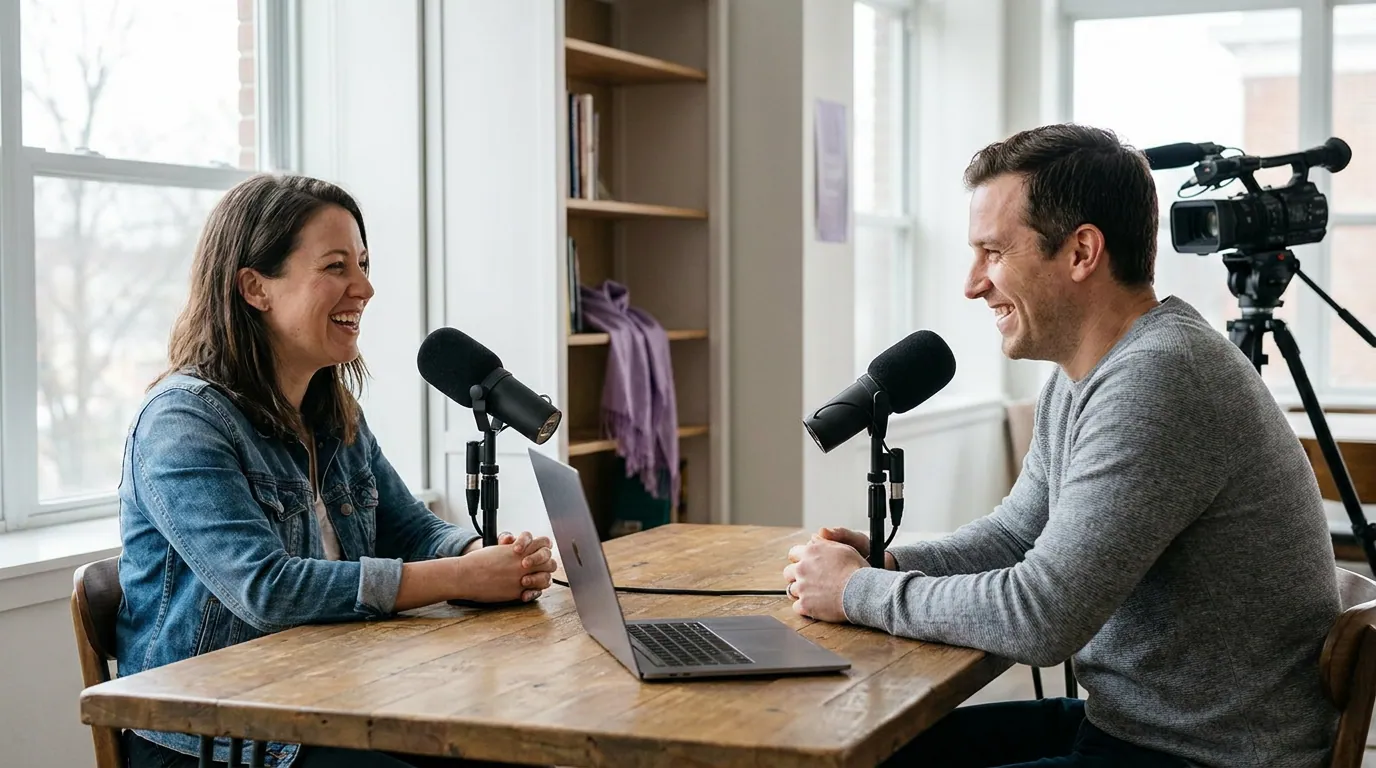
Look past the genres at the shows topping nearly every 2026 ranking, Acquired, All-In, The Pitch, My First Million, The Diary of a CEO, and one production habit is universal: they all distribute clip-first (The Pitch's 2026 ranking, which required full video on YouTube to even qualify). The full episode is the destination; a 45-second vertical clip is the advertisement that gets people there.
That is not a stylistic choice, it is where the audience is. YouTube is now the #1 US podcast platform at 42% of weekly listeners, ahead of Spotify at 15% and Apple at 7% (Backlinko, citing Cumulus Media, Oct 2025). And for the first time on record, social media drove podcast discovery past friends and family, 57% of listeners use social for recommendations versus 54% for personal referrals (Coleman Insights & Amplifi Media, State of Video Podcasting 2025, via InsideRadio). A founder show that only ships audio is invisible to most of its potential audience.
One non-negotiable inside that habit: most social video is watched on mute, Sharethrough research found roughly 75% of people often keep their phones muted while watching, and an older publisher estimate for Facebook ran as high as 85% (a number the platforms never confirmed, so read it as directional). Either way, an uncaptioned clip is a silent clip to most people who scroll past it.
If you are the one making a business podcast rather than just listening, that is the lesson to steal, not the guest list or the studio. Film the conversation, cut it into captioned vertical clips, and post those where founders already scroll. The catch is the same one that kills most new shows: doing all of that by hand is exhausting, and roughly 47% of new podcasts never get past three episodes, almost always from the workload (Podcasting Tech, via Podnews). The shows that survive automate the clipping so the cadence stays survivable.
So which one do you press play on?
Be honest about your stage and pick one show, not ten. Pre-idea, open My First Million and give yourself a deadline to start building. Zero-to-one, alternate The Pitch and Indie Hackers and copy the exact channels founders name. Scaling, make Lenny's your default and add The Diary of a CEO for the harder weeks. Studying what endures, block out the hours Acquired demands, it rewards them.
The trap is using podcasts as productive-feeling procrastination. Input is not output. A single episode that changes one decision beats a month of background listening that changes nothing. Match the show to the stage, take one action per episode, and the listening starts to compound.
For the wider context, see business podcasts worth studying as a new host, the production habits behind the top US podcasts, and why the UK top 10 looks nothing like the US. If you are building cross-border, the Canadian US-border problem and the small-market playbook from Australian shows are the regional cuts.
FAQ
What is the best podcast for a brand-new entrepreneur with no idea yet? My First Million, hosted by Sam Parr and Shaan Puri, is the strongest pick for the pre-idea stage because each episode reverse-engineers real business opportunities out loud (Salesflare, 2026). Pair it with How I Built This for origin stories, and set a deadline so listening does not replace building.
What is the best business podcast for a bootstrapped founder? Indie Hackers and Mixergy. Courtland and Channing Allen interview people building profitable businesses without venture money (Indie Hackers), and Andrew Warner's Mixergy has 2,000-plus founder interviews going back to 2009 (Indie Hackers, on Andrew Warner). Both focus on first revenue and operations rather than fundraising.
Which entrepreneur podcast is best for scaling a company? Lenny's Podcast for tactical product and growth playbooks, Masters of Scale for structural scaling strategy, and The Diary of a CEO for the leadership and resilience side. Lenny's is the closest match when your problem is a specific growth or retention question this quarter.
Are the top entrepreneur podcasts video podcasts? Almost all of them now. The Pitch's 2026 ranking required a show to upload full video to YouTube just to qualify (The Pitch, 2026), which reflects where listeners are: YouTube is the #1 US podcast platform at 42% of weekly listeners (Backlinko, Oct 2025). They film so they have clips to cut for discovery.
Should I listen to one entrepreneur podcast or several? One at a time, matched to your stage. A founder raising a first round and one scaling a working product need different inputs, so a flat "top 15" list wastes your time. Pick the show for your current phase, take one action per episode, and switch shelves when your stage changes.