
11 Interview Habits That Make Hosts Sound Amateur

The habits that make a host sound amateur are almost never about the topic, they're small reflexes that fire while the guest is mid-answer. Stacking two questions into one. Talking over a pause. Agreeing with everything. Each one costs the listener a better moment, not just the guest a fair shake. Below are eleven, each with the exact fix.
What makes this list useful is the diagnosis attached to every habit: not "this is rude," but who it hurts and what it costs the episode. Rudeness you can sometimes get away with. A listener who feels nothing and taps away you cannot. The eleven sort into three groups, how you ask, how you listen, and how you carry yourself on mic, so you can find your own tell faster than by reading a generic etiquette page.
What's the most common podcast interview mistake?
The most common one is the two-part question, asking two things in a single breath. The guest answers whichever half they remember, usually the second, and the first is gone. It sounds thorough. It plays as scattered, and it quietly tells the listener the host isn't tracking the conversation either.
That single habit produces more dead air and more half-answers than any other, which is why it leads the list. But it's a symptom of a bigger problem most of these share: the host is performing the question instead of asking it, or planning the next one instead of hearing this one. Fix the underlying impulse and four or five of the eleven fall away at once.
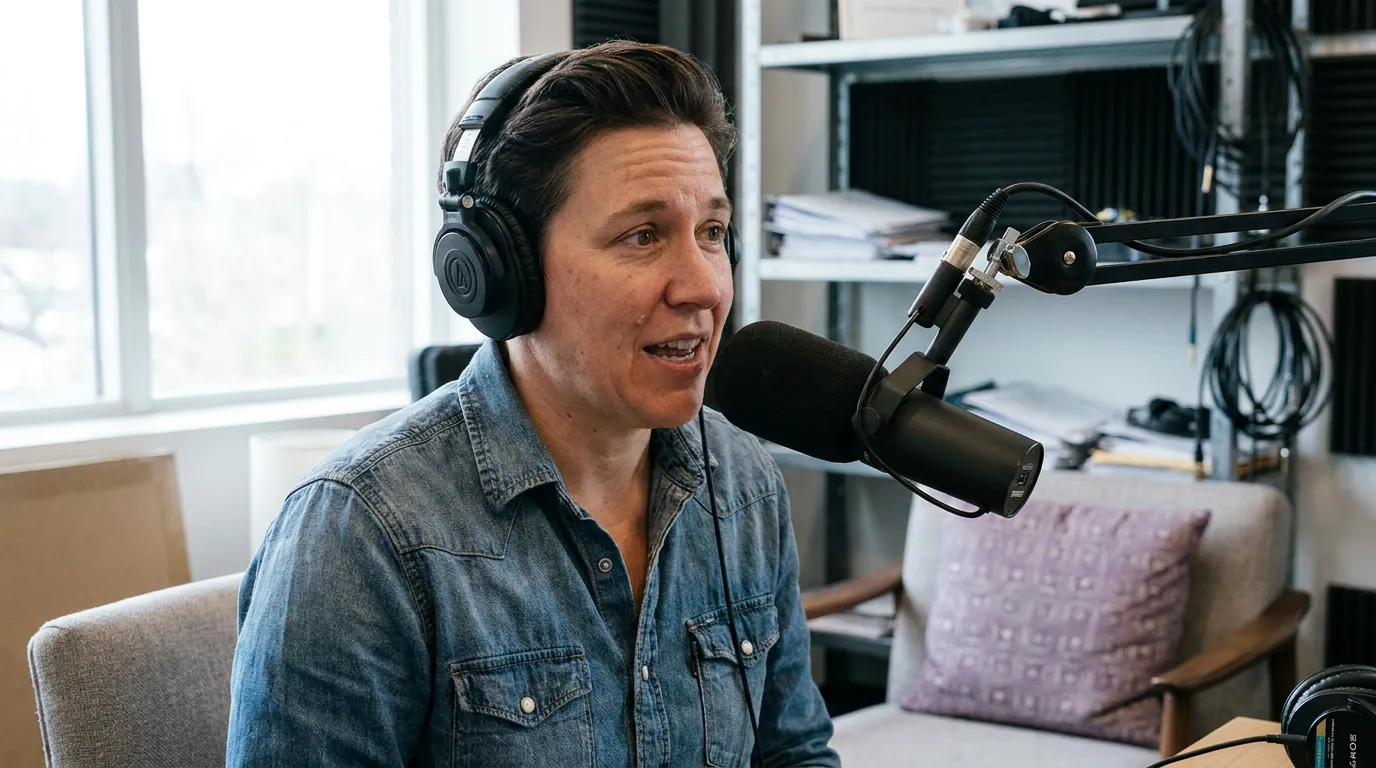
How you ask: four questioning habits
1. The two-part question. "Why did you start the company, and what would you do differently?" The guest picks one half. The other evaporates, and you either lose it or awkwardly circle back two minutes later. Cost to the listener: a half-answer where a full one was on offer. Fix: ask one thing. Hold the second question, it's often a better follow-up once you've heard the first answer anyway. If you build the habit of aiming each question at a single target, the two-part version stops forming.
2. Performing the question. A forty-second wind-up, complete with your own theory, before the actual question arrives. By the time you stop, the guest has lost the thread and so has the listener. Cost: the question gets buried under the host showing they did the reading. Fix: ask the question in the first sentence. Add context only if the guest's face says they need it. Front-loaded preamble is the single most common edit a producer makes to a raw interview.
3. Leading the witness. "That must have been incredibly stressful, right?" You've handed the guest your answer and asked them to nod. They will. Cost: you get agreement instead of their version, which is always more specific and more interesting. Fix: strip your read out of the sentence. "What was that stretch actually like?" lets them supply the word, and the word they choose is often the clip.
4. Asking the obvious. "So, what does your company do?", a question whose answer is the first line of their website. Cost: a recited, lifeless opening, and a signal to the listener that the host didn't prepare. Fix: do enough homework to ask the question only this guest can answer. You don't need hours; a focused 90-minute research pass is enough to retire every generic opener.
How you listen: four listening habits
5. Talking over the guest. The most damaging habit on video, where the overlap is visible, not just audible. You jump in on the last word of their sentence, or worse, mid-thought. Cost: the guest learns to keep answers short and safe, and the listener hears two people competing instead of one person opening up. Fix: count one full beat of silence after they stop before you speak. It feels endless. On playback it sounds like respect, and it cleanly separates voices for editing, the single most teachable piece of active listening on mic.
6. Over-agreeing. "Yeah, totally, exactly, a hundred percent" after every statement. It reads as warmth in the room and as a host with no spine on tape. Cost: a conversation with no friction, and friction is what listeners stay for. Fix: replace one in three agreements with a genuine question or a mild push. "I'd have guessed the opposite, why isn't it?" is worth ten "exactlys."
7. Missing the follow-up. The guest drops a loaded phrase, "that was the worst year of my career", and the host moves to the next scripted question. Cost: the episode just walked past its best moment. The follow-up is where the real answer lives. Fix: when you hear an emotional or surprising word, stop and dig before you move on. Five specific trigger phrases tell you exactly where to follow up.
8. The verbal-nod tic. Constant "mm-hmm," "right," "uh-huh" over the guest's words. In the room it signals attention. In the edit it's a layer of mud under every good line you'll later want to clip. Cost: every standalone moment is contaminated with your interjections, so it can't travel cleanly. Fix: nod with your face and body, not your voice. Save the verbal reaction for the gaps. This single change makes an episode dramatically easier to cut into clean clips.

How you show up: three presence habits
9. Making it about you. Answering your own question, or topping the guest's story with a bigger one of yours. A little of the host's experience builds rapport; a lot turns the guest into your audience. Cost: the listener tuned in for the guest, and you've put yourself between them. Fix: use the one-breath rule, relate in a single sentence, then hand it straight back: "Same thing happened to me once. But yours sounds worse, what did you do next?"
10. Rushing the silence. The guest pauses to think and the host, panicking, fills it. Cost: you interrupt the answer that was forming, which is usually the most considered one of the episode. Fix: treat a pause as the guest working, not as a problem to solve. Two seconds of silence is almost always followed by a better sentence than anything you'd have inserted.
11. Reading the list. Working through thirty prepared questions in order, eyes on the page, deaf to what the guest actually said. Cost: a conversation that never responds to itself, which listeners feel even if they can't name it. Fix: bring eight to ten strong openers, not thirty, and treat them as doors, not a script. The structure that lets you do this without losing your way is the same one that keeps a host comfortable enough to actually listen instead of clinging to the page.
Here are three of the worst offenders rewritten, with the listener cost made explicit.
Why the clean version is also your distribution
Fix these and you don't just get a better-sounding episode, you get an episode that travels. A guest who isn't talked over, isn't led, and isn't buried under "mm-hmm" gives you moments that stand alone, and standalone moments are the only kind that work as clips. That matters because 57% of listeners now rely on social media for podcast recommendations, the first time that source passed friends and family (InsideRadio). And **53% of new US weekly listeners now prefer to watch a podcast, up from 30% in April 2022** (Backlinko), so the visible habits, the overlap and the eye-on-the-page, cost you twice. The host who listens cleanly hands the algorithm the clip; the host who talks over the answer ruins it before it's recorded.
Frequently asked questions
What's the worst habit a podcast host can have? Talking over the guest. It's the most damaging because it shows up on video, it teaches the guest to keep answers short and guarded, and it contaminates every good line with the host's voice, which makes the best moments impossible to clip cleanly later. The fix costs nothing: count one full beat of silence after the guest stops before you speak.
How do I stop asking two questions at once? Ask one thing, then stop. The second question you wanted to bundle in is almost always a stronger follow-up once you've heard the answer to the first, so holding it costs you nothing and usually improves it. Aiming each question at a single target, a story, an opinion, a contrast, or a specific, keeps the two-part version from forming in the first place.
Is it bad to agree with my guest a lot? Constant agreement reads as warmth in the room and as a host with no spine on the recording. Some affirmation builds rapport; a wall of "exactly" and "a hundred percent" removes the friction listeners actually stay for. Replace roughly one in three agreements with a genuine question or a mild, respectful push.
How many questions should I prepare so I don't read from a list? Bring eight to ten strong openers for a 45-minute interview, not thirty. A short list forces you to listen and follow up instead of marching down a script with your eyes on the page. Treat the prepared questions as doors to open, not a checklist to complete, the best question of any episode is usually one you didn't write down.
What's the fastest single fix across all these habits? Add one beat of silence everywhere, after the guest finishes, before you fill a pause, before you jump in. Most amateur tells are a failure to wait. The pause feels uncomfortable to you and sounds like attention to everyone listening, and it gives the guest room to deliver the most considered line in the episode.