
Active Listening When You're Busy Planning the Next Question

The reason you stop listening mid-answer isn't bad discipline, it's that you're writing your next question in your head while the guest talks, and your brain can't compose speech and absorb it at the same time. The fix is to stop trying. Carry almost no notes, let the next question come from the answer, and prove you heard with a verbal callback. Those three habits are the whole skill.
Most hosting advice tells you to "listen actively" and leaves you to guess what that means on a live mic. The honest mechanism is narrower and more useful: the moment you start rehearsing your next sentence, you go partly deaf to the one being said. Below is why that happens, a note-taking method that keeps your attention on the guest instead of your paper, and three callbacks, the echo, the bridge-back, and the long callback, that turn "I was listening" from a claim into a thing the guest can hear.
Why can't you listen while planning your next question?
You can't fully do both because understanding speech and producing speech draw on the same limited pool of attention. When you rehearse your next question, you hand most of your working memory to that task, so the guest's words still reach your ears but stop being processed. You hear the audio. You miss the answer.
This is the bottleneck behind why people fall silent the instant they start composing a reply. The part of you that would catch the charged phrase, the hesitation, the number that didn't add up is busy elsewhere, building question eight instead of hearing question seven's answer.
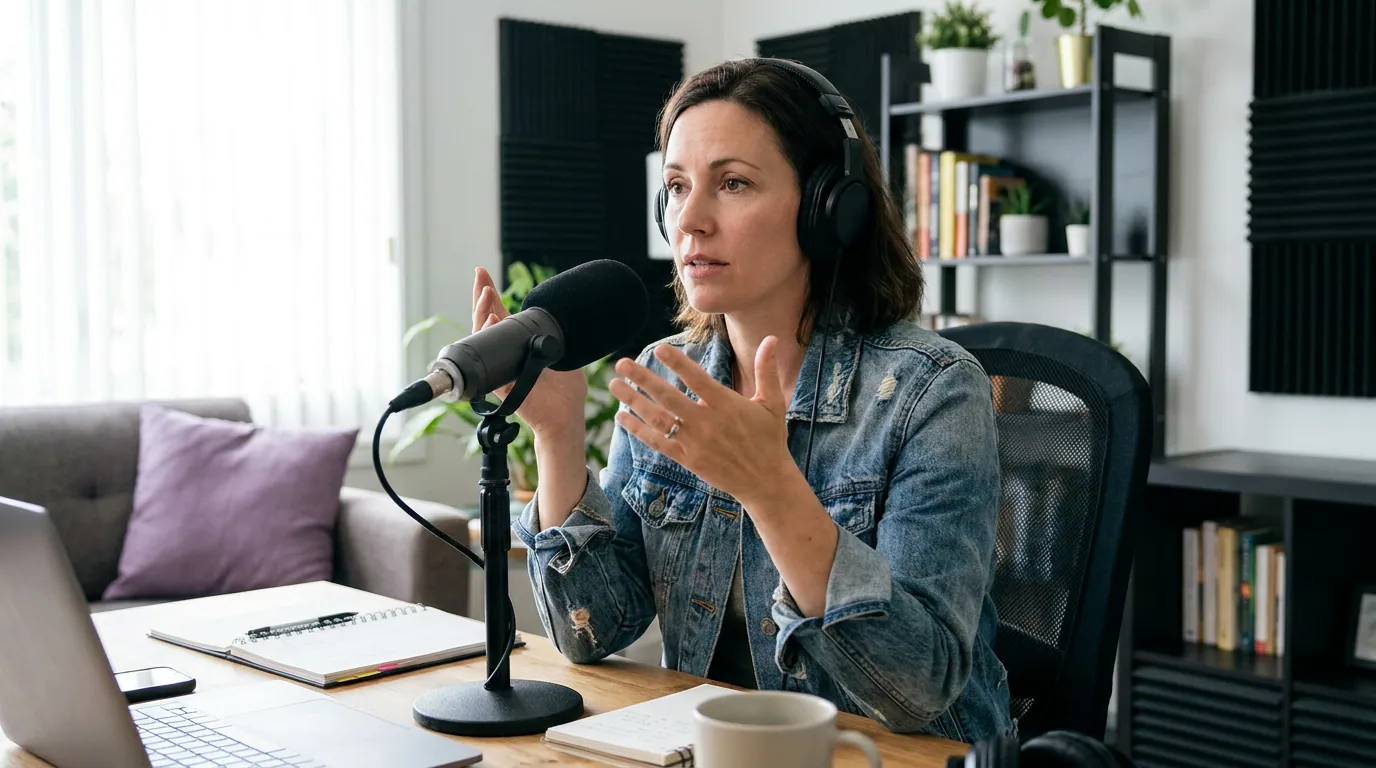
This is why so many interviews feel like two monologues taking turns. The host isn't rude; they're overloaded. They walked in with twenty scripted questions and a quiet fear of dead air, so the second a guest starts talking, the host's mind leaves the room to find question eight. The guest senses the absence and gives the rehearsed answer. Nobody decided to phone it in, the setup made it inevitable.
Why it matters: the part you miss is the part worth keeping
The phrase you drop while planning ahead is usually the best thing the guest said. People bury their real material in throwaway clauses near the end of an answer, "honestly," "I almost didn't tell anyone," "it nearly killed us." A host with their attention on the guest catches those flares and follows them. A host queuing question eight files them under "hard story" and moves on, and the episode flattens into a survey.
It matters past the recording, too. Discovery has moved to feeds: 57% of listeners now rely on social media for podcast recommendations, narrowly ahead of friends and family at 54%, the first time social took the top spot (Inside Radio on The State of Video Podcasting 2025, April 2025). The exchanges that travel as clips are the ones with a real, unguarded answer, the exact thing you can only get by hearing it when it arrives. Listening isn't only good manners. It's where the clippable moment comes from.
The note-light listening method
The instinct when you're nervous is to write more down. Do the opposite. Detailed notes are just the next-question queue moved onto paper, your eyes go to the page, your attention goes with them, and you're absent again. The method that keeps you in the room is to carry a thin map and take almost no notes during answers.
- Bring six themes, not twenty questions. Write topics on one card, "the winter it nearly folded," "the co-founder split," "what they'd tell a first-timer." Themes let you cover ground in any order and never pull your eyes down to read a sentence. If you want to build that card well before you sit down, research the guest properly and run a real prep pass so the territory is already in your head.
- Take one-word margin notes, not phrases. When something lands while the guest talks, write a single anchor word, funeral, winter, payroll, and nothing else. One word is enough to retrieve the moment later and short enough that you don't leave the conversation to write it. A full phrase costs you the next three sentences.
- Park, don't queue. When a future question occurs to you mid-answer, don't rehearse it, drop its one-word anchor in the margin and let it go. The anchor holds the idea so your mind doesn't have to. This is the move that frees the attention the queue trap was eating.
- Let the answer end before you build anything. Give the guest's last sentence a full beat of silence. Most people fill that beat with the realest thing they were holding back. Only after it lands do you decide where to go, and by then the best next question is usually obvious, because you actually heard the whole answer.
The deliberate technique for turning that last sentence into your next question, looping the guest's own charged phrase back in, has its own field guide in the last-sentence pivot for hosts. The note-light method above is what makes the pivot possible: you can't pivot off a sentence you were too busy to hear.
The three callbacks that prove you heard
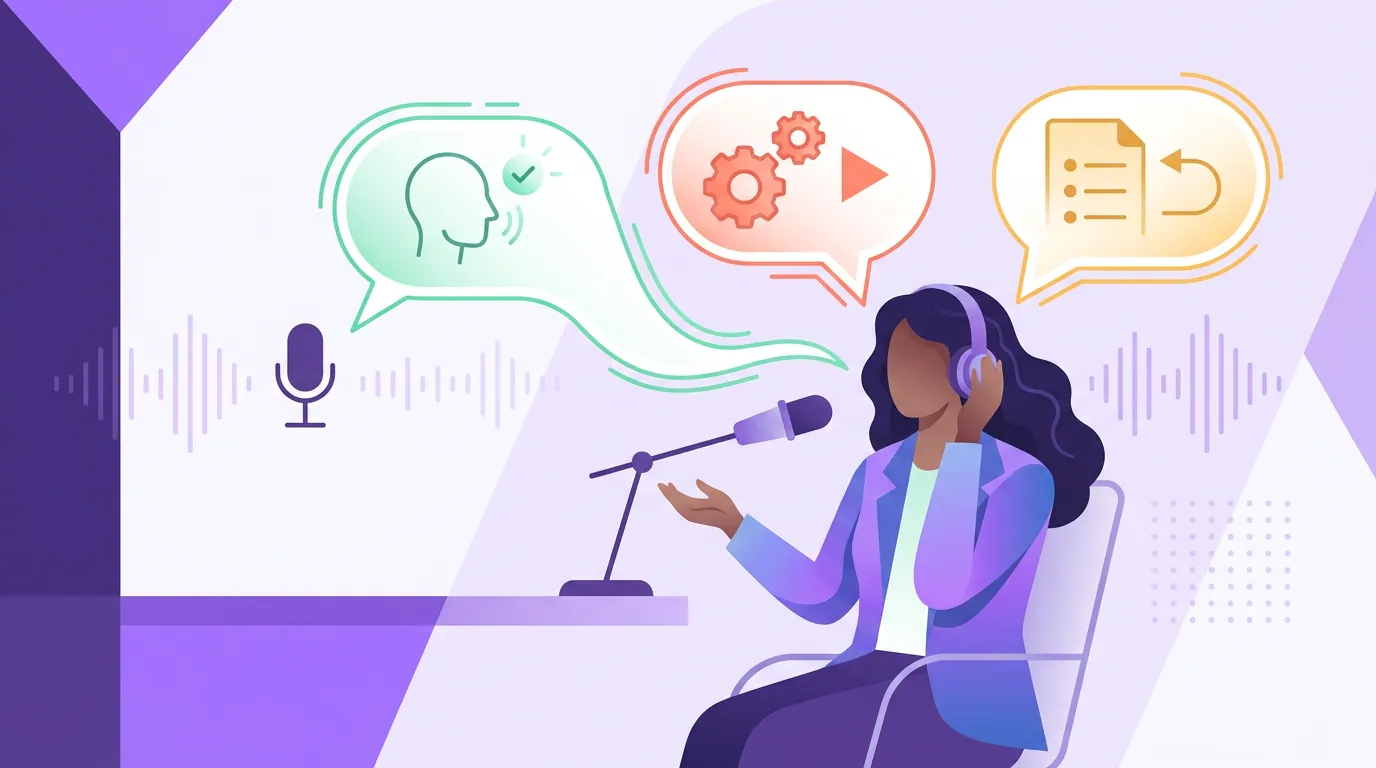
Listening that the guest can't detect changes nothing about their answers. A callback is a short line that references something they said earlier, proof, out loud, that it landed. It does two jobs at once: it tells the guest it's safe to go deeper, and it forces you to have actually heard the thing, because you can't call back what you missed. Here are three, from lightest to most powerful.
The echo repeats the guest's exact phrase, no question attached yet. "Without telling your co-founder." Said flat, with a beat after it, it signals I caught that, and I want more without you having to phrase a clever follow-up. It's the cheapest callback and it works almost every time, because the guest hears their own charged words handed back and naturally explains them.
The bridge-back connects two things the guest said minutes apart: "You told me earlier you hate fundraising, is that part of why you waited so long to ask for help?" This is what one-word margin anchors are for. The bridge-back is impossible to fake; it proves you held the first thread while the second one arrived, which is exactly the attention the queue trap steals. Guests open up for it because almost nobody does it.
The long callback returns near the end to a thread from the very start: "Earlier you mentioned that winter, does it still sit with you?" It tells the guest the whole hour was one conversation, not a checklist, and it tends to produce the most reflective answer of the episode because they've now warmed up to the topic they touched cold an hour ago. Save one anchor from the opening minutes specifically for this.
Common mistakes that look like listening
- Mistaking "mm-hmm" for listening. Nodding and verbal filler signal attention without requiring any. You can do them on autopilot while queuing your next question, which is precisely the problem. A callback can't be faked the same way, it's the better tell that you're actually present. More on the cues that build trust in host etiquette for making guests comfortable.
- Reciting the question while they answer. If you can mouth your next question silently before the guest finishes, you've already left. Park it as one word and come back when they're done.
- Filling the beat. Rushing in the instant a guest pauses buries the realest line, which usually arrives one second into the silence. Let it sit. The discomfort is the cost of the good answer.
- Calling back to nothing. A forced callback to a trivial detail reads as a trick. Only echo the charged stuff, the emotion, the surprise, the number. If nothing landed, ask a plain open question and listen harder to the next answer.
- Over-noting. A page of notes is the queue trap with a pen. One word per moment, maximum.
Tools that help (and one that doesn't)
The most useful tool here is restraint: a six-theme card and a pen beat any app, because the goal is fewer things pulling your eyes off the guest. Live AI transcript tools can be a crutch worth skipping, watching words scroll is the screen version of reading your notes, and it pulls you out of the room.
Where software earns its place is after the record. The unguarded exchanges your listening produces are clean, self-contained moments that make the best clips, because they need no setup to make sense. A tool like QuickReel turns those into captioned vertical clips from the recording, but the raw material is something only listening in the moment can give you. No tool can clip a moment you talked over.
Frequently asked questions
How do you actually listen while hosting a podcast interview? Stop composing your next question while the guest talks, your brain can't absorb speech and build speech at once. Carry six themes instead of a script, take one-word margin notes only, and let each answer fully finish before you decide where to go. The next question is almost always clearer once you've heard the whole answer instead of half of it.
What is active listening in an interview? Active listening means letting the guest's answer shape your next question, then proving you heard it with a callback. Passive listening, nodding, "mm-hmm," eye contact, looks identical from outside but changes nothing about what you ask next. The test is whether your follow-up references something specific the guest just said. If it could've come off your prep sheet, you weren't listening.
How do I stop thinking about my next question while the guest is talking? Prepare more so you can plan less. When the territory is already in your head as themes, you don't need to draft questions live. When one occurs to you mid-answer, write its one-word anchor in the margin and release it, the note holds the idea so your attention can stay on the guest. Then let the silence after the answer do the rest.
What's a verbal callback and why does it work? A callback references something the guest said earlier, repeating their exact phrase (the echo), linking two earlier points (the bridge-back), or returning near the end to an opening thread (the long callback). It works because it proves you were present, which tells the guest it's safe to go deeper, and because it's impossible to fake, you can't call back what you didn't hear.
Should I take notes during a podcast interview? Yes, but only one word per moment. Full-sentence notes are the next-question queue moved to paper: your eyes leave the guest and so does your attention. A single anchor word, funeral, winter, payroll, is enough to fuel a bridge-back or long callback later without pulling you out of the conversation now.
Related guesting guides
- The last-sentence pivot for hosts, the deliberate technique for turning the answer you just heard into your next question.
- Follow-up questions: where the episode actually lives, what to do with the moment once you've caught it.
- How to ask questions that get real answers, the open-question shapes that give listening something to work with.
- Building the six-theme map that lets you stop scripting, and getting the territory in your head before you sit down, both set up the note-light method.
- Host etiquette and the unwritten rules guests wish hosts knew make up the broader craft listening sits inside.