
Podcast Interview Prep Checklist: The Day Of

In the hour before you record, run a short, fixed ritual: test your tech and record a 20-second sample, get your energy up and water within reach, pull your question card down to one page, write your opening line word for word, and silence the room. That's the day-of job, and it's a different job from the research you finished days ago.
Most prep advice mashes those two jobs together, which is why hosts feel scattered at 9:58 for a 10:00 call. The research (who the guest is, what they've built, where the conversation should go) should already be done. What's left for the day of is readiness, not learning. Below is the exact countdown I run, the reasoning behind each step, and why keeping it separate from research is what makes it repeatable.
What should you do right before a podcast interview?
In the final hour, do five things in order: tech check with a recorded test clip (60 minutes out), energy and water reset (30 minutes out), trim questions to a one-page card (15 minutes out), write your first line verbatim (5 minutes out), and clear the room (2 minutes out). Research is not on this list. It belongs days earlier.
The reason to split them is that they use different parts of your brain and they fail in different ways. Research is slow, open-ended thinking you do best when you're not under time pressure. The day-of ritual is a checklist of physical, mechanical tasks, the kind that go wrong silently if you improvise them. Cramming research into the last hour means you do both badly: you skim the guest's work while your mic is untested. Separate them and each gets done properly.
Why the day-of ritual matters more than it looks
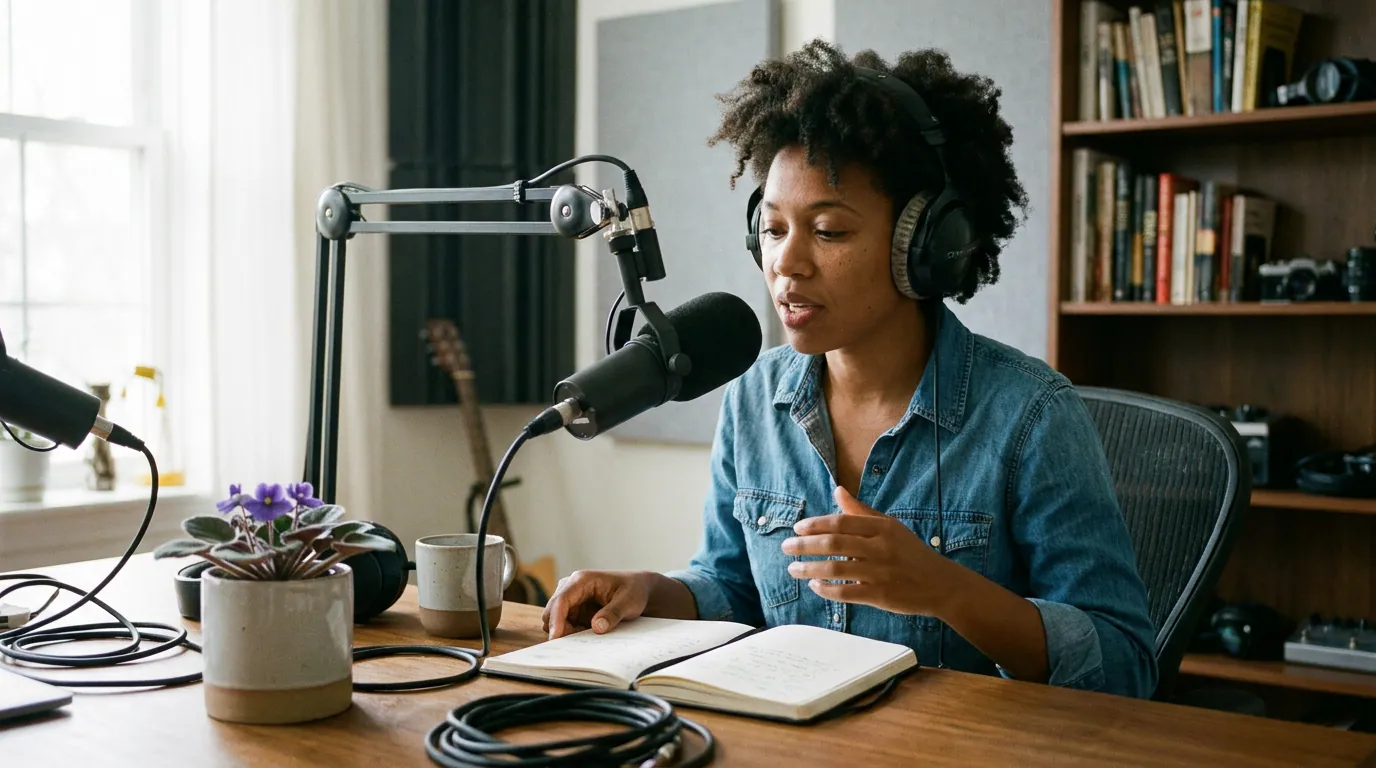
A good interview doesn't ride on one more fact you cram in beforehand. It rides on whether you're present, clear-headed, and technically clean from the first minute, which is exactly what a fixed ritual protects. The first answers are stiff; if your opening is also a tech scramble, the guest's nerves compound yours and the first ten minutes are unusable.
There's a distribution reason to care, too. The moments that travel from an interview are short, sharp exchanges, and 57% of listeners now rely on social media for podcast recommendations, the first time that source has surpassed friends and family (InsideRadio). A clean recording is a prerequisite for clipping; tinny audio or a frozen frame kills a moment that would otherwise have carried the episode to new people. And the audience is increasingly watching: 53% of new US weekly listeners now prefer to watch a podcast, up from 30% in April 2022 (Backlinko). On camera, a flustered first five minutes shows.
If the research half still feels rushed, that's a separate fix. Both how to research a guest in under 90 minutes and building the question set itself belong days before this checklist, not during it.
The hour-before countdown
Run these in order, each at roughly the marked time. The clock counts down to record. Nothing here is research. If you catch yourself googling the guest at minute 45, stop; that ship has sailed and you'll only spook yourself.
60 minutes out: tech check and a recorded test clip
Test every link in the chain, then prove it by recording 20 seconds and playing it back. Mic levels, closed headphones so the guest's audio doesn't bleed back in, camera framing and focus if it's video, the recording software actually capturing, and your internet on ethernet or right beside the router. Listening back is the step people skip, and it's the only way to catch the echoey room or the laptop mic you forgot was selected.
Do this an hour out, not five minutes out, so there's time to fix what you find. A dead battery, a muted track, or a USB mic that didn't reconnect are all five-minute fixes at minute 60 and full disasters at minute 2. Bad audio overrides good content every time, and it's the one failure your guest will quietly judge you for.
30 minutes out: energy and water
Your voice and your alertness are instruments you have to warm up. Stand up, walk for a few minutes, do whatever raises your heart rate slightly. A flat host makes a flat interview, and the energy you bring sets the guest's ceiling. Hum or read a paragraph aloud to get your voice out of its first-words croak before the guest hears it.
Then fill a glass of water and put it within reach, not across the room. A dry mouth produces clicks and that papery sound the mic loves to pick up, and you will not want to stop a good answer to go get a drink. This is the smallest item on the list and the one hosts forget most.
15 minutes out: cut the questions to a one-page card
Take whatever you drafted days ago and trim it to your six strongest openers on a single page, in type large enough to read at a glance without leaning in. The card is a safety net, not a script. You're not going to ask all of them; you're going to ask one and then follow the answer.
A one-page card keeps you from burying your head in notes, which is the most visible sign of an underprepared host on camera. The real interview happens in the follow-ups, not the prepared list. The follow-up question is where the episode lives, and active listening for hosts who are busy thinking is the skill that gets you there. A shorter card forces you to listen instead of reading the next line.
5 minutes out: write your opening line, word for word
This is the one place I'll tell you to script. Write the exact sentence you'll open with, both the welcome and the first real question, and read it once. The first ten seconds are where hosts fumble most, and a fumbled open makes both of you tense for the next five minutes. A clean, confident first line settles you and the guest at once.
Everything after the first line should be unscripted, but the cold start is worth nailing because it's predictable and high-stakes. "Sarah, you spent six years rebuilding that company after the first version failed, what did the failure teach you that the success never could?" beats "So, um, thanks for coming on, maybe tell us a bit about yourself."
2 minutes out: clear the room
Silence your phone, not vibrate, off or full do-not-disturb, and kill desktop notifications, Slack, email, the lot. One Slack ping mid-answer can wreck a clip you'd otherwise have kept. Shut the door, tell the household you're recording, and close any browser tab playing audio.
This is the last thing you do before you hit record, because anything you silence earlier tends to wake back up. A quiet room is also a courtesy to the guest, who can hear when your attention is split.
Common day-of mistakes that derail an interview
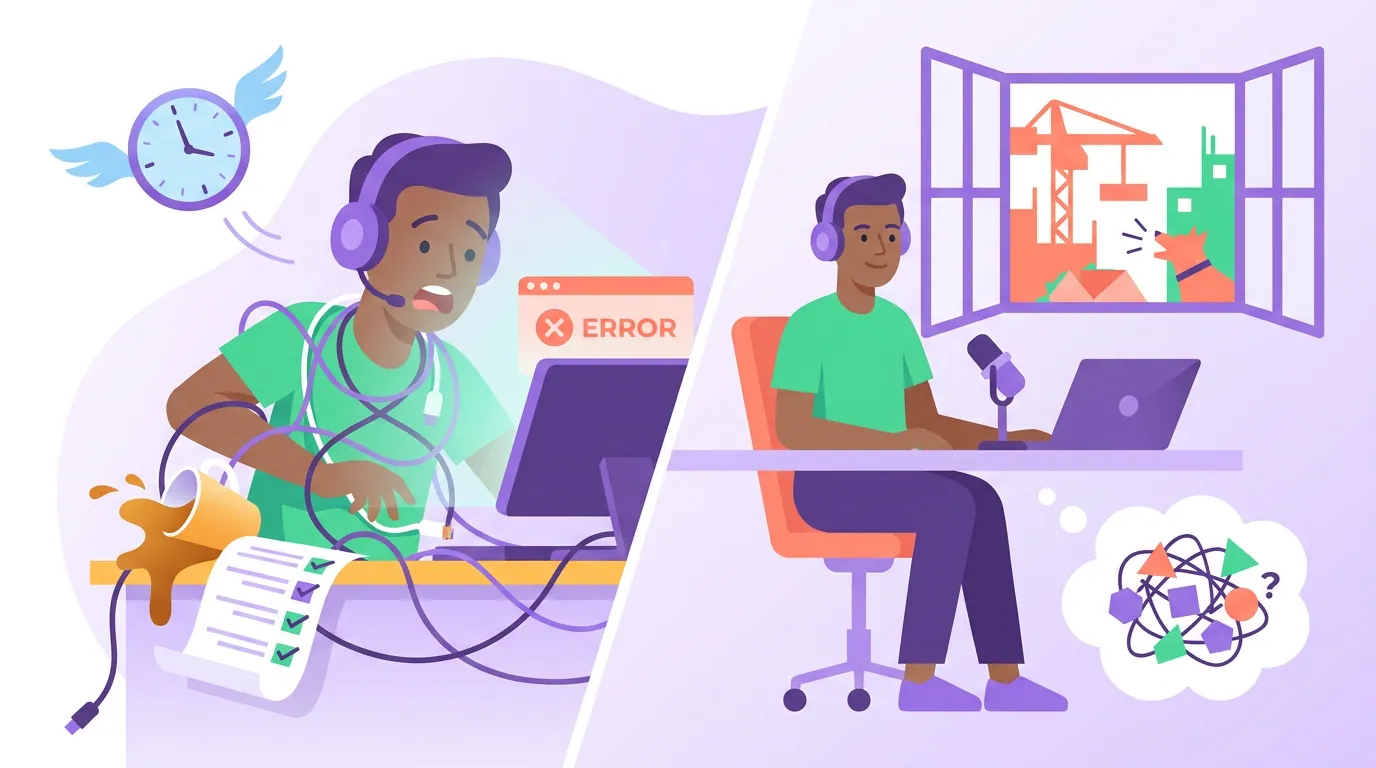
Skipping the playback on your test clip. Recording a sample and not listening to it defeats the point. The whole value is catching the problem you can't hear live, the room echo, the wrong input, the buzz. Twenty seconds, played back, every time.
Doing research in the last hour. If you're learning who the guest is at minute 40, you didn't prepare; you're panicking. It rattles you and it shows. Move all research days earlier and protect the final hour for readiness alone.
Over-scripting past the opening line. A scripted host can't react, and the moment the guest says something unexpected, which is the good part, they steer back to the list and lose it. Script the first line, then trust the card and your ears.
Forgetting water and energy. These feel optional and they aren't. A dry mouth and flat energy are audible from the first minute, and no amount of research fixes a host who sounds half-asleep.
Leaving notifications live. One ping ruins a take. It's a two-second fix that protects an hour of recording, and it's the easiest item on the whole list to forget.
Frequently asked questions
What should I do right before a podcast interview? In the last hour, run a fixed ritual: tech check with a recorded test clip at 60 minutes out, energy and water at 30, trim your questions to a one-page card at 15, write your opening line word for word at 5, and silence the room at 2. Keep research out of this hour, it belongs days earlier.
How long before a podcast interview should I prepare? Split it. The research and question-building should be done a few days ahead, when you can think slowly. The day-of ritual is a separate 60-minute checklist of mechanical tasks, tech, energy, card, opening line, room, run right before you record so nothing fails silently at the last minute.
Should I script my podcast interview questions? Script only your opening line. The first ten seconds are where hosts fumble, and a clean cold start settles everyone. Keep the rest as a short card of six strong openers, then follow the guest's answers, the real interview lives in unscripted follow-ups, not in reading a list.
What tech should I check before recording a podcast? Mic levels, closed headphones so audio doesn't bleed, camera framing and focus for video, that your recording software is actually capturing, and a stable connection on ethernet or beside the router. Then record 20 seconds and play it back. The playback is the step that catches the problem you can't hear live.
How do I calm my nerves before a podcast interview? Warm up your voice and body 30 minutes out, keep water in reach, and rehearse only your opening line so the start is automatic. Most nerves come from the cold open and from untested tech, fix both with the ritual and there's little left to be nervous about. Treat it as one curious conversation, not a performance.