
What Top Podcasters Have in Common Across Niches


Top podcasters do not agree on episode length, cadence, or format, those split sharply by niche. What they share is narrower and more useful: they film for video, they lead distribution with short clips, they hold a fixed publishing slot, and they can state what the show is in one sentence. Four habits, every genre.
That distinction is the whole point of this page. Most "habits of successful podcasters" lists conflate two different things, choices that depend on your niche, and choices that don't. Below is a comparative cut across the genres we cover separately, showing exactly where the leaders diverge, followed by the four patterns that hold no matter what you make a show about.
What varies by niche (and what people wrongly call a "rule")
The first useful finding is a negative one: there is no shared episode length, no shared cadence, and no shared format across top shows. Those are downstream of genre, not of greatness. A daily news show and a three-hour interview are both at the top of their categories, and copying one's length into the other's niche is a mistake.
Across YouTube's top podcasts, episode lengths run from 15 minutes to 3+ hours, and both daily and weekly publishers chart, MeidasTouch posts daily, Kill Tony posts weekly, and both rank in the top five (Castos, 2026). Format splits too. Among top-ranked podcasts, no single structure dominates: deep reporting leads at 38%, the interview comes second at 23%, commentary is 16%, and the rest spreads across recap, news, and other formats (Pew Research Center, 2023). The interview gets the hype, but most top shows are not interviews, the format you copy should follow your genre, not the loudest example.
The new-host data confirms the format question has no single answer either. Among aspiring podcasters, 53% plan a solo show, 28% an interview, and 14% a co-hosted one, per the Independent Podcaster Survey 2025, and among active creators the split shifts again, with interview and solo tied near 31% each (The Podcast Host, 2025). Read those numbers as proof that format is a fit decision, not a success lever. Pick the one you can sustain for a year.
So if length, cadence, and format are all niche-dependent, what actually carries across? Four things.
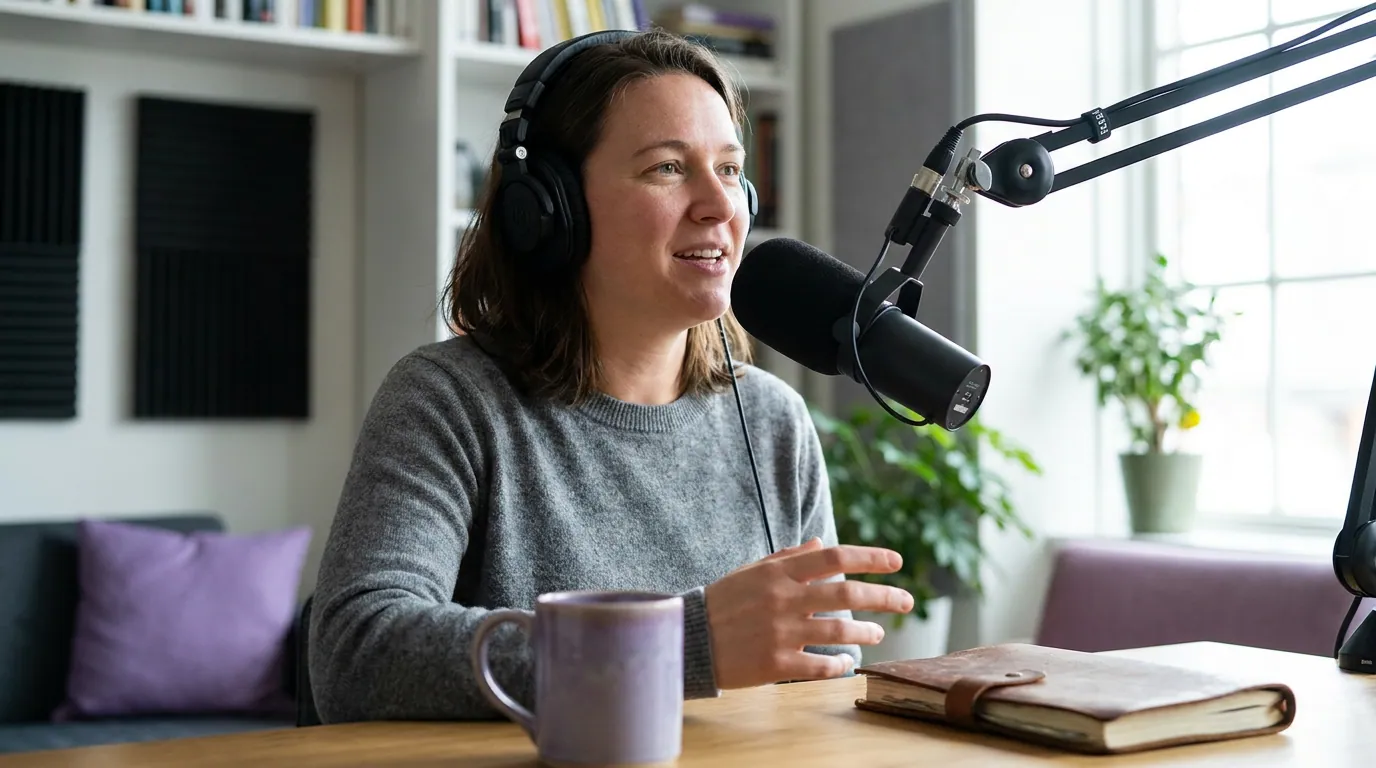
Habit 1: They film, even when the show is "audio"
The most consistent through-line across top shows in every genre is video-first production. Sweetfish's analysis of the top 150 podcasts (the top 75 Overall plus top 75 Business on Chartable) found 61.7% posted episodes with video regularly, and among shows that had any video, 85.4% posted it regularly, at minimum a full-length video per episode. The report called regular video posting "perhaps the most important factor driving subscriber growth" (Sweetfish Media).
This holds for genres you would assume are audio-native. Crime Junkie, a narration-led true crime show, now ships video. Daily news desks film their hosts. The reason is structural, not vanity: YouTube is the #1 US podcast platform at 42% of weekly listeners, ahead of Spotify and Apple (Backlinko, Oct 2025), and YouTube passed one billion monthly podcast viewers globally in early 2025 (Variety, Feb 2025). When the biggest distribution surface is a video platform, audio-only forfeits reach.
The transferable version is not a studio. It is one camera pointed at the conversation, recorded in the same session as the audio. Film not because it looks professional, but because filming is what makes habit two possible.
Habit 2: Clips lead discovery; the episode is the destination
The second universal habit is that top shows in every niche distribute clip-first. They cut each episode into short, captioned vertical clips and push those to the feeds where strangers scroll, then let the clip carry curious viewers back to the full episode. The top shows on YouTube cut 5–10 clips per full episode, with Diary of a CEO at three to four and individual interviews spun into a dozen Shorts; one Impaulsive interview became 12 Shorts that pulled 714,000+ combined views (Castos, 2026).
This is the one habit that pays off regardless of topic, because discovery itself has moved to clips. 57% of listeners now rely on social media for podcast recommendations, edging out friends and family at 54%, the first time social took the top spot, in a 1,000-person US survey from Coleman Insights and Amplifi Media (InsideRadio, 2025). A comedy bit, a finance explainer, a true-crime cliffhanger, a business hot take, all of them find new listeners the same way: a clip stops a scroll.
Two non-negotiables ride along with this habit. First, caption everything, most mobile video is watched on mute, which Sharethrough research put at 75% of viewers (Digiday); an uncaptioned clip is a silent clip to most of the people who see it. Second, the honest part the leaders rarely say out loud: clip volume without a hook is empty motion. Views are not listeners. A clip with a million plays that sends nobody to the show is a vanity metric. The shows that win pick moments that stand alone and make a stranger curious.

Habit 3: A fixed slot the audience can set a watch by
Cadence frequency varies by niche, but cadence discipline does not. The top shows publish on a schedule you can predict, daily, weekly, biweekly, and they protect that slot. The number is a niche decision; the consistency is the universal one. As Castos put it after reviewing the YouTube leaders, "consistency beats frequency every time," noting that 74% of podcasts publish on a 3-to-14-day cycle (Castos, 2026).
The reason this is a shared habit and not a niche one is that the failure it prevents is universal. Roughly 47% of podcasts stop at three episodes or fewer (Podcasting Tech, 2025), almost always from workload rather than lost interest. The viral "90% quit by episode three" claim circulates with no traceable source, so treat 47% as the better-supported figure. Top shows in every genre survive a heavy schedule because clips do the marketing while they make the next episode, which is why habits two and three are joined at the hip. Pick the cadence you can hold on a hard week, then never miss it.
Habit 4: A one-sentence promise a stranger understands
The least measurable habit is the most decisive: every top show can be explained in one clear sentence, and that sentence is the same across the whole catalog. Three friends interview a mystery guest. Two true-crime hosts tell one case a week. A founder breaks down one business idea. The promise is narrow, repeatable, and instantly legible to someone who has never heard the show.
This recurs across niches because it does two jobs at once. It tells a new listener whether to bother, the bar a clip has about three seconds to clear. And it tells you what each episode must deliver, which is what keeps a show consistent enough to survive habit three. A blurry premise is the quiet killer: the host who cannot say what the show is in one line tends to make episodes that wander, clips that do not travel, and a feed listeners cannot describe to a friend. If you cannot write your promise in a sentence, that is the first thing to fix, before the mic, the cadence, or the clips.
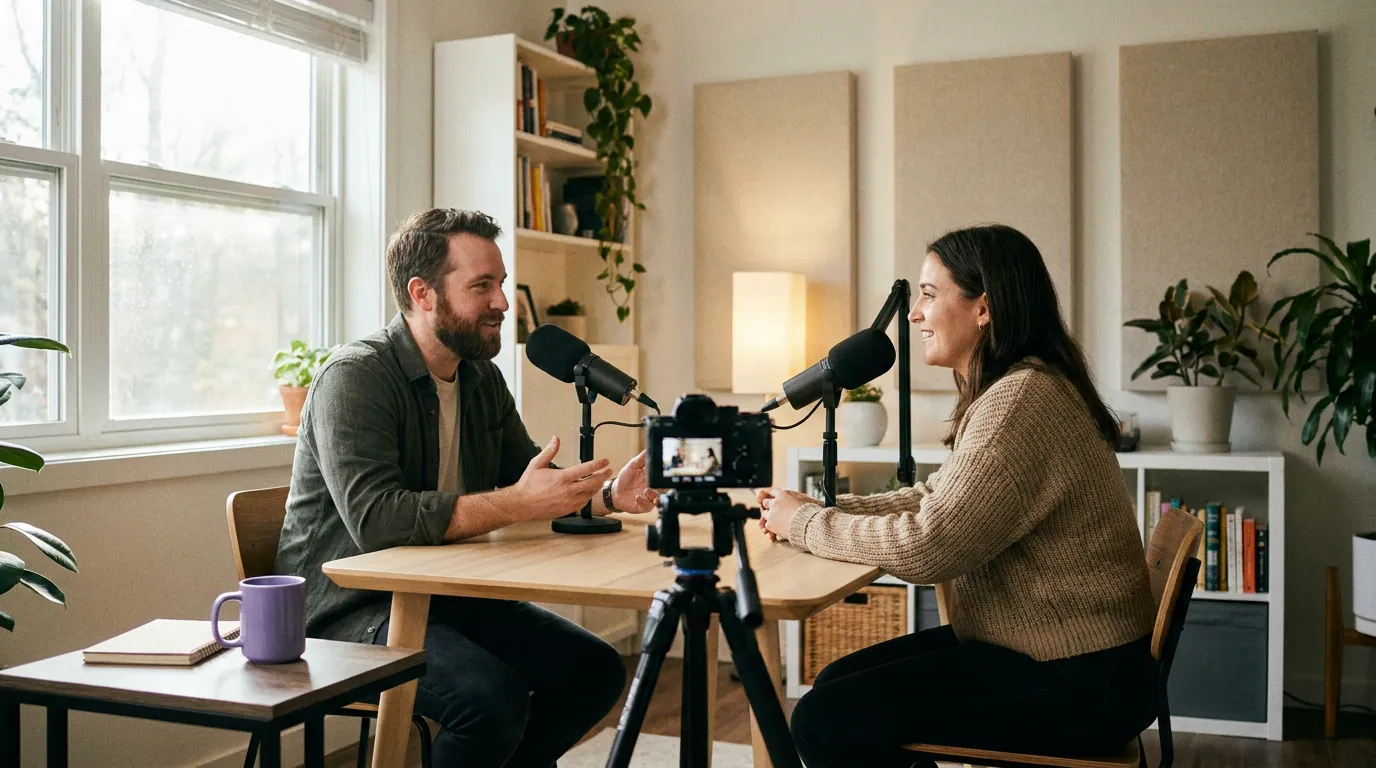
The four habits, side by side
Strip away genre and this is the entire shared playbook of top podcasters:
| Habit | Why it recurs everywhere | The transferable version |
|---|---|---|
| Film the show | YouTube is the largest podcast surface; video enables clips | One camera on the conversation, same session as audio |
| Lead with clips | Social now out-recommends friends for discovery | 5–10 captioned vertical clips per episode |
| Hold a fixed slot | Workload, not interest, kills most shows | A cadence you can hold on a bad week, never missed |
| One-sentence promise | A stranger decides in seconds; it keeps you consistent | Write what the show is in one line, then deliver only that |
Everything else, length, frequency, solo versus interview, is a niche fit decision, and the genre breakdowns we publish separately get specific. See business podcasts worth studying as a new host, finance podcasts that teach hosts to explain money, comedy podcasts new hosts should steal from, and what the best true crime hosts do differently. For the regional cut, the top US podcasts and the habits behind them and why the UK top 10 looks nothing like the US show how the same four habits play out under different markets. Entity pages with full episode histories, Joe Rogan, Crime Junkie, The Daily, The Tim Ferriss Show, live on the directory; the analysis lives here.
FAQ
What do all successful podcasts have in common? Four habits, not a format. Top shows film for video, lead distribution with short captioned clips, publish on a fixed predictable slot, and can state the show's promise in one sentence. Episode length, cadence frequency, and solo-versus-interview format all vary by niche, those are fit decisions, not success levers.
Do top podcasts all use the same format? No. Among top-ranked shows, deep reporting leads at 38% and interview is second at 23% (Pew Research Center, 2023), so most winning shows are not interviews. Among new podcasters, 53% plan a solo show versus 28% interview (The Podcast Host, 2025). Format follows the niche and what you can sustain, not a universal rule.
Is video really necessary, even for an audio podcast? For top-show-level reach, effectively yes. Among the top 150 podcasts, 61.7% post video regularly, and 85.4% of shows that have video post it regularly (Sweetfish Media). YouTube is the #1 US podcast platform at 42% of weekly listeners (Backlinko, Oct 2025). Filming also gives you clips to cut, which is the bigger payoff.
How many clips should I make from one episode? The top YouTube shows cut 5–10 clips per full episode (Castos, 2026). For a new show, three to five strong, captioned, self-contained clips a week beats ten weak ones. Volume only helps once each clip can stand alone and hook a stranger; otherwise it is empty motion.
How often do top podcasts publish? It ranges from daily to weekly depending on the genre, news desks daily, interview shows weekly. The shared habit is a fixed, predictable slot, not a specific number; about 74% of podcasts publish on a 3-to-14-day cycle (Castos, 2026). Pick a cadence you can hold on a hard week, because workload, not lost interest, ends most shows.