
Two-Host In-Person Podcast Gear Checklist (One Cart)


Two people in one room need two of everything that touches a person, two dynamic mics, two boom arms, two pairs of closed-back headphones, and exactly one of the thing in the middle: a recorder or interface with at least two mic inputs and two headphone outputs. Add basic room treatment, and that is the entire list. A complete lean cart lands around $410; a durable one around $1,180, both at verified mid-2026 prices.
Most two-host gear guides hand you a great mic and leave you to discover, the night before recording, that your interface has one headphone jack and your co-host is staring at silence. This is the whole cart instead, eight categories, the count of each, three named bills of materials at three budgets, and the one rule that decides every line: in one room, you double everything a body uses and never the box in the middle. Hardware prices move week to week, so read every figure as "roughly this," not a promise.
What gear do two people need to record a podcast in one room?
Two co-hosts in the same room need two dynamic cardioid microphones, two boom arms, two pairs of closed-back headphones, and one recorder or audio interface with two mic inputs and two headphone outputs, plus a couple of cables and some light acoustic treatment. Dynamic mics, two headphone feeds, and per-person tracks are the parts people skip and regret.
The reason the list looks the way it does is the room. When two open mics sit a few feet apart, each one hears both voices, the air conditioner, and the echo off the wall. A dynamic capsule rejects far more off-axis sound than a condenser, so each mic mostly hears its own host. That single choice matters more than which dynamic you buy, the deeper breakdown lives in our guide to the best mic setup for a two-host show in one room.
The second non-obvious part is the recorder. You do not buy two of it. One device with two XLR inputs captures both hosts, ideally to separate tracks, and feeds both of you your own headphones. The Zoom PodTrak P4 was built for exactly this: four XLR mic inputs and four independent headphone outputs, each with its own volume knob, recording to an SD card with no computer required (Zoom). Two of its four inputs go unused at first, which is fine, you have a guest seat ready.
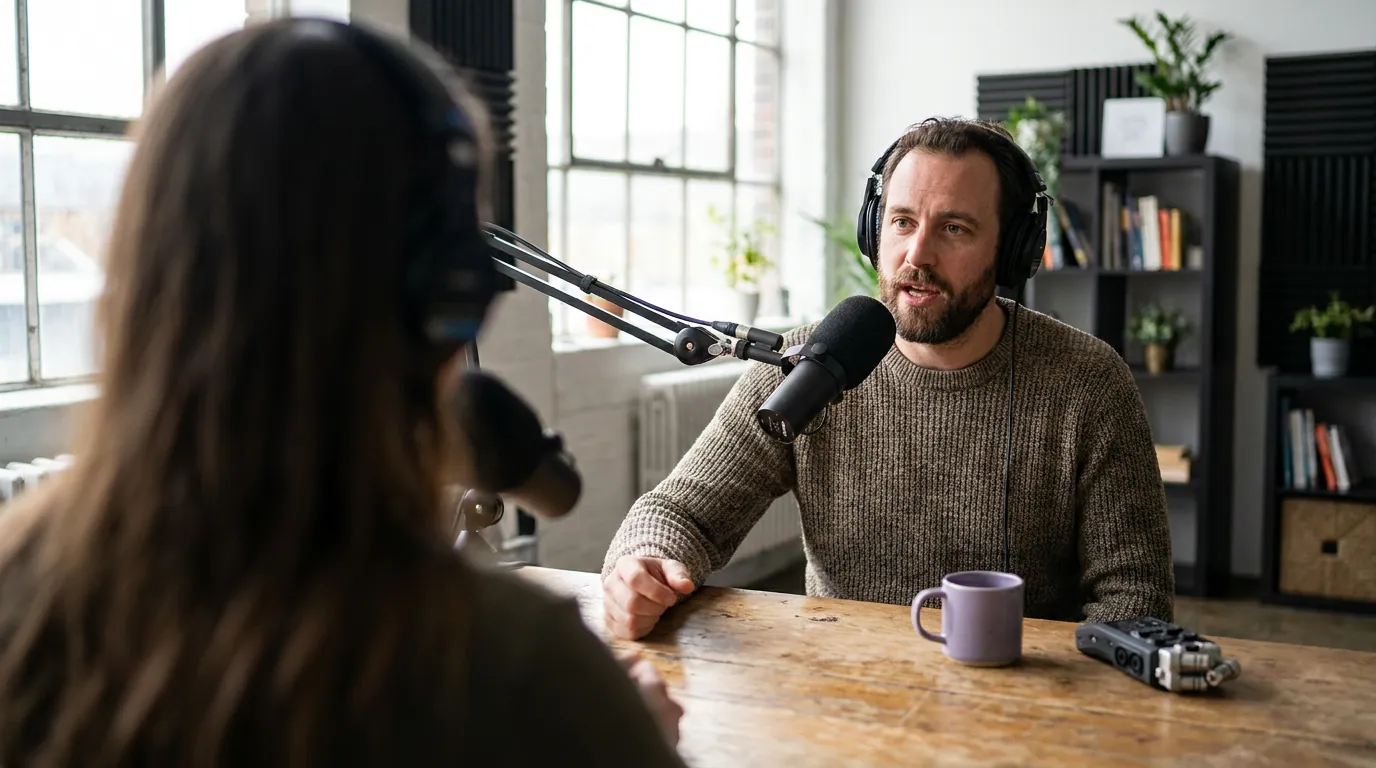
The eight-line shopping list
Before brands, fix the categories and counts. This is the list people get wrong, not by buying a bad mic, but by buying one headphone jack for two people.
A headphone splitter only appears if you buy a recorder or interface with a single headphone output, which is why this checklist steers you toward a recorder with two. Splitting one feed in two halves the volume and removes each host's ability to set their own level. Buy the right box and the splitter line stays at zero.
The three carts, side by side
Here are three complete two-host bills of materials. Each one records two people in one room to clean, separable tracks. They differ in durability and resale value, not in whether they work.
| Cart | Mics + recorder core | Approx. total |
|---|---|---|
| Lean (start today) | 2× Samson Q2U + Zoom PodTrak P4 | ~$410 |
| Balanced (most shows) | 2× RODE PodMic + Zoom PodTrak P4 | ~$720 |
| Durable (built to last) | 2× RODE PodMic + recorder + PSA1+ arms + M20x cans | ~$1,180 |
The lean cart sits inside the industry's budget band. Ausha puts a hobby podcast setup at $100–350 in one-time equipment, and a professional rig at $1,500–$5,000+ upfront (Ausha). A two-person rig lands a notch above a solo one because the parts that touch a body double, that is the math, not overspending.
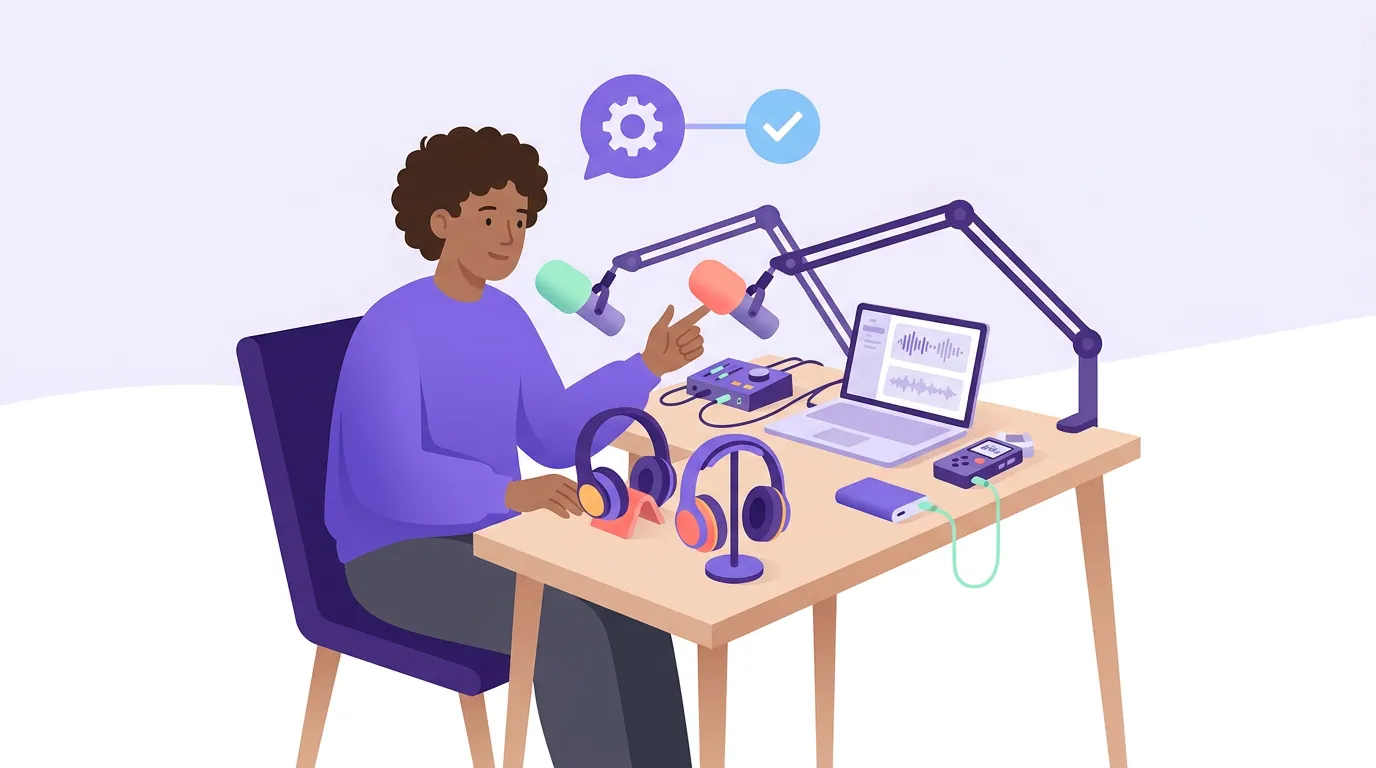
Cart 1, Lean: record today (~$410)
The goal here is two clean, separate tracks for the least money, with no part that becomes landfill on upgrade.
- 2× Samson Q2U, ~$60–70 each (~$130 the pair). A dynamic cardioid with both USB and XLR outputs (Samson). The dual connector is why it is here: it works straight into a recorder by XLR now, and survives any future rig. Each one ships with a clip, desk tripod, windscreen, and both cables, which quietly saves you on parts you would forget to order.
- 1× Zoom PodTrak P4, ~$150–180. Four XLR inputs, four headphone outputs with per-jack volume, SD-card recording, batteries optional (Zoom). It is the single most important box in the cart because it gives both hosts their own monitoring and records both to one card with no laptop.
- 2× boom arm, ~$25–30 each (~$55). Budget all-metal clamp arms get each mic close to the mouth and off the desk so taps and fan rumble do not travel in.
- 2× closed-back headphones, ~$11–15 each (~$25). Wired and cheap on purpose. Closed-back so the mic does not re-record your headphone leak; wired so there is no latency.
- 2× XLR cable, ~$8–10 each (~$18). The Q2U includes one each, so you may already be covered; budget the line anyway.
The honest cons. The Q2U pops on plosives, so use the included windscreens or add cheap pop filters. The P4's built-in mic preamps are good, not pristine, fine for speech, not for a whisper-quiet ASMR show. And budget headphones tell you whether audio is broken, not whether it is beautiful. None of that stops you publishing a clean episode this week. If you are weighing the connector question for the long run, our USB versus XLR explainer covers when the jump is worth it.
Cart 2, Balanced: the one most shows should buy (~$720)
This is the cart I steer most two-host shows toward. It trades up the part listeners actually hear, the mic, and keeps the rest sensible.
- 2× RODE PodMic, ~$99 each (~$198 the pair). An end-address dynamic XLR mic tuned specifically for speech and broadcast, with an internal pop filter and a fuller, more "radio" low end than the Q2U (B&H). It is XLR-only, which is exactly right once you own a recorder.
- 1× Zoom PodTrak P4, ~$150–180. Same recorder as the lean cart. It does not need upgrading until you regularly seat three or four people, and even then its four inputs already cover you.
- 2× mid-tier boom arm, ~$40–60 each (~$100). A sturdier spring arm holds the heavier PodMic without drooping and moves silently.
- 2× Audio-Technica ATH-M20x, ~$59 each (~$118). Proper closed-back monitors with 40mm drivers (Audio-Technica). Now both hosts can hear sibilance and hum while recording, not just after.
- Cables + 2 pop filters, ~$40. Insurance against the one thing dynamics get wrong.
- Acoustic treatment, ~$25–40. A 12-pack of foam panels sits in the dominant $20–50 band per 2026 retail data (ASINsight). Two voices generate twice the reflections, so a small two-host room needs treatment more than a solo one does.
The honest cons. The PodMic is heavier and demands a real arm, the cheapest clamp arms will sag. It is XLR-only, so it cannot run straight into a laptop without an interface; in this cart the P4 is that interface, so it is a non-issue. Foam panels tame echo and high-frequency harshness but do almost nothing for low-frequency rumble or soundproofing against outside noise, manage expectations there.
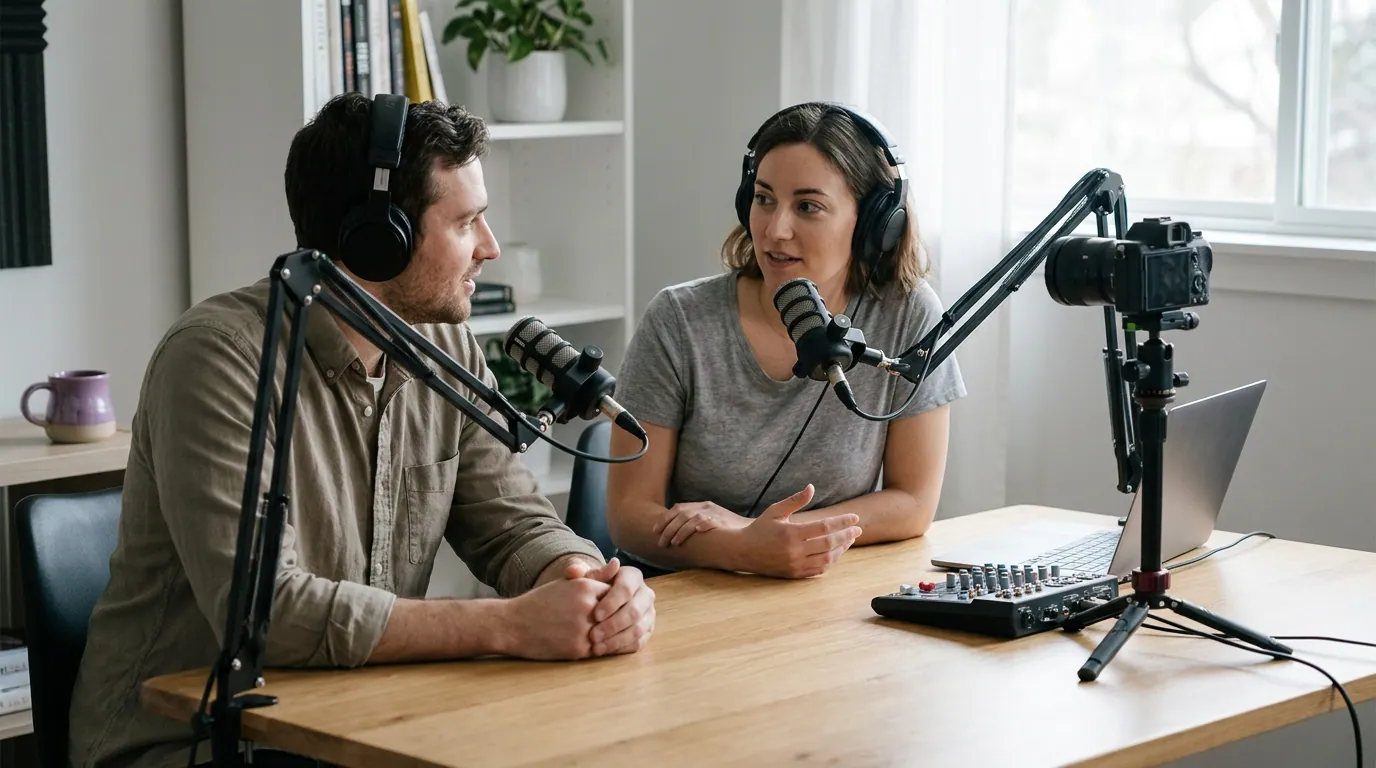
Cart 3, Durable: built to last and to add a guest (~$1,180)
This cart is for a show that already knows it is sticking around and wants gear that will not need rebuying. The jump from Balanced is mostly in the arms and the room, not the mics, because you do not need to spend more on capsules than the PodMic to sound excellent.
- 2× RODE PodMic, ~$198 the pair. Same mics as Balanced. You genuinely do not out-spend these for spoken-word in a treated room.
- 1× recorder/interface with two-plus inputs, ~$180–250. Step up to a mixer-recorder with motorized faders or onboard processing if you want live level control, or keep the P4 and bank the difference. Honest note: this is optional polish, not better audio per se.
- 2× RODE PSA1+ boom arm, ~$149–159 each (~$300). A fully damped parallelogram arm supporting up to 1.2 kg with integrated cable management and silent movement (RODE). This is where "durable" actually shows up: a good arm outlasts three microphones.
- 2× ATH-M20x or better, ~$120–180. Same monitoring logic, optionally a step up.
- Acoustic treatment, ~$80–150. A proper set of panels plus bass traps for the corners, rather than a single foam pack. The room is the last real variable once mics and monitoring are sorted.
- Cables, pop filters, splitter (if any), ~$60.
The honest cons. Past the PodMic, you pay a lot for small audible gains, the law of diminishing returns is steep in podcast audio. The single biggest lever at every budget is still the room and the mic technique, not the price of the capsule. Spending here buys reliability and resale value, not a dramatically better sound than the Balanced cart in the same treated room.
How we chose these parts
Four rules drove every line. First, dynamic, always, two open condensers in one room create overlapping, un-fixable tracks, so every mic here is a dynamic cardioid. Second, buy two of everything a body uses, one of the box in the middle, the most common two-host mistake is a single-headphone recorder, so the recorder line is chosen specifically for two headphone outputs. Third, nothing becomes landfill, the dual USB/XLR Q2U and the universal-thread arms survive into any future rig, so you are buying forward. Fourth, every price is a live retailer figure checked mid-2026, and where a range is real (the Q2U swings $60–70; the P4 line runs roughly $150–180 across the original and the newer P4next), we kept the range rather than inventing a tidy single number, hardware does not hold a fixed price the way software does.
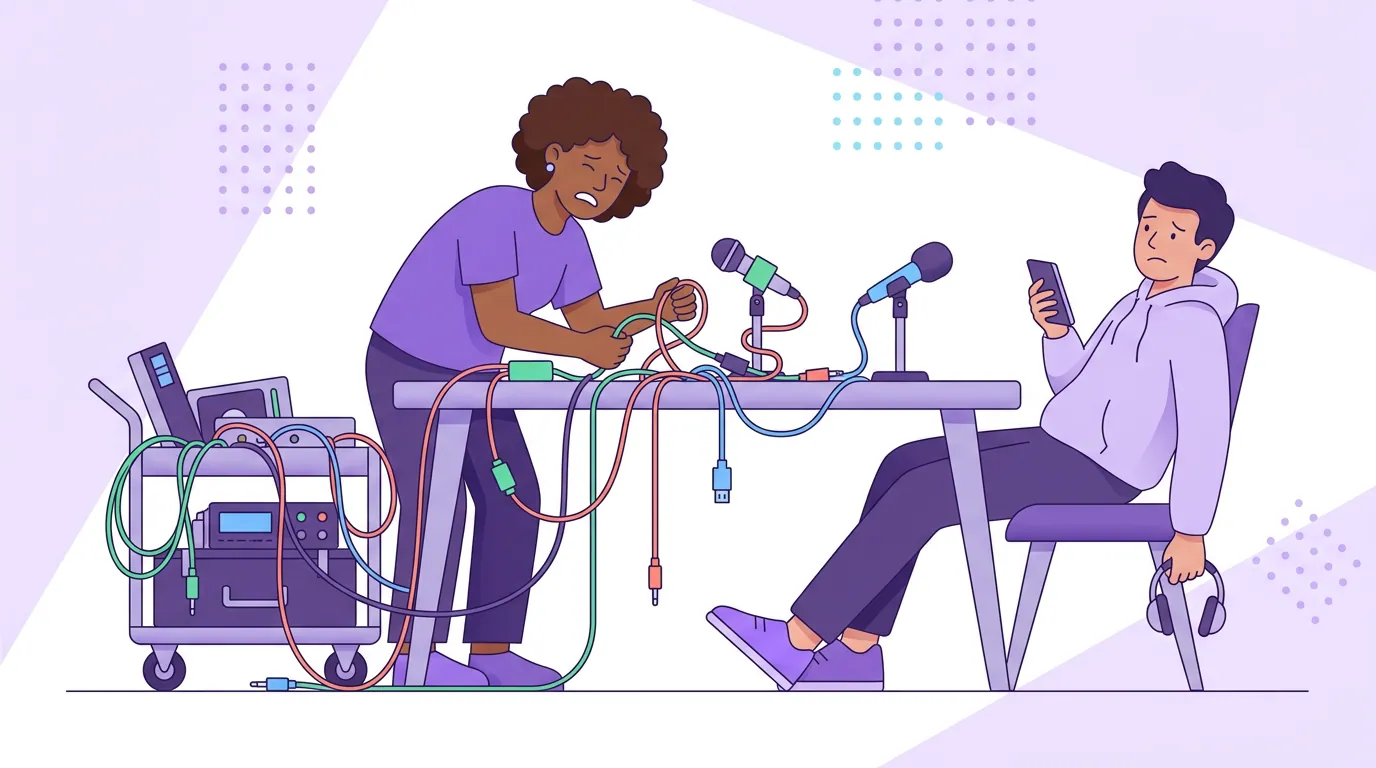
Common mistakes that wreck a two-host recording
These four account for most of the "we recorded a whole episode and it's unusable" stories.
- One headphone jack for two people. A recorder with a single output forces a splitter, which halves the volume and kills per-host level control. Pick a recorder with two-plus headphone outputs from the start, the whole reason this checklist names the PodTrak P4.
- Both mics on one track. If both hosts land on a single mono track, you cannot fix one person's level, gate one person's coughs, or cleanly clip one voice later. Record each mic to its own track; the P4 does this to its SD card by default.
- Condensers in an untreated room. They sound lush solo and muddy in pairs. Two dynamics beat two condensers in a shared room every time, see the budget mic options under $100 for forgiving picks.
- Skipping the room. Two voices make twice the reflections. A bare room with a desk between two people is a slap-echo machine. The cheapest fix, a blanket behind each host, a rug, soft furniture, beats any mic upgrade. The gap between a $400 and a $1,200 two-host rig is smaller than the gap between bad technique in a bare room and good technique in a treated one.
Frequently asked questions
What equipment do you need for a two-person podcast in the same room?
Two dynamic cardioid microphones, two boom arms, two pairs of closed-back headphones, and one recorder or interface with two mic inputs and two headphone outputs, plus cables and light room treatment. A complete lean cart (2× Samson Q2U + Zoom PodTrak P4 + arms and cans) runs around $410 at mid-2026 prices.
Can two mics share one recorder?
Yes, that is the point. One recorder or interface with two-plus XLR inputs captures both hosts, ideally to separate tracks. The Zoom PodTrak P4 has four XLR inputs and four headphone outputs (Zoom), so two people use it comfortably with room for guests later. You never buy two recorders for one room.
Do you need two pairs of headphones for a two-host podcast?
Yes. Each host needs to hear themselves and the mix in real time to catch popping, mumbling, or a dead mic. Buy two pairs of wired closed-back headphones and a recorder with two headphone outputs, so each person controls their own volume. Splitting one feed in two halves the level and removes that control.
Should two co-hosts use USB or XLR mics?
XLR, once you own a recorder. A single USB mic only feeds one computer input, so two USB mics in one room usually means two computers or a clumsy workaround. XLR mics into one two-input recorder is the clean path. A dual USB/XLR mic like the Samson Q2U lets you start on USB and switch to XLR later, see our USB-versus-XLR guide and the hybrid mics that grow with your show.
How much does a two-person podcast setup cost?
A complete in-person two-host rig runs roughly $410 lean, $720 balanced, and $1,180 durable at verified mid-2026 prices. A two-person setup costs more than a solo one because the parts that touch a body double, two mics, two arms, two headphones, while the recorder in the middle stays a single purchase.
Buy the lean cart, record three episodes before you upgrade a single line, and decide whether you are scripting or outlining and which repeatable episode structure fits the two of you. Those two choices shape your show more than any box on this list.