
TikTok Hooks That Keep People Watching Podcast Posts


A TikTok hook keeps people watching a podcast clip when it puts conflict, a stake, or a specific claim on screen in the first frame, before any setup, and gives a reason to stay for the next line. Start mid-thought. Show the strongest sentence spoken and as caption text at once. Cut every second of warm-up. The hook is the trade you offer the thumb: stay three seconds, get something worth it.
TikTok is the harshest feed a podcast clip will face. The thumb moves faster here than on Reels or Shorts, the audience skews toward people who have never heard your show, and the algorithm decides fast whether to keep showing your clip based on how many viewers stay past the open and whether anyone loops it. A conversation that rambles for forty seconds before the good line is dead on arrival. This guide is a swipe file of 25 hook patterns sorted by the kind of podcast content you have, debate, story, hot take, or expert tip, with the audience-behavior reason each one survives the scroll, plus a five-point rubric you score every hook against before posting.
If you're still assembling the wider system, read this alongside the TikTok growth playbook for podcasters, hooks are the per-clip craft; that piece is the account-level strategy they feed.
Why the first three seconds carry the whole clip on TikTok
On TikTok the opening seconds aren't a runway, they're a filter. The feed serves your clip to a small test batch, watches how many stay past the first beat and whether anyone rewatches, then decides whether to widen distribution. A weak open never reaches the audience that would have liked the clip. The watch-or-scroll decision happens immediately, and the first three seconds are, as the clip tool castmagic puts it, "absolutely critical for social media success".
This bites podcasts harder than most formats, because the source material works against the feed. Conversations earn their best moments slowly; TikTok rewards the opposite. And clips are now where podcast discovery happens: 57% of listeners rely on social media for podcast recommendations, the first time that source passed friends and family (InsideRadio). The upside is real, with a caveat worth stating plainly: clips can drive 20-40% of new audience for video shows and lift reach 2-5x (Podcast Studio Glasgow), but those are observed ranges from production studios, not guarantees, and they assume the hook lands often enough to feed the rest of the clip.
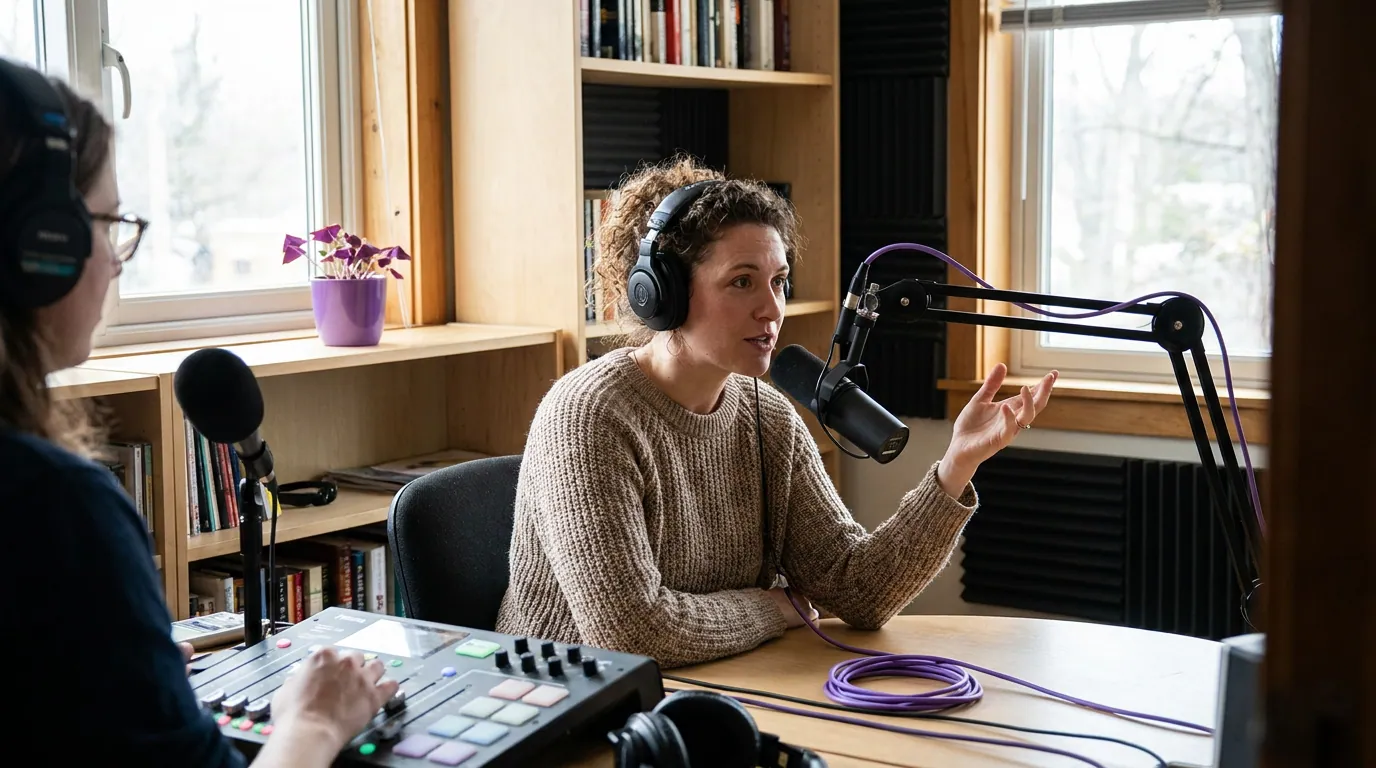
The four things a TikTok hook always does
Before the swipe file, the rules underneath all 25 patterns. Every working hook does these four, in order. The patterns are just different ways to execute them.
- Open on the moment, not the run-up. Cut everything before the line that makes a stranger stop. If the best sentence is 35 seconds into the episode, the clip starts at 34, not at the intro music.
- Put the hook on screen, not only in audio. A large share of social video is watched on mute, commonly cited at 75-85% (Sharethrough reported ~75% of people keep their phone muted while watching; Digiday reported ~85% of Facebook video watched without sound, both publisher-reported and directional). If the hook lives only in the spoken track, the muted majority never hears it. The opening line goes on the first frame as bold caption text.
- Open a gap fast. A hook is a promise that something is missing, an answer, an outcome, the other side of an argument, and watching is the only way to get it. "We completely disagreed about this" opens a gap. "Today we discuss disagreements" does not.
- Stay self-contained. A first-time viewer with zero context must grasp the stakes in one sentence. No inside references, no "like we said last episode," no names a stranger won't know.
Run a clip against those four and you'll catch most failures before you waste a post.
The swipe file: 25 TikTok hooks by podcast content type
Here's the core. Twenty-five patterns, grouped by the kind of content your episode produced, because the hook that fits a heated debate is not the one that fits a calm expert breakdown. Find your content type, then steal the matching pattern and the behavior reason that makes it work on TikTok specifically.
Debate content, two people who don't agree. The reason these win on TikTok: conflict is the cheapest tension to read instantly, and the feed's commenters love taking a side, which feeds the engagement the algorithm watches.
- Mid-argument open. Start inside the disagreement, no setup. The viewer arrives mid-conflict and stays to learn who wins.
- "We disagreed about this." Name the clash up front. "We almost stopped recording over this one."
- The interruption. Open on the moment one person cuts the other off. Interruptions read as stakes; people stay to see the reply.
- The two-sided question. Pose the exact thing they're fighting over. "Should you ever post a clip you don't love? We split on it."
- The challenge. Lead on one host putting the other on the spot. "Okay, defend that, I don't buy it."
- The "prove it." Open where someone demands evidence. The viewer stays for whether it gets delivered.
Story content, someone walks through what happened. The reason these win: an open loop is the strongest retention device on TikTok, and a story that starts in the middle forces the brain to fill in the gap by watching.
- The cold open. Drop straight into the most charged sentence of the story, no preamble.
- The in-media-res line. Start mid-scene. "So I'm standing in the parking lot at 2 a.m. and my phone rings..."
- The cliffhanger. Open on a line that demands the next one, but only when the payoff genuinely lands. "And then she said the thing I still think about."
- The number reveal. A concrete figure with a personal stake. "My first 60 episodes got 14 downloads. Total."
- The confession. The vulnerable admission, first person, specific. "I lied to my whole audience for a year."
- "Then it went wrong." Open at the turn, where the plan breaks. The turn is the reason to keep watching.
- The reaction spike. Lead on the unscripted moment, the laugh, the "wait, what?", the genuine shock. The visible emotion is the hook; the words barely matter.
Hot-take content, a host says the thing others won't. The reason these win: a stated position invites agreement and pushback at once, and TikTok's comment-driven distribution rewards clips people argue under.
- The contrarian claim. Open on the sentence that disagrees with the consensus, full stop. "SEO is not dead, and the people saying it is are selling you something."
- The sacred-cow callout. Name the thing nobody in the niche criticizes. "Everyone praises that tool. It's why your clips look like everyone else's."
- The contrarian stat. Lead with a real, citable number that contradicts what people assume. A true surprising number is a hook by itself, never invent one to fill the slot.
- "Unpopular opinion." Flag the take as one people will resist, then deliver it cleanly. The frame primes the comment fight.
- The reframe. Flip a common belief on its head. "You don't have a posting problem. You have a hook problem."
- "Stop doing X." A direct instruction against a common habit. "Stop ending your clips with 'link in bio.'"
Expert-tip content, a calm, useful breakdown. The reason these win: TikTok viewers save and rewatch how-to clips, and saves plus rewatches are among the strongest signals you can send, so the quiet content type often outscales the loud one.
- The direct how-to. State exactly what the clip teaches in the first line. "Here's how to cut a podcast into ten clips in one sitting."
- The mistake-fix. Name the error, then promise the fix. "You're posting at the wrong time. Here's the fix."
- "Most people get this wrong." Promise the viewer is probably making the mistake, then resolve it.
- The shortcut. Lead on the faster path. "The 90-second version of a thing that took me three years to learn."
- The insider line. Open with knowledge that sounds like it's from behind the curtain. "The thing editors never tell beginners."
- The framework. Number the structure up front. "There are exactly three reasons a clip flops."
For the calm, save-worthy expert-tip clips, longer formats can work, but match the length to the type, and when you're ready to think about where a TikTok audience actually converts, the route from TikTok followers to real podcast listeners is the next problem to solve.

The hook scoring rubric: score it before you post
A hook is easy to talk yourself into. The rubric makes it objective. Score the opening on five dimensions, zero to two points each. Anything below eight goes back for a re-cut; the failure usually points to exactly what to fix.
The honest part: a high score is not a guarantee of views. It's a filter that stops you posting the obvious losers and tells you what's weak when a clip underperforms. Virality without a real moment behind it is empty engagement, and views are not conversions. The rubric protects the floor, not the ceiling.
Does a strong hook alone get a podcast clip views?
No. A strong hook only buys you the first three seconds, the trade that survives the scroll. After that the clip has to pay off the promise the hook made, or the loop never happens and distribution stays narrow. The hook wins the test batch; the moment behind it, and a payoff that matches, is what actually scales the clip.
Common mistakes
- Burying the hook behind the intro. The branded sting, "welcome back," the slow ramp, all of it goes after the hook or gets cut. Trim the first 1-2 seconds of dead air on every clip by default.
- A hook that only exists in audio. With most social video watched on mute, an audio-only hook reaches a fraction of viewers. Burn the opening line into the first frame as caption text.
- Treating TikTok like Reels with a different export. The thumb is faster and the audience colder here. A hook that scored fine elsewhere may need to be sharper and the clip tighter to earn the loop.
- Vague openers. "Let's talk about consistency" is a topic, not a hook. "I posted every day for a year and it nearly broke me" is a hook. Specificity wins the rubric and the feed.
- Clickbait the clip can't pay off. A cliffhanger with no resolution scores one good view-rate and then trains the audience and the algorithm to distrust your openings. Match the promise to the payoff, that's the fifth rubric line for a reason.
- One content type on repeat. Six debate clips in a row and the feed pattern-matches. Rotate across debate, story, hot take, and expert tip so your account doesn't read as a single trick.
Tools for cutting and testing hooks
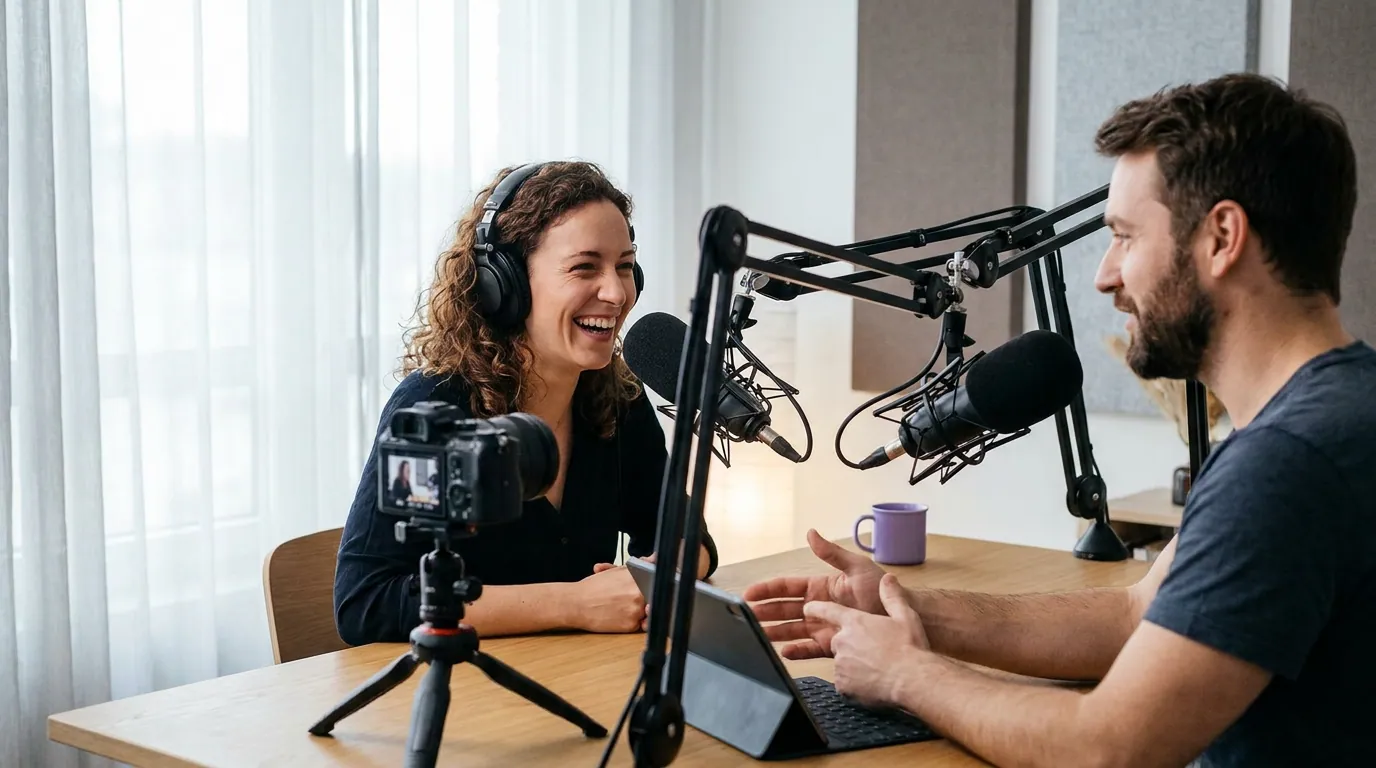
You can do every step by hand in any editor: trim the runway, add a bold caption on the first frame, export vertical, score it, post. The bottleneck is volume, testing which hook works means cutting the same moment several ways, which is slow manually. AI clipping tools speed up the first pass by auto-detecting candidate moments and adding captions; then you re-cut the openings and run the rubric. QuickReel fits here, paste a YouTube URL, get captioned vertical clips, then tighten the first three seconds yourself. Expect to do that human pass with any tool; every AI clipper still needs review, and the hook is exactly where your judgment beats the model's. If your audience leans professional, the same content-type logic applies on LinkedIn, where expert-tip hooks tend to outperform hot takes, don't let a tool pick the hook for either feed.
FAQ
How long should a TikTok hook be for a podcast clip? The hook is the first 1-3 seconds, not a separate clip. Land the visual and opening line by second one, the claim or conflict by second two, and a reason to stay by second three. The full clip is usually 30-90 seconds; on TikTok, shorter clips that get rewatched often beat longer ones, because the loop is a strong distribution signal.
Do TikTok hooks need to be different from Reels or Shorts hooks? The underlying patterns and content types are the same across all three. What changes is the intensity: TikTok's thumb is faster and its audience colder, so the same moment often needs a tighter cut and a sharper opening line to earn the loop. Test the same hook in all three places and let the watch-rate tell you which feed likes it.
What if my podcast is calm and conversational, not full of debates or hot takes? Lean on the story and expert-tip families. A quiet show still has a vulnerable confession, a surprising number, a genuine reaction, or a save-worthy how-to in every episode. Expert-tip clips quietly outscale loud ones on TikTok because saves and rewatches are strong signals, so the calm content type is an advantage, not a handicap.
How many hooks should I test before I trust one? Treat it as a rotation, not a single bet. Post across all four content types for two to three weeks, scoring each with the rubric, then look at which openings held viewers past three seconds and which got rewatched. One or two patterns usually outperform for your specific show, double down on those and keep one slot for experiments.
Does the on-screen hook text hurt the clip if TikTok adds its own caption? Place your hook text in the upper-middle third where it stays clear of the username, caption, and button stack along the bottom and right edges. The platform's interface overlaps those zones, so a hook caption parked there gets covered. Keep your opening line big, high, and inside the safe area, and it reads on mute regardless of the native UI.