
How to Grow a Podcast on LinkedIn (2026 Playbook)


To grow a podcast on LinkedIn in 2026, post from your personal profile rather than a company page, and lead with the two formats the feed rewards most: short text posts that tell a story and document carousels that teach something. Treat the platform as a credibility channel for a B2B audience, and tag each interview guest so the episode reaches their network too.
That is the whole strategy. LinkedIn is not TikTok with a blazer on, the mechanics are different, the audience is different, and the formats that win are different. The rest of this guide is the why behind each move and the exact steps to run it.
Why LinkedIn is worth the effort for podcasters
LinkedIn reported 1.2 billion members on Microsoft's Q4 FY2025 earnings, its fourth straight year of double-digit member growth (LinkedIn Pressroom, July 2025). The active number is smaller, third-party estimates put monthly active users near 310 million (DemandSage), which is the honest figure to plan around. LinkedIn does not publish official MAU, so treat any active-user number as an estimate, not a fact.
The reason it matters is not raw scale; it is who and intent. This is the one major feed where people show up in a work mindset, with a real name attached to a real job. For a business, marketing, tech, finance, or career podcast, that audience converts to listeners and to opportunities, guest bookings, sponsorships, clients, at a rate a viral TikTok rarely does.
And discovery now runs through social. Social media clips overtook friends and family as the top source of new podcast discovery: 57% of listeners rely on social media for recommendations (InsideRadio, 2025). For a B2B show, a meaningful slice of that social discovery lives on LinkedIn, not Instagram.
The honest caveat: LinkedIn is a slow-burn channel. You will not get the spike volume of TikTok. What you get instead is a higher-quality listener and a network effect on interview episodes that no other platform offers. If your show is consumer entertainment, put your energy into the TikTok playbook instead. If it is B2B, LinkedIn is the most productive feed you can work.

Post from your personal profile, not the company page
This is the single most important decision, and most podcasters get it backward. LinkedIn's ranking system heavily favors individual accounts over brand pages. Company-page organic posts now reach only about 1.6% of their own followers, and personal-profile posts pull roughly three times the impressions and five times the engagement of the same content from a company page (Entrepreneur, citing Algorithm Insights 2025 and Refine Labs). This is a structural change, not a slump, employee reshares now travel far further than the same content from the page itself.
So the move is: post your podcast content as you, the host, a real human with a face and a headline, and use the show's company page only as a secondary archive. If you have co-hosts or a small team, have each person post in their own voice. One episode posted by three humans beats one episode posted by one logo.
Treat your profile like a landing page while you are at it. Your headline, About section, and recent posts all influence how far your content travels, because the 2026 algorithm matches posts to people by topic, not just by connection. A clear, on-topic profile tells the system who your content is for.
The format hierarchy: what actually gets reach
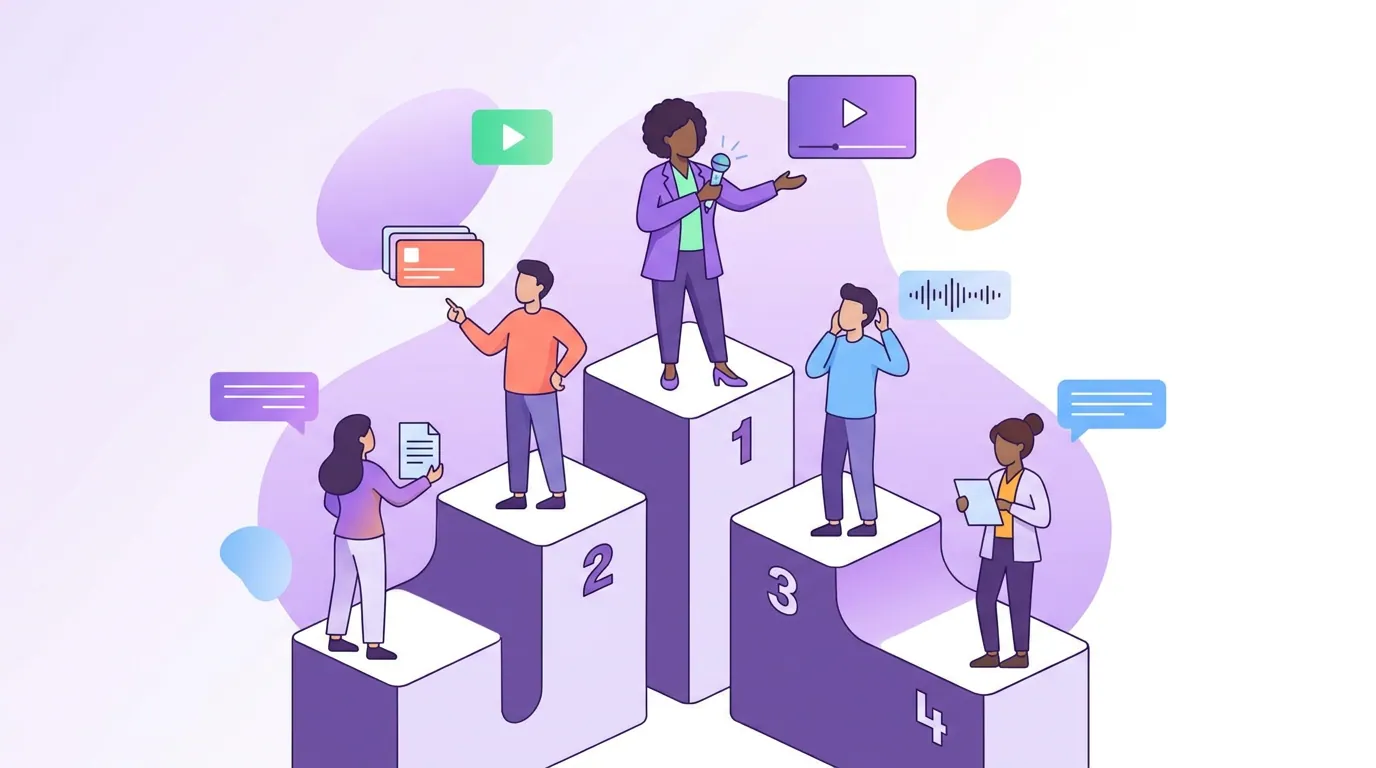
LinkedIn does not reward all post types equally, and the gap is wide. Social Insider's 2026 benchmark, drawn from 1.3 million posts across 16,645 business pages, January 2024 to December 2025, ranks native document posts (the PDF "carousels") and short video at the top, with plain text close behind and external links at the bottom (Social Insider).
Two things to read off that chart, with a caveat. First, the spread between the top and bottom format is roughly double, format choice alone moves the needle. Second, link posts sit dead last, and that is the most actionable line on the page: dropping a YouTube or Apple link in the post body is a reach tax. Put the full-episode link in the first comment instead, and keep the post itself native. The caveat: these are business-page averages, and the firm notes the figures labeled 2026 are really late-2025 numbers, read them as direction, not gospel.
The four formats to run, ranked for podcasters
Here is how to translate that hierarchy into a weekly cadence. You do not need all four every week, pick two or three and stay consistent. Consistency is the real growth lever; format is the multiplier on top.
- The text-first story post. A 1,000–1,300 character post telling one specific thing your guest said and why it changed your mind. No video, no link. Text posts in that length range hold attention long enough to perform, and they are the cheapest format to produce. This is your bread and butter, at least one a week.
- The document carousel. Take five to eight punchy takeaways from an episode and lay them out as a multi-slide PDF: one idea per slide, a strong first slide, a clear last slide. Documents top the engagement chart because each swipe is a fresh chance to stop and read, and that dwell time signals quality. Run one a week if you can; it is the format with the highest ceiling.
- The native video clip. A 30–90 second vertical clip of the best moment, uploaded directly with captions burned in. Upload native, never link out. Native video is watched far longer than the same clip posted as a YouTube link, because LinkedIn favors content that keeps people on the platform.
- The poll, used sparingly. A genuine question tied to your episode's topic. Polls can earn reach but wear out fast and rarely convert to listeners. One a month, maximum, and only when the question is real.
The interview advantage: guest tagging that compounds
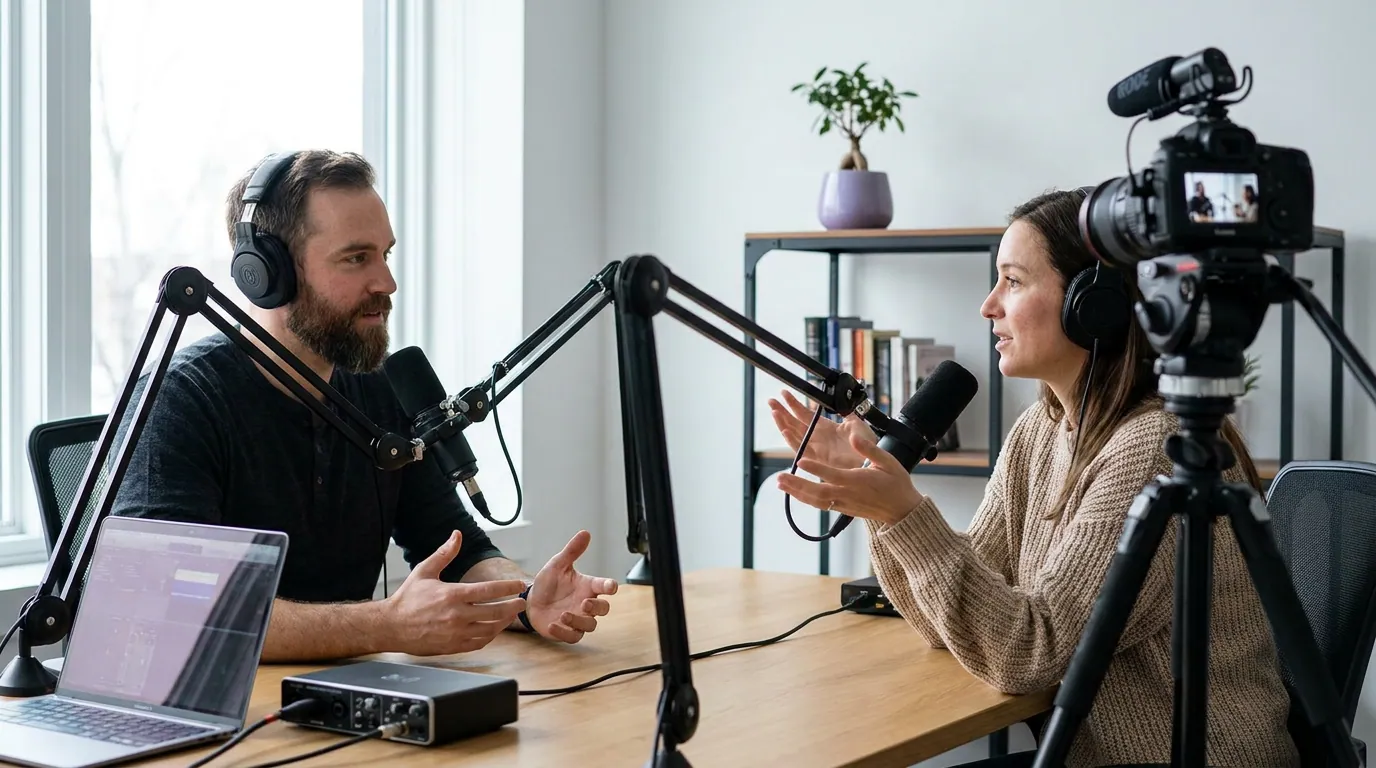
If your show is an interview show, you have a structural edge on LinkedIn that solo creators do not, and it is the most underused tactic in B2B podcasting. When you post an episode clip or carousel, tag the guest, and your post becomes eligible to surface in their network as well as yours. You are borrowing a second professional audience, for free, on every episode.
The mechanics reward this when you do it right. Tagging a relevant person who engages early sends a strong signal in the first 90 minutes, the window LinkedIn uses to decide whether to widen distribution. But the same tool punishes abuse: tagging a dozen unrelated people reads as spam and can suppress the post before it reaches anyone. So the rule is precise:
- Tag the guest, and at most one or two genuinely relevant people, a co-host, the company they mentioned, a person whose work the episode discusses. Never mass-tag.
- Message the guest before you post. "I'm sharing our episode tomorrow morning and tagging you, would love a comment or reshare in the first hour if you have a sec." Early engagement from the tagged person is what triggers wider reach.
- Make the guest look good. Lead with their best insight, not your show's branding. A guest reshares a post that makes them look smart; they ignore one that is an ad for your podcast.
Done across a season of interviews, this compounds. Each guest exposes your show to a new slice of their network, some of those people follow you, and your next post lands in front of a wider base. That is the closest thing LinkedIn has to a growth flywheel for podcasters.
Common mistakes that flatten a podcast's LinkedIn growth
These are the patterns I see most when a show posts on LinkedIn for months and gets nothing back.
- Posting from the company page only. You are publishing into the part of the feed the algorithm demoted hardest, company-page posts reach about 1.6% of followers. Post as a human first (Entrepreneur).
- Dropping the episode link in the post body. Link posts sit at the bottom of the engagement chart. Put the link in the first comment and keep the post native.
- Posting clips with no captions. A large majority of LinkedIn video is watched on mute, social video muted rates are commonly cited at 75–85% (Verizon Media/Sharethrough ~75%; Digiday reported ~85% of Facebook video muted; both publisher-reported and directional). An uncaptioned clip is a silent image people scroll past. Burn captions in.
- Treating it like TikTok. Trending sounds, fast meme cuts, and entertainment hooks underperform here. LinkedIn wants the insight, framed for a professional. The same clip needs a different first line than it does on TikTok.
- Never tagging guests, or mass-tagging. Both waste the platform's best podcast mechanic. Tag the one or two people who genuinely belong, and ask them to engage early.
- Inconsistency. Two posts, then silence for a month, then three posts. LinkedIn rewards a steady cadence, the same discipline that drives a posting schedule on TikTok applies here. Two to four posts a week, sustained, beats a burst.
How to measure whether it is working
Vanity metrics lie on LinkedIn the same way they do everywhere. Impressions feel good and mean little. Track the signals that actually map to a growing show:
- Saves and reshares, not likes. A save carries far more algorithmic weight than a like, and a saved or reshared post is the one a real person found genuinely useful.
- Profile visits and follows in the days after a post. That is the audience-building signal.
- Comments with substance, especially from people outside your existing network, that means the topic-matching reached new readers.
- Listener attribution. Add a "where did you hear about us?" line to your show survey, and watch for "LinkedIn." It is the only metric that proves the feed is feeding the show.
If a format consistently earns saves and follows, do more of it. If it earns impressions and nothing else, it is empty engagement, views are not conversions. The point is listeners, not a dashboard.
FAQ
How often should I post about my podcast on LinkedIn? Two to four times a week, from your personal profile, with a steady mix rather than a burst. Consistency matters more than volume here, LinkedIn's ranking favors accounts that post regularly. Start with one text post and one document carousel per week, then add a clip.
Should I post podcast clips as video or as a document carousel on LinkedIn? Lead with document carousels and text posts, and use video as a supplement. Native documents top Social Insider's 2026 engagement chart, while video reach has declined across the board (Social Insider). Repurposed clips still work, but post them native, vertical, and captioned, never as a link.
Is it better to post from my profile or my podcast's company page? Your personal profile, clearly. Company-page posts now reach only about 1.6% of their own followers, while personal profiles pull roughly three times the impressions and five times the engagement of identical content (Entrepreneur, citing Algorithm Insights 2025 and Refine Labs). Use the company page as a secondary archive, not your primary channel.
Do hashtags help on LinkedIn? Marginally. Three to five relevant hashtags is the current norm; more reads as low-effort. Hashtags help LinkedIn categorize your post by topic, but they are not a reach lever, the post's early engagement and dwell time are what drive distribution.
Can I grow a consumer (non-B2B) podcast on LinkedIn? You can, but the return is usually lower than B2B shows see. LinkedIn's audience is in a professional mindset, so business, tech, career, and finance topics fit naturally. If your show is entertainment, your time is better spent on TikTok and Instagram.
Once LinkedIn is feeding you listeners, capture them so you do not rent your audience from an algorithm: start a podcast email list from zero and set up a welcome sequence for new subscribers. And if you want a second growth channel with faster spikes, pair LinkedIn with a plan for converting short-form followers into actual listeners.