
How to Grow a Podcast on TikTok in 2026


Grow a podcast on TikTok by treating each clip as a standalone video built for the For You Page, not as an ad for your episode. Post three to five native, captioned clips a week, lead with your most surprising line in the first two seconds, and aim for a watch-through above 70%. Then convert the people who finish: tell them where to hear the full show, every single time.
That last sentence is the part most podcasters skip, and it is why so many shows rack up views on TikTok without gaining a single listener. TikTok is a discovery machine, not a listening app. Your job is to build a bridge from the clip to the episode, and the algorithm only gives you traffic for that bridge if the clip earns it on its own terms.
This is a For-You-Page-first playbook. We are not covering how to export clips here; we are covering what to do once you have them.
Why TikTok is worth the effort for a podcast
TikTok is the second-biggest podcast discovery channel for younger listeners, behind only YouTube. Edison Research found that 75% of US podcast listeners aged 13 to 24 use TikTok, and 80% of those listeners have found a new podcast on the platform (Edison Research, via Cohost). The same research puts the discovery effect at 20% of all TikTok users, not just Gen Z.
That matters because social clips have overtaken word of mouth as the way people find shows. In Edison's data, 57% of listeners now rely on social media for podcast recommendations, the first time it surpassed friends and family (InsideRadio). Clips themselves are credited with an estimated 20–40% of new audience acquisition for video shows, and a moment captured with clean production reportedly earns up to 2–3× the engagement of the same moment shot poorly (Podcast Studio Glasgow).
The honest caveat: TikTok ranks far smaller as a place people actually listen. As a primary podcast platform it sits around 4%, well below YouTube, which 42% of US weekly podcast listeners use most often (Cumulus Media / Signal Hill Insights via Backlinko, Oct 2025). So TikTok's job in your funnel is narrow and specific, find new people, then hand them off.
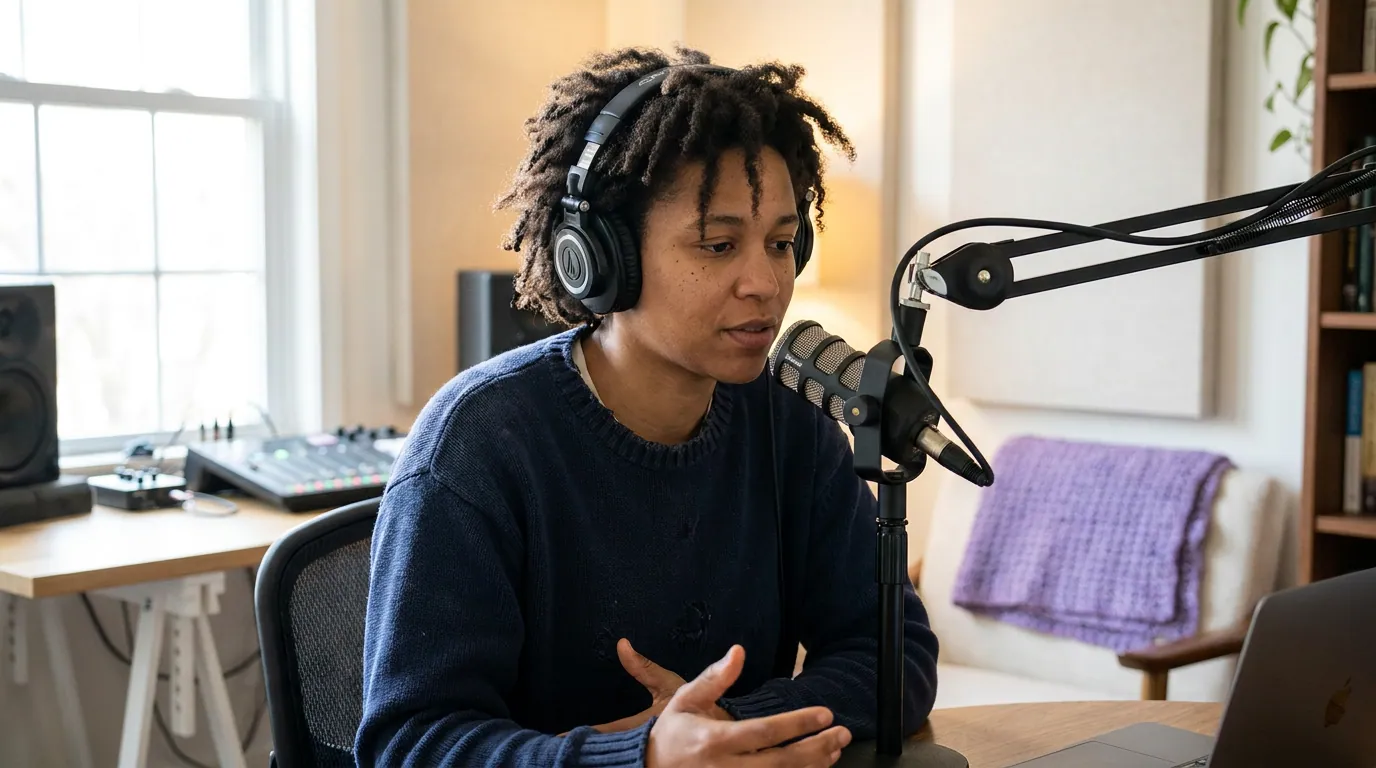
How does the TikTok algorithm rank podcast clips in 2026?
The For You Page ranks each clip almost entirely on watch behavior, completion rate, rewatches, shares, and how long people hold before swiping, not on your follower count. In 2026, published breakdowns put the viral threshold around a 70% completion rate, up from the roughly 50% benchmark of a couple of years ago (SyncStudio; Socialync). Rewatches now carry more weight than followers (Darkroom). One honest caveat: TikTok has never published these thresholds, so treat the 70% number as the working consensus across creator-marketing teardowns, not a figure confirmed by the platform.
Two mechanics decide whether a podcast clip lives or dies:
The follower test comes first. A reported 2026 change shows new uploads to your existing followers before pushing to strangers; the algorithm reads how those followers respond, completion, shares, saves, and only then decides whether to widen distribution (SyncStudio). A clip that bores your own audience never reaches the For You Page.
The first two seconds are the whole game. If the opening does not promise a payoff, the clip dies before TikTok ever tests it (Darkroom). For a dialogue-heavy podcast clip, that means cutting the build-up and opening on the line itself.
The seven-step TikTok growth playbook
1. Open on the line, not the lead-up
Find the single most surprising, funny, or contrarian sentence in the clip and make it the first thing a viewer hears. Trim everything before it. A podcast host saying "the advice everyone gives you about saving money is wrong" works as a cold open; "so we were talking last week and, anyway, here's the thing about money" does not. If you need help building openers that survive the swipe, our breakdown of TikTok hooks that make people finish podcast clips goes deeper on phrasing.
2. Caption everything, in TikTok's native style
Most social video is watched on mute, commonly cited at 75–85% (Verizon Media/Sharethrough ~75%; Digiday's 2016 Facebook figure ~85%, both publisher-reported and directional). For a podcast, where the value is the words, uncaptioned is dead on arrival. Burn in word-by-word captions that match TikTok's look, not a subtitle bar imported from another platform. The captions also feed TikTok's transcription index, which it uses to categorize and surface your clip.
3. Post three to five clips a week
Darkroom's 2026 guidance is a minimum of three posts a week, scaling to one or two a day if you can sustain it (Darkroom). Three to five is the practical floor for a podcast that wants to learn what works without sacrificing quality. Volume does not boost any single video, it gives the algorithm more data points and gives you more swings. Below three a week, you rarely gather enough signal to know what your audience responds to. For specifics on timing and frequency, see when and how often podcasters should post on TikTok.
4. Run a length split: short standalone, plus a longer narrative
Aim most clips at roughly 20–40 seconds, the band where a podcast moment is long enough to land and short enough to clear the 70% completion bar (SyncStudio). Longer cuts are tempting because they qualify for monetization, but retention gets harder the longer you run, a 15-second clip watched fully beats a 60-second clip watched halfway (SyncStudio). So run a split: punchy standalone moments and a longer narrative segment with a real payoff, then let the data pick the winner per format.
5. Lean on native trends, Duets, and Stitches
The 2026 algorithm favors creators who add a fresh perspective over those who simply repost existing content (Ampfluence), which is why practitioners stress exporting clean files with no other platform's watermark (Darkroom). It also rewards original audio and a real person speaking to camera. Use Stitches to react to a take in your niche, Duet a clip you disagree with, and respond to your own comments with a follow-up video. This is how a podcast joins a conversation instead of broadcasting at one.
6. Pick one niche and two or three repeatable formats
The algorithm finds your audience faster when your content is topically consistent. Choose a clear lane, then build two or three reusable formats you can refill every week, "hot takes," "guest origin stories," "things we got wrong." Repeatable structure also makes you faster, which is what keeps a posting cadence alive.
7. Convert finishers into listeners, every time
This is the step that separates views from a growing show. Every clip needs an unmissable handoff: a spoken "full episode on Spotify and Apple," a pinned comment with the show name, and a clean link in bio. A finisher who does not know where to listen is a finisher you lost. The mechanics of that handoff, bio architecture, the comment script, what to say on camera, are worth their own read in turning TikTok followers into actual podcast listeners.
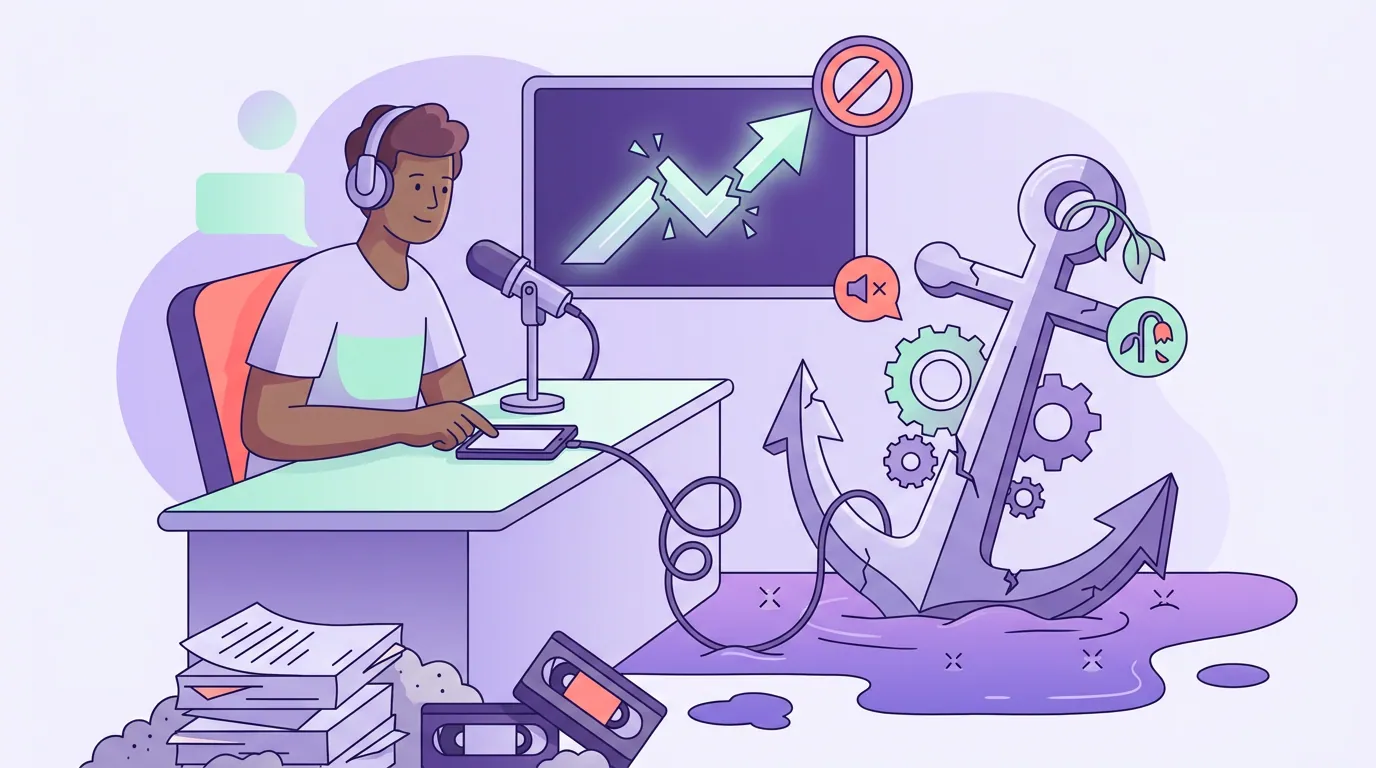
Common mistakes that quietly kill TikTok growth
Re-posting a clip with another platform's watermark. The algorithm rewards original-looking, native uploads over content that reads as recycled, so export clean files and edit native rather than dropping in a watermarked Reel.
Burying the hook behind context. "To understand this you first need to know…" is a swipe. Open on the payoff; let context come second, if at all.
Posting to an empty room and blaming the algorithm. Because the follower test runs first, a tiny or disengaged follower base throttles every upload. Early on, push the same clips to friends and existing listeners to clear that first gate.
Chasing views instead of listeners. Virality without strategy is empty engagement; views are not conversions. A clip with 200,000 views and no call to action grew TikTok, not your podcast. Tie a CTA to every post and watch your show's traffic, not just the view counter.
Treating TikTok like a feeder for every platform without adapting. A TikTok clip can become an Instagram Reel and a couple of YouTube Shorts, but trim the hook tighter and re-caption for each. A different audience lives on each surface, the B2B crowd you'd reach on LinkedIn is not the same one finishing your clips here.
When TikTok is not worth it
If your show is built for an older, professional audience and your guests are executives, TikTok's discovery skew toward 13–24 may not match your listener. The 4% primary-platform share is a real ceiling. Be honest about whether the people finishing your clips are people who would ever subscribe. For some shows, the better growth bet is a focused email list, start with building a podcast email list from zero, paired with one platform where your actual audience already lives.
Frequently asked questions
How long until TikTok grows my podcast? Expect hook-and-hold improvements within one to two weeks of consistent posting, but real listener conversion takes roughly six to twelve weeks (Darkroom). The first month is for learning which clips travel; growth compounds after you stop guessing.
Do I need a huge following to go viral on TikTok? No. Distribution is driven by watch behavior, not follower count, completion rate and rewatches outrank followers in 2026 (Darkroom). A new account with a clip that holds attention can reach the For You Page; a large account with a weak clip will not.
Should I post the same clip to TikTok, Reels, and Shorts? You can, but adapt it. Re-export without watermarks, tighten the hook for each surface, and re-caption in each platform's native style. TikTok specifically penalizes content that looks lifted from elsewhere.
What's the ideal clip length for a podcast on TikTok? Most clips work best around 20–40 seconds, long enough for a podcast moment to land, short enough to clear the 70% completion bar (SyncStudio). Longer narrative cuts qualify for monetization but are harder to keep watched in full, so run a split and let your own data pick winners per format.
How many clips should a podcast post per week on TikTok? Three to five for most shows. That is enough to feed the algorithm data and give yourself multiple swings without quality slipping. Seven a week works only with a team or a strong batch system.