
Starting a Podcast Solo vs With a Co-Host


Go solo if you want full control, can publish without waiting on anyone, and have enough to say to fill an episode alone. Choose a co-host if conversation comes easier than monologue, you genuinely click with one specific person, and you'd both rather split the work than carry it. The trap is picking a co-host to avoid the silence, that's the reason that ends most partnerships.
Most of the solo-vs-co-host advice online skips the part that actually matters: a co-host is a business partnership, and almost nobody writes down who owns the show before they hit record. This guide breaks down the real tradeoffs, scheduling, chemistry, who does what, and money, then gives you a co-host agreement checklist for the awkward questions partners forget to settle up front. If you want the wider three-way view, the solo vs co-host vs interview format comparison covers interviews too; this page is the two-person decision in depth.
Is it better to start a podcast solo or with a co-host?
Neither is better in the abstract, they fail and succeed for different reasons. Solo gives you total control and zero scheduling friction but puts the entire workload and energy on you. A co-host halves the prep and adds chemistry that's hard to fake alone, but you now depend on a second calendar, a second standard, and a shared sense of who owns what.
The single best predictor of whether a podcast survives is publishing consistency, not format. Nearly half of all podcasts never get past their first three episodes, and the ones that podfade mostly quit between episodes 7 and 25, right before audience traction usually kicks in. Of the millions of podcasts that exist, only about one in ten are still actively releasing episodes Amplifi Media. So the real question under "solo or co-host" is: which one lets you keep showing up every week? For some people that's the accountability of a partner. For others it's the freedom to record at 6am with no one to coordinate.
The case for going solo
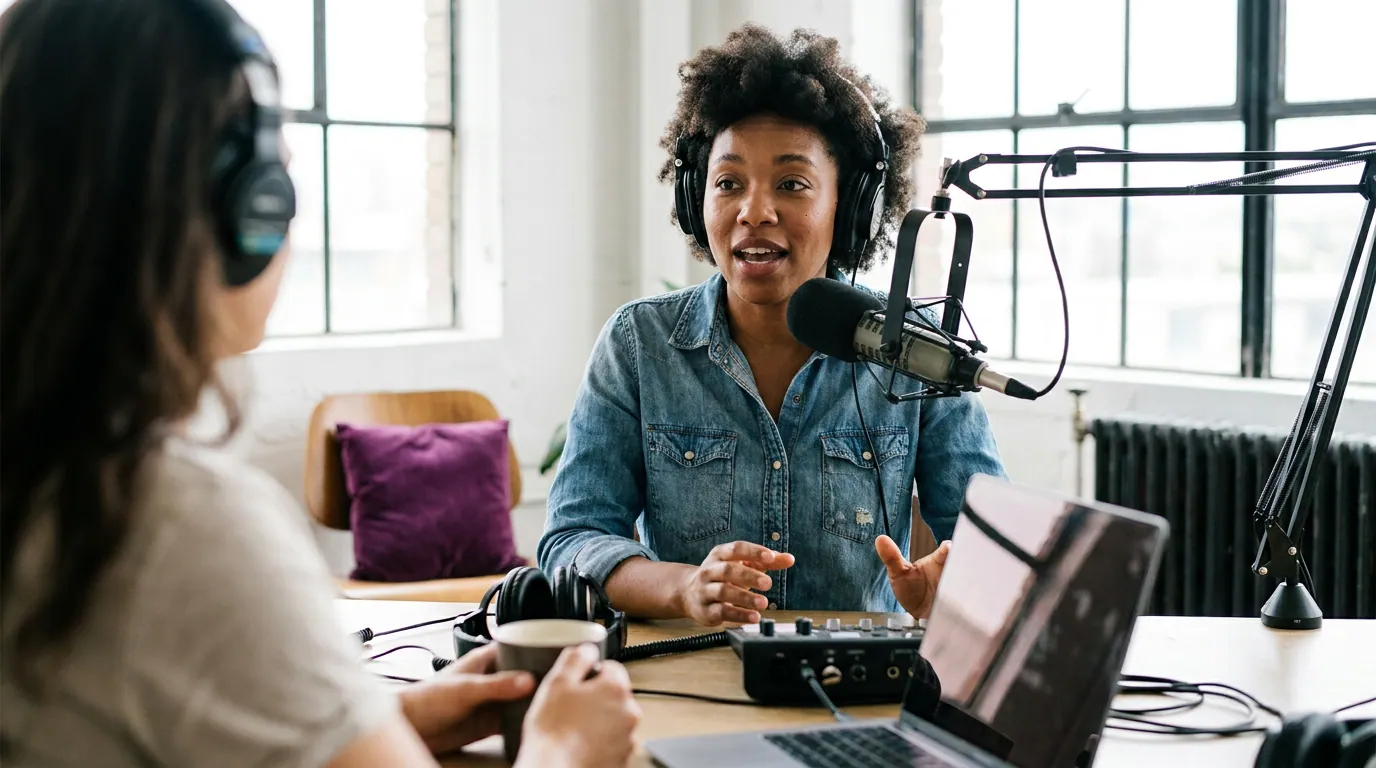
Solo is control and speed. You decide the topic, the length, the release day, the tone, and the moment you hit publish, without a single message to anyone. When motivation is high, you record. When an idea is hot, you ship it that night. No format on earth has a shorter path from idea to published episode.
Solo also keeps your foundation simple. One microphone instead of two, one set of levels to balance, no remote-recording link to manage when you both can't be in the same room. If budget is the constraint, the free podcast starter stack is built for exactly one host, and a solo show is the cleanest way to start without spending.
The cost is real, though. You carry the entire workload, research, recording, editing, show notes, promotion, and there's no one to bounce off when your energy dips mid-episode. Solo shows live or die on whether the host can hold attention without a foil. If you're naturally a strong monologuer or a teacher by instinct, that's a feature. If you go quiet without someone to react to, it's the thing that makes recording feel like a chore by episode eight.
The case for a co-host
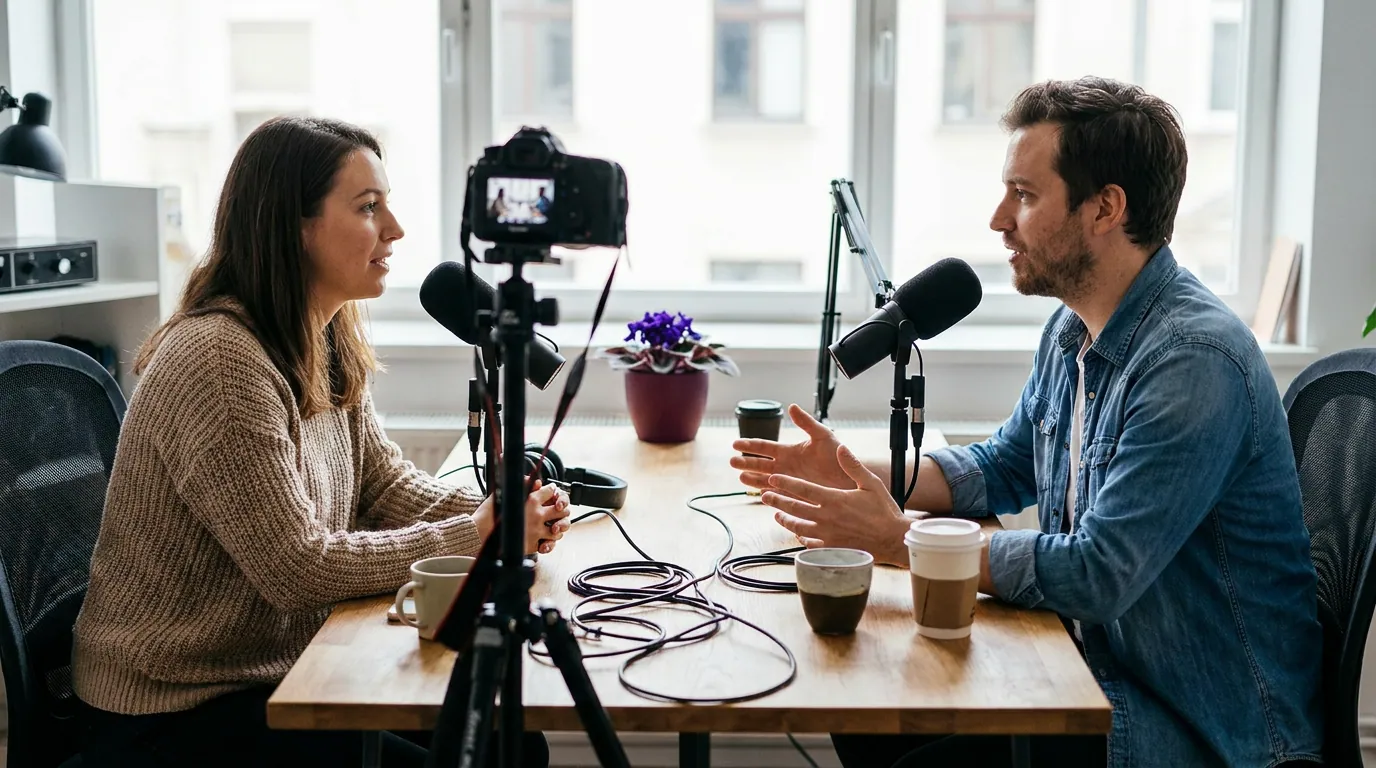
A co-host buys you two things money can't: chemistry and a built-in accountability partner. Banter, disagreement, and the rhythm of two people who actually like each other is genuinely hard to manufacture solo, and it's a large part of why comedy and conversation shows dominate, Comedy is the #1 US podcast genre, ahead of News and Society & Culture (Statista). Two voices fill silence, cover each other's flat days, and make a 45-minute episode feel shorter.
It also splits the work, on paper. One person edits, the other writes show notes. One books, the other promotes. When that split is honest, a co-host roughly halves the per-episode burden that drives burnout-podfade. That matters, because the per-episode workload is what causes most hosts to quietly stop.
The catch is that you've traded a workload problem for a coordination problem, and a relationship one. Now you need two calendars to agree, two people to maintain the same standard, and one shared understanding of who owns the thing you're building. When co-host shows fall apart, it's rarely the audio. It's a scheduling slide, a lopsided workload that breeds resentment, or a money question nobody answered before episode one.

How to decide: three honest questions
Skip the personality quizzes. Run these three questions in order, and answer them about reality, not the version of yourself you wish were true.
- Can you publish weekly without anyone else? If yes, solo removes your single biggest risk, scheduling. If the honest answer is "only if someone's expecting me," a co-host's accountability is worth the coordination cost.
- Is there one specific person you genuinely click with, not just a willing volunteer? Chemistry is the whole point of a co-host. A so-so partner gives you all the coordination cost and none of the upside. If there's no obvious "yes, them," start solo and add a regular co-host later.
- Are you both willing to write down the money and exit terms before episode one? If a co-host won't have the ownership conversation up front, that is your answer. Start solo. A partner who avoids the awkward questions now will avoid them when there's money or a breakup on the line.
The co-host agreement: settle the money and exit before episode one
This is the part nobody does, and it's the part that prevents the ugliest endings. You don't need a lawyer for a hobby show. You do need a shared written document, even a Google Doc both of you sign by typing your names, that answers the questions partners forget until it's too late. Treat it like a prenup for the podcast: you write it because you like each other, while you still do.
Here's the checklist. Go through each line out loud, together, and write down the answer.
Ownership and IP - Who owns the show name, the artwork, and the trademark if you ever register one? - Who owns the hosting account, the RSS feed, the website domain, and the email list? (Whoever controls the RSS feed effectively controls the show, name this person.) - Who owns the social handles and the back catalog of episodes? - If you used a designer or paid for art, who holds those files and rights?
Money - What's the revenue split, 50/50, or weighted to whoever does more? Write the percentage. - Who fronts the costs (hosting, editing, gear), and how are they reimbursed before profit is split? - Who's the named account holder for any ad or membership payouts, and how does the other person get paid? - At what point, if any, does unpaid passion become paid work, and what changes then?
Work and decisions - Who's responsible for which jobs: recording, editing, show notes, scheduling, promotion, guest booking? - How do you break a tie when you disagree on a guest, a topic, or whether to take a sponsor? (Pick a rule now: rotate the final call, or the person who owns that job decides.) - What's the minimum each of you commits to, and what happens if someone repeatedly misses it?
The exit - If one of you wants out, who keeps the show, the name, and the feed? - Is there a buyout, or does the leaver simply walk away from future revenue? - Can the remaining host continue under the same name, or does the brand retire? - How much notice does a leaving co-host give, one episode, or a month?
Most of these never come up. The few that do can end a friendship if they're unanswered, and end nothing if they're written down. Settling the exit clause before you launch is the single most underrated thing two co-hosts can do, it's a 20-minute conversation that protects years of work and a relationship.
Common mistakes that sink each format
- Solo: recording like you have a co-host. Long pauses and dead air that a partner would fill kill solo momentum. Script tighter, trim ruthlessly, and lean into structure, segments, a cold open, a clear arc. Planning beats winging it; the plan-before-you-record checklist is built for this.
- Co-host: a lopsided workload nobody named. When one person edits every week and the other "just shows up," resentment compounds quietly until the show stops. Split jobs explicitly and revisit the split every ten episodes.
- Co-host: picking a partner for company, not chemistry. A willing friend who doesn't spark on mic gives you all the coordination cost and none of the magic. If there's no obvious "yes, them," go solo.
- Both: treating the format as permanent. You can start solo and add a recurring co-host at episode 20. You can run a co-host show and release solo episodes between. The format is a starting point, not a vow.
- Co-host: skipping the agreement because "we're friends." Friends are exactly who you write it for. The document exists so a disagreement about money never becomes a disagreement about character.
What it costs either way
Format barely moves your launch budget. The real swing is one mic versus two, and a remote-recording tool if your co-host isn't in the room. The deeper truth about gear holds for both: the gap between a $150 and a $1,500 setup is smaller than the gap between bad mic technique in a noisy room and good technique in a treated one (Ausha cost framing). For the full numbers, the what it really costs to start a podcast breakdown and the step-by-step launch plan cover both setups.
Whichever you choose, the thing that grows the show after launch is the same: short clips. Clips drive an estimated 20–40% of new audience for video shows and can lift reach 2–5× (Podcast Studio Glasgow), and co-host banter tends to clip especially well, because the funniest 30 seconds are usually two people reacting to each other.
FAQ
Should I start a podcast alone if I'm nervous about being on mic? Yes, start solo, but for the right reason. Recording alone lets you re-take freely, edit out every stumble, and build mic confidence with no one watching. Add a co-host once you're comfortable, not to hide behind. A co-host won't fix nerves; it just moves where they show up.
Can I switch from solo to co-host later? Easily, and many shows do. Start solo to lock your cadence and voice, then add a recurring co-host around episode 15–25 once you know your format works. Switching the other way, co-host to solo, is harder, because the audience came for the dynamic. If in doubt, start solo.
How do you split podcast revenue with a co-host? Write the percentage down before episode one. A straight 50/50 is simplest when the work is even; weight it toward whoever does more (editing, booking) if it isn't. Name who fronts costs and gets reimbursed first, who the payout account holder is, and how the other person gets paid. The number matters less than agreeing on it in writing.
Do solo podcasts grow more slowly than co-host shows? Not inherently. Growth tracks consistency and discoverability, clips, search, cross-promotion, far more than host count. Co-host banter can clip better, but solo shows publish faster and never lose a week to a scheduling clash. The format that helps you publish every week is the one that grows.
What happens to the podcast if my co-host quits? Whatever your agreement says, which is exactly why you write one. Decide up front who keeps the name and the feed, whether there's a buyout, and how much notice a leaving co-host gives. Without that, a quitting partner can take the show name, the feed, or the social handles, and there's little you can do after the fact.