
How Much It Really Costs to Start a Podcast

You can start a podcast for $0 with a phone and free software. A setup that sounds good and stays online runs about $300 one-time plus roughly $20 a month. A video-first show with two mics lands near $900 up front. The "$1,000 to start" number people quote is almost always padded with gear you do not need yet.
The real question is not "how much does a podcast cost", it is "how much do I need to spend to publish episode one," because most spending after that is optional and most of it is recurring. Below are three fully itemized budgets with real retail prices verified in June 2026, a split between what you pay once and what you pay every month, and the three costs nobody warns you about that quietly sink first-year budgets.
How much does it cost to start a podcast?
The bare minimum is $0 to about $80: a phone or laptop you own, free software, and free hosting. A sensible setup that sounds clean and won't disappear costs about $300 one-time plus ~$20/month. A video-ready two-mic studio runs roughly $900 up front plus ~$25–40/month. The biggest variable is video, not the mic.
That spread is wide on purpose. Podcasting has no required spend; the entry fee is closer to a phone than a camera rig. What actually separates the tiers is audio quality, whether you film, and how much editing time you're willing to buy back. Pick the tier that matches your show, not your aspirations.
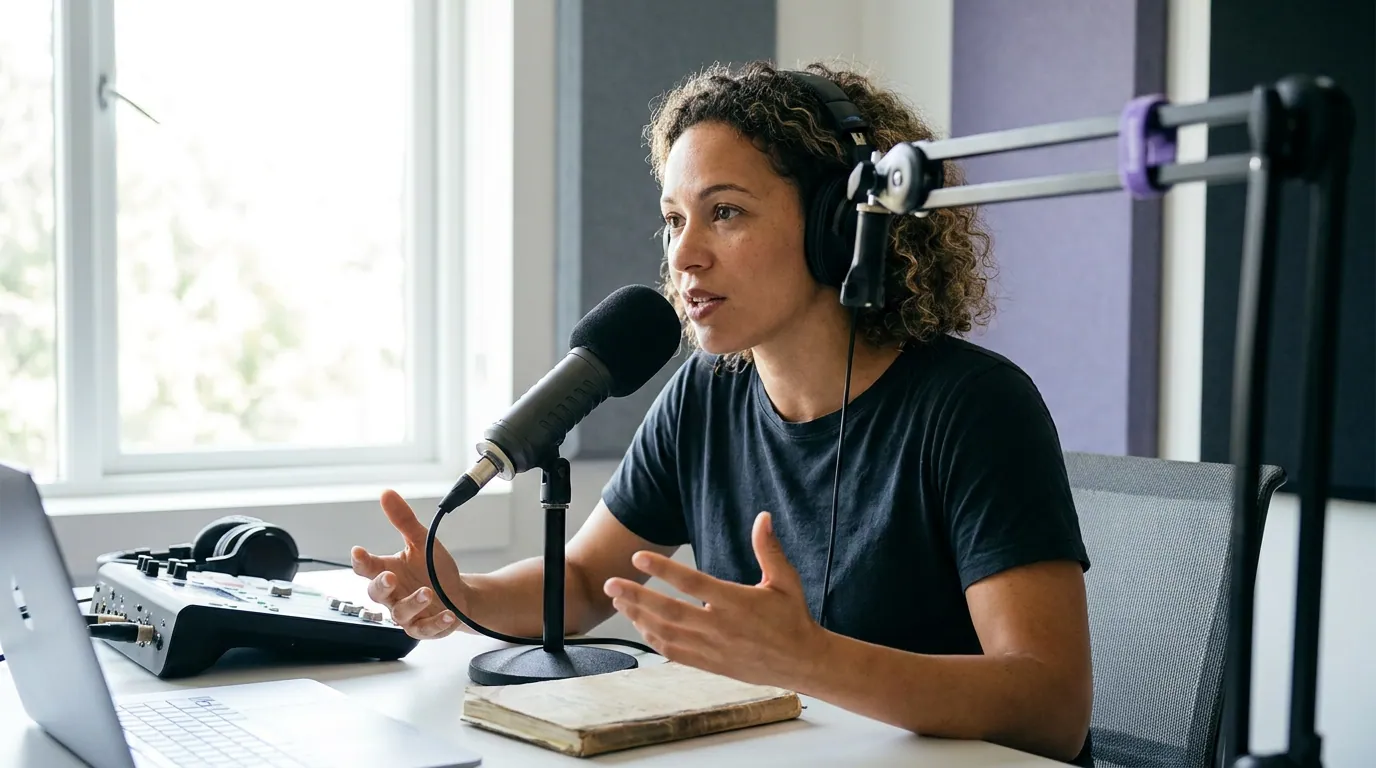
Budget 1, Bare minimum ($0 to ~$80)
If you have a smartphone or a laptop with a working mic, your only true cost is your time. This is the right starting point if you're testing whether you'll actually publish, not whether you'll go pro. Nearly half of all podcasts never make it past their first three episodes (Command Linux), so spending nothing until you've shipped three is the most rational move you can make.
| Line item | Pick | Cost |
|---|---|---|
| Microphone | Phone earbuds with inline mic, or laptop mic | $0 (own it) |
| Recording + editing | Audacity (Win/Mac/Linux) or GarageBand (Mac) | $0 |
| Hosting | Spotify for Creators, or a free host tier | $0 |
| Cover art | Canva free plan | $0 |
| Total to publish | $0 |
The one upgrade worth $60–80 here is a wired lavalier or a used dynamic USB mic, which fixes the single biggest tell of a beginner show: thin, roomy audio. Everything else on this row genuinely works. The catch is the free hosting tier, see the forgotten-costs section, because "free hosting" sometimes means your episodes get deleted after 90 days (Buzzsprout). If you go free, pick a host that keeps your back catalog.
For a full walkthrough of the no-budget path, see how to start a podcast for free. And before you buy anything, decide what the show is, planning the podcast before you record saves more money than any gear choice.
Budget 2, Sensible (~$300 one-time + ~$20/month)
This is the build I recommend to most first-time hosts. It sounds clean enough that listeners won't notice the room, it's audio-only so there's no camera spend, and it keeps your episodes online permanently. The mic is the only line item that matters for quality, and you do not need to spend big to clear that bar.
| Line item | Pick | Cost |
|---|---|---|
| Microphone | Samson Q2U (USB + XLR dynamic) | ~$70 (Samson) |
| Headphones | Closed-back monitoring pair | ~$60 |
| Recording + editing | Audacity or GarageBand | $0 |
| Boom arm + pop filter | Desk-clamp arm (pop filter ships with the Q2U) | ~$30 |
| Cover art | Fiverr designer | ~$25 (Fiverr) |
| Hosting (recurring) | Buzzsprout Audio (~$15/mo annual) or Transistor Starter ($19/mo) | ~$15–19/mo (Buzzsprout, Transistor) |
| One-time total | ~$185–200 |
That lands closer to $200 one-time than $300, which is the point. The Samson Q2U is still cited as one of the best-value podcast mics in 2026 because it works over both USB (plug into your laptop) and XLR (plug into an interface later), so the mic grows with you (The Podcast Host). The ~$300 figure people expect appears once you add the first few months of hosting and a small cushion for accessories you'll discover you want.
If you want help choosing the mic, the best podcast mics by budget tier covers the $50, $150, and $400 brackets, and the best podcast mic under $100 tests the entry options by use case.
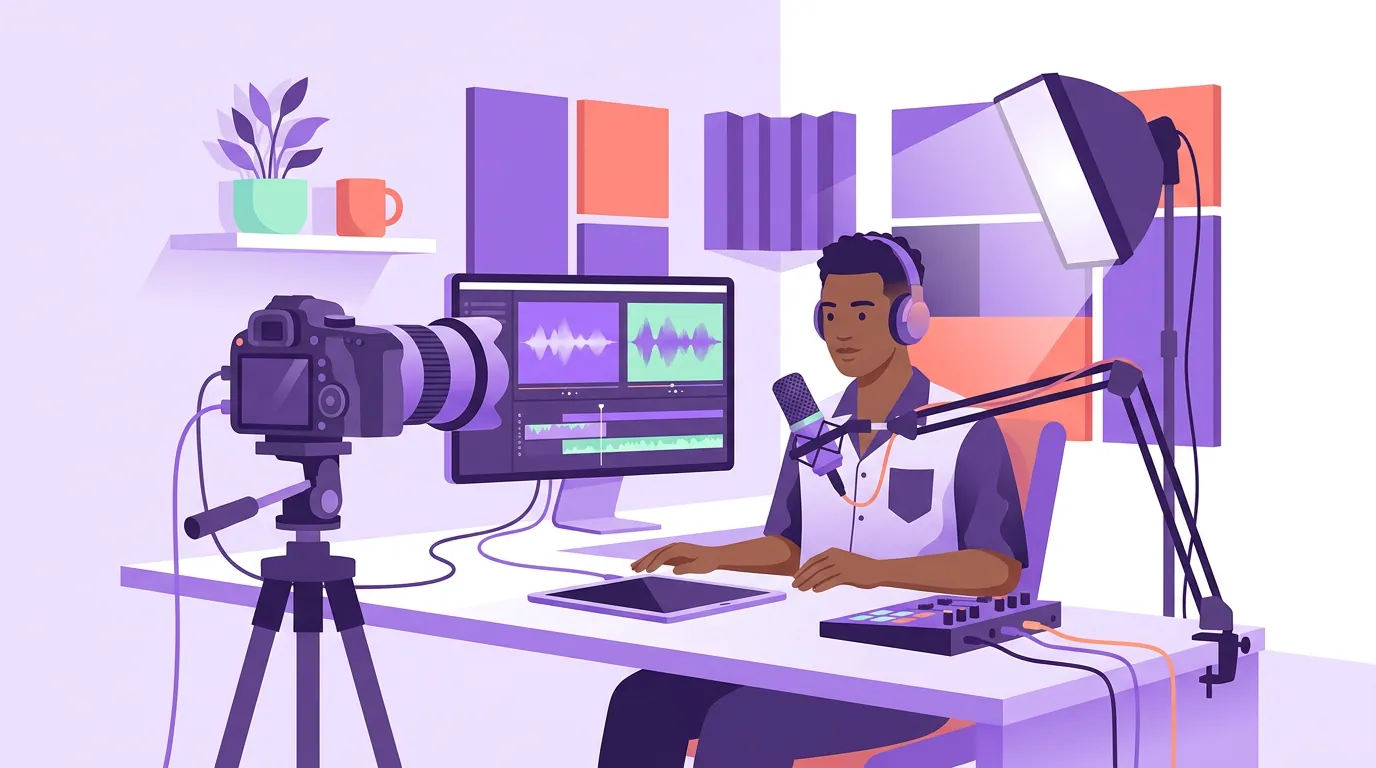
Budget 3, Pro / video-first (~$900 one-time + ~$40/month)
This tier exists for one reason: video. More than half of new US weekly listeners now say they prefer to watch a podcast (Backlinko), so if you're filming and want two clean mics, the cost climbs, but not to the four-figure rigs influencers show off.
| Line item | Pick | Cost |
|---|---|---|
| Microphones (×2) | Shure MV7+ or RODE PodMic USB | ~$280 each / ~$200 each (Shure) |
| Audio interface | Focusrite Scarlett 2i2 (if using 2 XLR mics) | ~$190 (Focusrite) |
| Camera | Decent webcam or a mirrorless you own | ~$100–300 |
| Lighting | Two-light key + fill kit | ~$80 |
| Boom arms + cables (×2) | ~$80 | |
| Cover art | Professional freelance designer | ~$100–300 (Fiverr range) |
| Hosting + music (recurring) | Host ~$15–19/mo + Epidemic Sound ~$6–15/mo | ~$21–34/mo (Epidemic Sound) |
| One-time total | ~$850–1,000 |
Two honest notes. First, you can halve the mic line by using two RODE PodMic USB units (~$200 each) that plug straight into a laptop and skip the audio interface entirely, that single swap saves ~$200. Second, the camera line is the most padded number in every "pro podcast budget" article; a webcam you already own or a phone on a stand is fine for episode one. Spend on the mic before the camera. Bad audio loses listeners faster than mediocre video.
The gap between a $150 and a $1,500 setup is smaller than the gap between bad mic technique in a noisy room and good technique in a treated one.
A folded blanket behind the mic and recording away from hard walls will do more for your sound than the difference between a $70 and a $280 mic.
The split nobody warns you about: one-time vs recurring
Here is the part that wrecks budgets. Gear is a one-time hit you plan for. Subscriptions are forever, and three or four small ones stack into a number that surprises people in month three. A $19 host, a $15 music library, a $17 editing tool, and a $12 transcription tool is $63/month, about $750 a year, on top of whatever you spent on hardware.
The fix is simple: start with one recurring cost (hosting) and add subscriptions only when a real bottleneck appears. You do not need a music library, a transcription tool, and a clip tool on day one. Add each one the week it solves a problem you actually have.
The three costs beginners always forget
These are the line items missing from nearly every "podcast startup cost" article, and they're the ones that catch people off guard.
- Hosting that doesn't delete your episodes. "Free hosting" often comes with a catch. Buzzsprout's free tier, for example, only hosts episodes for 90 days; keeping your back catalog permanently means a paid plan starting around $15/month billed annually (Buzzsprout). Read the storage and retention terms before you commit, or your early episodes vanish.
- Music licensing. Background music and intros are not free unless you stay inside a host's bundled library. A claim-free library like Epidemic Sound runs about $6–15/month for creators (Epidemic Sound); a single licensed track bought one-off can be $29–149. Using a song you don't have rights to is the fastest way to get an episode pulled.
- Your time, and the cost of buying it back. Editing a single episode by hand can take longer than recording it. That's why most hosts eventually pay for a tool that compresses the work, and it's also the cost most "$300 to start" lists ignore entirely. You can publish without it, but the hours add up, and burnout-driven podfade is the number-one reason shows stop. Budget for either your time or a tool that returns it.
FAQ
Can you start a podcast for free? Yes. With a phone or laptop you already own, free software like Audacity or GarageBand, and a free hosting tier, your out-of-pocket cost is $0. The only catch is some free hosts delete older episodes, so check retention terms. Free is the right place to start if you're testing whether you'll publish consistently.
What's the cheapest thing worth paying for first? A dynamic USB microphone in the ~$70 range, like the Samson Q2U (Samson). Audio quality is the single clearest signal of a beginner versus an established show, and it's the cheapest tier to fix. Spend here before a camera, lighting, or any software.
Do I need an audio interface? Only if you use XLR microphones. A USB mic plugs straight into your laptop with no interface. Hybrid mics like the Q2U give you both options, so you can start over USB now and add an interface (~$130–200) later if you move to XLR. Most solo hosts never need one.
How much does podcast hosting cost per month? Paid hosting typically runs $15–19/month, Buzzsprout's Audio plan is ~$15/mo billed annually (Buzzsprout) and Transistor's Starter plan is $19/mo (Transistor). Free tiers exist but often limit storage or stop hosting old episodes. Hosting is usually the one recurring cost you can't avoid.
Is $1,000 enough to start a podcast? More than enough. $1,000 covers a full pro video setup with two mics, lighting, and a year of hosting. Most first-time hosts spend closer to $200–300 one-time. The "$1,000 to start" figure usually includes gear you should buy later, not on day one.
Start at the tier that matches your show. Publish three episodes before you upgrade anything. Then spend on the next bottleneck, usually your time, and not a moment sooner. For the full launch path from here, follow the step-by-step plan to launch your first podcast, and if you're still deciding what to make, choose your topic and niche first.