
How to Start a Technology Podcast People Trust


To start a technology podcast people trust, run three rotating beats, news, deep-dive, and review, so you always have something to ship even on a slow week, and disclose every review unit and affiliate link in plain language inside the episode itself. Trust in a tech show is built on two things competitors fudge: where your gear came from, and whether your take landed while the news was still fresh. Get those right and the audio quality is the easy part.
Tech is one of the harder niches to start well, not because the topics are scarce but because they rot fast. A take on a phone launch is worth a lot on day one and almost nothing by day five. And the moment you start reviewing hardware, you inherit a credibility problem the moment a free unit shows up at your door. This guide gives you a coverage system that survives slow news weeks, the exact disclosure language to use, and a workflow that gets timely episodes out before they're stale.
Why a tech podcast is harder to start than most
Two forces work against a new tech show. The first is competition: Technology is a crowded category, and the biggest genres reward incumbents who already have the audience. The biggest US podcast genres skew toward Comedy, News, Society & Culture, True Crime, and Sports (Statista, top US podcast genres), tech sits adjacent to the crowded "News" lane, where established shows fight for the same launch-day story.
The second is the wall every new show hits. Nearly half of all podcasts never make it past their first three episodes, and most that fade out quit between episodes 7 and 25 Amplifi Mediaon podcast failure rates). Tech hosts hit that wall faster than most because they tie their whole show to news cycles, and the week nothing launches, they have nothing to publish. A coverage system fixes both problems at once: it gives you a reason to exist on quiet weeks and a sharp angle on busy ones.

The three-beat coverage system
Pick three beats and rotate them, instead of trying to be a daily news show or a once-a-quarter deep-dive that nobody remembers. News keeps you timely. Deep-dive keeps you valuable when nothing's launching. Review keeps you concrete and gives you something only you have, hands-on opinions. The rotation means a dry news week doesn't break your schedule, because a deep-dive or a review is already queued.
Beat 1, News: opinion, not a recap
The mistake new tech shows make is reading the headlines back to people who already read them. Your news beat is worth nothing if it's a recap and everything if it's a take. Pick one or two stories a week, skip the summary, and lead with what you think and why, the trade-off everyone else missed, the precedent it sets, who it actually hurts. The recap is a search result; the opinion is a reason to subscribe.
Keep the news beat short and fast. Twenty minutes of sharp commentary beats an hour of summary, and it's the beat you'll need to ship inside 48 hours (the workflow for that is below). Pick your stories by relevance to your specific niche, a show about indie app development should not be covering every chip launch.
Beat 2, Deep-dive: the evergreen backbone
Deep-dives are the episodes that still get downloaded a year later, and they're the reason your show survives a week with no news. "How USB-C actually charges your devices," "why every app wants a subscription now," "what end-to-end encryption really protects", these don't expire, so you can record them whenever and hold them in reserve. Batch two or three at a time and you'll always have one ready to drop.
This is also where keyword research pays off. Target deep-dive topics people already search for rather than clever titles nobody types (Ausha, on choosing podcast keywords). A deep-dive on a searched question keeps earning downloads long after a news take has gone cold.
Beat 3, Review: the trust test
Reviews are where a tech show earns or loses its credibility, because the second you accept hardware, your incentives stop being obviously aligned with the listener's. The review beat is the most valuable, hands-on opinions are genuinely yours and hard to copy, and the most dangerous. Handle disclosure cleanly (next section) and your reviews become the reason people trust the rest of the show. Handle it sloppily and one undisclosed freebie poisons everything.
How to disclose review units and affiliate links
Disclose every review unit and affiliate link clearly, in the episode itself, before or at the point you discuss the product, not buried in show notes nobody reads. The US Federal Trade Commission's endorsement guidance requires that material connections (free products, paid sponsorships, affiliate commissions) be disclosed clearly and conspicuously, in a way the audience will actually notice. For a podcast, that means saying it out loud.
Here's language you can lift directly:
- Loaned or free review unit: "[Brand] sent us this unit to test. They didn't see this review before it published and there's no money changing hands."
- Unit you're keeping: "[Brand] sent this and we're keeping it. That doesn't change what we say, but you should know."
- Affiliate link: "There's an affiliate link in the show notes, if you buy through it we get a small cut at no extra cost to you. We only link gear we'd actually recommend."
- Paid sponsorship: "This segment is sponsored by [Brand]. We picked them, but they paid for this spot, here's our honest take anyway."
Three rules make disclosure trustworthy instead of a checkbox. Say it before the opinion, not after, so listeners weigh your take knowing the connection. Use plain words, "they sent us this" beats legalese. And keep editorial control visible: state explicitly when a brand didn't get pre-approval, because that's the thing audiences most suspect. A clear disclosure read in your own voice does more for trust than any production polish.
The 48-hour fast-ship workflow
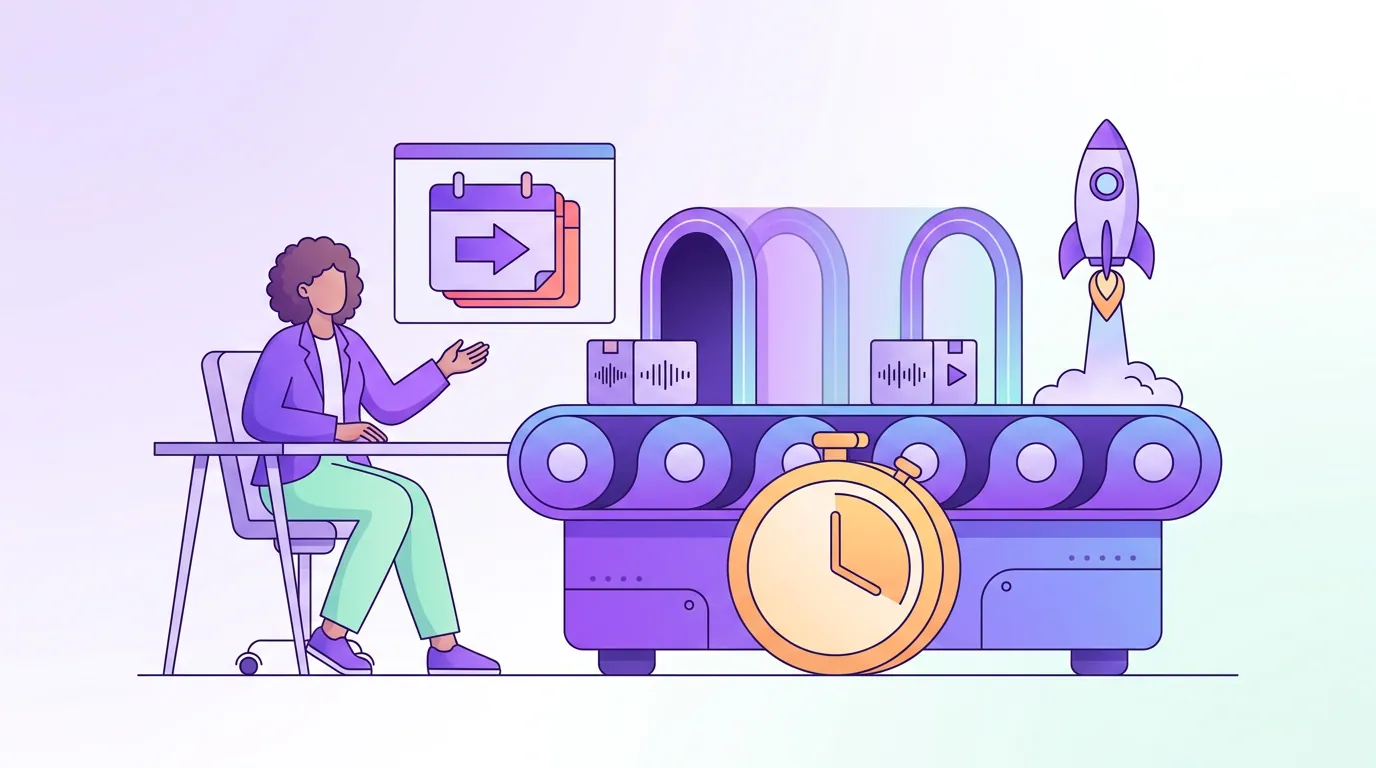
A news take is only worth publishing if it lands before the story goes cold, which means your news beat needs a workflow that turns a breaking story into a published episode within about 48 hours. You get that speed not by rushing, but by removing decisions in advance, a fixed template, pre-recorded segments, and one editing pass instead of three.
Build these once and the lane runs itself:
- A fixed news template. Cold open with your take, one or two stories, a single recurring closing segment. Same structure every time so you're never designing the episode under deadline.
- Pre-recorded intro and outro. Record your standard open and close once. Drop them in; never re-record them for a news episode.
- One editing pass, captured clean. Record in a quiet, treated-enough space so you don't need cleanup. The gap between a $150 and a $1,500 setup is smaller than the gap between bad mic technique in a noisy room and good technique in a treated one, so fix the room before you buy gear. A decent mic on a budget under $100 recorded well beats an expensive one in an echoey kitchen; our mic picks by budget tier cover the rest.
- Clip the take while it's hot. Pull the 30-90 second moment where you said the sharp thing and post it the same day. With 57% of listeners relying on social media for recommendations (InsideRadio, 2025), the clip is often how people find the episode before the news cycle moves on.
Common mistakes new tech shows make
- Recapping instead of arguing. If your news episode could be replaced by reading the headline, cut it. Lead with the opinion and the trade-off, every time.
- Tying the whole show to launches. A show that only exists when something ships goes dark every quiet week and trains listeners not to expect you. The deep-dive beat is the fix.
- Hiding the disclosure. Putting "gifted unit" in show notes nobody opens is a disclosure in name only. Say it out loud, before the opinion.
- Buying gear before treating the room. Tech hosts overspend on mics and underspend on acoustics. You don't need much to start, a first show can cost very little (Ausha, on podcast startup cost). Spend the budget on a quiet space first.
- Going too broad. "Technology" is not a niche; it's a category sitting inside a field of more than 4.5 million podcasts competing for attention (demandsage podcast statistics). Narrow it, indie apps, consumer hardware, AI for non-engineers, using the three-circle niche test.
Tech podcast ideas that aren't already saturated
The crowded lanes are general gadget news and AI hot-takes. The room is in the specific. A few angles with demand and less competition:
- One platform, deeply. A show only about iOS automation, or self-hosting, or mechanical keyboards. Narrow draws the people who'll never miss an episode.
- Tech for a non-tech audience. "Cybersecurity for small-business owners," "AI tools for teachers", you translate, you don't lecture.
- The repair-and-longevity angle. Right-to-repair, getting more life out of old hardware, what's worth fixing. An underserved, loyal niche.
- Build-in-public for makers. Following real projects shipping real software, with the founders on as guests.
If you're weighing a tech show against another niche, the same coverage-and-trust logic applies to a business podcast that wins clients and a comedy podcast you start with friends, only the beats change.
Frequently asked questions
Do I need to review gadgets to have a tech podcast? No. Reviews are one of three beats, not a requirement. Plenty of strong tech shows run only news commentary and deep-dives. Reviews add a beat that's hard to copy and a trust test you have to pass, add them when you can get hands-on time with products and disclose cleanly.
How do I get review units as a new show? Early on, you mostly buy or borrow what you already own and review that honestly. PR firms send units to shows with an audience, so build the audience first on news and deep-dives. When units do start arriving, disclose every one, your willingness to say "they sent this" is what makes the reviews worth reading.
How often should a tech podcast publish? Weekly is the realistic target for a solo or two-host show, with the three-beat rotation covering the slow weeks. Don't promise daily news unless you have a team, the danger zone for quitting sits at episodes 7-25 Amplifi Media, and overcommitting on cadence is how hosts get there.
Is it legal to use affiliate links on a podcast? Yes, affiliate links are standard and legal. The requirement is disclosure: the FTC's endorsement guidance says you must clearly and conspicuously reveal that you earn a commission. On a podcast that means saying it out loud, in plain language, near where you discuss the product, not only in the show notes.
Won't AI news make my episodes stale instantly? Only if you treat news as your whole show. The 48-hour workflow gets timely takes out fast, and the deep-dive beat gives you evergreen episodes that don't expire. Balance the two and a slow or fast news week both have an episode.