
How to Start a Sports Podcast for One Team


To start a sports podcast for one team, build the whole show around that team's schedule: a preview episode before each game, a reaction episode right after, and a recap mid-week, plus a fixed set of season beats (training camp, trade deadline, playoffs) that you plan once and reuse every year. Pick a clear angle, settle who is on the mic, and lock a cadence you can keep for a full season before you record episode one.
The single-team model is the easiest version of a sports podcast to start and sustain, because the schedule does your content planning for you. You never run out of topics, the next game is always coming. What kills most sports shows is not a lack of takes; it is the burnout of inventing a topic from scratch each week. A team's calendar removes that problem entirely. Below is how to set it up: the season calendar that becomes your editorial backbone, the game-week reaction formats that record themselves, the gear that is genuinely enough, and the one thing that gets fan channels deleted, using team names, logos, and highlights without knowing the rules.
Sports is a top-five US podcast genre (Statista top genres; The Podcast Host) and the sports segment is also the fastest-growing slice of the market, Grand View Research projects roughly 29% annual growth through 2030, ahead of the overall podcast market (Grand View Research). That is good news and a warning: a large, passionate audience, and a field already full of established team shows. A single-team focus is how a new show carves out a defensible corner of it.
What angle should a single-team sports podcast take?
Pick one of four angles before you record: the superfan fan-cast (emotional, in-the-stands reaction), the analyst (tactics, stats, roster decisions), the insider-lite (rumors and reporting you aggregate honestly, never invent), or the comedy/banter show. Most lasting fan shows are a blend, but you need a dominant mode so listeners know what they are tuning in for.
The angle decides everything downstream, your tone, your guests, even your gear. A two-host banter show forgives a rough recording; an analyst show that misquotes a stat loses trust fast. Be honest about which one you actually are. If you and a friend just want to yell about the game, that is a fan-cast, and it is a completely valid show, own it rather than pretending to be a beat reporter.
One position worth taking early: do not try to break news. You are not credentialed, you do not have sources, and "I heard a rumor" content ages badly and can get you into legal trouble if you state an unverified claim as fact. Aggregate what credible reporters have already said, credit them by name, and add your reaction. That is the safe and honest lane for a fan show, and it is the same sourcing discipline a document-led true crime show lives by, different subject, same rule: state only what you can attribute.
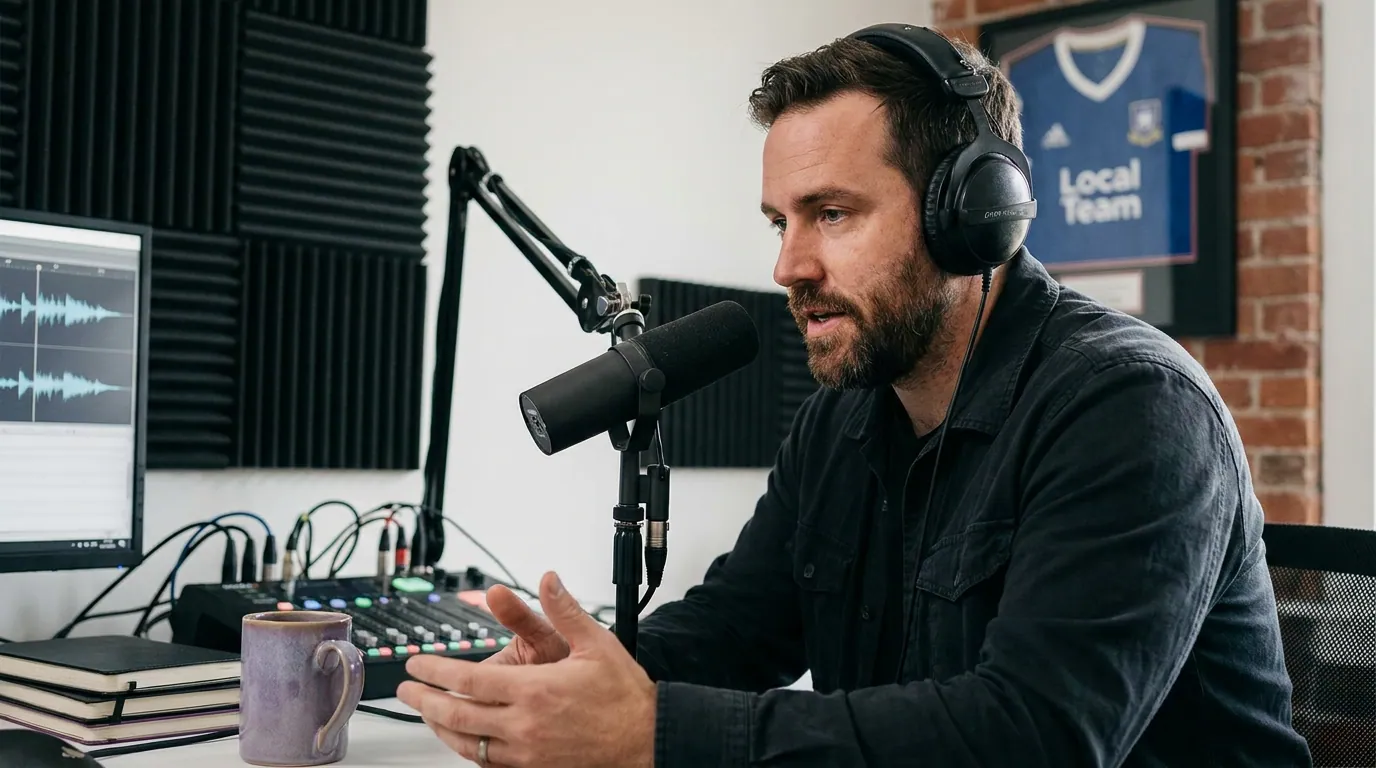
The single-team season calendar
This is the part that makes a one-team show effortless: map your team's year once, attach an episode type to each beat, and you have a content calendar that refills itself every season. You are not inventing topics; you are reacting to a schedule that is fixed months in advance.
Three things to set up the first time you build it:
- The trade deadline is your Super Bowl. For most leagues it is the single most-searched, most-debated day of the year for a fan base. Plan a fast reaction special around it months ahead, it is reliably your biggest-traffic episode.
- Pre-plan your evergreen filler. Off-weeks, bye weeks, and the long off-season kill shows that only react to games. Keep a running list of "no-game" episodes, all-time rankings, a great-game rewatch, a listener mailbag, so a quiet week never becomes a skipped week.
- The off-season is not dead air, it is recruitment season. Draft and free-agency content pulls in the most curious, debate-hungry version of your audience. A show that goes silent all summer restarts from zero in the fall.
The reason this matters: the #1 predictor of a podcast surviving is publishing consistency, and nearly half of all podcasts never make it past their first three episodes Amplifi Media. A schedule-driven calendar is the cheapest insurance against that, because the next topic is never a question.
The game-week reaction formats
The weekly cycle is the heart of a single-team show, and each part of it has a repeatable format you can record fast. Get these three templates locked and a normal game week practically produces itself.
The preview (day before the game). Short and tight, 15 to 25 minutes. A fixed running order keeps it fast: the matchup, the key storyline, an injury or lineup note, a prediction, and one bold call. Reading the same five segments every week is a feature, listeners learn the rhythm and you stop staring at a blank page.
The reaction (within hours of the final whistle). This is the format that defines a fan show, and the rule is counterintuitive: record it raw and fast, not polished. The value is the live emotion, the groan, the disbelief, the relief. Recording a great reaction the next morning is like a stale joke; the feeling is gone. Hit record while it still stings or thrills, run lighter editing, and ship it the same night or first thing the next morning. Speed beats polish here every time.
The mid-week recap (two to three days later). The cool-down. Now you have stats, replays, and other people's takes. This is where the analysis lives, the listener mailbag fits, and you set up the next game. It is the calm counterweight to the reaction's heat, and together the two cover both halves of how fans actually process a game.
A two-host setup suits all three. The banter carries a reaction episode, and a second voice catches what the first misses in analysis. If you go solo, lean harder on a guest rotation, a different fan, a stats friend, a former player from the local scene, to keep the energy up. The format and chemistry are the show; on that point a fan-cast has more in common with a comedy podcast recorded with friends than with a scripted production.
Using team names, logos, and highlights without a takedown
This is the part that quietly ends fan channels, and almost no beginner guide explains it honestly: you can talk about a team all you want, but you cannot freely use its name as your brand, its logos, or its broadcast highlights. The rules split into three layers, and the safe path is different for each.
Talking about the team is free. Commentary, criticism, analysis, and opinion about a public sports team are protected speech. You can name the team, the players, and the games as much as you like in your episodes. This is the entire show and it is not the risky part.
Naming the team in your brand is mostly fine if you describe rather than impersonate. "An unofficial podcast for [Team] fans" is descriptive use, you are telling people what the show is about, not claiming to be the official team channel. Add the word "unofficial" to your title or description; it is the single cheapest piece of protection a fan show has, because it removes any suggestion that the team endorses you.
The team's logo, crest, wordmark, and exact colors are trademarks, don't build your brand on them. Lifting the official crest into your cover art or thumbnails is where descriptive use ends and infringement risk begins. Design your own logo. It can be inspired by the team's vibe; it cannot be the team's actual mark. This also makes you look like a real show rather than a bootleg.
Broadcast highlights and TV audio are the top cause of takedowns, do not re-upload them. Game footage, the broadcast feed, and the music played during it are owned by the league and the broadcaster, and their content-ID systems are aggressive. Re-uploading a goal clip with the commentator's audio is the fastest way to a copyright strike. The safe model is the talking-head reaction: record yourselves reacting, talk over and about the play, and let the audience watch the actual game where it legally lives. Your faces, your takes, and your own b-roll, not the broadcast.
If you do want game visuals, license stock sports footage, use officially provided embeddable clips where a league offers them, or stick to still photos you have rights to. When in doubt, the default is voices and your own video, not someone else's broadcast. This is the same rights discipline that governs music licensing on any show, assume the footage is owned until you can prove otherwise.
What gear does a sports podcast actually need?
Less than you think. A clear, quiet voice recording matters far more than any effect, and the gap between a $150 and a $1,500 setup is smaller than the gap between bad mic technique in a noisy room and good technique in a treated one (editorial framing from our gear guides). For a two-host show recording in the same room, that means two decent mics, headphones, and a quiet space, not a studio.
| Tier | What it covers | Good for |
|---|---|---|
| ~$70–150 (one mic) | A solid USB or hybrid mic, basic headphones | A solo host or a remote co-host |
| ~$150–350 (two mics) | Two mics, an interface or hybrid setup, headphones | The classic two-host fan-cast |
| ~$500+ (video rig) | The above plus a webcam/camera and simple lights | A talking-head reaction show for YouTube |
Those tier ranges are the working bands from our own gear testing, not a hard rule. For the actual picks, our best podcast mics by budget tier guide and a strong option under $100 cover everything a starting fan show needs. The honest priority order: quiet room first, mic technique second, gear third. A reaction recorded on a $90 mic in a closet beats one recorded on a $400 mic next to a loud TV.
One sports-specific note: if you record reactions with the game on in the room, the TV audio will bleed into your mics, which is both a quality problem and a rights problem. Mute the broadcast and watch on a slight delay, or record in a separate room. Your reactions, not the commentator's, are what people are there for.
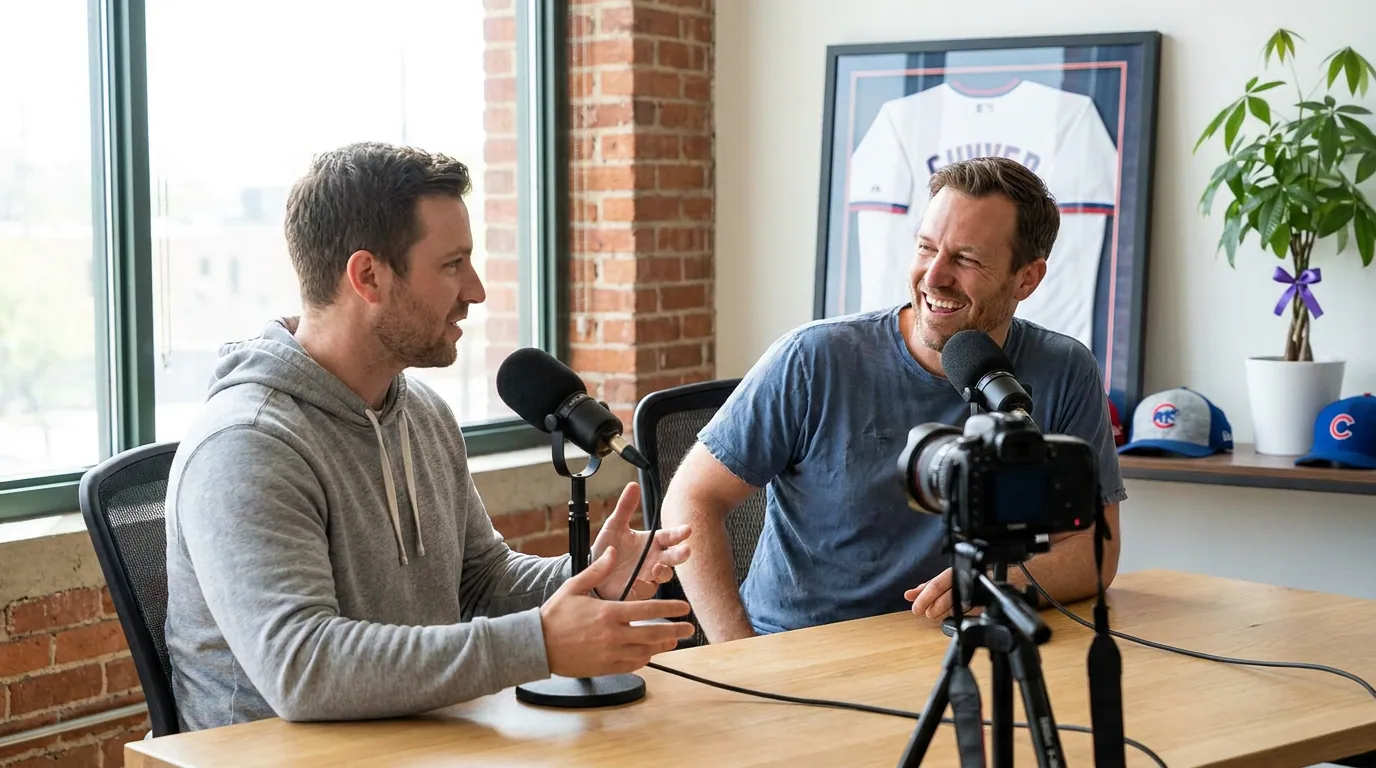
Why clips matter more for a fan show than almost any genre
Sports lives on social video, and a single-team show has a built-in advantage: every game produces a hot take with a clear emotional spike, which is exactly what travels. Clips drive an estimated 20–40% of new audience for video shows and can raise reach 2–5× (Podcast Studio Glasgow). For a fan show, the highest-performing clip is almost always a 30-to-60-second reaction with a strong opinion and a bold on-screen caption, the moment you called the result, or lost your mind over a bad call.
A practical workflow: after each reaction episode, pull two or three of your most heated 30-to-60-second moments, add captions, and post them the same night while the game is still the conversation. Timing is the multiplier in sports, a great take posted at 11pm on game night outruns the same take posted Wednesday. This is the same "create once, distribute everywhere" logic a business podcast uses to win clients, just tuned to the speed of a sports news cycle. One honest caveat worth keeping in mind: virality without strategy is empty engagement, and views are not subscribers, make clips that pull people back to the full reaction, not just clips that rack up plays.
Frequently asked questions
Is a podcast about one team a good idea, or too niche?
A single-team focus is a strength, not a limitation. It gives you a built-in, loyal audience, an endless supply of topics from the schedule, and easy discovery for fans searching that exact team. The real risk is not being too narrow, it is going quiet in the off-season. Plan evergreen and off-season episodes so the show never disappears between games.
Can I use my team's name in my podcast title?
Generally yes, descriptively, "an unofficial podcast for [Team] fans" tells listeners what the show covers without claiming to be the official team channel. Add the word "unofficial" to remove any suggestion of endorsement. What you should avoid is using the team's official logo, crest, or wordmark as your brand art, which crosses from descriptive use into trademark infringement risk.
Can I play game highlights or audio on my sports podcast?
No, not safely. Broadcast footage, the TV feed, and game-day music are owned by the league and broadcaster, and re-uploading them is the most common cause of copyright strikes on fan channels. Instead, run a talking-head reaction: discuss the plays in your own words and video, and let the audience watch the game where it legally airs.
How often should a single-team podcast publish?
Build the cadence around the schedule. During the season, a preview before each game, a fast reaction after, and a mid-week recap is a strong rhythm, but even one reliable reaction episode per game beats an irregular three. Consistency matters more than volume: nearly half of all podcasts never get past their first three episodes Amplifi Media, and a schedule-driven calendar is the simplest defense against that.
Do I need to be an expert or insider to start a sports podcast?
No. The most durable fan shows are run by passionate, well-informed fans, not credentialed reporters. The one rule is honesty about sourcing: don't invent rumors or state unverified claims as fact. Aggregate what credible reporters have already published, credit them by name, and add your own reaction and analysis. Your take is the product, not a scoop you can't back up.
Build the season calendar once, lock the three game-week formats, and keep the team's marks and broadcast footage off your channel, that is the entire starting playbook for a single-team show. The schedule will hand you topics for as long as the team plays. In a top-five, fast-growing genre (Statista; Grand View Research), the fan shows that win are simply the ones that show up every game week without fail.