
How to Start a Solo Podcast Without a Co-Host


Start a solo podcast by fixing the format before you touch the mic: outline each episode into four or five beats, write only the hook and the close word-for-word, then riff the middle from bullet points. The thing that makes solo hard isn't being alone, it's the silence you fill with rambling. Structure removes the silence.
This is not the "solo or co-host?" decision; if you're still weighing that, the honest solo vs co-host breakdown settles it. You've decided to fly solo. The hard part now is craft: how to sound prepared without sounding read-to, how to carry energy with no one to bounce off, and how to build an episode that holds attention for twenty minutes when there's only one voice in the room. That's the whole guide.
Why solo is the hardest format to do well
Solo podcasting removes your safety net. A co-host fills your dead air, picks up the thread when you lose it, and supplies the reactions that make a conversation feel alive. Alone, every one of those jobs is yours. Most solo shows don't fail because the host had nothing to say, they fail because the host couldn't hold a shape without a second person to push against.
That's worth taking seriously, because the failure numbers don't care about format. Nearly half of all podcasts never get past their first three episodes, and the ones that fade tend to quit between episodes 7 and 25, right before audience traction usually begins Amplifi Media. For a solo host, the trap is specific: with no co-host expecting you on Tuesday, the only accountability is the system you build. Get the format right and recording stays a 90-minute job you can do alone every week. Get it wrong and each episode feels like climbing a hill from scratch.
The upside is that solo is also the format with the shortest path from idea to published. No second calendar. No chemistry to manufacture. Just you, a single decent microphone, and a repeatable structure. Nail that structure and you remove the two failure modes that kill solo shows, rambling and quitting, in one move.
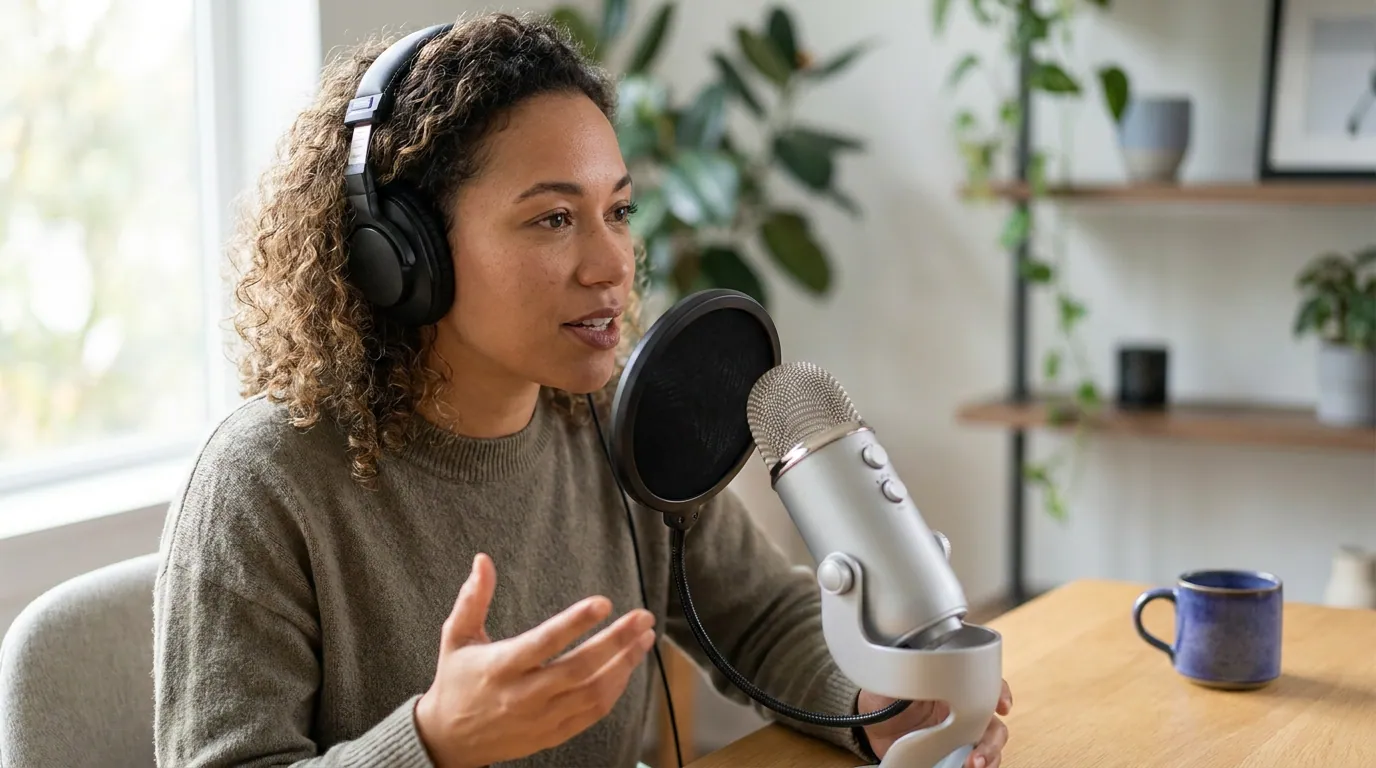
The outline-and-riff method: scripting without sounding read-to
Don't fully script and don't fully wing it. Write the hook and the close word-for-word, outline the middle as four or five bullet beats, then talk to the bullets like you're explaining them to one smart friend. A full script reads flat and robs you of warmth; pure improvisation drifts into tangents and "um." Outline-and-riff is the middle that keeps both the energy and the spine.
Here's why the spectrum matters. Heavily scripted solo episodes have a recognizable deadness, the rhythm of someone reading, the dropped energy at the end of every sentence, the absence of the little corrections and emphases that real speech carries. Pure riffing has the opposite problem: it wanders, repeats itself, and buries the one good point under three minutes of warming up to it. Comedy and conversation shows dominate the charts, Comedy is the #1 US podcast genre (Statista), precisely because they feel unscripted and warm. Solo hosts have to engineer that warmth on purpose.
The mechanics, step by step:
- Write the hook in full and read it. The first 15–20 seconds decides whether anyone stays. Say the most interesting thing first, the conclusion, the surprising claim, the question, not "welcome back to the show." A scripted hook you deliver with energy beats a riffed one that meanders.
- Outline the body as 4–5 beats, not sentences. Each beat is a phrase: "the mistake everyone makes," "the one exception," "what I'd do instead." Bullets, never paragraphs. You're giving yourself a map, not a teleprompter.
- Under each beat, jot a single anchor. A stat, a name, a one-line story. The anchor is the thing you'd forget if you blanked. Everything else you already know, that's why it's your show.
- Write the close in full. End with a clear next step (subscribe, the one takeaway, next week's topic), delivered cleanly. A strong landing is what people remember and what makes them come back.
- Talk to one person. Tape a name to your monitor if it helps. "You" should mean a single listener, not an audience. It's the simplest fix for the lecturing tone solo hosts slide into.
Faking conversational warmth with no second voice
Energy is the hardest thing to carry alone, because there's no one absorbing it back. Three tricks do most of the work: record standing or leaning forward so your breath supports your voice, talk slightly faster and warmer than feels natural (the mic flattens energy by roughly a level), and ask yourself the listener's questions out loud, then answer them. You become both sides of the conversation.
That last one is the real solo skill. When you make a claim, voice the pushback a co-host would: "Now, you might be thinking that only works for big accounts, and you'd be half right." It creates the rhythm of dialogue without a second person. It also keeps you honest, because you're forced to address the objection instead of gliding past it. Used a few times an episode, it's the difference between a lecture and a conversation you happen to be having alone.
A few more that compensate for the missing foil:
- Vary your pace deliberately. Slow down on the one line that matters; speed up through setup. Monotone is what an empty room does to you, and it's the fastest way to lose a listener. Pace is your version of a co-host's reactions.
- Use silence on purpose, not by accident. A half-second pause before a key point lands it. Three seconds of dead air while you find your place loses people. The fix is the outline, you should never be searching mid-sentence.
- React to yourself. Laugh at the funny line, let an honest "huh" out when something surprises even you. Solo hosts who suppress their own reactions sound like a press release. The ones who let them through feel like a person.
- Keep a glass of water and a reset line. When energy dips, a sip plus a phrased reset ("okay, here's where it gets interesting") buys you a beat and re-engages the listener. You'll edit the pause out later anyway.

Three segment structures built for one mic
Pick one repeatable structure and reuse it. The reason solo shows ramble is that the host reinvents the shape every week; a fixed structure removes that decision and trains your listener to know what's coming. These three cover almost every solo show. Choose by what you naturally do best, teach, explore, or reflect.
1. The monologue arc. Hook, story, turn, lesson, action. This is the teacher's and storyteller's structure, you make a claim, illustrate it with a single concrete story, hit a turn (the twist, the mistake, the realization), draw the lesson, and end with one thing the listener can do. Keep it to one story per episode. The most common monologue mistake is cramming three half-stories instead of telling one all the way through.
2. Self-Q&A. Pose the question your listener is actually Googling, give the obvious-but-wrong answer first, push back on it, then deliver the real answer and the so-what. This is the explainer's and myth-buster's structure, and it's the easiest way to manufacture the dialogue rhythm, you're literally arguing with yourself. It maps perfectly to search intent, which helps you get found.
3. Solo-interview-of-self. Treat yourself as the guest. Intro the topic, ask yourself a real question, answer it in depth, ask the natural follow-up, recap. This suits subject-matter experts who'd otherwise dump everything in one breath. The questions force pacing and stop you from front-loading. Write 4–6 questions in advance and answer them like someone smart just asked.
If you want a fourth lever, build a recurring segment into whichever structure you pick, a regular "one thing I changed my mind on" or a listener-question slot. Recurring segments give a solo show texture and give the listener a reason to expect each episode. Still unsure which overall format fits you? The how to choose a podcast format guide widens the lens beyond solo.
Common mistakes that sink solo shows
- Recording like you have a co-host. Leaving space for reactions that never come creates dead air and saps momentum. Script tighter, trim ruthlessly in the edit, and lean on your structure to carry the gaps a co-host would have filled.
- The 90-second cold start. Solo hosts warm up on tape, "hey everyone, hope you're doing well, so today I wanted to…" Cut all of it. Start on the hook. Your first sentence is the most valuable real estate you have.
- One long unbroken block. Twenty minutes with no signposts is exhausting solo. Use verbal chapter markers ("that's point one, here's point two"), a recurring segment, or a mid-episode reset to give the ear somewhere to breathe.
- No accountability system. With no co-host expecting you, motivation alone won't sustain a weekly cadence. Batch-record two or three episodes in a session, schedule them out, and treat the publish date as fixed. Consistency is the single biggest predictor of survival.
- Editing out all the humanity. Removing every laugh, breath, and "hm" to sound polished leaves you sounding synthetic. Cut the mistakes and the dead air; keep the personality. The personality is the entire reason a solo show works.
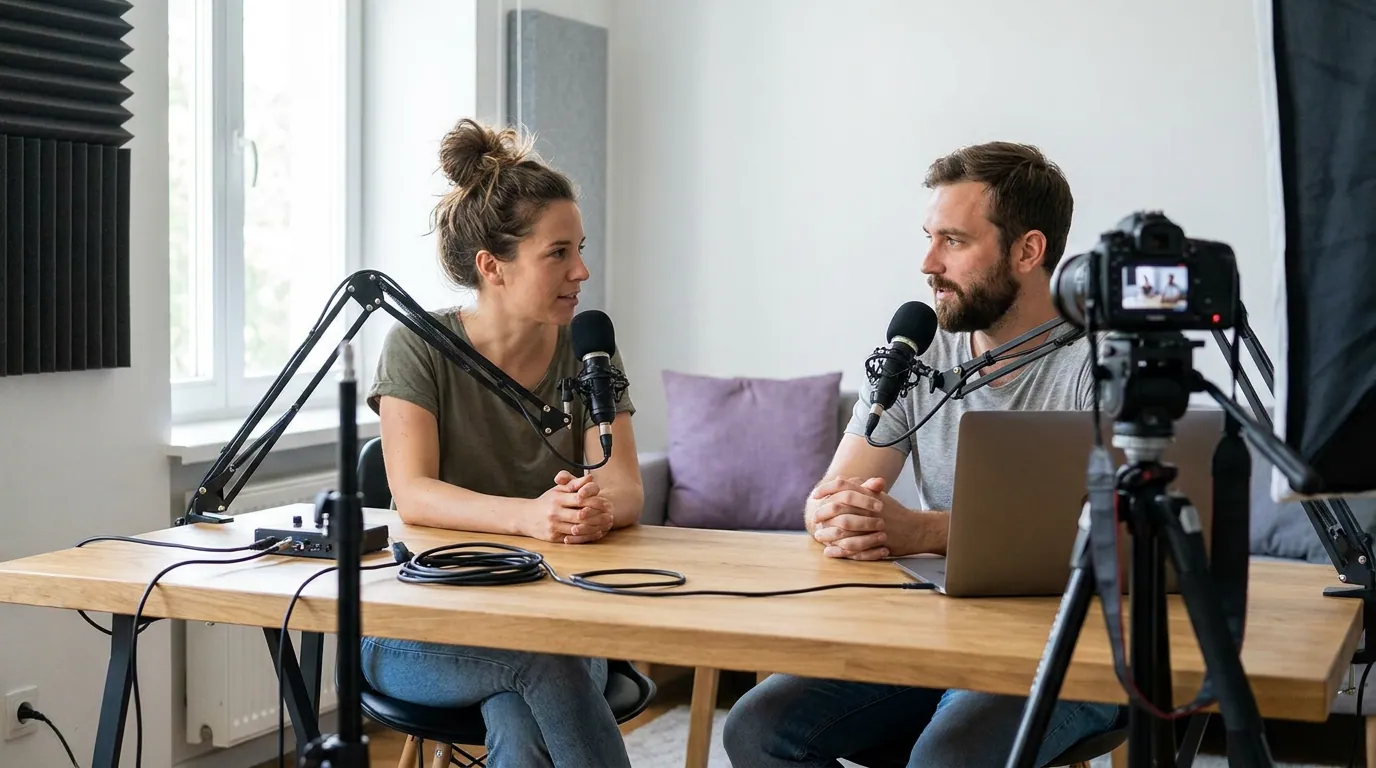
What a solo setup actually costs
A solo show is the cheapest podcast to start, because the format spend is one microphone, not two, and zero remote-recording cost. You can launch on a free recording-and-hosting stack and a sub-$100 USB mic and sound completely credible. The honest gear truth holds here: the gap between a $150 and a $1,500 setup is smaller than the gap between bad mic technique in a noisy room and good technique in a treated one (Ausha cost framing). Spend on a quiet room and good technique before you spend on a fancier mic.
The thing that grows a solo show after launch is the same thing that grows any show, with one wrinkle: you have no guest's audience to borrow. Short clips fill that gap. Clips drive an estimated 20–40% of new audience for video shows and can lift reach 2–5× (Podcast Studio Glasgow). For the wider playbook on growing without a guest network to lean on, see how to grow a solo podcast.
FAQ
Can you start a podcast by yourself? Yes, solo is the most common way new shows launch, and the easiest to keep consistent because there's no second calendar to coordinate. The catch is craft: with no co-host to fill silence or supply reactions, you carry the energy and structure alone. Fix the format first and the rest follows.
How do you not ramble when podcasting alone? Outline each episode into four or five beats, write only the hook and close word-for-word, and put a single anchor (a stat, a name, a story) under each beat. You ramble when you're searching mid-sentence; a tight outline means you never are. Then trim every false start and long pause in the edit.
How long should a solo podcast episode be? Long enough to make one point well, which for most solo shows is 15–30 minutes. Solo episodes feel longer than co-host ones at the same length, because there's no banter to break the rhythm. Start shorter than you think, and only grow the runtime once your structure holds attention all the way through.
How do I sound more energetic recording alone? Record standing or leaning into the mic so your breath supports your voice, talk slightly faster and warmer than feels natural since the mic flattens energy, and react to your own lines instead of suppressing them. Asking the listener's questions out loud and answering them creates a conversational rhythm with no second voice.
Is a solo podcast harder to grow than a co-host show? Not inherently, but you lose the guest's audience and the banter that tends to clip well, so discovery leans harder on search and short clips. Solo shows publish faster and never lose a week to a scheduling clash, which compounds. The format that helps you publish every week is the one that grows.