
How to Start a Language Learning Podcast


To start a language learning podcast that actually teaches, pick one CEFR level (A1 to C1) per show, speak just slightly above what that level understands, and build each episode around repetition: tell a short story slow, teach the new words, then replay it at natural speed. Pair every episode with a bilingual transcript. That pedagogy, not the mic, turns listeners into learners.
Most language podcasts fail at the same place: they either talk about the language in English, which teaches grammar trivia but not comprehension, or they speak the target language at native speed, which leaves beginners drowning. The shows that work sit in between, on a principle Stephen Krashen called comprehensible input, language a learner can mostly follow because it is pitched just past their current level. Below is how to design that into a podcast, level by level, with the transcript and clip workflow learners need to stick around.
This is a niche with a real tailwind. US monthly podcast listening hit a record 55% of the 12+ population in 2025 (Edison Infinite Dial 2025), well over 150 million people, and language self-study audiences skew toward exactly the commute-and-headphones moment audio owns. The catch is consistency: nearly half of all podcasts never make it past their first three episodes Amplifi Media, and a teaching show lives or dies on a steady release rhythm learners can build a habit around.
What makes a language learning podcast actually teach?
A language podcast teaches when the listener can follow most of what they hear without translating in their head, and meets a few new words often enough to retain them, comprehensible input plus spaced repetition. A show fully in English explains the language; one at native speed performs it. Teaching happens in the gap: slightly-above-level speech, repeated.
The practical version of Krashen's principle is "i+1": input one notch above where the learner is now. If a beginner knows 200 words, an episode built on those 200 plus a handful of new ones, spoken slowly and supported by context, is learnable. The same episode at native speed with 40 new words is noise. Your single biggest design decision is which "i" you are writing for.
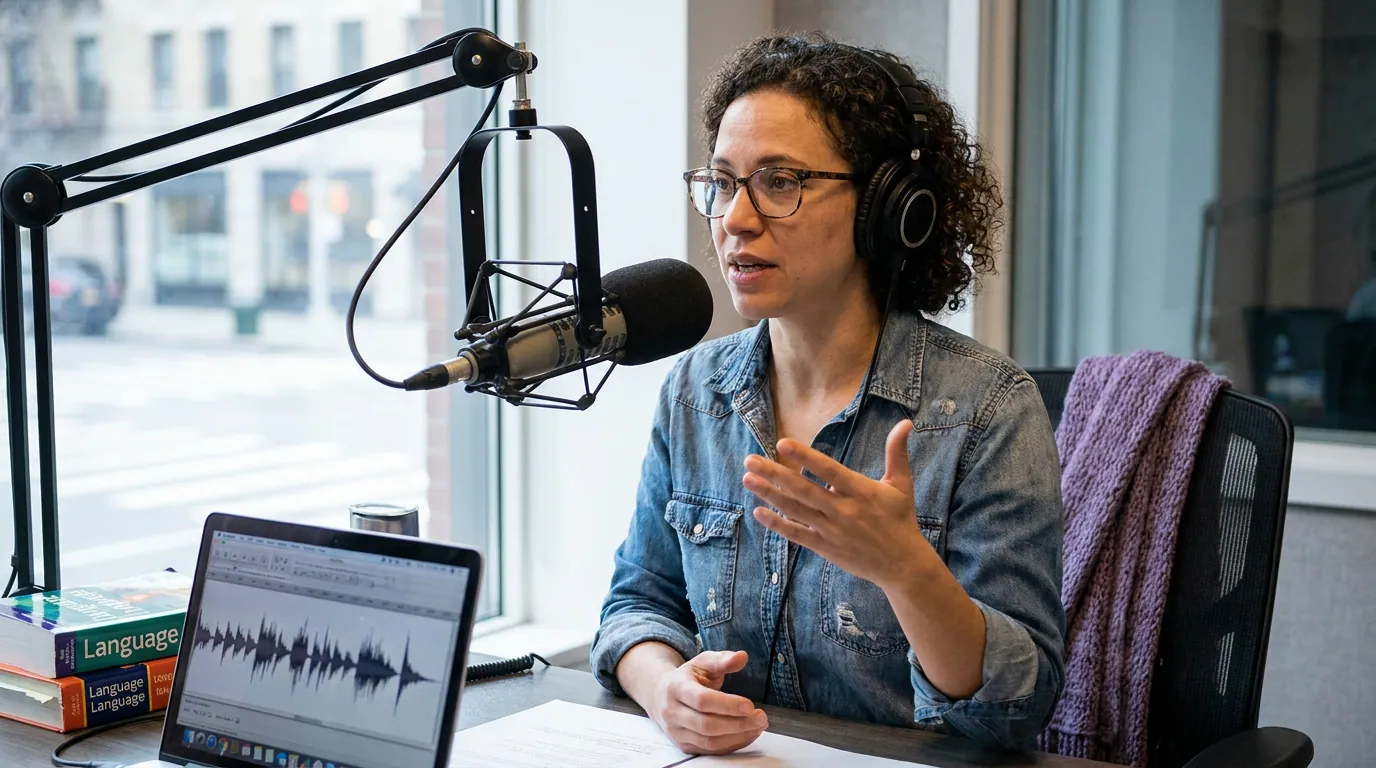
Pick one level and design the whole show for it
Decide your CEFR level before you decide anything else, because it sets your speech speed, your episode length, how much of the target language you use versus the learner's native language, and your vocabulary ceiling. A show that tries to serve A1 beginners and C1 near-fluent listeners in the same episode serves neither. Most successful teaching shows pick a lane: "slow [language] for beginners," "intermediate stories," "advanced news in plain [language]."
The reference standard is CEFR, the Common European Framework, which grades learners A1 (absolute beginner) through C2 (mastery). You do not need to teach the framework; you use it to keep your scripts honest about who they are for. Here is how the level should drive the four production knobs.
The episode structure that does the teaching
The format that consistently works is repeat-at-two-speeds: present a short passage slowly, teach the new words, then replay the same passage at natural speed so the learner hears it click. The repetition is not filler, it is the spaced exposure that moves a word from "I heard it" to "I know it." Build every episode on this spine and your show teaches even when an individual lesson is ordinary.
A few specifics that make this format work:
- Slow does not mean robotic. Speak slowly with natural pauses between phrases, not by stretching individual syllables. You are giving the brain processing time, not impersonating a slow-motion video.
- Seed new words, don't dump them. Five to ten new words per episode for beginners, more for advanced. A word met three times across one episode and again in the next sticks far better than twenty words met once.
- Repeat across episodes, not just within. Bring last week's vocabulary back into this week's story. That spacing is the mechanism behind retention.
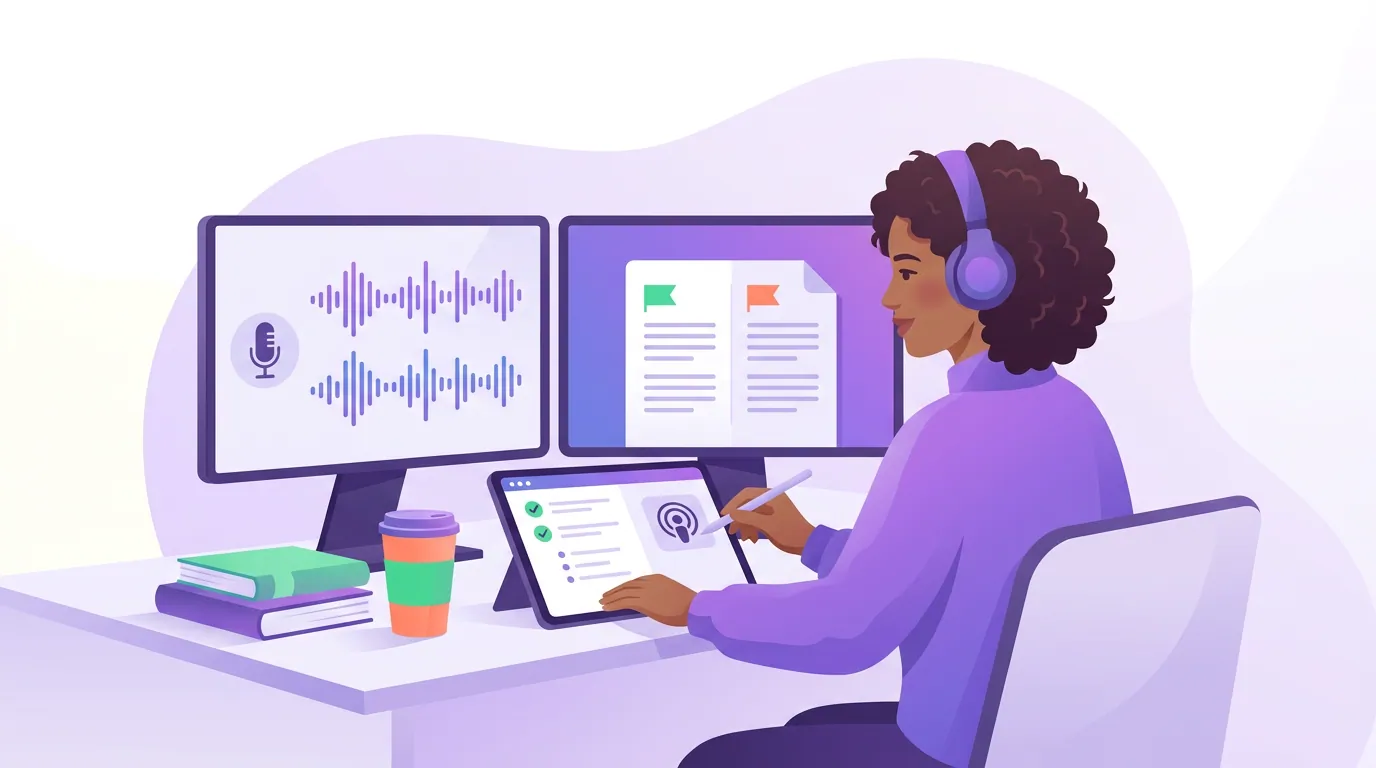
The bilingual transcript and show-note workflow
The transcript is not an afterthought for a language show, it is half the product. Learners read along to map sound to spelling, scan the vocabulary list, and review on a screen what they heard in their ears. A teaching podcast without a transcript is asking learners to do the hard part blindfolded. Build it into the workflow from episode one.
- Script before you record. Unlike a conversational show, a teaching episode should be largely scripted so your level and vocabulary stay controlled. The script becomes the basis of your transcript.
- Produce a two-column or interleaved transcript. Target language alongside (or below) the native-language translation, with the episode's new words listed and defined at the top or bottom. This is the artifact learners actually want.
- Publish it where it ranks. Put the transcript on your show's website, not just in a PDF. Transcripts give search engines real text to index and turn each episode into a page learners find when they search a phrase or word.
- Auto-transcribe, then correct. Generate a first-pass transcript with a transcription tool, then fix it by hand, auto-transcription mangles a second language and proper nouns. For a teaching show, accuracy is the point, so budget the review time.
- Pull short clips for discovery. A 30–60 second clip of one memorable phrase, captioned in both languages, is how new learners find the show. Social clips now drive podcast discovery more than friends-and-family recommendations did (InsideRadio, 2026).
Common mistakes that sink a language learning podcast
- Teaching the language in English the whole time. Explaining grammar in the learner's native language is sometimes useful, but a show that never lets the learner hear the target language at a followable pace builds knowledge about the language, not the ability to understand it. Get them listening, early and often.
- One episode for every level. The most common failure. Speed and vocabulary that suit B1 lose A1 and bore C1. Pick a level, label it clearly in the title, and serve it well.
- Native speed from day one for beginners. Authentic input is the goal, but unscaffolded native speed to an A1 listener produces frustration, not learning. Slow first, then the natural-speed replay.
- No transcript, or a sloppy auto-transcript. A wrong transcript teaches wrong spelling and wrong words. For a teaching show this is worse than none. Correct it by hand.
- Inconsistent release. Language learning is a habit, and a habit needs a schedule. With nearly half of all shows stalling by episode three Amplifi Media, a predictable weekly slot beats an ambitious one you cannot sustain. Batch-record to protect the cadence.
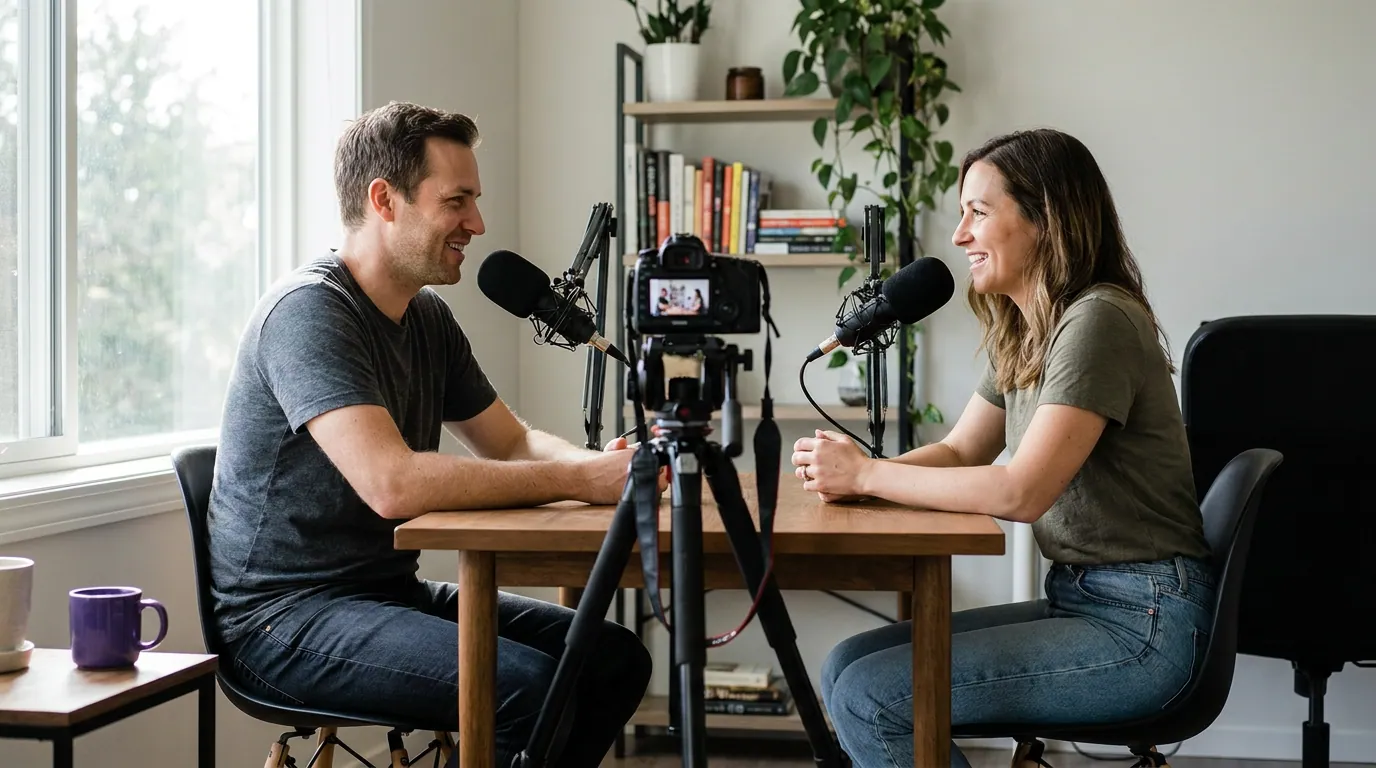
Gear: less than you think, but diction matters
A language show needs a clean, quiet recording above all, every mispronounced or muddy word is a word taught wrong. You do not need a studio. A single decent USB or dynamic mic in a quiet, soft-furnished room gets you most of the way; our mics-by-budget-tier guide and a solid pick under $100 both cover options that are more than enough. Spend your real effort on the script and the transcript, the same way an education podcast lives on its lesson design rather than its hardware.
If you are weighing this niche against others, the research and scripting load here sits closer to a science show that has to get its facts right than to a loose conversational format, the value is in the rigor of the teaching. Our guides to starting a business podcast that wins clients and a true crime show you can defend lay out how differently each niche's preparation works, if you are still choosing.
Frequently asked questions
How do you teach a language through a podcast?
Pitch the speech just above the learner's current level (comprehensible input), and repeat. Tell a short passage slowly, unpack five to ten new words in context, then replay the same passage at natural speed so it clicks. Pair every episode with a bilingual transcript, and bring earlier words back in later episodes so the spacing locks them in.
What level should a language learning podcast target?
One CEFR level per show, A1 for absolute beginners, A2–B1 for intermediate, B2–C1 for advanced. Picking a single level sets your speech speed, episode length, how much target language versus native language you use, and your vocabulary ceiling. A show that tries to serve every level in one episode serves none of them well. Label the level in the title.
Do language learning podcasts need a transcript?
Yes, for a teaching show the transcript is half the product, not an extra. Learners read along to map sound to spelling, scan the new-word list, and review on screen what they heard. A bilingual transcript on your website also gives search engines real text to index, turning each episode into a page learners find by searching a word.
How long should a language learning episode be?
Match the length to the level. Beginner (A1) episodes work best at 8–12 minutes, because dense new input is tiring; intermediate (A2–B1) at 12–20 minutes; advanced (B2–C1) at 20–35 minutes, where listeners can sustain near-natural speech. Shorter, frequent, learnable episodes beat long ones that overload a beginner and break the habit.
Can you make a language learning podcast without being a native speaker?
Yes, if you are clearly more advanced than your audience and honest about it. Many effective teachers are advanced learners who remember the beginner's struggles. The rules: get pronunciation right (use a native speaker or verified audio for model phrases), have a native speaker review scripts, and never teach a structure you are unsure of. Accuracy is the bar, not nativeness.
Pick one level, write to comprehensible input, repeat each passage at two speeds, and publish a corrected bilingual transcript with every episode. That is the whole method, pedagogy first, gear second. Do it on a schedule learners can build a habit around, and you will be in the minority of teaching shows that survive past the first month and the first three episodes Amplifi Media.