
How to Start a Health and Wellness Podcast Responsibly


Pick one lane within health and wellness, decide before you record where you draw the line between sharing information and giving medical advice, and build a fact-check step into every episode. The gear matters far less than your credibility: a wellness show that hands out treatment claims it cannot stand behind gets demonetized, struck, or sued, while one that stays on the information side of the line can grow for years. This guide gives you the line, a way to vet guests for pseudoscience before you book them, and a pre-publish check that keeps your episodes online.
Health and wellness is one of the most crowded and most scrutinized corners of podcasting. The upside is real demand, Society & Culture and health-adjacent shows sit near the top of the genre charts (Statista top podcast genres). The risk is just as real: this is the one niche where a careless sentence can hurt a listener, trigger a platform strike, and end the show. Treat that risk as the core production task, not an afterthought.
What counts as a "health and wellness" podcast, and which lane to pick
A health and wellness podcast covers any show about physical health, mental health, nutrition, fitness, sleep, longevity, or general wellbeing. The category is enormous, which is exactly why a brand-new show should claim a narrow lane rather than "health" in general. Specific beats broad, because a defined audience trusts a defined host.
Before anything else, choose one of these starting lanes and stay in it for your first season:
- Lived-experience and stories, your own or guests' real accounts of a condition, a recovery, or a habit change. Lowest claims risk, high relatability.
- Expert interviews, you host, credentialed guests supply the science. Borrowed authority, but you inherit responsibility for what airs.
- Coaching and behavior change, habits, routines, mindset. Stays clear of diagnosis and treatment if you keep it general.
- Research and explainers, you translate published studies into plain language. Highest credibility ceiling, highest homework.
The narrower lane is not a limitation; it is your survival strategy. Roughly half of all podcasts stop within their first three episodes, and most that quit do so between episodes 7 and 25 Amplifi Mediasummarizing podfade data). A clear lane gives you a repeatable episode format, which is what carries a show through that quit window. A nutrition show that interviews one dietitian a week has a renewable engine. "A podcast about being healthy" runs out of fuel by episode six.
This is the same start-with-a-niche logic behind our guides to launching a fitness podcast as a coach and a business podcast that wins clients, wellness just raises the stakes on accuracy.
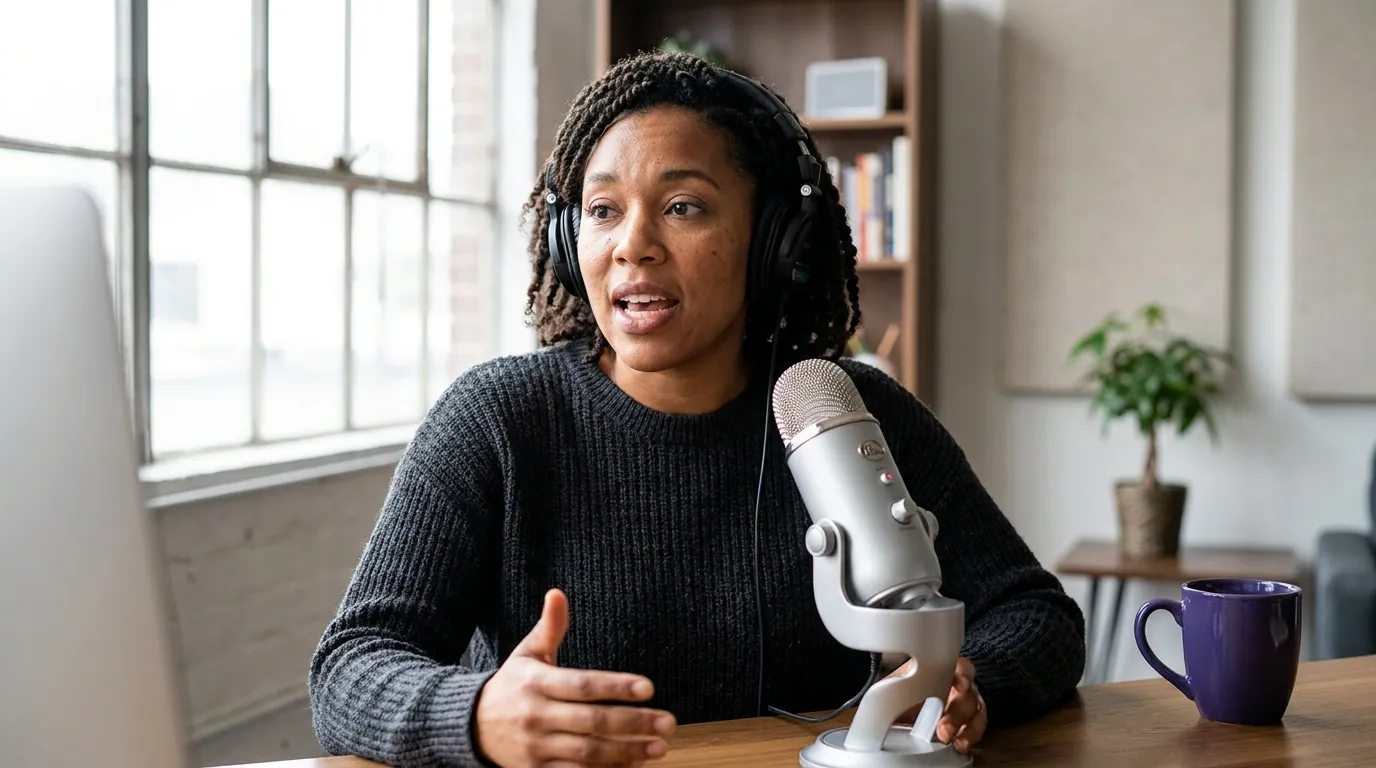
The line between sharing information and giving medical advice
The single most useful concept for a wellness host is this: sharing information is describing what is generally known; giving medical advice is telling a specific person what to do about their specific body. "Studies link magnesium to better sleep for some people" is information. "You should take 400mg of magnesium for your insomnia" is advice. The first is the spine of a healthy wellness show. The second is what gets episodes pulled.
That distinction is not just etiquette. It is roughly the line platforms enforce. YouTube's medical misinformation policy removes content that contradicts local health-authority or World Health Organization guidance on the prevention, treatment, or denial of specific conditions, and it applies to your video, your description, your comments, and even external links and verbal mentions, not just the spoken episode. The textbook removal examples are treatment claims: telling viewers a food cures cancer, or to skip approved care for an unproven substitute. Stay on the information side and you stay inside the lines.
Use this routing rule on every claim before it leaves your mouth or makes the final cut.
Two habits make the rule automatic. First, record a standing disclaimer once and place it at the top of every episode and in your show notes: this is for general information, not a substitute for personal medical advice. Second, train yourself to say "some people find" and "the research suggests" instead of "this works" and "you should." Those four words are the difference between a host and a liability.
Vet wellness guests for pseudoscience before you book
Your guests are your biggest credibility risk and your hardest to control. A confident guest making a fringe claim is far more damaging than a vague script, because the audience hears authority and you inherit whatever airs. Vet for pseudoscience before the booking email goes out, not after the recording is in the can, once it is recorded, your only options are an awkward cut or an episode you regret.
Score each prospective guest against five red flags. None is automatically disqualifying alone, but the more they stack, the harder you should think before booking.
The practical vetting steps take fifteen minutes per guest. Read their last three interviews or posts and listen for the flags above. Confirm their credential actually covers what they will discuss, a personal trainer talking training is fine; a personal trainer prescribing supplement protocols for a disease is not. Ask, in the pre-interview, one direct question: "Where does the evidence for that come from?" A credible guest answers easily. A risky one bristles. If you do book a borderline guest, plan a respectful on-mic counterpoint and reserve the right to cut anything that crosses the line in editing. The booking email is the cheapest place to say no.
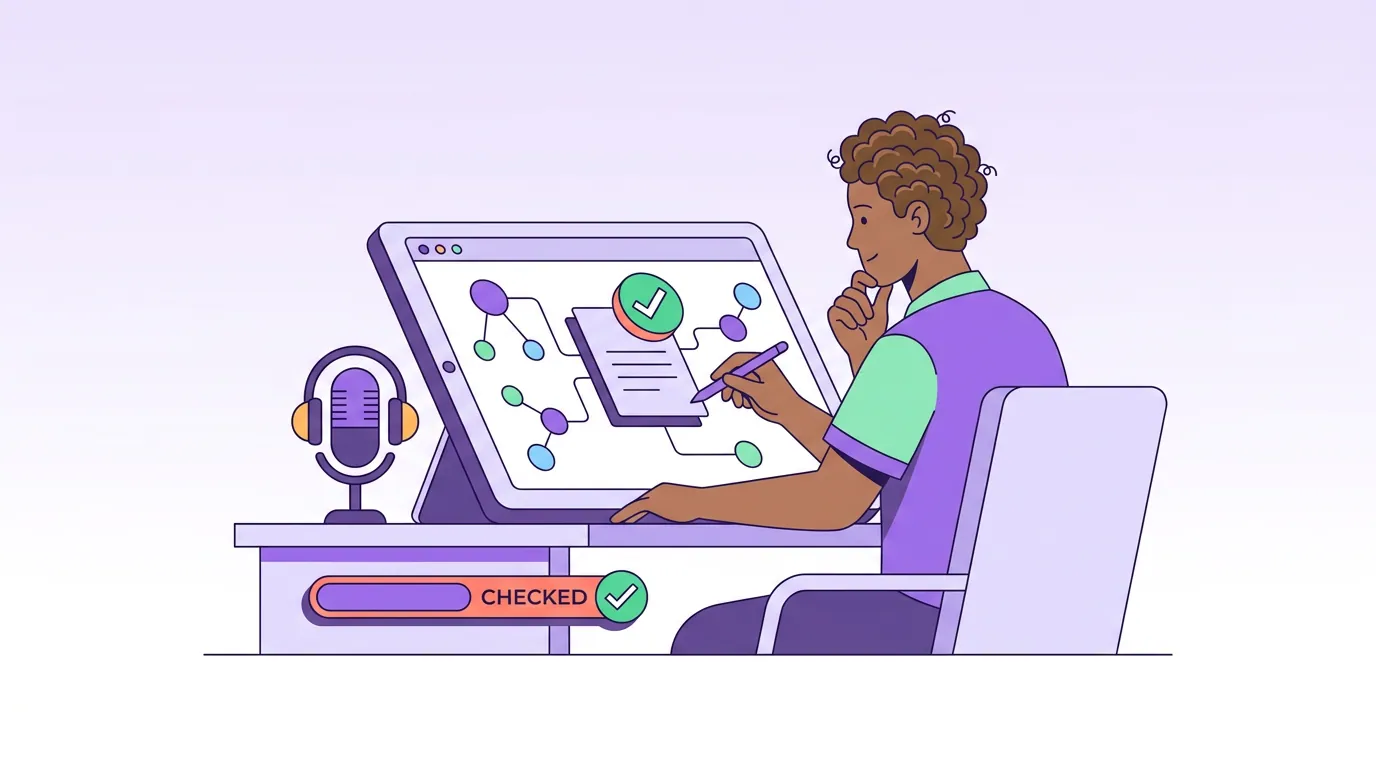
The pre-publish fact-check that prevents platform strikes
Build a deliberate fact-check between recording and publishing, it is the cheapest insurance a wellness show can buy. Platform enforcement is automated and at scale: reviewers and machine learning remove violating content "as quickly as possible," and the medical-misinformation rules cover your video, description, comments, and links (YouTube's medical misinformation vision). A strike does not just remove one episode; repeated strikes can take down the channel that holds your whole back catalog. Catch it before you upload.
Run every episode through three stages before it goes live.
- Flag. Pull the episode transcript and mark every sentence that states a health claim, anything about what helps, prevents, treats, or causes a condition. Most editing tools and clip platforms generate a transcript automatically, which turns this into a five-minute skim rather than a re-listen.
- Verify. For each flagged claim, find a credible source: a health authority, a peer-reviewed study, or a professional body. If you cannot find one in a few minutes, the claim is not ready to air as fact.
- Label or cut. Cite the verified claims out loud or in your show notes. Reframe the soft ones as "some people find." Cut anything that promises a cure or contradicts authority guidance. The routing rule from earlier is your decision key here.
One caveat worth stating plainly, because most wellness guides skip it: platform policy is a moving target. YouTube's rules are explicitly dynamic, they change as health-authority guidance changes, and there can be a lag between new science and a policy update. Do not treat any single checklist as permanent permission. The durable protection is the habit of citing sources and staying on the information side of the line, not memorizing today's rulebook.
Gear and setup: less than you think
You do not need a studio to start a credible wellness show. The format that builds trust, a clear voice, a real source, an honest disclaimer, runs on modest gear. A single quality USB microphone, a quiet room, and free recording software will carry your first season.
For a solo show or a remote interview, one good mic beats a pile of half-used accessories. Our roundup of the best podcast mics by budget tier covers the whole range, and most beginners are well served by something from our list of the best podcast mics under $100. On the software side, you can record and publish your first episodes without spending anything, the start-a-podcast-for-free walkthrough lays out the full no-cost path. Spend your energy on accuracy, not on a mixer you will not use until episode 40.
Common mistakes when starting a wellness podcast
- Treating disclaimers as a substitute for judgment. A disclaimer at the top does not protect an episode that tells a specific listener to stop a prescribed medication. The disclaimer sets context; the routing rule does the real work. Use both.
- Booking a guest because they are famous, not because they are credible. A large following is not evidence. Run every guest, big name or not, through the five-flag scorecard. The bigger the audience a fringe claim reaches, the bigger your exposure.
- Sharing personal anecdotes as universal advice. "This worked for me" is a story and is allowed. "So it'll work for you" is advice and is not. Keep the personal frame on personal experience.
- Skipping the fact-check to publish on time. A missed upload costs you a day. A treatment-claim strike can cost you the channel. When the two collide, the fact-check wins. Batch-record so you have buffer and never have to choose.
- Going too broad to seem like an authority. A show that covers "all of wellness" reads as an expert in nothing. The narrow lane is what builds the trust the niche demands, and it is what keeps you publishing past the episode 7–25 quit window.
Accuracy keeps the show alive; distribution makes it grow. Short clips drive an estimated 20–40% of new audience for video shows (Podcast Studio Glasgow). For a wellness show, clip the moments that share information well, a clearly sourced explainer, a relatable story, a myth gently corrected, and skip anything that reads as a treatment claim out of context. A clip strips away your disclaimer, so it has to stand on its own as information.
Frequently asked questions
Can I give health advice on my podcast?
You can share general health information freely; giving personal medical advice to a specific listener is what creates legal and platform risk. Describe what the research generally shows, name your sources, and route anything that tells one person what to do about their body back to "talk to your clinician." Information is the safe lane.
How do I avoid a medical misinformation strike?
Stay on the information side of the line and fact-check before you publish. YouTube's medical misinformation policy removes content that contradicts health-authority guidance on preventing, treating, or denying conditions, and it covers your video, description, and links. Cite credible sources, avoid cure claims, and cut anything you cannot back up.
What are good health and wellness podcast ideas for beginners?
The strongest beginner formats are narrow and renewable: a lived-experience story show, a weekly expert interview in one sub-niche (sleep, nutrition, mental health), a habit-and-behavior coaching show, or a research explainer that translates studies into plain language. Pick one lane and keep the format consistent for a full season.
Do I need medical credentials to host a wellness podcast?
No, but you must stay inside what your background supports. A non-clinician can host interviews, share stories, and explain published research as information. What you cannot do is present yourself as qualified to diagnose or prescribe. When the science gets specific, defer to credentialed guests and to the audience's own clinicians.
How do I vet a wellness guest before booking?
Score them against five red flags: selling the cure they discuss, framing all mainstream medicine as conspiracy, credentials that do not match their claims, leaning on a single anecdote, and dodging requests for sources. Zero or one flag, book and verify anyway. Three or more, do not book, no download number is worth a strike.
Pick your lane, write your standing disclaimer, and run your first three episodes through the routing rule and the fact-check before anything goes live. If you want the broader launch sequence next, the start-a-podcast-for-free guide covers recording and publishing, and our niche guides to a fitness podcast and a true crime podcast that stays out of legal trouble show how other high-scrutiny niches handle the same credibility problem.