
How to Start a Food Podcast Beyond Recipes


To start a food podcast that works, build it on everything food except the recipe. Nobody cooks from their ears, a spoken "add a quarter teaspoon of baking soda, then fold" is unfollowable and forgettable. So make episodes about the story behind a dish, the culture it comes from, the people who cook for a living, and the experience of eating, and learn to describe taste so a listener feels it. That is a food show. A read-aloud cookbook is not.
The mistake almost every new food podcast makes is treating audio like a YouTube cooking channel with the picture turned off. The format fights you. Below is how to fight back: a quick test for whether an idea even survives without eyes and hands, four lanes of episodes that thrive on audio, a method for making flavor audible, and a guest-booking playbook for the people who make food shows great, chefs and restaurant owners.
Food shows live under Society & Culture, one of the top US podcast genres (Statista top genres). That is the good news and the bad: a huge audience, and a shelf crowded with shows that are essentially recipes read aloud. The ones that break out are built differently from the first episode.
Why don't recipe podcasts work on audio?
Recipes fail on audio because cooking is a visual, hands-on task and a podcast is neither. A listener is usually driving, walking, or doing dishes, hands busy, eyes elsewhere, and cannot pause to measure, can't see the color of a caramel, can't rewind to catch the third of seven steps. Step-by-step instruction needs a screen or a page. Audio is for the parts of food that live in story and sense.
Think about where people actually listen. A recipe is reference material; you want it open in front of you, written down, scannable. The moment you turn it into a linear audio stream you strip away the two things that make a recipe usable, the ability to see and the ability to go at your own pace. So the format mismatch is not a style problem you can polish away. It is structural.
What survives the move to audio is the why and the who: why this dish exists, who made it matter, what it's like to eat, what happens in the kitchen the diner never sees. That is the whole opening that recipe-readers leave on the table.
The audio-cooking test
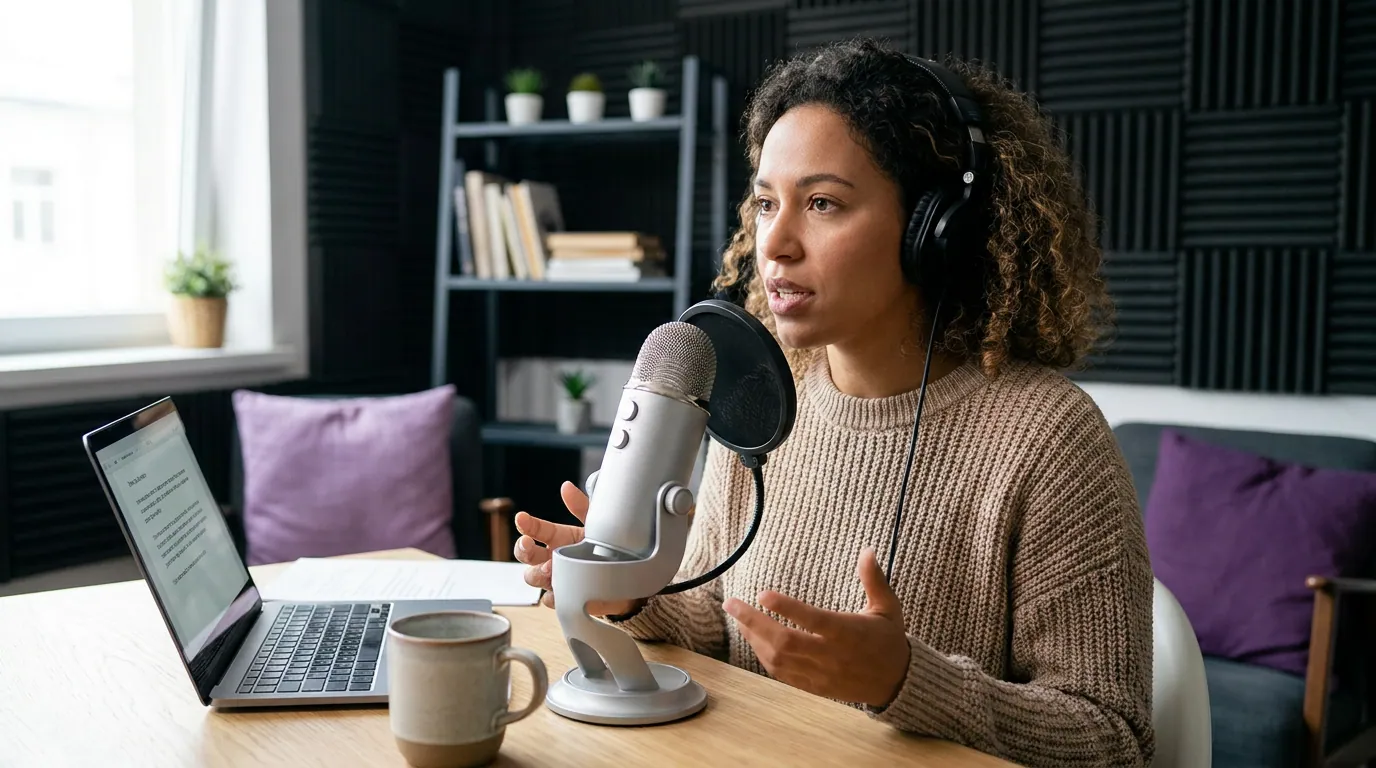
Before any idea goes on the calendar, run it through one question: does this need the listener's eyes or hands to make sense? If yes, it belongs in a blog post, a video, or your show notes, not in the audio. If no, it might be an episode. This single rule reroutes a food show away from the recipe trap and toward the material audio does well.
A worked example. "How to make ramen from scratch" fails the test, broth color, noodle texture, and timing all need the eyes. But "why tonkotsu broth takes 18 hours and what that night shift is actually like" passes, because it's a story with a person in it. Same dish, completely different episode. The recipe goes in the show notes as a link; the story of the recipe is the audio.
Four lanes of food episodes that work on audio
Once you stop reading recipes, the question is what to make instead. There are four reliable lanes, and a strong show usually rotates through all of them rather than living in one.
Stories are the workhorse. Every dish has a person and an origin: the grandmother's recipe nobody wrote down, the line cook who opened a stall, the dish that was invented by accident. A story has tension, characters, and a turn, everything audio is built to carry. This is also the lane that holds attention longest, because the listener wants to know what happens next.
Culture is the deep lane. Food is how families remember, how migrants keep a homeland, how a religion marks time. An episode on why a single spice rewired global trade, or what a holiday meal means three generations after the family left home, is richer on audio than any recipe could be.
The industry is the lane almost no recipe show touches, which makes it a gap you can own. How does a restaurant actually make money on a $4 dish? What is a 14-hour kitchen shift like? Why do so many places fail in year two? This is where chefs and owners become your best material, more on booking them below.
The senses is the hardest lane and the most distinctive when you get it right: making someone taste a dish through their headphones. That takes a specific skill, so it gets its own section.
How do you describe taste and technique on a podcast?
Describe flavor by climbing from the flat word to the felt one: name the basic taste, then the texture and temperature, then a comparison the listener already knows, then the bodily reaction it causes. "It was spicy" tells a listener nothing. "A slow heat that builds at the back of the throat until your eyes water, then fades into something almost sweet" puts them in the chair. Specificity and sensory comparison do the work.
The same ladder works for technique. Don't say "you sear it", describe the sound (the loud, aggressive hiss the second the meat hits the pan), the smell (the nutty edge as the surface browns), and the feel (when it stops sticking and releases, it's ready to flip). You are not teaching someone to cook over audio; you are letting them experience the cooking. That distinction is the whole game.
Two habits sharpen this fast. Tell guests to describe food "to someone who's never tasted it", it forces them off the flat word. And steal from how wine and coffee people talk: they have spent decades building a vocabulary for taste, and borrowing their structure (acidity, body, finish) gives you scaffolding when your own words run dry.
How to book chefs and restaurant owners as guests
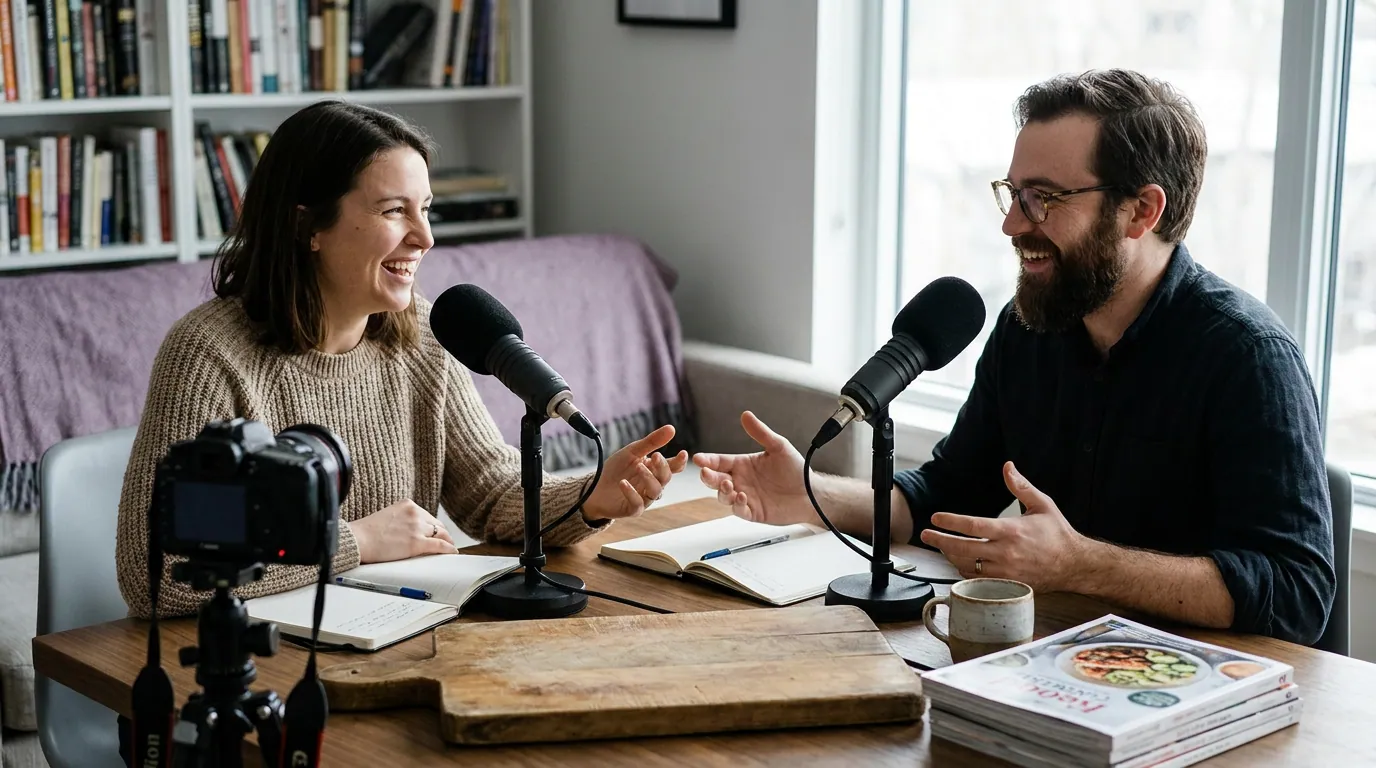
Book chefs by respecting their clock and trading them something they want. The biggest mistake is pitching during service or asking for an hour with nothing offered in return. Reach out in the dead hours, mid-afternoon between lunch and dinner, or a Monday when many kitchens are closed, keep the first ask short, and lead with what's in it for them: exposure to local diners, a piece they can share, a real conversation about their craft rather than the same five questions every blogger asks.
A few rules that make chefs say yes:
- Pitch in the off-hours, not during service. Email or DM around 2–4pm, or on the restaurant's closed day. A pitch that lands at 7:30pm on a Friday gets ignored, and rightly so. Showing you understand the rhythm of a kitchen signals you're worth their time.
- Make it a trade of value, not a favor. Offer something concrete: clips they can post, a backlink to their site, a feature timed to a new menu or opening. Chefs market constantly; frame the episode as marketing they don't have to make themselves.
- Record where they're comfortable. Many will give you more, and better, if you bring a portable rig to the restaurant in the afternoon than if you ask them to travel to a studio. The ambient kitchen sound is a bonus, not a flaw.
- Ask the question they never get asked. "What's the dish on your menu you're secretly tired of making?" or "What did your first week as a chef actually feel like?" Owners and chefs answer the same surface questions on every press hit. The off-angle question is what makes your episode the one they remember.
- Start local and stack proof. Your first guest probably isn't a James Beard winner. Book the neighborhood spot you love, make them sound great, send the clips, then use that episode to pitch the next, slightly bigger name. Booking compounds.
Most discovery for a new show now comes through clips on social, not through directory browsing, 57% of listeners say they rely on social media for podcast recommendations, the first time it has passed friends and family (54%) as the top source (InsideRadio, citing Coleman Insights and Amplifi Media). A chef's most quotable 45 seconds, captioned and posted, does double duty: it grows your show and gives your guest something to share with their own following.
Common mistakes new food podcasts make
- Reading recipes aloud. The core error this whole guide is built to fix. Steps belong in show notes or a video; audio gets the story and the senses. Run every idea through the audio-cooking test first.
- Stopping at "it was delicious." Flat description is the second-most-common failure. If your tasting language never climbs past rung one of the sensory ladder, listeners feel nothing, push the important moments to a comparison or a bodily reaction.
- Only interviewing other food media. Bloggers and critics are easy to book and add up to a samey feed. The people who make a food show distinctive are the ones in the kitchen and on the farm, harder to reach, far more interesting.
- Pitching guests at the worst possible time. A cold pitch during dinner service tells a chef you don't understand their world. Off-hours outreach with a clear trade of value gets a yes where a generic ask gets silence.
- No format, just "we chat about food." Loose food shows fade fast, podfade hits hardest early, with nearly half of all podcasts never getting past their first three episodes Amplifi Mediaon failure rates). Pick a repeatable structure, a recurring segment, a fixed interview arc, so you're not reinventing each episode.
Food sits among the more research-light niches to launch, but it rewards the same discipline the heavier ones demand. If you're weighing it against another topic, our guides to a true crime show built on documents you can defend and a business podcast that wins clients show how different the research and booking loads are niche to niche; a comedy show recorded with friends leans on chemistry over sourcing, while a fitness podcast as a coach lives or dies on credibility and demonstration.
On gear, a food show needs no special rig, clean, warm voice audio matters far more than any effect, especially if you record on location in a noisy restaurant. A single budget mic from our by-tier guide or a solid pick under $100 is plenty to start; if you'll record in kitchens, prioritize a dynamic mic that rejects room noise over a sensitive condenser.
Frequently asked questions
Do food podcasts need recipes?
No, and most of the best ones avoid reading recipes on the audio entirely. A spoken list of measurements and steps is unfollowable, listeners are usually driving or cooking with their hands full and can't pause or rewind. Put the recipe in your show notes as text, and use the audio for the story, culture, and sensory experience behind the dish instead.
What should a food podcast be about if not recipes?
Build episodes from four lanes that work on audio: the stories and people behind dishes, the culture and history food carries, how the restaurant industry actually runs, and vivid sensory close-ups on flavor and technique. A strong show rotates through all four rather than living in one, which keeps the feed varied and gives you an endless supply of ideas.
How do you describe food on a podcast so people can taste it?
Climb a ladder from the flat word to the felt one: name the basic taste, add texture and temperature, compare it to something the listener already knows, then describe the bodily reaction it causes. "It was spicy" becomes "a slow heat that builds at the back of the throat until your eyes water."
How do you get chefs to come on your podcast?
Reach out in the off-hours, mid-afternoon between services or on the restaurant's closed day, never during dinner, keep the first ask short, and offer a clear trade of value: clips they can share, a backlink, a feature timed to a new menu. Start with local spots you love, make them sound great, and use those episodes to pitch bigger names later.
What equipment do you need to start a food podcast?
Very little. Clean, warm voice audio matters more than any effect, so a single good dynamic mic and a quiet space are enough to begin. If you plan to record on location in kitchens or restaurants, favor a dynamic mic that rejects background noise over a sensitive condenser, and consider a portable recorder so you can capture chefs where they're comfortable.
Stop reading recipes and start telling the stories around them. Run every idea through the audio-cooking test, build the calendar from the four lanes, push your tasting language up the sensory ladder, and book the chefs that other food shows never bother to reach. That is how a food podcast stands out on a shelf crowded with cookbooks read aloud, by being the show that makes you feel the food, not just hear about it.