
How to Start a Fashion Podcast in an Audio Medium


Start a fashion podcast by choosing a format that does not depend on a camera, trend analysis, the business of fashion, style philosophy, or designer oral histories, then planning a short-form clip layer before you record episode one. Fashion is a looking industry, so the work is translating what people want to see into something worth hearing, and clips are how a style show gets found at all.
Fashion has a specific problem that beauty, food, and travel share but feel less acutely: the entire industry is built on the visual, and audio cannot show a silhouette, a drape, a color, or the way a fabric moves. A listener cannot see the coat. So the lazy version of a fashion podcast is two people describing outfits nobody can picture, and it dies fast.
The version that works treats the camera as optional and the ideas as the product. Below is how to make a visual industry compelling in audio, what to buy, why a clip layer is closer to mandatory here than in almost any other niche, and exactly how to handle the gifting and affiliate codes the style world runs on without quietly becoming an ad feed.
Why fashion is hard to do in audio
Fashion sits inside the Society & Culture and lifestyle space, which is one of the larger US listening categories by audience (Statista, top podcast genres). The category has listeners. The trouble is that most fashion shows fail the way most shows fail, they stop. Nearly half of all podcasts never make it past the first three episodes Amplifi Mediapodfade analysis). A visual niche adds a second failure mode on top of that: hosts try to narrate images, run out of things to describe, and lose interest before the podfade cliff even arrives.
The shows that last in fashion have a reason to exist that does not live on a runway. A point of view about why a trend is happening. Knowledge of how the industry actually works. Access to the people who make the clothes. That is what survives in audio, because it is information and argument, not display. Decide your reason before you decide your name.
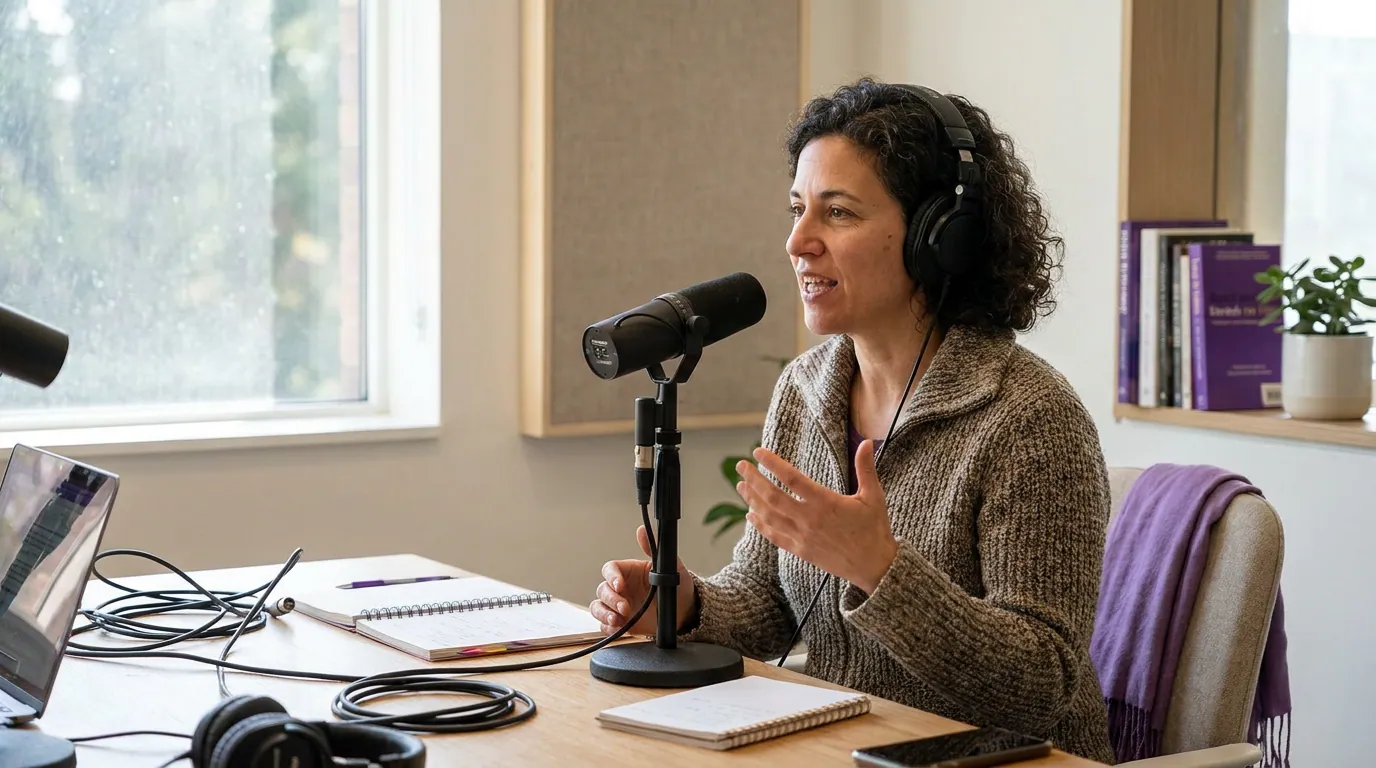
The audio translation test: will this moment carry without a picture?
Before you build an episode, run every idea through one filter: can a listener get the value without seeing it? If the payload of a segment is "look at this," it belongs on a clip, not in the audio. If the payload is "here is why this matters, what it signals, or what you didn't know," audio carries it perfectly. Use the test to sort what goes in the show from what goes on social.
What format makes a fashion podcast work without a camera?
Four formats carry a fashion show in audio: trend analysis, the business of fashion, style philosophy, and the designer or founder oral history. Each replaces "look at this" with an idea, a story, or an argument, the things audio rewards. Build episodes around explanation and opinion, not around outfits you have to describe.
Trend analysis is the strongest fashion-audio format because trends are ideas before they are images. Why is quiet luxury everywhere. What does the return of low-rise actually signal. Who decides a color of the year and how. You are not showing the trend; you are explaining where it came from, who profits, and where it goes next. That travels in audio better than on any feed.
The business of fashion is the most defensible long-term lane. Markups, the resale and rental economy, fast fashion's supply chain, why a brand collapsed, how a collaboration gets priced. This is endless material, and it positions you as someone who understands the industry, not someone reacting to a lookbook. If you lean here, the business podcast playbook on landing and prepping expert guests maps onto fashion almost directly.
Style philosophy is the personal lane: how to build a wardrobe that lasts, dressing for your real life, the psychology of why we wear what we wear, capsule wardrobes, the case against trends. It is opinion and framework, which audio handles well, and it builds the kind of host-listener trust that survives a sponsor read.
The designer or founder oral history is the interview format. Sit a designer, a buyer, a stylist, a vintage dealer, or an indie label founder down and get the story behind the work. Fashion is full of people who never get asked a real question on camera. Audio gives them room to talk.
A practical mix for a new weekly show: two trend or culture episodes a month, one business breakdown, one interview. That rhythm keeps you from running dry and gives sponsors different contexts to buy.
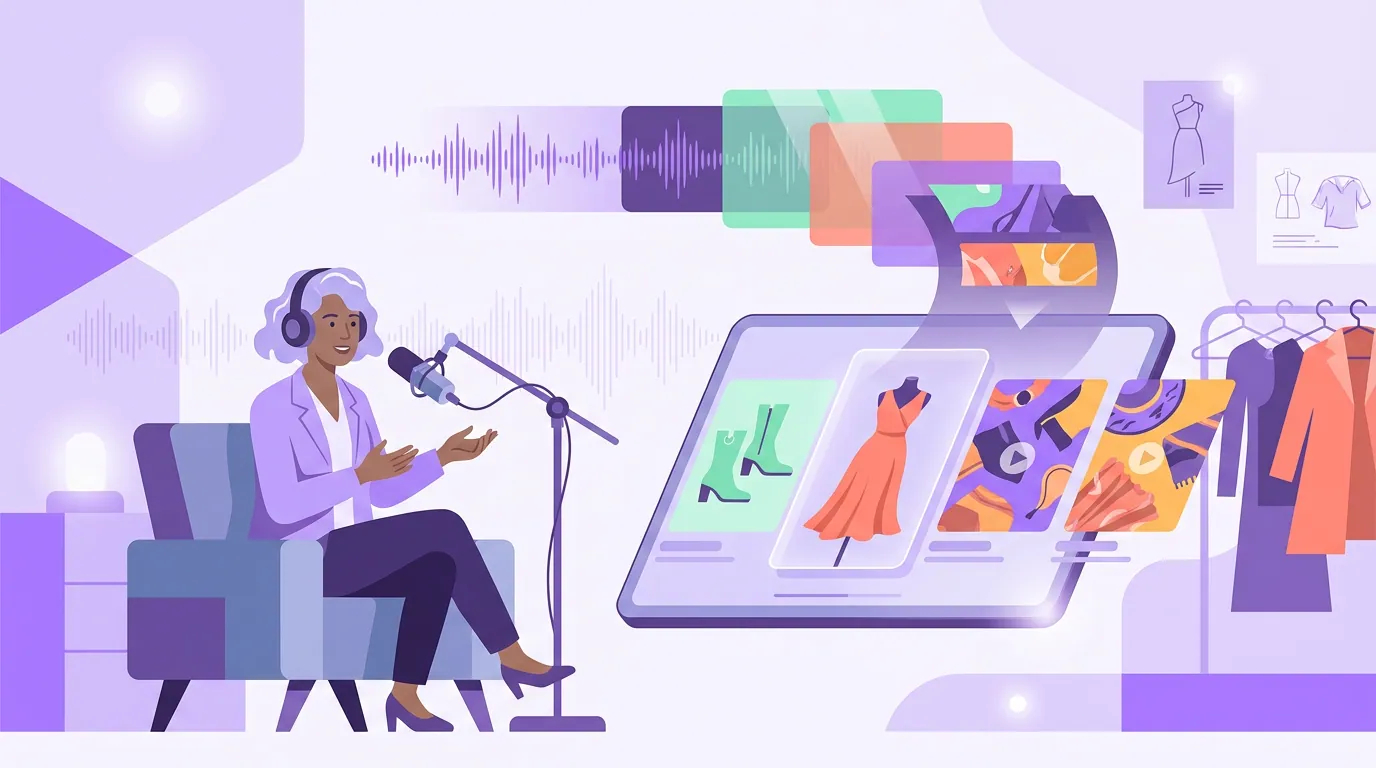
Why a fashion podcast needs a clip layer more than most
Here is the move that resolves the visual-niche-in-audio tension: record the conversation, then build the visuals from it as clips. You do not perform for a camera the whole time. You capture a handful of strong moments, a sharp trend call, a contrarian take, a designer's best line, and turn them into captioned vertical clips that live on Reels, TikTok, and Shorts, where fashion discovery actually happens.
This is closer to mandatory for fashion than for almost any niche. Social media has now passed friends and family as the top source of podcast recommendations, 57% of listeners rely on it versus 54% for word of mouth, and short-form video platforms like YouTube Shorts (41%), Instagram Reels (34%), and TikTok (29%) are where listeners first find new shows (InsideRadio, 2025). A fashion audience already lives on those visual feeds, it is the most natively visual audience in podcasting. A style show with no short-form video is invisible in the one place its listeners are already scrolling.
The practical version: record video even if the show is "audio first," because a few good vertical clips per episode are what get the show seen. You do not need a studio. A phone or webcam in window light and a clean backdrop is enough to pull clips from.
What gear do you need to start a style podcast?
You need one decent microphone, headphones, and recording software. That is the whole requirement to start. A fashion podcast has no special audio demands beyond clean, close voice, the same baseline as any interview or solo show. Put your money into the mic and the room, not a camera you may not use at first.
A USB dynamic mic in the $70–100 range gets you clean, professional-sounding audio in an untreated room. The Samson Q2U sits around $70 and the RODE PodMic around $99 (gear tiers in Ausha's cost guide). Either is plenty to launch. For the full breakdown by price, see best podcast mics by budget tier; if you are starting lean, the best podcast mic under $100 covers the value picks tested by use case.
One principle to internalize: the gap between a $150 and a $1,500 setup is smaller than the gap between bad mic technique in a noisy room and good technique in a treated one. Speak close to the mic, record in a room with soft furniture, and you will beat expensive gear used badly.
If you record video for clips, sensible, given where fashion discovery happens, a webcam or phone in good light against a tidy backdrop is fine to start. A garment rack or a clean wall reads better on camera than a cluttered room. Do not let a video ambition stall your audio launch, though; capture the conversation first, polish the visuals later.
The disclosure rules every fashion host must set on day one
The FTC requires you to disclose any material connection to a brand, money, free product, affiliate commission, or a personal relationship, clearly, conspicuously, and on every single piece of content. The 2023 revision of the Endorsement Guides made this stricter: it tightened the definition of "clear and conspicuous," said platform tools alone are not enough, and confirmed that gifted product counts even when no cash changes hands (FTC press release, June 2023).
This matters more in fashion than in most niches, because fashion runs on PR closets, gifted samples, sample sales, and affiliate links to the exact pieces you mention. You are constantly one careless episode away from sounding bought. Set the rules once, write them into your script template, and they stop being a weekly judgment call.
A few specifics from the FTC's Endorsement Guides Q&A that trip up fashion creators:
- Gifted is a connection. If a brand sends you a sample and you talk about it, disclose it, even with no contract and no money. "Brand X sent me this" is enough; "#gifted" buried in a caption is risky.
- Affiliate links are a connection too. LTK, Amazon, and brand affiliate links all pay you per purchase, so a listener deserves to know your recommendation carries a commission. Disclose it in the audio and beside the link in show notes.
- Stack your disclosures. If a piece was gifted and your link earns commission, saying only "they sent me this" is not enough. Disclose both.
- Every post, separately. You cannot disclose once and assume listeners carry it across episodes or clips. Each episode and each clip needs its own disclosure.
- Platform tags are not a substitute. Instagram's "Paid Partnership" label can supplement your disclosure but does not replace saying it in the content.
Penalties are real, the FTC's maximum civil penalty per violation runs over $50,000, and each post can count separately. But the bigger cost is trust. A disclosed honest take on a piece builds it. A hidden ad, once spotted, ends the relationship with the listener.
A brand-partnership structure that keeps your credibility
Take brand money on terms that protect your verdict. The structure that holds: write editorial control into the agreement, only feature pieces you would recommend unpaid, and never let a brand approve or edit your opinion. The moment a label can change what you say, your audience is right to stop believing you.
Rules to set before you pitch or accept a deal:
- Separate the ad from the take. A host-read ad slot ("this episode is sponsored by") is fine and clearly an ad. Your actual opinion of a piece should never be paid for. If a brand pays you to praise a collection, that is an ad in disguise, and your audience will eventually sort which is which.
- Reserve the right to be honest. Put one line in every contract: you will give your genuine assessment, including drawbacks, the fit, the price, the quality. Brands worth working with accept it. The ones who refuse are telling you the deal would cost you credibility.
- Price the ad, not the endorsement. Host-read podcast ads are valued because they work, host-read spots carry meaningfully higher brand recall than generic ads (Nielsen, via Podscan, 2025). You are selling attention and delivery, not a promise that you love the product.
- Keep an affiliate firewall. It is fine to link pieces you already recommend. It is not fine to steer what you recommend toward whatever pays the highest commission. Decide what to cover first; add the affiliate link after.
That is the whole thesis. Shilling is letting the money decide your opinion. Building a show is being trusted enough that when you genuinely rate something, people buy it. The second compounds; the first burns the show down.
Common mistakes that sink fashion podcasts
- Narrating images. Two hosts describing outfits nobody can see is the fastest way to lose a listener. Fix it by building episodes around trends, business, and stories, the things audio does well, and pushing the "look at this" moments into clips.
- No clip layer. A fashion show without short-form video is invisible to the most visual audience in podcasting. Fix it by clipping every episode from day one and recording video so you have footage to clip.
- Disclosing vaguely or late. A "#ad" at the end, or no disclosure on the clip and only on the full episode. Fix it with a fixed script line and a disclosure on every clip.
- Saying yes to every PR package. A gifted sample is not free; it is an obligation to disclose and a slow pull toward positivity. Fix it by only covering what fits your show and disclosing the rest you do mention.
- Launching with one episode. The podfade cliff hits early (nearly half quit at three episodes or fewer). Fix it by recording three to five episodes before you publish, so a busy week never breaks your streak.
Fashion podcast ideas that have a reason to exist
If you need an angle, start here. Each works in audio because each is built on information, argument, or story, not on what you can show:
- The trend autopsy, one trend per episode: where it came from, who profits, where it goes next.
- The business desk, markups, resale, fast fashion, collabs, and brand collapses, explained for people who love clothes and want to understand the money.
- Closet philosophy, building a wardrobe that lasts, dressing for your real life, the case against the trend cycle.
- The makers, interviews with designers, buyers, stylists, and indie founders about the story behind the work.
- The archive, vintage, secondhand, and fashion history; the pieces and eras worth knowing, described for the ear.
A niche-within-the-niche beats "general fashion" every time. The same logic powers the strongest fitness shows, comedy shows built on a specific chemistry, and tightly-scoped true crime shows: pick a lane narrow enough to own.
FAQ
Can a fashion podcast work without video? Yes, if you build it on ideas rather than images. Trend analysis, the business of fashion, style philosophy, and designer interviews all carry in audio because the value is the argument or the story, not the visual. Record video anyway to pull clips for discovery, but the core show can be pure audio.
Do I have to disclose gifted clothing on a fashion podcast? Yes. The FTC counts a gifted sample as a material connection you must disclose clearly, even with no money involved, on every piece of content (FTC Endorsement Guides Q&A). Say "Brand X sent me this for free" in plain language; vague tags like #gifted are not considered clear enough.
Do I need to disclose affiliate links like LTK or Amazon? Yes. Affiliate links pay you per purchase, which is a material connection. Disclose it both in the audio and in the show notes next to the link, with plain wording such as "I earn a commission if you buy through this link." If a piece was also gifted, disclose both connections, not just one.
What equipment do I need to start a style podcast? A USB dynamic mic ($70–100), headphones, and recording software. The Samson Q2U (~$70) or RODE PodMic (~$99) get you clean audio in an untreated room (gear tiers, Ausha). Good mic technique in a soft-furnished room beats expensive gear used badly.
How do I make a visual fashion moment work as a clip? Record video of the segment, then cut the strongest 30–60 seconds, a sharp trend call, a contrarian take, a designer's best line, into a captioned vertical clip. The audio carries the idea; the clip supplies the face and the caption that make it watchable on Reels, TikTok, and Shorts.