
How to Start an Esports Podcast Around the Scene


To start an esports podcast that survives, build it on the competitive calendar, league splits, patch cycles, and the major tournaments, rather than on whichever game is fun this week. Pick one title or region as your lane, book the right voice for the moment (pro, caster, or analyst), run a repeatable meta-analysis format, and clip only the footage you have a right to use. The scene publishes its own schedule months ahead, which solves the problem most shows die from.
An esports show is a different animal from a general gaming show, and the difference is what keeps it alive. A gaming podcast plans around game releases; a competitive show plans around results, who won the split, how a patch reshaped the meta, which roster move just changed the standings. That distinction sets your calendar, your guests, your episode structure, and your legal exposure. If your interest is reviews and playthroughs rather than standings, the how to start a gaming podcast around release cycles guide is the better fit; this one is for the competitive scene.
Why build an esports show around the competitive calendar?
Because the scene already runs on a fixed schedule, and that schedule becomes your editorial calendar. Splits start and end on known dates, patches drop on a predictable cadence, and the majors and a world championship anchor each year. Plan episodes against those beats and you publish exactly when fans are already searching the result, the roster, or the patch.
The danger zone for quitting sits between episodes 7 and 25, and shows under 100 episodes capture just 4.8% of all listening time, the audience is concentrated in shows that keep going Amplifi Mediaon podcast failure rates). Most shows die not from bad takes but from "what do we talk about this week?" A competitive scene hands you that answer for free every single week of a season, and the off-season has its own obvious topics in roster moves and the next patch.
Discovery backs the timing up. 57% of listeners now rely on social media for podcast recommendations, the first time it passed friends and family (InsideRadio, on podcast discovery). A reaction clip posted the night a grand final ends rides a wave of people searching that result. A clip about a meta from two patches ago competes with nothing because nobody is looking it up.
Step 1: Pick one title or region as your lane
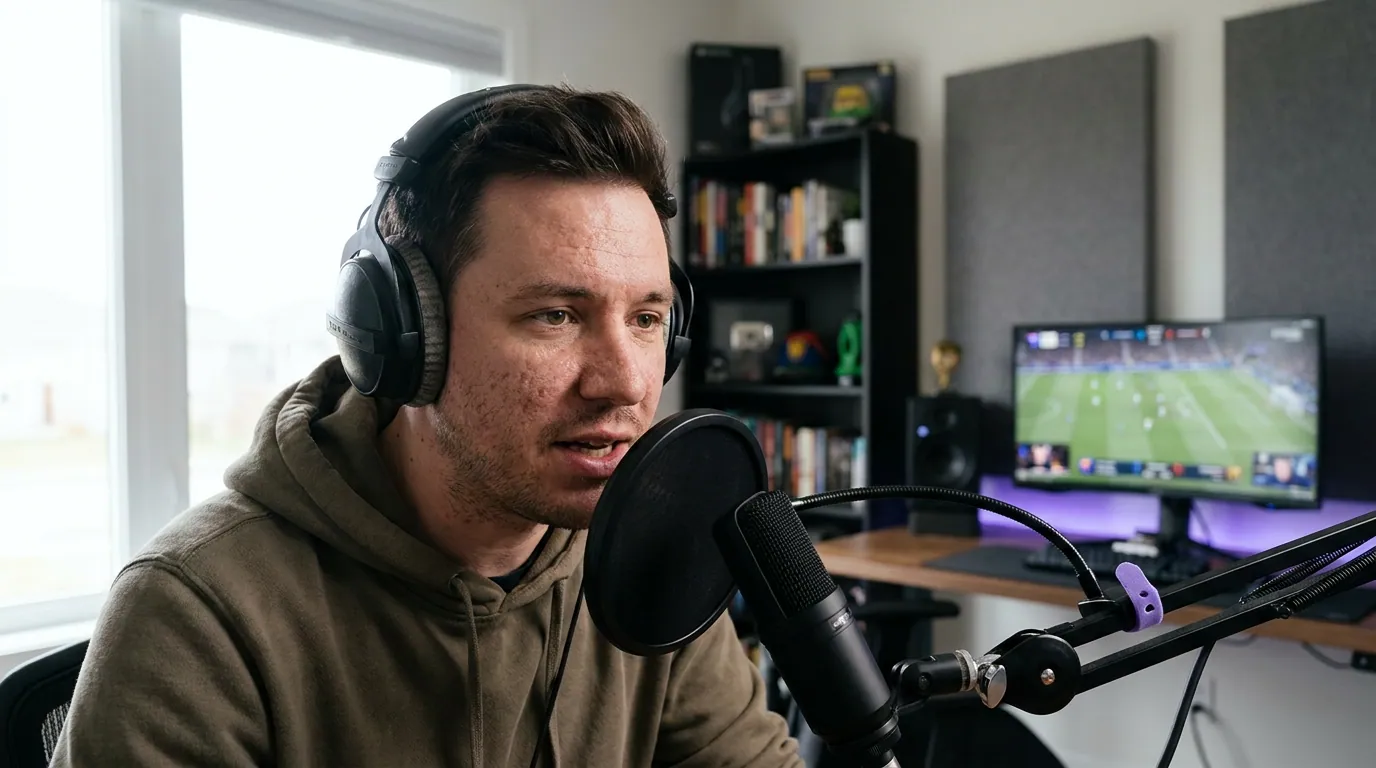
"An esports podcast" competes with every esports podcast. Niche down to a lane you can carry for 50 episodes: a single title (one game's competitive scene), a single region (a domestic league), a single role-or-team focus, or a cross-game angle like roster economics or coaching. The sharper the lane, the easier the calendar gets, because each lane maps to a specific slice of the schedule, one game's split dates, one region's matchdays, one tier of competition.
Two hosts is the durable default, and the most useful pairing in this niche is a fan-plus-expert dynamic: one host who plays the audience and one who has competitive or analytical credibility. That tension is the most clippable thing a competitive show produces. Solo works if you lean on tight scripting; three-plus voices get hard to follow in audio and harder to frame on video. The same two-versus-three tension shows up in any conversation-driven niche, a comedy podcast with friends wrestles with it for the same reason.
Step 2: Use a guest-booking decision rule
The wrong guest at the wrong moment is a wasted booking. Pros, casters, and analysts each shine at a different point in the calendar, and pros in particular are nearly impossible to book mid-competition, they are practicing, traveling, or under team media rules. The rule below tells you who to chase, and when.
Start with the reachable tier. Casters, coaches, and analysts are used to talking on the record and far easier to land than a starting pro mid-split. Book your pro interviews for the off-season or right after a team is eliminated, when players actually have time and an unfiltered story to tell. Booking is a relationship game over time, the same patient pitching discipline a business podcast that wins clients relies on to land senior guests applies here.
Step 3: Run the meta-analysis episode format
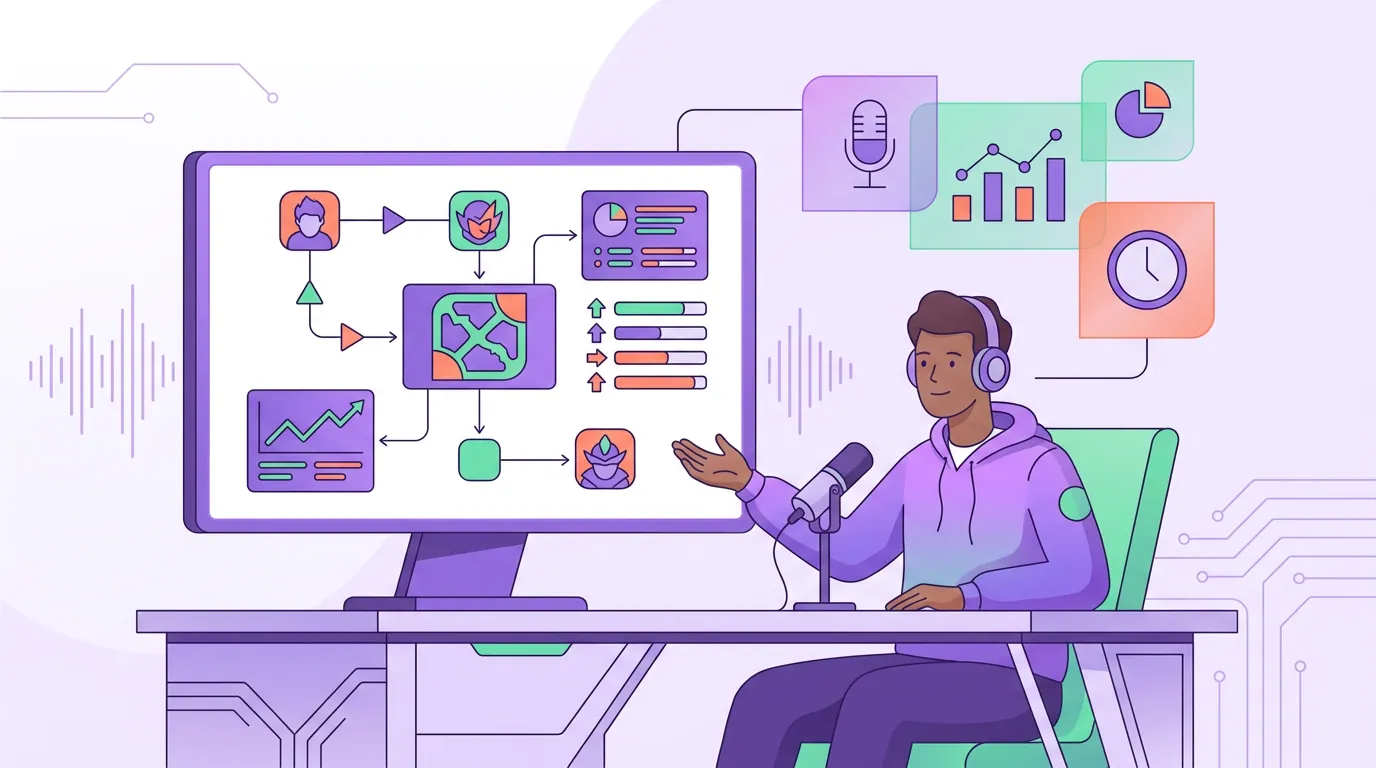
The signature episode of a competitive show is the meta-analysis: not "here's what happened," but "here's why it happened and what it means next." A repeatable four-part structure makes it fast to produce and instantly recognizable to fans, and it works for any title because every competitive scene has results, causes, a shifting meta, and a future.
Lead with the result, not a slow recap, so the opening 30 seconds stand alone as a clip. The prediction segment does double duty: it gives fans something to argue about, and it sets up your next episode, where you grade your own calls. That accountability loop, "last week we said X, here's how it played out", is the cheapest recurring segment in the niche and the most binge-able.
Step 4: Capture footage while recording a multi-host call
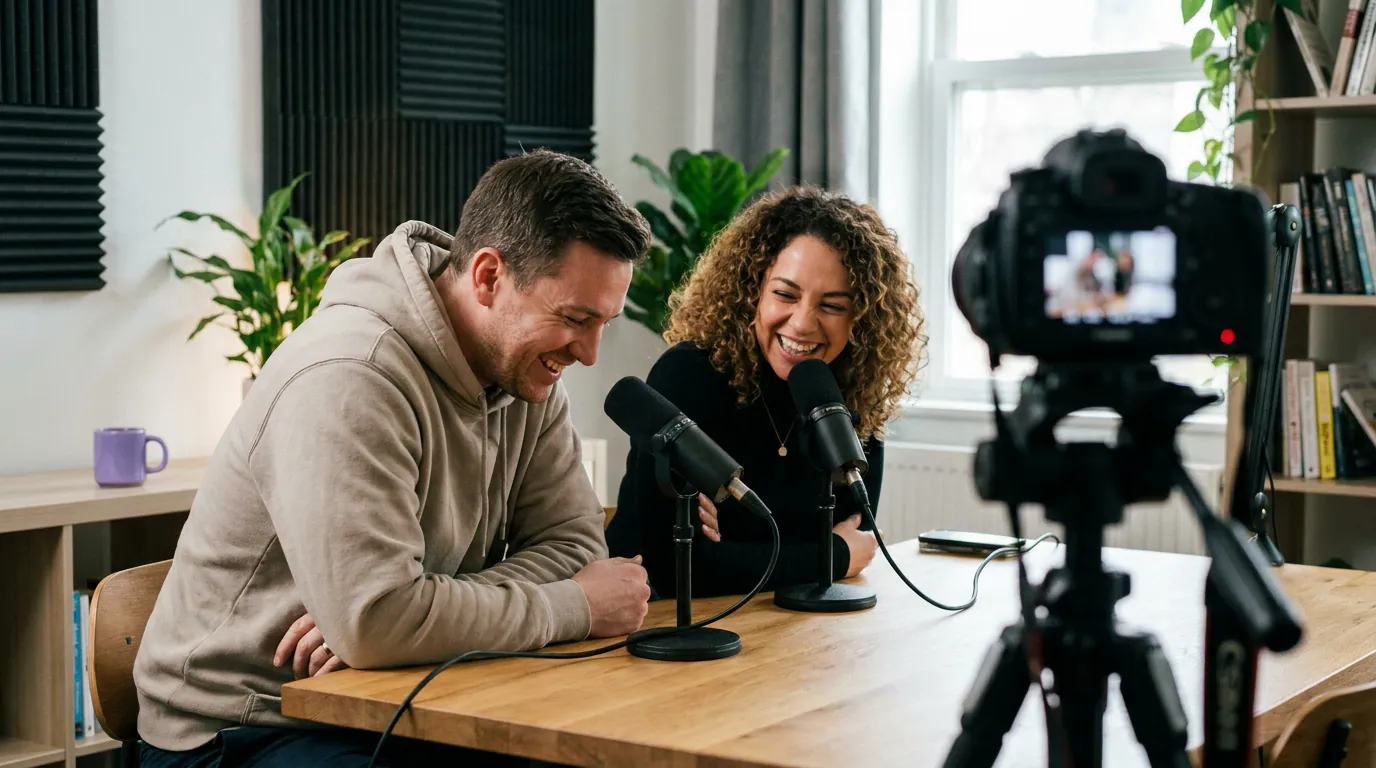
You are running two recordings at once: the conversation between hosts and the match footage you are reacting to. Keep them separate. Record the call on a remote platform that captures each host's mic and webcam locally, and capture footage independently, but use only footage you have a right to use (see the next step). Don't make the call software also juggle a stream feed; quality drops and you lose the ability to edit the two apart.
The clean default is each host recording their own audio and camera through a remote studio that saves local tracks, footage captured separately, and everything synced in the edit with a clap or countdown at the top. Gear is the easy part: a solid dynamic mic per host clears the bar, and the best podcast mics by budget tier breaks down where the real quality jumps happen. Outfitting two hosts cheaply, a reliable mic under $100 each is genuinely enough to start.
Step 5: Know the legal line on match footage and team logos
Match footage and team branding are where a competitive show carries more legal risk than a general gaming show, and "it's just a clip" is not a defense. Three layers stack here. The game itself is copyrighted by the publisher. The broadcast of a tournament is a separate copyrighted production, often owned by the league or a broadcaster who paid for the rights. And team names and logos are trademarks, which protect against implying a sponsorship or endorsement that does not exist.
Four practical rules keep you out of trouble. First, commentary and criticism are your strongest footing, footage used to analyze, react to, or critique a match is the transformative use fair use exists to protect, far safer than replaying a match for its own sake. Second, broadcast VODs are riskier than the game, reposting tournament broadcast clips can draw a strike even when raw gameplay would not, so keep them short, clearly secondary to your own analysis, and check each league's content policy. Third, logos are for reference, not endorsement, show a team logo to identify who you are discussing, never in a way that suggests the team backs your show. Fourth, music is a separate trap, broadcast intros and licensed tracks carry their own rights, so mute or duck them under your clips. One copyright strike can wipe a YouTube channel you spent a year building, so build these habits before you need them.
Common mistakes when starting an esports podcast
Five errors sink most new competitive shows. Each has a fix.
- Treating it like a general gaming show. Reviews and playthroughs are a different niche with a different audience. Fix: anchor every episode to a result, a patch, or a roster move, the competitive calendar, not the release calendar.
- Chasing pros mid-competition. They will not answer, and you burn weeks waiting. Fix: book casters and analysts during the season and save pro interviews for the off-season or post-elimination.
- Reposting broadcast VODs carelessly. Tournament broadcasts are separately owned and the fastest route to a strike. Fix: keep footage short, secondary to your commentary, and read each league's content policy.
- Recapping instead of analyzing. "Here's what happened" is what every results page already does. Fix: run the meta-analysis format and lead with why and what's next.
- Going too broad. "All esports" competes with everyone and has no schedule. Fix: pick one title or region so your calendar, your guests, and your audience are all specific.
FAQ
Do I need to be a former pro to start an esports podcast? No. Most successful competitive shows are hosted by knowledgeable fans, analysts, or casters, not ex-players. What you need is genuine fluency in your lane and a clear point of view. The fan-plus-expert two-host pairing is a reliable way to cover both credibility and accessibility without a competitive résumé.
How do I book pro players as guests? Book them in the off-season or right after their team is eliminated, when they actually have time and team media rules loosen. During active competition, target casters, coaches, and analysts instead, talking is their job and they are far easier to reach. Booking is a relationship built over a season, not a single cold message.
Is it legal to use match footage and team logos? Use footage as short, secondary support for your own commentary rather than as the main event, treat tournament broadcast clips more cautiously than raw gameplay, show logos only to identify teams rather than imply endorsement, and mute licensed broadcast music. Commentary and criticism are the safest framing; reposting a broadcast for its own sake is the riskiest.
Should an esports podcast be video or audio? Lean toward video. Most consumers use YouTube for podcasts, a majority of new listeners prefer to watch (Backlinko podcast stats), and YouTube passed a billion monthly podcast viewers in early 2025 (Variety). Competitive audiences live on video platforms, and video lets you reference plays alongside the conversation while producing far better discovery clips.
How often should an esports podcast publish? Weekly is the sustainable default during a season, with the matchday and patch schedule deciding which week gets which episode. Publishing consistency is the strongest predictor of a show surviving its first months Amplifi Mediaon podcast failure rates), so pick a cadence you can hold through the off-season, not just through finals week.