
How to Start a Beauty Podcast That Sells Without Shilling


Start a beauty podcast by picking a format that survives without a camera, ingredient deep-dives, routine breakdowns, or industry interviews, then setting your disclosure rules before your first sponsor email arrives. The niche is visual, so build trust through expertise and honest reviews, and treat the FTC's gifted-PR and affiliate rules as part of your setup, not an afterthought.
The hard part of a beauty show is not the gear. It is that the thing your audience wants to see, a swatch, a finish, a before-and-after, does not exist in audio. And the thing that pays for the show, gifted product, affiliate codes, brand deals, is the same thing that quietly erodes the trust you spend years building. Get both right and you have a show people return to and recommend. Get either wrong and you have a feed of disguised ads nobody finishes.
This guide is for the host who wants a real audience and a clean conscience. Here is how to make beauty work in audio, what to buy, and exactly how to take money without becoming a billboard.
Why a beauty podcast is harder than it looks
Beauty lives inside Society & Culture and lifestyle, which sits among the top US podcast genres by audience (Statista, top podcast genres). A big parent category is good news and bad news: the audience is there, but so is everyone chasing it. The shelves are crowded, and most beauty shows fail the same way every other show fails, they stop. Nearly half of all podcasts never make it past their first three episodes Amplifi Mediapodfade analysis).
The shows that survive in beauty share one trait. They have a reason to exist beyond "we like makeup." A point of view, a depth of knowledge, or a specific lens (clinical skincare, fragrance, the business of the industry) gives listeners a reason to subscribe instead of watching a thirty-second swatch video. Decide that reason first.
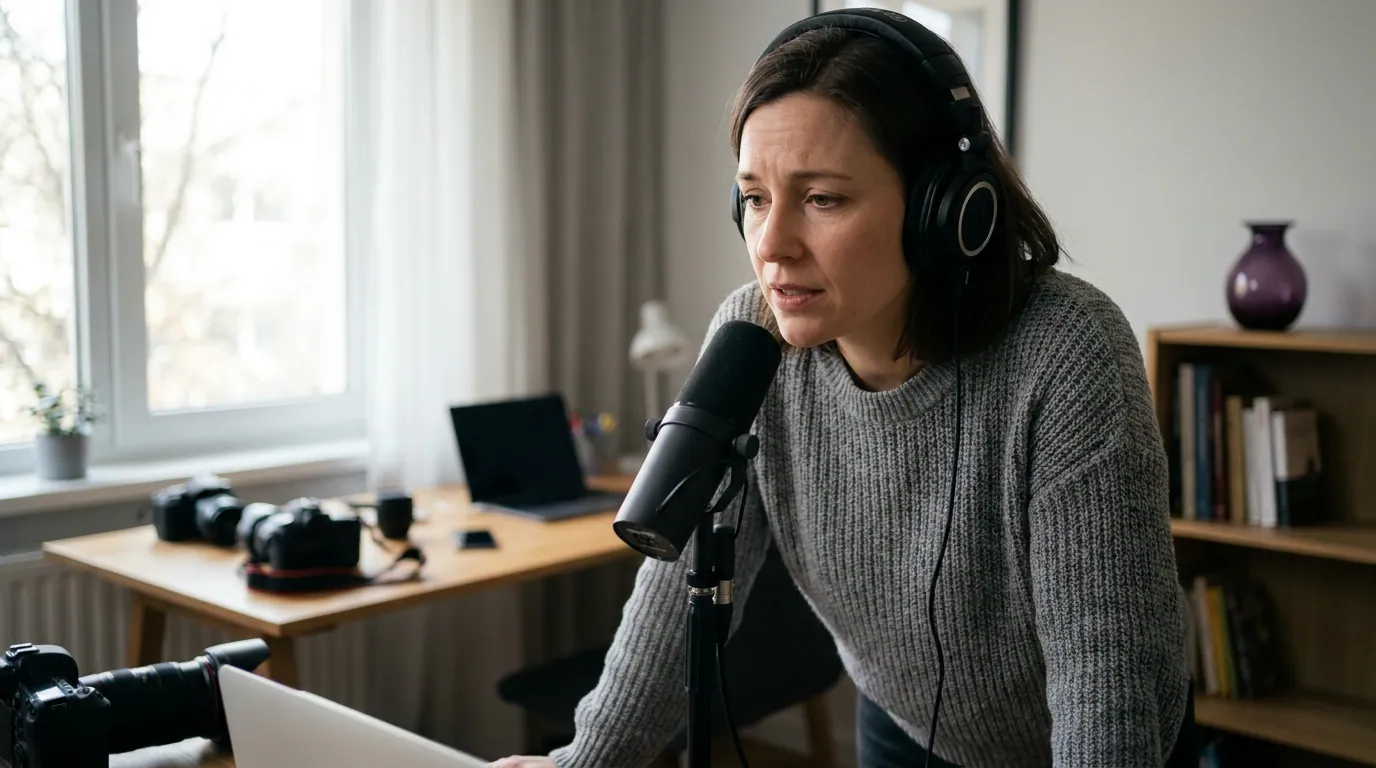
What format makes beauty work in audio?
Three formats carry a beauty show without a camera: the ingredient deep-dive, the routine breakdown, and the industry conversation. Each replaces "look at this" with "here is what you didn't know." Audio rewards expertise and storytelling, so build episodes around explanation and opinion, not around showing a product on screen.
The ingredient deep-dive is the strongest beauty audio format because it is pure information. One episode, one ingredient, retinaldehyde, niacinamide, salicylic acid, what it does, what the research actually supports, which claims are marketing, and which products use it well. This is a skincare podcast at its best: you are teaching, and teaching travels in audio.
The routine breakdown turns a personal habit into a structured walk-through. A guest's full morning routine with the why behind each step. A "build a $40 routine" episode. A "what I cut and why" episode. The structure gives the listener a takeaway they can act on.
The industry conversation is the most defensible long-term format. Interview a chemist, a buyer, an indie founder, a dermatologist, an esthetician. The business and science of beauty is endless material, and it positions you as someone with access, not someone reading a press release. If you lean here, the business podcast playbook on landing and prepping expert guests applies almost directly.
A practical mix for a new weekly show: two ingredient or education episodes a month, one routine or product-focused episode, one interview. That rhythm keeps you from running dry and gives sponsors different ad contexts.
What gear do you need to start a skincare podcast?
You need one decent microphone, headphones, and recording software. That is the entire requirement. A beauty podcast has no special audio demands beyond clean, close voice, the same baseline as any interview or solo show. Spend your money on a mic and your room, not on a camera you may not use.
A USB dynamic mic in the $70–100 range gets you to clean, professional-sounding audio in an untreated room. Ausha's cost guide puts a usable mic anywhere from $50 to $400, with about $150 buying a high-quality one (Ausha, podcast cost guide), but you do not need to spend the $150. The two I hand beginners are the Samson Q2U (street price about $70) and the RODE PodMic (about $99); both are dynamic, both reject room noise, and either is more than enough to start. For the full breakdown by price, see best podcast mics by budget tier, and if you are starting lean, the best podcast mic under $100 covers the value picks tested by use case.
One principle worth internalizing: the gap between a $150 and a $1,500 setup is smaller than the gap between bad mic technique in a noisy room and good technique in a treated one. Speak close to the mic, record in a room with soft furniture, and you will outperform expensive gear used badly.
If you record video too, sensible, given where beauty discovery happens, a webcam or phone in good window light is fine to begin. Lighting matters more than camera resolution for skin on camera, but do not let a video ambition stall your audio launch.
Make beauty visible after the fact
Here is the move that resolves the visual-niche-in-audio tension: record the conversation, then make the visuals from it as clips. You do not need to perform for a camera the whole time. You need a handful of strong moments, a sharp opinion on an ingredient, a myth you debunk, a routine tip, pulled into captioned vertical clips that live on Reels, TikTok, and Shorts.
This matters because social video clips now drive podcast discovery more than friends and family recommendations did before; the share of listeners finding shows through social video keeps rising (InsideRadio, 2025). For a beauty audience that already lives on visual feeds, clips are not optional marketing. They are how the show gets found.
The disclosure rules every beauty host must set on day one
The FTC requires you to disclose any material connection to a brand, money, free product, affiliate commission, or a personal relationship, clearly, conspicuously, and on every single piece of content. The 2023 revision of the Endorsement Guides made this stricter: it added a formal definition of "clear and conspicuous," said platform tools alone are not enough, and confirmed that gifted product counts even when no cash changes hands (FTC press release, June 2023).
This is not legal trivia. It is the structural decision that keeps a beauty show trustworthy. Beauty runs on gifted PR and affiliate codes, which means you are constantly one careless episode away from sounding bought. Set the rules once, write them into your script template, and they stop being a judgment call every week.
The three connections you will deal with, and the language the FTC actually accepts:
A few specifics from the FTC's Endorsement Guides Q&A that trip up beauty creators:
- Gifted is a connection. If a brand sends you product and you talk about it, disclose it, even with no contract and no money. "Brand X sent this to me" is enough; "#gifted" buried in a caption is risky.
- Stack your disclosures. If you got the product free and you earn affiliate commission on it, saying only "they sent me this" is not enough. Disclose both.
- Every post, separately. You cannot disclose once and assume listeners connect it across episodes or clips. Each episode and each clip needs its own disclosure.
- Platform tags are not a substitute. Instagram's "Paid Partnership" label can supplement your disclosure but does not replace saying it in the content.
Penalties are real, the FTC's maximum civil penalty runs over $50,000 per violation (it sat at $50,120 in 2023 and adjusts for inflation each January), and each post can count as a separate violation (FTC, 2024 civil penalty amounts). But the bigger cost is trust. A disclosed honest review builds it. A hidden ad, once spotted, ends it.
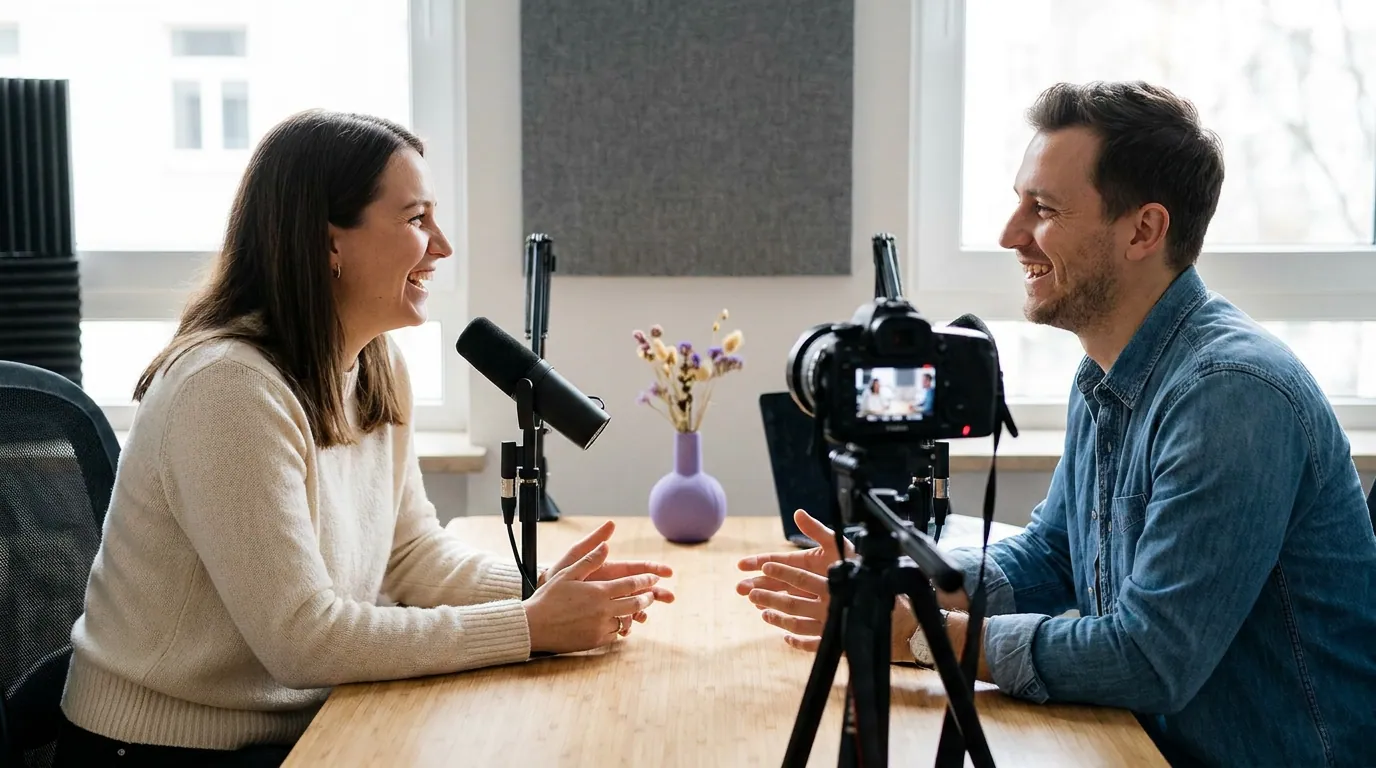
A brand-partnership structure that keeps your credibility
Take brand money on terms that protect your verdict. The structure that holds: keep editorial control written into the agreement, only feature products you would recommend unpaid, and never let a sponsor approve or edit your opinion of the product. The moment a brand can change what you say, your audience is right to stop believing you.
Concrete rules to set before you pitch or accept a deal:
- Separate the ad from the review. A host-read ad slot ("this episode is sponsored by") is fine and clearly an ad. A product review should never be paid for. If a brand pays you to review favorably, that is not a review, and your audience will eventually figure out which is which.
- Reserve the right to be honest. Put one line in every contract: you will give your genuine assessment, including drawbacks. Brands worth working with accept this. The ones who refuse are telling you the partnership would cost you credibility.
- Price the ad, not the endorsement. Host-read podcast ads are valued because they work, host-read spots carry meaningfully higher brand recall than generic ads (Nielsen, via Podscan, 2025). You are selling your audience's attention and your delivery, not a guarantee that you love the product.
- Keep an affiliate firewall. It is fine to use affiliate links for products you already recommend. It is not fine to skew which products you recommend toward the ones that pay best. Choose what to cover first; add the affiliate link after.
This is the whole "sells without shilling" thesis. Shilling is letting the money decide your opinion. Selling is being so trusted that when you genuinely like something, people buy it. The second one compounds; the first one burns the show down.
Common mistakes that sink beauty podcasts
- Treating it like a video that happens to be audio. Hosts describe swatches no one can see and the episode dies. Fix it by building episodes around explanation, opinion, and stories, the things audio does well.
- Disclosing vaguely or late. "#sp" at the end, or no disclosure on the clip, only on the full episode. Fix it with a fixed script line and a disclosure on every clip.
- Saying yes to every PR package. Gifted product is not free; it is an obligation to disclose and a slow pull toward positivity. Fix it by only covering what fits your show and disclosing the rest you do mention.
- No clips, no discovery. A beauty show without short-form video is invisible in the place its audience actually browses. Fix it by clipping every episode from day one.
- Launching with one episode. The podfade cliff is real near the start (nearly half never pass episode three). Fix it by recording three to five episodes before you publish, so a busy week never breaks your streak.
Beauty podcast ideas that have a reason to exist
If you need an angle, start here. Each works in audio because each is built on information or perspective, not visuals:
- The ingredient files, one active ingredient per episode, what the evidence supports versus the marketing.
- The clinical desk, a dermatologist or chemist breaks down a trending product or claim each week.
- Indie beauty, interviews with small-brand founders on formulation, manufacturing, and the business.
- Fragrance, in words, scent is impossible to film and perfect for describing; the audio-native beauty niche.
- The honest shelf, what you actually finished and repurchased, with disclosed affiliate links and unsponsored picks side by side.
A niche-within-the-niche beats "general beauty" every time. The same logic drives the strongest fitness shows, comedy shows built around a specific chemistry, and even tightly-scoped true crime shows: pick a lane narrow enough to own.
FAQ
Do I need to show products on camera for a beauty podcast? No. Audio works for beauty when you build episodes around ingredients, routines, and industry conversations, information and opinion, not visuals. Record video if you want clips for discovery, but the core show can be pure audio. Make the visuals after the fact as short clips.
Do I have to disclose free products on a beauty podcast? Yes. The FTC counts gifted product as a material connection you must disclose clearly, even with no money involved, on every piece of content (FTC Endorsement Guides Q&A). Say "Brand X sent this to me for free" in plain language; vague tags like #gifted are not considered clear enough.
How do I disclose an affiliate link in a podcast? Disclose the affiliate relationship both in the audio and in the show notes next to the link. The FTC suggests plain wording such as "I earn a commission if you buy through this link." If you also got the product free, disclose both connections, not just one.
Can a sponsor edit my review? Keep that out of the deal. A paid ad slot is fine and clearly an ad. A product review should stay yours, write editorial control into the agreement and reserve the right to mention drawbacks. If a brand insists on approving your opinion, the partnership will cost you more trust than it pays.
What equipment do I need to start a skincare podcast? A USB dynamic mic ($70–100), headphones, and recording software. The Samson Q2U (~$70) or RODE PodMic (~$99) get you clean audio in an untreated room; Ausha's cost guide pegs a usable mic at $50–400, so you can start well under that (Ausha, podcast cost guide). Good mic technique in a soft-furnished room beats expensive gear used badly.