
How to Start an Automotive Podcast for Car People


To start an automotive podcast, pick one of three lanes first, enthusiast culture, DIY repair, or industry and EV news, then build a repeatable format that works without pictures, since cars are a visual hobby on an audio medium. Record in a quiet, soft-walled room over a parked car or open garage where you can, get a clear mic and good technique, and disclose every press loaner, gifted part, and affiliate link on air. The niche choice is the decision that shapes everything after it.
"Automotive podcast" is three different shows wearing the same jacket. A drift-builds-and-track-days show, a how-to-replace-your-brake-pads show, and a who-bought-which-EV-startup show share almost no audience, no format, and no guest list. The most common beginner mistake is trying to be all three and ending up as none. This guide starts with the lane, then handles the parts other car-podcast guides skip: clean recording in noisy, reflective spaces, the disclosure rules that keep a gear-and-loaner show honest, and a format that survives an audio-only medium for a thing you mostly do with your eyes and hands.
Car content has a built-in advantage: it is a deep, loyal interest with endless sub-topics, which is exactly what keeps a show publishing past the danger zone. But it also has a trap, nearly half of all podcasts never make it past the first three episodes Amplifi Media, and the ones that quit are usually the ones who never decided what their show actually is.
What kind of automotive podcast should you start?
Pick one of three lanes and commit before you record episode one. Enthusiast shows cover culture, builds, racing, and ownership stories, conversational, opinion-driven, guest-friendly. DIY repair shows teach a specific job per episode and live or die on clarity. Industry and EV news shows analyze launches, earnings, policy, and the EV transition for a more professional listener. Each one has a different format, guest pool, and monetization path, and trying to serve all three dilutes every episode.
The reason this matters more in automotive than in most niches: the audiences barely overlap. Someone who wants to hear a builder argue about manual transmissions is not the same person Googling "how do I bleed my brakes," who is not the same person tracking whether a battery startup will survive the year. Choose the listener, and the format follows.
A useful sub-niche move: go narrow inside your lane. "Air-cooled Porsches," "first-time EV buyers," or "DIY diesel truck maintenance" each carve a defensible corner where a new show can be the obvious choice instead of the 400th general car podcast. Narrow is how a small show gets recommended.
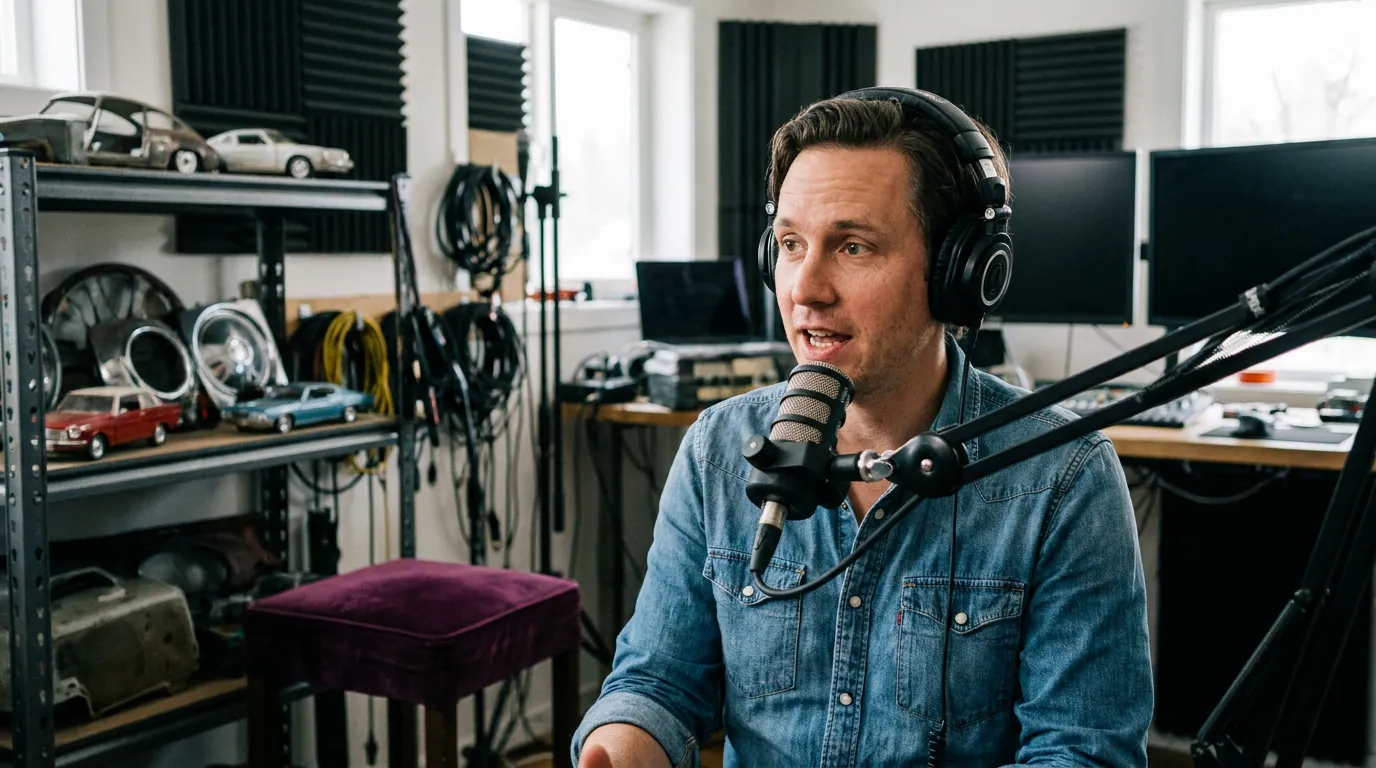
Why most car podcasts quit, and what keeps yours alive
The number that should set your strategy: nearly half of all podcasts never make it past the first three episodes, and most of the quitters stall somewhere under ten Amplifi Media. Cars give you an unusually long runway of topics, but a runway is useless without a plane that can fly the same route every week. The single best predictor of survival is publishing consistency, and consistency comes from a format simple enough to repeat when you are tired.
So design for repeatability before quality. A two-segment structure, a news or hot-take open, then the main interview or DIY teardown, is easier to keep up than a sprawling free-form show. Batch-record when you can. And keep your topic backlog visible so you never face a blank page on recording day.
How do you record a car podcast cleanly in a garage or a car?
Record where the walls are soft and the engine is off. The two enemies are reflections (hard garage surfaces bounce sound into a hollow, echoey mess) and noise (engines, lifts, traffic, HVAC). Get the mic close to your mouth, point it away from hard surfaces, kill any running equipment, and record indoors over the bay where you can, then save the car or garage for B-roll and clips, not your primary audio.
The honest order of priorities is technique, then room, then mic. After setting up rigs from $150 to $5,000, my rule is blunt: the gap between a $150 and a $1,500 setup is smaller than the gap between bad mic technique in a noisy room and good technique in a treated one. A hobby setup runs about $100–$350 in one-time gear (Ausha); you do not need the pro rig to sound clean.
Practical fixes for the two hardest car-podcast spaces:
- Recording in a garage: move to the most furnished corner, or hang moving blankets behind and beside you to deaden reflections. Close the bay door, shut off compressors, lifts, and fans, and record at a quiet hour. A dynamic mic (it rejects more room than a condenser) plus close mic technique does most of the work.
- Recording inside a parked car: a car cabin is surprisingly dead, soft seats and headliner absorb reflections, which is why automakers test audio there. Park somewhere quiet, engine off, windows up, climate fan off, phone on silent. Use a dynamic mic or a good lav, and record a few seconds of "room tone" so your editor can smooth out any traffic rumble.
- For driving segments (a review while rolling), accept that road and wind noise will cost you fidelity, keep them short, mic close, and treat them as flavor, not the whole episode. Never compromise safety to chase audio.
A clear, quiet voice beats any backdrop. Listeners forgive a plain room; they leave over echo and engine drone. If you are choosing hardware, a single solid pick from our best podcast mics by budget tier or a reliable option under $100 is plenty to launch, spend the rest of your energy on the room and your levels.

How do you disclose press loaners, gifted parts, and affiliate links?
Disclose clearly, conspicuously, and close to the recommendation, spoken on air, not buried in show notes. The US Federal Trade Commission requires you to reveal any "material connection" to a brand: a press loaner car, a free part, a gifted tool, a paid sponsorship, or an affiliate link that pays you. The standard is plain language a listener can't miss, in the same place as the claim. Saying "the manufacturer loaned me this car for the week" at the top of a review is the model to copy.
This matters more in automotive than almost any other niche, because the whole genre runs on free stuff. Manufacturers loan press cars. Parts brands send products to review. Tool companies seed garages. None of that is a problem, taking a loaner is normal and fine. Hiding it is the problem. The FTC's endorsement guides (the "16 CFR Part 255" rules and the agency's plain-language FAQ) put the obligation on you, the creator, not just the brand.
Three working rules for car shows:
- Spoken, up front, and specific. "This week's car was a press loaner from the automaker" or "the parts in today's brake job were sent free by the manufacturer." Saying it on air is what the listener actually receives; show-notes-only disclosure can fail the "clear and conspicuous" test.
- Disclose even if it didn't change your opinion. The rule is about the connection, not your honesty. A loaner you'd have praised anyway still gets disclosed.
- Keep your independence visible. The fastest way to lose a car audience is to sound like a brochure. Disclose the loaner, then say what you actually thought, the negatives included. Reviewers who criticize the cars they're loaned are the ones listeners trust, and trust is what keeps a review show alive.
This is not legal advice; if you take significant sponsorships, have a media or advertising lawyer review your standard disclosures once. But the everyday habit is simple, say where the car or part came from, then give your honest take.
How do you make a visual hobby work as audio?
Build segments that carry meaning through the ears alone, and let video and clips do the showing. Cars are seen and felt, so an audio-only car show has to translate the visual into the verbal: describe the sound of an engine, walk through a repair as a sequence of steps, narrate a drive as sensation. The format is the fix, design every recurring segment to work with eyes closed, then add video for the people who want to watch.
Segment ideas that survive an audio medium:
- The sound walkthrough. Play and describe engine notes, exhaust tones, or a failing component. Audio is the one medium where the sound of a car is the content, not a limitation.
- The step-by-step job. For DIY, narrate a repair as an ordered list a listener can follow in their own garage, torque specs, the order of operations, the part that always fights you. Pair it with a video for the visual learners.
- The owner story or build saga. Interviews about a project car, a restoration, or a first track day carry entirely on voice, this is the enthusiast lane's bread and butter.
- The news desk. For industry and EV shows, a tight rundown of the week's launches and earnings is pure analysis; the listener doesn't need to see anything.
- Listener garage questions. Answer real problems from your audience. It generates endless episodes and builds the community that keeps a small show going.
Then film it anyway. A growing share of new listeners would rather watch a podcast, and video gives you the raw material for short clips, which for a new show are the main discovery engine. Record the audio to stand on its own, capture video and B-roll of the car or the job, and pull the moments that explain or surprise into vertical clips. One episode can seed a week of posts that send people back to the full show.
For how the same format math plays out in other niches, see our guides to starting a business podcast that wins clients, a comedy podcast with friends, a fitness podcast as a coach, and, if you ever cover crime in the auto world, a true crime podcast without getting sued, which carries a much heavier sourcing and legal load than a car show does.
Common mistakes new automotive podcasters make
- Being all three lanes at once. A show that swings from a restoration interview to a brake tutorial to EV stock analysis confuses the algorithm and the listener. Pick a lane, then narrow inside it.
- Recording with the engine or shop running. Engine drone, compressor hum, and lift noise are nearly impossible to remove cleanly. Kill the noise at the source before you hit record; don't count on editing to save it.
- Letting the garage echo. Hard surfaces bounce sound into a hollow mess. Add soft material, move to a furnished corner, or record in the car cabin, reflections are the most common reason a car show sounds amateur.
- Hiding the loaner. Failing to disclose a press car, gifted part, or affiliate link isn't just an FTC risk; it's the fastest way to lose a car audience that can smell a paid plug. Disclose on air, then say what you really thought.
- Designing for video first, audio second. If your episode only makes sense when you can see the screen, most of the podcast audience is lost. Build it to work with eyes closed, then add the video.
- No topic backlog. The visual hobby has endless material, so capture it. Keep a running list of jobs, cars, and news threads, and the blank-page panic that kills shows at episode three never arrives.
Frequently asked questions
Is an automotive podcast worth starting in 2026?
Yes, if you go narrow. Car content is a deep, loyal interest with endless sub-topics, but the field is crowded, so a general "car podcast" struggles while a specific one (air-cooled builds, first-time EV buyers, DIY diesel repair) can become the obvious pick for its corner. The hard part isn't audience demand, it's consistency, since nearly half of all podcasts never get past their first three episodes Amplifi Media.
How do you record a podcast inside a car?
Park somewhere quiet with the engine off, windows up, climate fan off, and your phone silenced. A car cabin is acoustically dead, soft seats and headliner absorb reflections, so it works better than most garages. Use a dynamic mic or a quality lavalier close to your mouth, and record a few seconds of room tone so your editor can smooth out any background rumble. Never record while driving in a way that compromises safety.
Do car podcasters have to disclose free cars and parts?
Yes. Under the FTC's endorsement guides, any "material connection", a press loaner, a gifted part or tool, a sponsorship, or an affiliate link, must be disclosed clearly and conspicuously, close to the recommendation, ideally spoken on air rather than buried in show notes. Disclose even when the freebie didn't change your opinion; the rule is about the connection, not your honesty.
What equipment do you need to start a car podcast?
Less than you'd think. A hobby setup runs about $100–$350 in one-time gear (Ausha): one solid dynamic mic, headphones, and free recording software. A dynamic mic rejects more room noise than a condenser, which helps in a garage. Technique and a quiet, soft-walled room matter more than price, the difference between a clean recording and a hollow one is rarely the mic.
How do you make a car podcast work without video?
Design segments that carry through the ears: describe engine sounds, narrate repairs as ordered steps, tell owner and build stories, and run a tight news desk. Build each episode to make sense with eyes closed, then record video on top for the people who want to watch and for short clips. Clips are the main way a new car show gets discovered, so capture the visual even if the audio leads.
Choose your lane, treat the room before the mic, disclose every loaner and part, and build a format that works with eyes closed. Cars give you more to talk about than almost any niche; the shows that last are the ones disciplined enough to pick a corner and keep showing up, which, in a field where nearly half of podcasts quit before episode four Amplifi Media, is most of the battle.